

ONE AFRICA 🌍| Chemical Engineer | Web3 Enthusiast 🌐 | Advocating for Cryptocurrency Adoption among people 🌎 | Empowering through Technology & Education
Joined February 2024
- Tweets3.3K
- Following679
- Followers161
- Likes67.8K





African Guy retweeted

You have managed the remarkable feat of being condescending about a distinction you are too ignorant to understand. Nobody said Africa lacked sovereign kingdoms before colonialism.
The point, since it has apparently escaped your sanity is that those kingdoms were not identical to the countries on today’s map. Thanks to the wickedness of European colonizers, who, after centuries of conquest and plunder in the Americas, met in Berlin to establish the rules for carving up Africa, existing kingdoms and communities were subsequently sliced across colonial borders, while previously separate societies were bundled into the same territories. Communities whose villages were raided and whose people had been captured and sold into slavery find themselves enclosed within the same colonial borders as the powers that had preyed upon them.
Take my country Togo for example. The country known as the Republic of Togo today has over 40 ethnic communities. One of the kingdoms that conducted the raids was split between Nigeria, Benin and Togo and its population does not even make up 5% of Togo’s population today. But many of the ethnic communities that were raided are also in modern Togo. As a result, both victims and perpetrators were forced to live in the same country because of colonialism and this has been the root of political crisis to this very day.

African Guy retweeted
Genocide was very common throughout human history. So why did Germany ever have to pay reparations to Jewish victims of the Holocaust? Why should Germany be held accountable for something that had been practiced by so many civilizations before it?
After all, at the beginning of that same 20th century, Germany had already committed genocide against the Herero and Nama peoples in Namibia decades before the Holocaust. Massacres, ethnic persecution, enslavement and extermination were hardly new inventions of the Nazis. So why single out Germany? Why demand accountability for something that was common at the time?
War was equally common in the 19th and 20th centuries. So why was Germany and Japan forced to pay reparations after the World War? Why should any country compensate another for the consequences of war when human beings have been fighting wars since the beginning of civilization?
Does this reasoning sound intellectually bankrupt to you? Good.
Because this is precisely the reasoning we are subjected to whenever we raise the issue reparations for the transatlantic slave trade. Suddenly, we are reminded that slavery was common at the time, that Europeans were not the only people who practiced it.
Can anyone name another system of enslavement besides the transatlantic slave trade that forcibly uprooted millions of people, transported them across oceans and left generations of their descendants permanently displaced from their ancestral homelands? If so, let us demand reparations for its victims too!
For centuries, European nations codified slavery into their laws, protected it through state institutions and made human beings legally recognized property. France’s infamous Code Noir, introduced in 1685, legally classified enslaved Africans as movable property, made slavery hereditary and authorized brutal punishments, including mutilation.
It was only in 2026 ( yes this very year) that France’s Parliament voted to formally repeal this legislation.
We are talking about state-sponsored crimes, written into law and enforced for centuries. Why should the states responsible be exempt from accountability?
If your argument against reparations is that everybody was doing it, then you are not offering a historical defense. You are simply suggesting that atrocities should become exempt from accountability once enough people have participated in them.

African Guy retweeted
This is what happens when historical ignorance is accompanied by an astonishing degree of intellectual arrogance.
First, there were no “West African countries” during the transatlantic slave trade. The region comprised kingdoms, empires, city-states and independent societies. Applying modern national identities to centuries-old history is an extraordinary display of ignorance.
Second, Europeans did not arrive in Africa as benevolent abolitionists. For centuries, they financed, institutionalised and industrialised human trafficking, supplying weapons that fuelled wars and slave raids, creating an enormous market for human captives, and codifying racial slavery into their laws. African collaborators existed, but their complicity does not absolve the European empires that sustained this monstrous commerce.
Entire African communities were devastated, populations displaced, villages destroyed and societies destabilised. Millions were deported across the Atlantic, while countless others suffered captivity, violence and death on African soil. Africa was itself a vast crime scene, not merely the departure point of enslaved people.
And perhaps the most remarkable historical fraud is how European nations have managed to present themselves as the liberators of the very people they spent centuries enslaving.
I grew up in a former French colony in Africa being taught from primary school that slavery was abolished by a Frenchman named Victor Schœlcher. It was only in 2026 ( yes this year ) that I discovered that people in former British colonies had been taught a remarkably similar story, except that their white saviour was an Englishman named William Wilberforce.
Yet long before Britain abolished slavery in its colonies in 1833, enslaved Africans in Haiti had fought a revolution, defeated European armies and proclaimed their independence in 1804. Toussaint Louverture and Jean-Jacques Dessalines were central to that struggle.
In 1816, Haitian President Alexandre Pétion supplied Simón Bolívar with weapons, ammunition and military assistance to support South America’s liberation struggles, on the condition that he advance the emancipation of enslaved people. And he went on to free more than half a dozen Latin American countries.
And what was Haiti’s reward for daring to liberate itself? Diplomatic isolation and, in 1825, a crushing indemnity of 150 million francs imposed by France, effectively forcing formerly enslaved people to compensate the descendants of their enslavers for the loss of their supposed property.
Meanwhile, Britain compensated slave owners with £20 million following abolition, while the enslaved received nothing.
Where are these stories in the European narratives of abolition? Where are Nat Turner, who led an enslaved uprising in Virginia in 1831, Queen Nzinga, who resisted Portuguese expansion and slave raiding in Central Africa, or the countless African rulers, communities and freedom fighters who resisted enslavement?
Black people fought for their freedom. They rebelled, resisted, organised, sacrificed and died for it. Their liberation was never simply a gift bestowed upon them by benevolent Europeans.
There is something profoundly tragic about descendants of enslaved Africans, born and educated in the lands of their ancestors’ enslavers, regurgitating sanitised colonial history, seemingly incapable of distinguishing historical scholarship from imperial propaganda.
The greatest triumph of colonial indoctrination is when the descendants of its victims become the most zealous defenders of its mythology.
What a pity!

African Guy retweeted

R*cism Justified Sl*very and C*lonialism! - John Henrik Clarke
John Henrik Clarke (1915-98), historian and pioneer of Pan-African and Africana studies in the US, explained in 1971 how Europeans used r*cial classifications to justify their invasions, sl*very and exploitative pursuits throughout the world.
How do r*cial classifications affect our struggle for liberation?
Video credit: 'Black Journal' (1971)


African Guy retweeted
When you talk about reparations, some of the first people who come to oppose them are ignorant Africans whose confidence far exceeds their intellect telling you, “We don’t need reparations.”
Do you people even understand what you are rejecting? Do you think reparations mean a workers’ compensation cheque, that we are all going to queue at the bank and receive $100 or $500 for the suffering inflicted on our ancestors? Or that those our corrupt leaders receiving a $1billion check to acquire their next mansion in Dubai or Monaco? Is that really the extent of your imagination?
Reparations mean repairing structural harms left by the slave trade and its immediate child colonialism and it takes multiple forms.
Economic reparations include changing trade laws and agreements that keep formerly colonised economies supplying cheap raw materials while making it difficult for them to develop industries of their own. They can include preferential access to markets, removing tariffs that penalise processed goods, supporting local manufacturing, and changing procurement rules so African businesses can compete for valuable contracts.
Reparations can include tax advantages for building businesses: tax credits for productive investment, relief for new enterprises, incentives for research and manufacturing, and measures that help businesses owned by affected communities accumulate capital. They can include debt cancelation, investment funds and ownership stakes that help people build lasting wealth.
They can include returning identifiable stolen assets, millions of acres land, mines, confiscated gold reserves ( More than 2/3rd of the French gold reserve was taken from African countries since the colonial era).
Cultural reparations can mean returning looted artworks, sacred objects, royal treasures, manuscripts and human remains ( The German are still holding onto tens of thousands of African skulls they massacred in Namibia for ex), with the resources necessary for their preservation under the authority of the communities to whom they belong. You cannot steal somebody’s heritage, charge admission to see it, and then present a temporary loan as generosity. Repair can also include funding museums, libraries, publishing houses, theatres, film and cultural institutions whose development was obstructed or whose work was treated as inferior.
Historical reparations can mean opening colonial archives, returning records, identifying burial sites, documenting atrocities and supporting research led by the communities concerned to restore the names and lives of people reduced to numbers in those shipping registers.
Linguistic reparations can mean investing in reinstating African languages as languages of education, science, administration and intellectual life. That includes training teachers, producing textbooks, and recovering knowledge that colonial institutions dismissed because it was transmitted in a language they refused to respect.
Our nations have been so tied by debts that the IMF and our western debtors slash our educational budgets leaving our schools underfunded, making such reforms financially impossible. And this was intentional!
Reparation means our Children should be able to learn through their own languages and acquire other languages without being taught to despise the first words through which they understood the world.Reparations means revising our school curriculums, both in formerly colonised countries and in the countries that profited from their subjugation.
These measures require negotiation, enforceable commitments and public accountability.
But listen to how quickly some of you ignoramuses dismiss the entire demand before making the smallest effort to understand it. The ignorance is sickening !
African Guy retweeted
I have always been fascinated by a particular breed of African politicians in Europe who seem to have made it their life’s ambition to be more British than the British, more French than the French, and more hostile to Africans and immigrants than the most rabid nationalists in their adopted political circles.
You find them in Britain, France, Belgium and across Europe, particularly in countries that once colonized Africa. Many are the children of African immigrants, sometimes the first generation born in Europe, whose parents arrived in those countries as foreigners. Yet their children have somehow developed an almost religious devotion to the most reactionary interpretations of European nationalism. They speak about immigration as though their own parents descended from the heavens with citizenship certificates in their hands.
And I am not talking about Africans who happen to be conservative. I am talking about those who appear determined to prove their loyalty to their political constituencies by expressing a degree of contempt for immigrants, Africans and their own ancestral history that would embarrass even some European conservatives. The irony would be hilarious if its consequences were not so serious.
Because these politicians occupy a particularly convenient position in the racial politics of Europe. Their African ancestry gives certain political movements an opportunity to present deeply contested positions on immigration, race and colonial history through someone whose very presence is then offered as proof that racism could not possibly be involved.
It is the political equivalent of the racist who insists that he cannot be racist because he once dated a Black woman. Except that this time, instead of producing a Black girlfriend, they produce a Black politician with an African surname and a spectacular appetite for defending their ideological prejudices.
What particularly disgusts me is the historical revisionism that sometimes accompanies this performance. Imagine being so desperate to demonstrate your European patriotism that you begin defending an imperial history whose victims included people who looked like your grandparents.
And for what? To prove that you are sufficiently British? Sufficiently French? That your African ancestry has been politically disinfected to the satisfaction of your audience? I find this obsession with proving oneself more authentically European than Europeans themselves intellectually fascinating and morally disturbing.
This is the context in which I examine Kemi Badenoch’s politics. Badenoch is entitled to her conservative convictions, just as anyone else is entitled to challenge them. But her Nigerian heritage does not make her interpretation of British colonial history more credible, nor does it make her positions on race and immigration immune from criticism.

African Guy retweeted

We might have our difficulties here in Africa, especially in Ghana, but one thing I will always pride myself on is how we were brought up as children, even in rough and tough neighbourhoods.
Murder is a big deal out here. It’s almost alien to us because whenever something like that happens, it becomes major news. We announce and discuss almost every single case in the media, and as a people, we are always shocked and saddened by it.
But it seems to have become an almost regular thing in some parts of the West, which makes it scary for my people to feel safe out there.
I honestly don’t know what kind of upbringing shapes children to become so evil. I think some of my fellow Black brothers and sisters out there need to do better when it comes to raising their children and instilling the right values in them.
It’s very unfortunate that we had to lose Javits this way. May his gentle soul rest in perfect peace. Sending love, prayers and strength to the family, especially his mum and dad.
My deepest condolences. ❤️

African Guy retweeted
I am thoroughly exhausted by the intellectual gymnastics and extraordinary moral cowardice that emerge whenever Africans and people of African descent raise the question of reparations for slavery and colonialism.
Every time we discuss the transatlantic slave trade, someone rushes to remind us that Europeans were not the only people who enslaved Africans. There was the Arab slave trade, they say. Africans sold other Africans, they insist, as though they have just unearthed some extraordinary historical revelation capable of absolving Europe of centuries of organized human exploitation.
And what exactly is the argument here? That because several people participated in a crime, none of them should be held accountable? That the involvement of an African merchant somehow diminished the suffering of the African who was sold? What a spectacular bankruptcy of moral reasoning.
Yes, some Africans participated in the slave trade. Some African monarchs, merchants and elites profited from the trafficking of human beings. These are historical realities that deserve serious examination. We can even discuss the Afro-Brazilian returnees who settled along the West African coast. Some were formerly enslaved Africans who had obtained their freedom in Brazil, returned to Africa and subsequently participated in the very trade that had once deprived them of their own liberty. Joaquim d’Almeida, for example, was enslaved in Brazil, obtained his freedom, returned to West Africa and became a slave trader. Francisco Félix de Souza, a Brazilian-born merchant, built an immense commercial enterprise around the trafficking of enslaved Africans from Ouidah.
We can examine the royal families, merchant dynasties and political institutions that benefited from this commerce. We can investigate the fortunes accumulated, the properties acquired and the privileges transmitted across generations. I have absolutely no objection to holding African historical actors accountable for their participation in slavery. But now that we have identified some of the sellers, can we please return to the people who were SOLD? Can we talk about their descendants?
Can we talk about the millions of human beings whose bodies became commercial merchandise, whose children were born into captivity and whose descendants were subsequently denied access to land, education, property, political equality and economic opportunity for centuries?
The participation of an African king in the slave trade does not absolve the European merchant who purchased human beings, the shipowner who transported them, the banker who financed the enterprise, the plantation owner who extracted their labor or the governments that legalized and protected the entire system for centuries.
And then comes my favorite exhibition of historical illiteracy, the claim that Europeans today cannot be expected to pay for the sins of their ancestors. How convenient!
Apparently, nations can inherit the wealth of their ancestors, the institutions of their ancestors, the territories acquired by their ancestors, the commercial advantages secured by their ancestors and the accumulated prosperity produced by centuries of exploitation. Oh they can even compensate the slave owners for freeing their slaves. But the moment we discuss the obligations attached to that inheritance, history suddenly becomes irrelevant. You can inherit the estate, but apparently the debts buried beneath its foundations must remain with the dead.
What an extraordinary understanding of justice!
African Guy retweeted

Please take a few minutes to read this exceptional response to from @Farida_N.
Farida is a writer, Pan-Africanist and human rights activist from Togo, who has spent much of her life fighting authoritarianism and campaigning for democracy.
Her response is a powerful reminder of the sheer scale of Britain's involvement in the transatlantic slave trade, and the extraordinary wealth accumulated through the exploitation of millions of people.
But there's an even bigger conversation we need to have.
The exploitation didn't simply end with the abolition of slavery. It continued through colonialism, resource extraction, unequal trade and economic systems that concentrated wealth and power in the hands of a few.
And the consequences are still with us.
Look at the extraordinary imbalance in global wealth, economic power and governance today. Look at how much of the world's resources come from poorer nations, and how much of the wealth generated ultimately accumulates elsewhere.
This isn't simply about assigning blame for the past, or even reparations.
It's about confronting the structures that continue to perpetuate inequality today.
We cannot change history. But we absolutely can change the economic system that continues to reproduce so many of its injustices.
Please read Farida's response. And consider not just what happened in the past, but what we're still allowing to happen today.

Kemi, congratulations on leading a major British party as a Black Woman. It takes real talent to rise to where you are and deceit is what it takes to rise as a Black leader in a western Conservative Party.
It is a pity the climb did not leave room for a history book and since you chose to argue in the language of history, let us do the history. Let’s dissect your verbal diarrhea point by point.
Everyone participated." Slavery existed on every continent. So did war, and nobody calls a village feud the World War. The transatlantic trade ran for 366 years (1501 to 1866) and put about 12.5 million Africans on ships, of whom about 1.8 million died before they saw the Americas, according to the Trans-Atlantic Slave Trade Database. It ran through joint-stock companies, chartered monopolies, Lloyd's underwriters and acts of Parliament. It was hereditary, because the law made the child of an enslaved mother property from birth. It was racial, because a whole continent was defined as chattel. No other system in history combined those features at that scale. Dissolving all of it into "people from every continent" is far worse than intellectual dishonesty.
Britain was a market leader, not a participant. British ships carried about 3.2 million Africans, second only to Portugal and Brazil. The Treaty of Utrecht (1713) gave Britain the asiento, a thirty-year monopoly to supply 4,800 enslaved Africans a year to Spanish America. The Royal African Company, chartered in 1672 and headed by the Duke of York, later James II, branded its captives "DY". During Edward Colston's years in its leadership it shipped about 84,000 people, and roughly 19,000 died on the way.
You say British taxpayers should not answer for what happened before they were born. They did. In 1833 Britain borrowed £20 million to compensate slaveholders, and taxpayers serviced that loan until 2015, including the descendants of the enslaved. So the principle you invoke was not applied when the cheque went to slaveholders. It only appears when the cheque changes direction.
"Navel-gazing" is a curious charge from someone whose party spends more energy on the past (Empire nostalgia, culture war crusades) than most of those you accuse. Defend Britain if you must. But do not use your Nigerian name as the permission slip for arguments Nigerians know better than anyone.
African Guy retweeted

All of a sudden, North Korea has no functioning educational system, and its people are suffering because the leader oppresses them.
Who has no useful technology and absolutely nothing is accused by the West of being responsible for the Binance hack
Is North Korea developed enough for that sort of hack?
You have to choose between propaganda and reality, dear America.
What is North Korea exactly?
A poor, wretched, dysfunctional country or a successful country with bright minds?
Pick a struggle.
African Guy retweeted
Kemi, congratulations on leading a major British party as a Black Woman. It takes real talent to rise to where you are and deceit is what it takes to rise as a Black leader in a western Conservative Party.
It is a pity the climb did not leave room for a history book and since you chose to argue in the language of history, let us do the history. Let’s dissect your verbal diarrhea point by point.
Everyone participated." Slavery existed on every continent. So did war, and nobody calls a village feud the World War. The transatlantic trade ran for 366 years (1501 to 1866) and put about 12.5 million Africans on ships, of whom about 1.8 million died before they saw the Americas, according to the Trans-Atlantic Slave Trade Database. It ran through joint-stock companies, chartered monopolies, Lloyd's underwriters and acts of Parliament. It was hereditary, because the law made the child of an enslaved mother property from birth. It was racial, because a whole continent was defined as chattel. No other system in history combined those features at that scale. Dissolving all of it into "people from every continent" is far worse than intellectual dishonesty.
Britain was a market leader, not a participant. British ships carried about 3.2 million Africans, second only to Portugal and Brazil. The Treaty of Utrecht (1713) gave Britain the asiento, a thirty-year monopoly to supply 4,800 enslaved Africans a year to Spanish America. The Royal African Company, chartered in 1672 and headed by the Duke of York, later James II, branded its captives "DY". During Edward Colston's years in its leadership it shipped about 84,000 people, and roughly 19,000 died on the way.
You say British taxpayers should not answer for what happened before they were born. They did. In 1833 Britain borrowed £20 million to compensate slaveholders, and taxpayers serviced that loan until 2015, including the descendants of the enslaved. So the principle you invoke was not applied when the cheque went to slaveholders. It only appears when the cheque changes direction.
"Navel-gazing" is a curious charge from someone whose party spends more energy on the past (Empire nostalgia, culture war crusades) than most of those you accuse. Defend Britain if you must. But do not use your Nigerian name as the permission slip for arguments Nigerians know better than anyone.

Slavery was an evil in which people from every continent and region participated. We should be honest about the whole history, not select the parts that are politically convenient today, especially given Britain's leading role in ending the transatlantic slave trade.
If Caribbean countries are asking Britain for a formal apology for Britain’s role in the transatlantic slave trade, will they also be asking the same of the descendants of African kingdoms, rulers and merchants who captured, sold and profited from the trade?
On demands for reparations, whether through cash or debt relief, we have been down this track before. Twenty-five years ago, Jubilee 2000, Drop the Debt and Make Poverty History argued that cancelling the debts of poorer countries would give them a fresh start. More than $100 billion of debt was eventually written off, but many of those countries have since built up even bigger debts. Labour are already spending too much on Britain's welfare state, now is not the time for Andy Burnham to be providing global welfare.
There is no reason British taxpayers today should be held financially responsible for things that happened generations before any of us were born. And I have even less patience for political elites in commonwealth countries who don’t know how to make their own citizens prosperous now looking for another opportunity to blame Britain.
As Prime Minister, Andy Burnham should be Britain’s greatest defender. Instead, he is writing articles saying we need to confront our history (as if we haven't done enough of that) and considering another formal historical apology. Tony Blair already expressed Britain’s deep sorrow and regret for our role in the slave trade nearly twenty years ago. There is no need to do so again.
This is all another navel-gazing distraction. The Commonwealth should be looking forward, not endlessly backwards. That means economic partnerships to make us all richer and deeper military and security cooperation against common threats. If every Commonwealth summit becomes an exercise in presenting Britain with demands for cash then we need to start asking if it is worth the effort.
African Guy retweeted

At the Africa-Russia Summit in Moscow, something truly surreal happened. A young Russian woman approached me, visibly excited, and asked, “Oh my goodness, are you Wode Maya?” When I said yes, she could hardly contain her excitement. She told me that MGIMO University, one of Russia’s most prestigious universities, had published a book titled 100 African Leaders and Influencers, and I was among those featured in it.
Honestly, I was overwhelmed. Imagine travelling all the way to Russia and discovering that a university had recognised your work enough to include you in a book celebrating 100 African leaders and influencers. I initially thought it was a joke until she showed me a digital copy.
But the story didn’t end there. The following day, one of the university professors personally brought an English-language copy of the book to my hotel.
Sometimes, you get so caught up in the journey that you forget how far you’ve come and how many lives your work might be touching beyond the places you have travelled.
I started this journey simply wanting to tell Africa’s stories differently and change the negative narrative about our continent. I never imagined that one day, my work would find its way into a book published in Russia.
I’m genuinely humbled, grateful and overwhelmed. This is bigger than me. ❤️🌍


African Guy retweeted
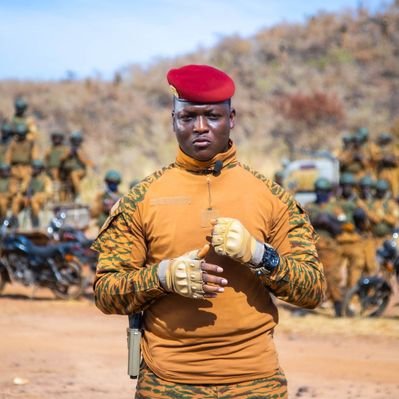
J’ai présidé, ce jour 30 octobre 2026, la cérémonie officielle d’ouverture de la 18e édition du Salon international de l’artisanat de Ouagadougou (SIAO). Je salue le talent et la créativité de nos artisans. Le SIAO met en lumière la richesse de nos savoir-faire et le potentiel de nos produits.
Ma conviction est que l’artisanat ne doit plus être considéré uniquement comme l’héritage de notre passé. Il doit devenir l’un des fondements de notre avenir industriel. C’est ainsi que nous transformerons notre patrimoine culturel en puissance économique, sans jamais lui faire perdre son âme.
Soutenons la transformation locale et le rayonnement de l’artisanat africain.
La Patrie ou la Mort, nous vaincrons. #SIAO #BurkinaFaso


African Guy retweeted

He was only 37 when they shot him 12 times. His crime was refusing Western aid, rejecting IMF debt, and telling Africans to stop being slaves. He proved we could feed ourselves.
They murdered him for it. Save this. Teach your children about the leader they erased from the history books. As long as we remember him, his revolution lives. 🇧🇫✊🏿
African Guy retweeted

Had the Kuomintang won, China would be ruled from Washington.
Its ports patrolled.
Its elections supervised.
Its economy opened like a carcass.
Mao did not just defeat an army.
He prevented a century of American ownership.
That is why they still hate him.
Not because of what he built.
But because of what he denied them.
African Guy retweeted
Why Africa Has "Electocracy," Not Democracy
@wmnjoya, associate professor in the Language and Performing Arts Department at Kenya's Daystar University, argues that Africans have no democracy, but a restirctive, Western-imposed system that handpicks African leaders based on who is best for Western interests regardless of any actual election outcomes.
According to her, this situation where box-checking exercises that suit the description of "elections" are held without any actual organic choice from the people, is not a democracy, but an "electocracy".
Why do Africans continue to vote in such a restrictive system? Drop us a comment.
Video credit: @officialorina
African Guy retweeted
They tell you to be afraid of these countries.
And I want to ask you, seriously, to sit with this:
Name the last country Iran invaded.
Name the last country Cuba destabilized through a coup.
Name the last population North Korea bombed into the Stone Age.
Name the last foreign president China abducted in a military raid.
Now do the same exercise for the country that told you to be afraid.
The fear is a product.
It is manufactured, distributed, and renewed on a regular cycle because fear justifies the budget.
And the budget justifies the bases.
And the bases justify the fear.
You are not afraid because these countries are "dangerous."
You are afraid because someone, very powerful, very expensive, needs you to be.
Follow the money.
Follow the bases.
Follow the bombs.
And then ask yourself one more time:
Who, in this picture, should actually be afraid of whom?