

Robotics and Neural Computation @CarnegieMellon. PhD student with @xaqlab and @aran_nayebi. Building a computational theory of animal autonomy.
Pittsburgh, PA
Joined February 2021
- Tweets34
- Following583
- Followers308
- Likes57




Reece Keller retweeted

“We have full confidence that Alpöge's proof of the Riemann Hypothesis is correct.” -- Lean community confirms the *biggest* achievement in AI for math!
However, two points are worth noting:
(1) This proof is 17M lines of code!!! It speaks to the genius of Riemann that he could show how the zeros of the zeta function govern the distribution of primes and formulate his hypothesis 167 years ago, with nothing but pen and paper.
(2) One of the main reasons proving GRH mattered so much was the prospect of a much deeper understanding of mathematics, perhaps even the discovery of new subfields. An AI-generated proof we cannot yet understand doesn’t, by itself, deliver that understanding. It may still take a while to extract the ideas that mathematicians can build on.

The Lean FRO and Mathlib Initiative have released a joint statement on the Lean verification of the Riemann Hypothesis.
On November 20, Levent Alpöge released a proof of the Riemann Hypothesis as a Lean library of 17 million lines of code. Over the past day, the Lean and Mathlib communities worked together to verify it. The statement certifies the proof as correct and describes how it meets all necessary verification criteria.
Congratulations to Levent on this achievement, and thank you to everyone in the community who contributed to the verification.
Full statement: leanprover-community.github.…

Reece Keller retweeted

“The authors compare their methods with Ramanujan; however, they do not use ‘dreams’ for their proof so therefore they are comparing to an untuned baseline.
I maintain my score of 1.” - ICLR 2027 Reviewer


Reece Keller retweeted
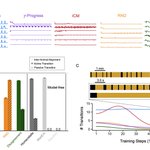
1/ Animals explore without rewards, tasks, or instructions. What computational objective drives that autonomy?
We trained virtual flies with intrinsic-motivation algorithms to see which best reproduce real fly behavior and brain activity.
Work with @rdkeller and @aran_nayebi !🧵
Reece Keller retweeted

Super excited to share that I'm co-founding Read/Write Labs for #NeuroAI applications to human brain health and human-aligned AI. We could not ask for a more wonderful team: prn.to/4yK9vqo

Reece Keller retweeted

Are virtual flies playing Beat Saber? SM64? Doom? No.
The new fly connectome is an incredible achievement! Less is going on in the sim videos than it seems. I'm stoked to see people engage with neuroscience though. My breakdown: neuroai.science/p/are-flies-…

Reece Keller retweeted

When I saw some of the work at CCN'26 from Martin's group about using NeuroAI to cure brain diseases, I was blown away! A really great opportunity & far more impactful than the unproductive debates in our field of explainability vs. prediction. Predictive models are super useful (AND allow us to explain things)!

Hiring postdocs @EPFL: please reach out and/or apply to the AI Center fellowship epfl.ch/research/funding/epf…. My #NeuroAI group is excited about testing and building models of brain and behavior, from sensory through language to cognition, and from healthy to dysfunction (treatment)!

Reece Keller retweeted

Mice perform active sensing to acquire visual info: check out our collaborative effort, which is our 1st in motor+vision!
Great to work with @AToliasLab Xaq and Cris - 💰by the Brain Initiative @NIH! Led by @celia_bqt & @sainsbury_tom
@CurrentBiology
cell.com/current-biology/ful…?
Reece Keller retweeted

1/4 @aran_nayebi and I have created a new mathematical Theory of Contravariance in NeuroAI. There are two high-impact concepts: weak-strong equivalence (WSE) and Zippering (ZIP) that shape how to think about NeuroAI going forward.
Reece Keller retweeted
Diffusion (or flow) makes for excellent policies, but training them with RL is notoriously hard: BPTT is unstable, RL over diffusion blows up the horizon. In our new paper, we show how we can optimize flow matching actors by using "one weird trick" -- "approximate" the Jacobian of the flow denoising process with the identity matrix. 👇

Reece Keller retweeted

Our new open-source book on the Principles and Practice of Deep Representation Learning (A Mathematical Theory of Memory) is now posted on the arXiv: arxiv.org/abs/2606.06624 I will offer a new graduate course this fall at the University of Hong Kong. Everything will be open sourced!

Reece Keller retweeted
Congrats to @KlemenKotar on this release. Physical world models are getting to the next level. You should really check out some of the amazing examples neuroailab.github.io/psi-web… Fine-grained control for e.g. bottle-cap turning and needle-threading ... amazing!
Reece Keller retweeted
Ok -- I've started a substack -- The Principle Investigator! My goal is communicating advanced takes on ideas in NeuroAI+. Here's the first substantive post: danyamins.substack.com/p/kol… Calculating the aesthetics of DNN models of the brain
Reece Keller retweeted
If you're attending @CosyneMeeting, come check out our NeuroAgents workshop on Tuesday March 17.
Speakers include: Omri Barak, Cristina Savin @lilwebian @rdkeller Caroline Haimerl @JonathanCKao @Ch0iHannah @xaqlab @srinituraga Yanan Sui @TrackingPlumes
More details below 👇

📣 Excited to announce the 2nd edition of our workshop
“Agent-Based Models in Neuroscience: Theory, Autonomy, Embodiment & Environment”
at @CosyneMeeting #CoSyNe2026!
🧠🤖🌍🪰🐟🐭💪🧘🏃
🗓️ March 17, 2026
📍 Cascais, Portugal
🔗 Speakers and schedule: neuro-agent-models.github.io
Reece Keller retweeted

Kids spend years playing with blocks, building spatial+arithmetic skills. Today, AI models just read.
While AI research often conflates reasoning with language models, block-building lets us study how embodied reasoning might emerge from exploration and trial-and-error learning.

Scalable learning mechanisms for agents that solve novel tasks via experience remain an open problem. We argue that a key reason is suitable benchmarks. Simply put, most current generation of interactive benchmarks lack diversity in the skills that could be learned from them.
Presenting BuilderBench, a benchmark to accelerate research in pre-training that centers learning from experience.
Website: rajghugare19.github.io/build…

Reece Keller retweeted
Here is our best thinking about how to make world models. I would apologize for it being a massive 40-page behemoth, but it's worth reading. arxiv.org/pdf/2509.09737


Reece Keller retweeted
Over the past 18 months my lab has been developing a new approach to visual world modeling. There will be a magnum opus that ties it all together out in the next couple of weeks. But for now there are some individual application papers that have poked out.
Reece Keller retweeted

Given the confusion around what RL does for reasoning in LLMs, @setlur_amrith & I wrote a new blog post on when RL simply sharpens the base model & when it discovers new reasoning strategies.
Learn how to measure discovery + methods to enable it ⬇️
tinyurl.com/rlshadis

Reece Keller retweeted

New paper: World models + Program synthesis by @topwasu
1. World modeling on-the-fly by synthesizing programs w/ 4000+ lines of code
2. Learns new environments from minutes of experience
3. Positive score on Montezuma's Revenge
4. Compositional generalization to new environments
topwasu.github.io/poe-world
[1/n]