

An independent think tank in Armenia that informs policymakers and the public about regional developments, fostering evidence-based research and collaboration.
Yerevan, Armenia
Joined March 2023
- Tweets608
- Following53
- Followers960
- Likes106






Pinned Tweet
Become a monthly supporter to help independent and non-partisan analysis on Armenia's security, foreign policy and democratic development.
rearmenia.com/en/fundraisers…

Deutsche Welle (DW) has published an article examining concerns over selective prosecution and freedom of expression in Armenia, featuring the findings of the Regional Center for Democracy and Security (RCDS) and comments by RCDS Director Tigran Grigoryan.
The article highlights RCDS's monitoring of online hate speech during the 2026 parliamentary election campaign. Our reports documented how pro-government bloggers and influential social media users used their platforms to target Nagorno-Karabakh Armenians with hostile rhetoric and derogatory language, while law enforcement largely refrained from pursuing criminal cases against those responsible.
Speaking to DW, Tigran Grigoryan also discussed the EU's response to developments in Armenia, arguing that Brussels has largely adopted a pragmatic, geopolitically driven approach. With Armenia increasingly viewed as the EU's primary partner in the South Caucasus, concerns over selective prosecution and democratic standards have received limited attention.
dw.com/en/armenias-selective…

Watch RCDS Director Tigran Grigoryan’s speech at the Delhi Defence Dialogue 2026, where he discusses Armenia–India defense cooperation and prospects for a deeper partnership.
youtube.com/watch?v=iBkWrFwJ…
RCDS Director Tigran Grigoryan participated as a speaker at the Delhi Defence Dialogue 2026, the flagship conference of the Manohar Parrikar Institute for Defence Studies and Analyses (MP-IDSA), one of India's leading defense think tanks, held in New Delhi on November 3–4.
In his remarks, titled “Armenia and India: Defense Cooperation and Prospects for Partnership,” Grigoryan discussed the evolution of bilateral defense cooperation, India's role in Armenia's defense modernization, and opportunities for further collaboration in defense technologies, joint production, and military research and development.
The conference was attended by India's Defence Minister Rajnath Singh, as well as senior military officials, government representatives, defense experts, and international delegates.
We thank MP-IDSA for the invitation and the opportunity to contribute to this important discussion.


In his latest CivilNet column, Tigran Grigoryan examines Prime Minister Pashinyan’s announcement on October 29 that he would soon make the parliamentary opposition an offer on the constitutional referendum that it would not be in a position to reject.
Grigoryan reads this as an attempt to turn the opposition’s rejection of constitutional changes into leverage. Pashinyan would seek assurances from Azerbaijan that the constitutional demand is its last precondition for the peace treaty, then use them to press the opposition, potentially through street protests, to back the new constitution.
Grigoryan considers the chances of success very low: Azerbaijan is unlikely to give such assurances, the opposition is unlikely to change its stance, and Pashinyan appears unable to mobilize enough supporters; as shown by is standoff with the Church.
civilnet.am/en/news/1015094

95% of the vote in some communities. Between 70% and 96% in others. Armenia’s ruling Civil Contract party faced little meaningful competition in several communities during the recent local elections.
In his latest #DemocracyWatch article, RCDS expert Hayk Khanumyan examines why challenging the ruling party at the local level has become increasingly difficult.
He points to regional poverty, economic dependence on public-sector employment, pressure on government critics, the use of administrative resources, and criminal prosecutions of opposition community leaders.
Khanumyan argues that these factors undermine genuine political competition and raise questions about whether election results can translate into actual local self-government.
civilnet.am/en/news/1015090?…

On October 26, the Regional Center for Democracy and Security (RCDS) presented its final report, Armenia’s Parliamentary Elections and Hate Speech Against Nagorno-Karabakh Refugees. The report was presented by Tigran Grigoryan, RCDS Director and co-author. The discussion brought together foreign diplomats, civil society representatives, and experts.
Tigran Grigoryan outlined the main hate speech narratives targeting Nagorno-Karabakh Armenians and the key actors involved in spreading them. He also addressed the public legitimization of hate speech and the inaction of law enforcement agencies, which contribute to a climate of impunity.
The speaker explained how such manifestations of hate speech hinder the civic and political integration of Nagorno-Karabakh Armenians in Armenia. The presentation concluded with recommendations for international partners and civil society aimed at countering and preventing hate speech.
The discussion concluded with an active question-and-answer session. The report is available in the comments section.
This discussion was organized with the financial support of the European Union and the German Marshall Fund of the United States – Transatlantic Foundation (GMF TF). Its contents are the sole responsibility of the Regional Center for Democracy and Security and do not necessarily reflect the views of the European Union or the GMF TF.


RCDS Director Tigran Grigoryan participated in a study visit of an Armenian think tank delegation to Brussels on October 21–23, 2026, within the framework of the EU-funded project “Strengthening Armenian Think Tanks for Enhanced EU Engagement and Regional Cooperation.”
During the visit, he met with representatives of leading European think tanks, including the European Policy Centre (EPC), the Centre for European Policy Studies (CEPS), the Egmont Institute, Bruegel, and IRSEM Europe, as well as representatives of the European Commission, the European Parliament, and the European External Action Service (EEAS).
The discussions focused on EU-Armenia relations, regional security, foreign policy, strategic communications, and broader geopolitical developments. The visit provided an opportunity to exchange perspectives with European policy experts and institutional representatives and strengthen dialogue and cooperation between Armenian and European think tanks.

On October 22, the Regional Center for Democracy and Security (RCDS) held a discussion titled “Armenia’s Energy Future: Prospects and Scenarios.” The discussion featured Hakob Vardanyan, former Deputy Minister of Territorial Administration and Infrastructure of Armenia, and was moderated by RCDS analyst Hayk Khanumyan.
The discussion explored the challenges and possible future developments surrounding Russian gas supplies, potential policy responses under different scenarios, and options for building a new nuclear power plant, including the choice of technology and operating model. Participants also examined the opportunities and obstacles to expanding solar energy, the need to increase energy storage capacity, the impact of energy market liberalization on the power system, and the technical and policy challenges of synchronizing Armenia’s energy infrastructure with that of neighboring countries.
The discussion concluded with a question-and-answer session, during which Vardanyan responded to participants’ questions.


How much could Russian gas cost Armenia if Moscow changes the current pricing arrangements?
In a new analysis for RCDS, Hakob Vardanyan, former Deputy Minister of Territorial Administration and Infrastructure overseeing the energy sector, examines the agreements underpinning Armenia’s current gas price, outlines five possible scenarios, and assesses potential alternatives to Russian supplies.
The analysis argues that European exchange-traded prices should not be treated as the default benchmark for Armenia. It also distinguishes between the economic impact of higher prices and the more serious challenge of a complete disruption of supplies.
Read the full article: rcds.am/armenia-and-russian-…

The Regional Center for Democracy and Security (RCDS) has published its final report examining hate speech targeting Nagorno-Karabakh refugees during Armenia’s June 2026 parliamentary elections and the period immediately following them.
Based on four months of monitoring, the report identifies three recurring narratives used to stigmatize and marginalize refugees, documents the role of political figures, pro-government bloggers, and media outlets in spreading hate speech, and examines how institutional inaction and official legitimization contribute to a culture of impunity.
It concludes with recommendations for Armenia’s international partners and civil society to address hate speech and support the civic and political integration of Nagorno-Karabakh refugees.
The report was produced with the financial support of the European Union and the German Marshall Fund of the United States – Transatlantic Foundation (GMF TF). Its contents are the sole responsibility of the Regional Center for Democracy and Security and do not necessarily reflect the views of the European Union or the GMF TF.
rcds.am/armenias-parliamenta…

Prime Minister Nikol Pashinyan’s remarks about the woman injured in the Shaki shooting, suggesting that she should have waited for the police rather than confronting an armed Azerbaijani soldier in her home, have sparked public controversy.
In his latest op-ed for CivilNet, RCDS Director Tigran Grigoryan argues that victim-blaming has become a key pillar of the Armenian government’s official rhetoric. From security failures to the forced displacement of Nagorno-Karabakh Armenians, he examines how shifting responsibility onto those affected by crises allows the government to deflect scrutiny of its own decisions, deepen societal divisions, and undermine public trust in state institutions.
Read the full op-ed:
civilnet.am/en/news/1014714?…

#DemocracyWatch | Criminalizing public speech
The criminal prosecution of public speech has remained an important concern in Armenia even after the decriminalization of “grave insult” in 2022.
The recent cases involving Artur Danielyan and Vahram Sahakyan once again raise questions about the use and selective application of criminal law in response to statements made on social media.
The issue is broader than the individuals involved. Freedom of expression protects not only speech that is widely accepted, but also speech that may offend, shock, or disturb. At the same time, RCDS monitoring has documented serious instances of hate speech targeting Nagorno-Karabakh refugees for which no criminal proceedings have been initiated.
The question, therefore, is not whether offensive or hateful speech should be addressed. It is whether criminal law is being applied consistently, proportionately, and without political selectivity.
It is also important to distinguish opposition to the use of unlawful or selective legal tools from support for the individuals being prosecuted or their public activities. Criticizing their statements or past conduct does not justify turning a blind eye to the misuse or selective application of criminal law.
civilnet.am/en/news/1014642

In his article for @MieroszewskiPL, RCDS security analyst Eduard Arakelyan examines the debate over the future of Russia’s 102nd Military Base in Gyumri and what it reveals about the changing Armenian-Russian relationship.
The article looks at how Armenia’s security environment has changed since the base was established, the declining scope of Russia’s military presence in Armenia, and what the future of the base could mean for Russia’s role in the South Caucasus.
mieroszewski.pl/en/blog/rosy…
Read the English version on our website: rcds.am/the-future-of-russia…

41
A new article in Jungle World, published as part of a special issue on Armenia, examines concerns over the country’s rule of law, democratic institutions, and the concentration of political power.
RCDS Director Tigran Grigoryan is quoted on the conduct of the June parliamentary elections, describing the government’s actions as “anti-democratic intervention” that influenced the outcome.
Grigoryan highlights the failure to hold repeat voting at three polling stations where election results were annulled over irregularities. While the annulment itself was provided for under electoral law, the required repeat vote did not take place. The missing votes could have affected the final result, including whether Prosperous Armenia crossed the 4 percent threshold needed to enter parliament.
jungle.world/artikel/2026/40…

2
95
A new Foreign Policy article examines the growing tensions between the Armenian government and Nagorno-Karabakh Armenians, including the increasingly hostile rhetoric directed at the displaced populations.
RCDS Director Tigran Grigoryan told Foreign Policy that government hate speech against Nagorno-Karabakh Armenians “intensified exponentially” during the 2026 election campaign.
He described the government’s scapegoating of Nagorno-Karabakh Armenians as “systematic in nature,” arguing that repeated narratives against refugees are being deployed during political crises to advance the government’s political interests.
“They are using repeated, well-tested narratives against refugees that are being used each time there is a political crisis,” Grigoryan said.
The article also examines the broader political consequences of the government’s approach to the Nagorno-Karabakh issue and the deteriorating position of displaced Armenians in Armenia.
foreignpolicy.com/2026/10/02…

The restructuring of Armenia’s system of state strategies could lead to a broader shift in the country’s approach to strategic governance, from setting priorities to financing, implementation, and monitoring of results.
In a new RCDS analysis, Hayk Khanumyan examines the emerging system of six major strategies in Armenia and looks at its key opportunities and risks.
The article also examines the Czech experience to show why consolidating strategic documents alone is not enough to overcome fragmented strategic governance.
The key question remains: will the new system be able to link state priorities to the budget, accountability, measurable results, and monitoring?
This article was prepared by the Regional Center for Democracy and Security (RCDS) with the financial support of the European Union within the framework of the “Sustainable, Impactful and Inclusive Civil Society” (SIICS) Project. Its content is the sole responsibility of RCDS and does not necessarily reflect the views of the European Union.
The “Sustainable, Impactful and Inclusive Civil Society” (SIICS) Project is implemented by the Democracy Development Foundation (DDF), People in Need, and the Boon Scientific and Cultural Foundation. It aims to strengthen the role of civil society in Armenia as a resilient, independent, and trusted actor in democratic governance, policy development, and community empowerment.
rcds.am/consolidating-state-…

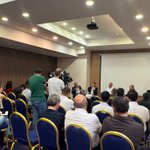
On September 23, the Regional Center for Democracy and Security (RCDS) hosted a discussion on deaths in Armenia’s Armed Forces during peacetime.
The discussion featured Artur Sakunts, President of the Helsinki Citizens’ Assembly Vanadzor Office; Vilen Gabrielyan, Chair of the National Assembly Standing Committee on Defense and Security Affairs; and Colonel (Ret.) Grigory Sahakyan. The discussion was moderated by RCDS expert Hayk Khanumyan.
The discussion addressed a number of systemic issues within the Armed Forces, including shortages of personnel and professional training at the junior command level, the persistent practice of failing to report problems in military units to higher command, inequalities within the conscription system, and problematic approaches to disciplinary measures against service members.
Colonel (Ret.) Grigory Sahakyan emphasized the need for a systemic assessment of peacetime deaths and suicides in the Armed Forces, taking into account the specific circumstances of each case.
Vilen Gabrielyan stressed the importance of improving mechanisms for transmitting accurate and unfiltered information about problems within the Armed Forces. He also highlighted the need for greater dialogue among state institutions, experts, civil society organizations, and reserve officers.
Artur Sakunts addressed statistics on deaths in the Armed Forces and differences in how such cases are classified, and provided details on the investigation of several cases.
The speakers also responded to questions and comments from participants.


Watch the full recording of the discussion (in Armenian): youtube.com/watch?v=tNdSYw-z…
1
81
What does it actually take to build a professional army?
In a new in-depth analysis, RCDS military analyst Eduard Arakelyan examines Armenia’s Armed Forces Transformation Concept and the challenges surrounding the transition to a professional army.
The analysis argues that professionalization cannot be reduced to replacing conscripts with contract soldiers. Its success will depend on combat training, the quality of the reserve, the development of the NCO corps, Mission Command, and the effective integration of women into the armed forces.
Drawing on the experiences of Finland, Ukraine, and Israel, the article identifies key risks in Armenia’s current transition and proposes concrete steps, including a roadmap with measurable indicators, more intensive combat and reserve training, pilot units for Mission Command, and a more rational approach to expanding the military personnel pool.
This article was prepared by the Regional Center for Democracy and Security (RCDS) with the financial support of the European Union within the framework of the “Sustainable, Impactful and Inclusive Civil Society” (SIICS) Project. Its content is the sole responsibility of RCDS and does not necessarily reflect the views of the European Union.
The “Sustainable, Impactful and Inclusive Civil Society” (SIICS) Project is implemented by the Democracy Development Foundation (DDF), People in Need, and the Boon Scientific and Cultural Foundation. It aims to strengthen the role of civil society in Armenia as a resilient, independent, and trusted actor in democratic governance, policy development, and community empowerment.
rcds.am/transition-to-a-prof…
