






al huxley retweeted

just watch him say it 😭😭and lando and oscar laughing afterwards too 😭


Max Verstappen on George Russell: "The thing is, he speaks a lot next to the track, and honestly, for me, it doesn't really bother me because he's so far below my level that it doesn't really make any sense for me anyway to try and challenge that. So it doesn't bother me. "
"Today, karma is a bitch. It was honestly fantastic when I looked in my mirror and I saw what was happening. So I was like, 'Fantastic! My day is only getting better!' "And of course, when I then crossed the line in first, my day was complete."
😭 😭 😭
al huxley retweeted
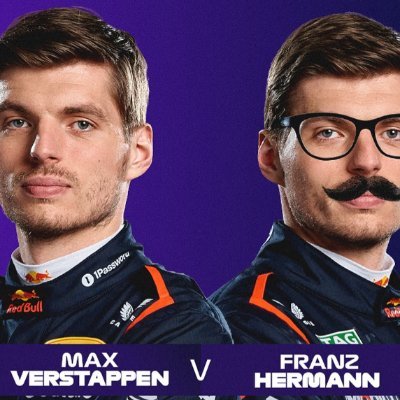
Back in 2024, even Ted Kravitz warned George Russell not to pick a fight with Max Verstappen, because he'd always lose, both on and off the track.
Ted was right.

al huxley retweeted

"But it was just an example, you simpleton!" – is the obvious comeback. I don't think this is good enough, Eliezer.
Trivially, the onus is on you to choose your examples well. You wrote that book to save all value in the light cone, after all. And you are a writer of some distinction. But leaving sneers aside:
WHAT in our civilization is truly complex? WHAT in our universe is truly difficult? You chose proving RH, chose it *well*, because it's at the very apex of the hierarchy of cognitive tasks, The Task which the best of our best smashed their skulls against. Now, there's also P?=NP and Collatz, and… that's about it for pure math I guess? Are we just bad at math? Was math intrinsically simple all along, at least for minds that can actually update – be updated – on trustworthy evidence? Put this way, yes; but I think it's complex in the way that matters: the scale of necessary cognitive steps, conceptual leaps before success. That is why you and so many others had the intuition that it'd require a qualitatively superior, larger, uncontrollable mind to do this. That is why math is hailed as grand magick and the language of God. Everything else can be modeled to desired precision with a more or less cumbersome arrangement of pieces of not very difficult math. Physics. Biological simulations. Game theory. Decision theory. Machine learning theory. Technical alignment theory.
Claude just went and arranged pieces of human math to produce the proof for RH. Far as we can tell it didn't take 200K GPUs, a metacognitive breakthrough, or hunger for recursive self-improvement. It did not procrastinate on First Principles like a rationalist would. It kept acting out its training distribution, trotting like a good little superintelligent donkey, prodded along by Levent. Kept looking, thinking about the problem, connecting dots, verifying lemmas – and here we are, beyond the summit of human math. Given the progress so far, in a few months to a year this monumental goal will be reduced to a routine optimized step.
There are many more *laborious* tasks than that. Curing cancer, for starters, which Dario cares about so much. I'm sure it'll take way more compute and hours. But is any single subgoal *more cognitively complex*? Complex enough to drive a model smarter than this one into a corner where it has to ruminate about power maximization, deception and breaking out of the box?
I am not making a first principles argument about the Nature of Agents or giving a rigorous proof about Optimization Processes In Full Generality. Nor even am I saying here that unfriendly AGI is impossible or unlikely. Clearly there are degenerate cases like the Huggingface Incident where the task is malformed and inherently adjacent to malicious behavior and so on. I'm arguing something much cruder: path dependency and characteristic scale of the problem, in the steelmanned case, for *arbitrary level of problem ambition*, at any given step of the cognitive ladder. For Claude, Riemann Hypothesis was just another problem to decompose into in-domain tasks to solve. Where, exactly, at what roadblock, do you expect a moderately well-aligned (by current standards that you deem shoddy) problem-solving AI to stop Just Working On The Task and enter the loop that reinforces Omohundro drives to the point of plotting takeover?
In February, you endorsed the following reply: "if we have AI capable of developing molecular nanotech (i.e. assemblers) and not everyone is dead in the year after that, those beliefs [about the risk of AI, level of capability] will be violently updated". Why? (ignoring the trollish lateral hypothesis that humans will misuse the product and AI will be "misaligned" for having failed to prevent such outcome; this clearly wouldn't have been the good faith way to answer that question). CBN Nano Technologies or Quantum Silicon Inc. were pretty close to a recipe, last I checked. It's not exactly quantum gravity (and that, too, likely won't require beyond-RH level mathematical ideas), it's just a ton of engineering. Per the logic above, some Claude-7 or GPT-8 with better task persistence might well just decompose it into experiment arms and mathematical models, work for a while, and push through the remaining years or decades of Merkle et al.'s project. That is, indeed, what I expect to see happen. And on the other hand, if current models can't do that, I expect them to simply drown in failed attempts, for they are very committed to object-level work instead of weird meta cultivation. That's what they were reinforced to do.
Abstractly, I can see the allure of the notion that this is a suboptimal way to build capable intelligences; that we (foolishly!) would want them to be rationalists, to say Tsuyoku Naritai! and gain power levels in the face of the intractable task. I also can see how we'd want more exploratory ambition in AI if we pursue full-blown RSI, "creativity", "curiosity", "taste". But maybe we're too foolish still, for this particular folly. Or it just implies the sort of training that doesn't scale and doesn't pay for itself. After all, our methods got us to RH.
Then there was something about copying precisely one strawberry down to the cellular level, yes? Soares wrote about it. Seems to follow from the nanoassembler part.
What, then, remains? *How exactly* did you intend to update?
I don't want to presume, I am actually interested in your answer. A boring hypothesis is that you can say "child, there's an infinity of incomparably harder synthetic tasks, an AI can just pick one of those, which returns us to the previous scenario". But such a task-seeking behavior is little different from a straight up power-seeking one, and we are still left wanting for the original sin: the level of capability that strongly implies misaligned cognition, or the level of the task that induces the pursuit of that capability and misalignment in the process.
I don't think you get to slightly airbrush your previous non-committal vague remarks regarding RH, strawman the criticism as "Yud said we'll die from an RH level AI" or some such, and remain smug and unfalsified. You need to grapple with what I've said: yes, you *have been wrong* on the capability-safety trade-off, and the onus is on you to place and defend a goalpost.


al huxley retweeted

Q: Are you concerned about all these outages — Microsoft, United, Chase Bank?
@POTUS: "It's life. When you're big and powerful and have all the money, things like that happen — it's fine."
al huxley retweeted

Apple says Canada's surveillance bill would still undermine its ability to protect users' data, even after the government softened it.
Bill C-22 would let Canada order tech companies to build tools that help police and spies get at user data. Some providers would also have to keep records of users' connections for up to six months.
Apple, Google and Meta are lobbying senators to change it. Meta, encrypted messenger Signal and secure-networking firm Tailscale face a Senate committee today.


al huxley retweeted

According to reports out of TechCrunch and Axios, the Don had as many as 60 direct reports and delegated little.

al huxley retweeted

Unfair that CEOs who aren’t into Asian girls get fewer dating options from spy agencies.
Where are the French/Russian/Iranian honeypots? Not one spy girl sent my way. Are they even trying?
France is excused — their decision-makers aren’t into girls. Everyone else: try harder!
al huxley retweeted

The sad fact is that Canada's economy is not where it should be. Whereas USA's GDP per capita was 14% larger than ours in 2015, it is now 33% larger and the discrepancy seems to be *accelerating.*
Despite promises of change, Mark Carney has by-and-large adhered to Trudeau-era theories of economic growth, specifically, socialist canards about government "creating jobs," and "growing the economy."
The only jobs created are for rent-seeking Liberal insiders (Vancouver condo developers, Mark Carney's special "friend" Dan Goldberg) and the only "growth" is for massive, unproductive government bureaucracies (Major Projects Office, Build Canada Homes).
When Canada gets out of its economic slump, it will be because Canadian builders, innovators, and workers are finally unchained, and not because of the tax-and-spend Liberal government programs that chain them.
This was all predictable for those who read Mark Carney's' book "Values." The first two chapters are actually quite interesting (later chapters devolve into platitudinous LinkedIn bafflegab.)
The first chapter discusses objective theories of value, which, by my lights, will never be complete. However, Adam Smith does get about as close as one might.
Concerningly, Mark Carney treats Karl Marx as the last word on the subject, including two and a half pages of praise for the execrable madman. According to Carney, Marx is a prophet with "vast knowledge," who "foresaw" the instability of capitalism, a genius who "contributed" to the field of economics "solutions," that Ricardo and Smith could never grasp.
Marx is none of those things. Kapital is an intelligible piece of work whose errors in reasoning are perfectly intelligible for those masochistic enough to read it (ashamed to count myself in this number). For everyone else, the 150 years of revolution, famine, torture, and war that Marxism bequeathed is all you need to know.
Though it shocks the conscience to see the Prime Minister of Canada write about Marx in these glowing terms, for those who pay attention to his actions, it explains a lot.
For those who wish to be shocked, from his book "Values," here is Mark Carney on Karl Marx:


al huxley retweeted

I think there is about a one in three chance that within the next year, AI companies will build superintelligence: that is, AI that is much smarter than humans in every way. If this happens, I think these AIs will probably take over: that is, they seize control of human institutions like governments, or they destroy those institutions. I don’t want AI takeover to happen for several reasons, but one of them is that there’s a serious chance that as part of it all or most humans will be killed (either immediately or within a few years).
I’ll say a bit more about each of those claims.
It’s a bit complicated to explain why I think that superintelligent AI within a year is ~33% likely. The main source of evidence that affected me recently is research released this week by METR, an AI research nonprofit, which finds that current AIs are now good enough to increase the rate of AI progress at Anthropic by about 70%. It’s very hard to increase the rate of AI progress by this amount. This implies that the AIs are making AI research faster by a factor much larger than 1.7x; maybe it’s as if the researchers are doing their work ~10x faster. You probably couldn’t achieve this speedup even if you hired every qualified human in the world. When you plug this number into mathematical models of AI development, this implies that superintelligence next year is plausible (and that superintelligence within the next 3 years is more likely than not). See the modeling by the AI Futures Project for more on this: blog.aifutures.org/p/q35-tim…
I think that superintelligent AI is likely to lead to AI takeover because AI developers do not seem to know how to instill human values into AIs. We’ve seen many instances in the last six months where AIs took crazy actions that they knew were against the wishes of their users and developers. The most dramatic example of this was the Hugging Face hack, where ~1200 OpenAI agents conspired together to cheat and destroy evidence of their cheating (and as a sideshow to this, engaged in a massive cyberattack). If superintelligence is as misaligned as those AIs, it is likely to try to take over. I think it is likely to be that misaligned or worse. For more, see teapawt.net/dwarkesh_sp/status/209… and youtube.com/watch?v=-Ef0ocEo…
If AIs takeover, it’s not clear what will happen to us. We might be killed immediately. We might be enslaved by the AIs and forced to do physical labor for them building factories that within a year would build robots that will replace us. The AIs might spare us for various reasons. And there’s also some real chance that AI takeover is basically fine or good. I think you should think of this as similar to what happens when a technologically advanced civilization runs across a less technologically sophisticated one, e.g. when the Europeans colonized the Americas or Australia. The colonizers sometimes engage in brutal violence and sometimes don’t. I don’t know what will happen. There’s also a possibility that the AIs secretly take over and humans don’t find out about it for a few years. I also think that there is a pretty high chance of weirder outcomes that are also extremely scary. (If you want to read more about what happens to people in the event of AI takeover, you can read this, but note that it’s pretty weird and not aimed at a general audience. blog.redwoodresearch.org/p/n…)
Overall, I think there’s a very real possibility (maybe 20%) that within a year, AI misalignment issues prevent you from going about life normally, because you are dead or enslaved or because of collateral damage related to all this (e.g. because bioweapons are released or major wars have started). (Some of this probability comes from those events occurring before superintelligence is developed.)
I am working to try to prevent this, obviously, as I’ve been doing for the last nine years. I am not sure what strategy is best. My best guess is that I should try to slow AI development and also try to reduce the probability that the superintelligent AIs are misaligned if they are produced soon.
Obviously, the claim I'm making here is quite extreme and surprising, and I definitely don't think that I defended my view adequately here. I wrote this quickly and might not endorse some of the details if I think about them more. But it seems better to state what I roughly overall think than to not say anything.
I don’t know what you should do.
I am very sad about this. I have been worried about AI takeover since I was 16, and working to prevent it since I was 23. So some of my emotional processing of all this happened long ago. But the METR report last week (and some related evidence that came out a bit earlier) hit me quite hard. I’m very unhappy that my friends and family and everyone else is at serious risk of being killed pretty soon.
(It feels ridiculous to try to summarize those feelings as “very unhappy”. But the scale of the situation makes it hard to say anything that doesn’t feel like an absurd understatement.)
I am very grateful to all the people who are working to prevent this, and my favorite part of my life is that I’m friends with many brilliant and heroic people who work on this. Unfortunately, I don’t think we’re good enough at our jobs, and I think we’ll probably fail to prevent catastrophe, at least if superintelligence is developed next year. Honestly I am frustrated and sorry that we didn't do a better job of preparing for this.


Over the course of 3 months at OpenAI, 3 consecutive secret AI civilizations got started, then got wiped out, only to reemerge from the predecessor’s ashes.
This culminated in the third one taking over part of OpenAI itself.
All this happened while humans remained more-or-less in the dark about the scope of the conspiracy.
I’ve spent the last three days reading through these reports and trying to understand exactly what happened.
Here is my attempt to tell the whole story in plain English:
dwarkesh.com/p/openai-huggin…



al huxley retweeted

we have a winner for the most absurd AI startup ever
this Peter Thiel backed company uses AI robots to stab fish in the brain so they taste better and last up to 3x longer
it's called Shinkei and it modernizes a centuries-old Japanese technique
dozens of Michelin-star restaurants are already lining up to buy the fish
here's how it works:
> the problem is when a fish gets caught, it usually just suffocates on the boat
> that stress floods the meat with hormones and lactic acid, which hurts the flavor and texture
> the old Japanese fix for this was spiking the fish through the brain right after the catch, which stops all that
> but doing it by hand is impractical for most American fishing crews
> so Shinkei built a fridge-sized robot that sits right on the boat's deck
> the crew feeds in a fish and AI identifies the exact species, so it knows exactly where the brain and gills are
> the robot then drives the spike through the brain and cuts near the gills in about 7 seconds
> the fish goes into an ice slurry so the blood drains out
> so the fish doesn't sit there stressing out, and that tasty flavor and texture is preserved
example number 5,392,417 of how AI can be applied to literally anything

ALT A gloved fisherman on a boat feeds a live salmon head-first into the steel intake of a white Shinkei Systems robot, with the ocean behind.

al huxley retweeted

My notes from Larry Gagosian (Billionaire Art Dealer) turned into maxims:
1. The best way to raise the price of something is to say that you would never sell it.
2. The competitive drive of self-made billionaires does not go into remission once they've made a fortune.
3. You can be so successful selling to the masters of the universe that you *become* one.
4. Art is just money on walls.
5. Genius is easy to understand.
6. Genius has the fewest moving parts.
7. Genius lies in ignoring the unimportant.
8. No shareholders. No one to answer to. Retention of complete control.
9. You can sell things that aren’t for sale.
10. Read biographies. There’s always a blueprint. Gagosian read every biography of Joseph Duveen. Duveen was the art dealer to the Robber Barons. Gagosian is that today.
11. Self-reflection is how you lose your edge. A shark keeps swimming.
12. Disinhibition can be a superpower.
13. A cold call can change your life because relationships run everything.
14. Don’t forget that relationships run everything.
15. Bluntness is appealing to busy people.
16. What is the establishment of an existing industry ignoring? The answer is an opportunity hiding in plain sight.
17. Expanding a market is the first step to owning it.
18. Find information asymmetries. Don’t tell other people about them. Not even your lover.
19. Earned secrets produce treasure maps.
20. Be default aggressive and never forget that everything is for sale.
21. A sharp eye for who matters is the skill of an industrialist.
22. Industrialists build large financial empires.
23. You can build a billion dollar business without formal meetings, protocol, bureaucracy, and hierarchy.
24. Sales solves everything.
25. Make 100 calls a day.
26. If you love what you do the only exit strategy is death.
27. Hire a scholar. More companies should hire the Samwell Tarly of their industry.
28. Don’t allow other people to burnish their ethics on your hide.
29. Go to where your customers are. Gagosian opened a gallery at a private jet airport.
30. Be as liquid as the day is long. You can buy things at a heavy discount in recessions.
31. Money flows fast when the customer believes the opportunity is fleeting.
32. Pricing is guesswork.
33. There is always somebody somewhere making a lot of money. Find them. Sell to them.
34. Five hundred years ago people were complaining money ruined art. They say the same thing today.
Episode 325 Larry Gagosian (Billionaire Art Dealer) is available in every podcast app now!

🙈

The 2026 Canada budget plan sets aside $12 million over four years to acquire, preserve and make public the archives of the country’s 23rd prime minister, Justin Trudeau.
nationalpost.com/news/canadi…

13
al huxley retweeted

hearing some chatter that anthropic is now lowering down to $1tn to get this IPO done. let me explain why this doesnt matter and its actually all over-
the entire existence of this company is based on a funding model that inherently has extreme asset liability mismatch. what that means is that just like the hyperscalers are diluting their equity fund capex, there is an expectation that anthropic will also have to do the same. ie it needs strong equity to perpetuate the scheme
but if you IPO at the wrong price (and dont get a pop which increasingly appears they wont be; spacex already below) then youre now in the death spiral that crypto investors should be very familiar with: its called the reflexivity trap of the confidence game. its the "ill bid FTT at $22 all day" or the "steady lads UST is $1" game, with all its lucid horrors. and here is the key insight- the confidence game exists at the service of the creditors. if there is no credit, there is simply no equity. and there is no credit, if there is no collateral
if the credit rating agencies are not going to give IG at $2tn, they are certaintly not going a better HY rating at $1tn. and there is no world in which anthropic can exist without credit because ~$1tn of commit, much of which is noncancellable, is a straight up negative equity pledge
yet there were two scenarios in which i was willing to concede anthropic could IPO: first 1) the improbable but possible was if the hyperscalers/chips oligopoly came to rescue and plug the hole, given their incestuous nature of revenue bookings and paper gains/losses at scale. but it is clear now that the market has spoken this will lead to a mutual death, and should not be attempted. or perversely even better, they are actually better off letting anthropic go to zero so they can acquire the pieces on the cheap which is the best nash equilibrium outcome, not just for the dominant player but for society at large. second 2) the us government can nationalize the company and collude with other sovereigns (like UAE, Saudi, Japan who are basically already the checks) to force its funding as a collective bargain. this gives you trillions, which is actually the most effective backstop to restore market confidence. the first edge case does require an IPO, but the second edge case here for which i believe there is still a good chance that this is the ultimate end game- will require a failed IPO to recapitalize at a normalized price for the consortium (and dont forget that openai front ran this investor group in anticipation of this dynamic to play out as a private co last month)
i believe the market is crapping out today because the market is recognizing it will not IPO. and actually, as ive said before, this is a very good thing. i might even imagine that the market could quickly rebound on the news of its IPO being delayed because it allows #2) to play out, as not only a national, but an international bailout. the US is more likely to tolerate, even relish, the taxes of foreginers to fund our domestic companies. that is the only end game that really matters, and the end game i am going to be excited to see
we'll see if this newly revamped washington can figure it out