

Science & Tech @ConversationUK Previously: Science Editor, BBC News Website. Also: film, art, history, sport. Views are mine.
Joined October 2011
- Tweets6.9K
- Following5.6K
- Followers17.3K
- Likes8.4K




Paul Rincon retweeted

Only one chance in this lifetime…
Like watching sunset at the beach from the most foreign seat in the cosmos, I couldn’t resist a cell phone video of Earthset. You can hear the shutter on the Nikon as @Astro_Christina is hammering away on 3-shot brackets and capturing those exceptional Earthset photos through the 400mm lens. @AstroVicGlover was in window 3 watching with @Astro_Jeremy next to him.
I could barely see the Moon through the docking hatch window but the iPhone was the perfect size to catch the view…this is uncropped, uncut with 8x zoom which is quite comparable to the view of the human eye. Enjoy.
Paul Rincon retweeted

I've been enthralled by the voyage and crew of #ArtemisII - I've written an article for @ConversationUK on the achievements of the mission and the broader human context:
theconversation.com/as-nasas…

Why has it taken so long to return to the Moon? Great read by @DVicinanza ahead of the Artemis II launch theconversation.com/why-has-…

Somebody was going to try this sooner or later: using AI to recreate the lost scenes from Orson Welles’ masterpiece, The Magnificent Ambersons

In 1942, a studio cut 43 minutes from an Orson Welles masterpiece. Can A.I. resurrect this lost classic? newyorkermag.visitlink.me/FY…

Mixed responses from audience previews led studio RKO to wrest the film from Welles. They slashed 43 minutes from the film and gave it a happy ending.
The excised footage was supposedly destroyed, although @lostprintmovie details a search for the missing reels - including in Brazil. In 1942, Welles travelled to the country to make his next feature. The Ambersons footage was shipped there so he could finish editing.
Robert Redford: ten great films from a brilliant career
theconversation.com/robert-r…

Paul Rincon retweeted

#BlueGhost got her first diamond ring! Captured at our landing site in the Moon’s Mare Crisium around 3:30 am CDT, the photo shows the sun about to emerge from totality behind Earth. Hope to have more shots to share soon! #BGM1

Congrats Firefly Aerospace. It’s Blue Ghost 1 becomes the second commercial lander to touch down softly on the Moon spacenews.com/fireflys-blue-…

Paul Rincon retweeted

Intuitive Machines’ lander is on its way to the Moon after Falcon 9 successfully deployed Athena into a lunar transfer orbit. Not a bad view!
Best of luck @Int_Machines, @Astroforge, @NASAJPL’s Lunar Trailblazer, and @EpicAerospace's Chimera GEO 1 on the remainder of your missions!
Soon, this will be the view on our way to Mars. It’s so beautiful


The sample of soil delivered to Earth from the asteroid Bennu contains some of the ingredients for biology, such as amino acids (building blocks of proteins), nucleobases, that make up DNA and RNA, along with evidence of salt water nasa.gov/news-release/nasas-…

Paul Rincon retweeted

Last night, @blueorigin's New Glenn rocket reached orbit for the first time. Its launch was powered by seven BE-4 engines, which we described in this 2019 feature article: spectrum.ieee.org/blue-origi…


Paul Rincon retweeted
Look at that view! Blue Ghost is now separated from the launch vehicle and our road trip to the Moon has officially begun! Stay tuned as we look to acquire signal to the lander within the next 30 minutes. #BGM1

Paul Rincon retweeted

There it goes: our post-holiday delivery aboard Blue Ghost begins its journey to the Moon!
In addition to providing information about the Moon, the data these instruments will capture could help us on Earth by providing insights into how space weather impacts our planet.
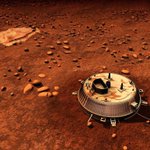
20 years ago today, the Huygens spacecraft touched down on Saturn’s moon Titan - the most distant landing by a human-built craft. I was reporting on it from ESA’s control centre in Darmstadt. Huygens sent data and images during a 2 hr 27 min descent through Titan’s atmosphere

ALT An artist's concept of the Huygens probe sitting on Titan. ESA / C. Carreau
The mission shed valuable light on a fascinating world with its own seasonal cycle, where wind and rain shape the surface to form channels, seas, dunes and shorelines. This article by me from 2017 tells the story of Huygens and the Cassini orbiter bbc.co.uk/news/resources/idt…

ALT Titan. Credit: NASA/JPL/University of Arizona/University of Idaho
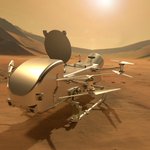
NASA will build on the findings, sending a rotorcraft to Titan this decade. It will explore a variety of locations, studying chemical processes on the moon, which is thought to be similar in some ways to the very early Earth science.nasa.gov/mission/dra…

ALT Credit: NASA/Johns Hopkins APL/Steve Gribben