

squeezing water out of stone
Joined January 2017
- Tweets2.2K
- Following748
- Followers784
- Likes3.9K






rishi retweeted

Go try ZONOS3-Mini out on SGL!

Zonos3-Mini from @ZyphraAI runs on SGLang-Omni on day 0!
It’s an 800M MoE voice-cloning TTS model with 80M params active per token. On one H100, first audio streams back in 57 ms.
Serve it today with SGLang-Omni: sgl-project.github.io/sglang…

rishi retweeted

At the moment H-Net seems to still scale worse than BPE as the compute scale increases from these small-scale experiments. The scaling laws crossover will happen at ~4e24 flops, well within modern pretraining budgets.
A scaling ladder comparison would still have likely rejected such treatment. From using simple fitting of L = E + A·C^(−α) using data from the blog, BPE has a better exponent α at 0.1366 compared to H-Net's 0.1338. If we plot out the compute multipliers needed for baseline to match, you can see trend more clearly that the H-Net's lead shrinks (though with high uncertainty given the few data points).
The effect is likely from either of: 1/ the flops of the BPE baseline get dominated by the last layer compute due to large vocab size; 2/ suboptimal vocab size for the BPE baseline ladder. It's a well-known effect that larger models scale better with smaller vocab.
Nonetheless, H-Net is definitely worth more research!


I've always believed that intelligence should come from simple, general building blocks that learn their own abstractions directly from raw data; in other words, the bitter lesson. I think we're finally seeing a real step towards AI that can learn from all data.
Language modeling on raw bytes is a microcosm of this ideal, and to me it's a central problem in AI: if we can't build LLMs that learn end-to-end from bytes, how will we handle the rest of the world's data that we understand even less?
Last year we introduced hierarchical networks (H-Nets) as a first step. Our new version finds up to 3-5x efficiency gains in controlled scaling law experiments, and at larger scale matches an open-source model trained on 11T tokens with ~10x less data and compute. The posts below walk through what we found and why we think it works.
rishi retweeted

Tinker’s Dimuon is Muon with delayed diagonal conditioning, Polar Express and a rank-dependent update norm. I recovered its update rule through the API, borrowing @mrtnm’s approach to StableReinforce. Here’s how 🧵


Dimuon is a new optimizer we built for LoRA fine-tuning. In our SFT tests, it often reaches lower loss in fewer steps than AdamW. We're still experimenting with Dimuon; you can Tinker with it today and share your feedback!
See our optimizers guide at tinker-docs.thinkingmachines…
rishi retweeted

Traditional LLMs write one token at a time. Diffusion models don't.
At the London PyTorch Meetup I gave an intro to text diffusion and how DiffusionGemma gets ~4x faster text generation. If you know LLMs but diffusion is a black box, this one's for you!
youtu.be/3n5RN7i8h2Y

rishi retweeted

As if we needed any more evidence that 2026 is the year of continuous diffusion for language🤭
(I recently wrote a blog post about my thoughts on this topic, in case you missed it: sander.ai/2026/08/24/continu…)


💫 Large Language Continuous Diffusion Models
Presenting Sigma, the first large-scale (3B/8B) continuous diffusion LM (dLM) trained with likelihood.
📈 Comparable with discrete dLMs and AR on math and coding
🎛️ Enables meaningful study of inference-time interventions
Jointly led with Wei Guo (@WeiGuo01), Jean-Marie Lemercier (@jm_lemercier), Simon Welker (@_cobalamin)
Team: @YongganFu @mmkamani7 Sajad Norouzi @julberner @tomasgeffner @karsten_kreis @YongxinChen1 @MoleiTaoMath @jwthickstun @PavloMolchanov Ante Jukic @ArashVahdat @MardaniMorteza
rishi retweeted

🔥Welcome 🔺Simplex Diffusion Models🔻!
Standard discrete diffusion models suffer from "information collapse" because they discard uncertainty at intermediate steps by sampling categorical tokens. (1/5)

rishi retweeted

Excited to share my new result on unbounded Holevo additivity gaps, a long-sought open question since Hastings’ seminal discovery on addivitiy violation.
We identify a sequence of channels where Holevo $\chi$ diminishes while classical capacity diverges. Surprisingly, the construction was hiding in plain sight: it simply takes a fresh look at earlier work by Benoît Collins et al. bridging random channel violations and free probability theory (, which is also a subject of my favorites, and more works coming soon, stay tuned!).
arxiv.org/abs/2609.18222

rishi retweeted

This month, I reverse-engineered Jane Street's ASIC puzzle from its chip layout. I reconstructed the circuit, solved the hidden 11 x 11 Star Battle, recovered `(* TWO STARS *)` and found @JaneStreetGroup's spiral logo drawn into the metal

rishi retweeted

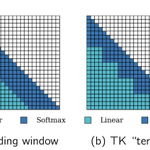
How can your abstract ignore years of research? It has been repeatedly proven that SWA is much worse than linear attention when trained from scratch. See app. A of arxiv.org/pdf/2509.24552 or any other recent linear attention paper's SWA baseline.
Is this just an honest mistake?
rishi retweeted

We're releasing Terminal-Bench-Science: a benchmark for evaluating AI agents on research workflows across scientific domains.
An ongoing Stanford-led community effort, built by the team behind Terminal-Bench together with scientific domain experts at research institutions worldwide. v0.1 has 70 tasks. Claude Opus 5 solves only ~30%.
1/n 👇


rishi retweeted

Excited to have Zyphra's @BerenMillidge @rawsh0 and @rishiiyer01 at AMD’s annual Advancing AI conference speaking about how Zyphra built the first MoE Diffusion LLM on @AMD.
Registration still open: amd.com/en/corporate/events/…

rishi retweeted

If compression is intelligence, text cannot be the final for superintelligence. Text is already a remarkable human-made compression of thought and experience; but it is still an interface shaped for human communication, not necessarily the right from for intelligence beyond us.
With Latent Thought Flows, we try to compress text further into a continuous latent space that could support generative modeling. We actually bet on representation learning a lot by compression.
Will the Bitter Lesson win agian?
It has been absolute fun working on this with @mihirp98!

Images, video, audio, actions — generative modeling has converged on one recipe: compress into continuous latents, generate in latent space, decode.
Language is the lone exception: still generated token by token, as a long discrete stream.
Latent Thought Flows: We compress 256 text tokens into 8 continuous latents, generate them with a one-step flow model, and read them out as text using an autoregressive decoder.
Result: a better inference-compute vs. generation-quality Pareto frontier than a tuned autoregressive baseline — thanks to compression and one-step generation.
Co-led w/ @ZhengyangGeng 🧵
rishi retweeted

Introducing Flash-MSA, the world’s first open source sparse attention training kernels optimized for extreme context lengths. 4 simple kernels, 400%+ speedup over dense flash attention at long context ⚡

rishi retweeted

Together with UC Berkeley we are announcing the laser phase plate - a breakthrough in atomic resolution imaging. This is the brightest continuous wave laser in the world, 100 million times the intensity of the surface of the sun.
Phase contrast plays an important role in microscopy, but it was thought close to impossible for electron microscopy, where it would require interfering with an electron beam. Holger Mueller and Robert Glaeser proposed exactly this using a standing wave laser. It has taken over 15 years to make this a reality. Biohub partnered with UC Berkeley and Mueller to support this work and to engineer and build the technology.
Contrast has been the critical barrier to achieving atomic resolution imaging of the cell. In cryo-electron tomography, a cellular imaging technology that uses electron microscopy, the low contrast makes it impossible to resolve anything but the largest proteins within their cellular context. The laser phase plate removes that barrier.
With advances in AI this breakthrough in contrast will start to open up a new frontier in structural biology, that will allow us to see the molecular machines of the cell, and how they assemble into far more complex and dynamic systems, and understand how they work.
rishi retweeted

@rishiiyer01 cooked here. very excited about scaling ttc with diffusion - sparse active params + diffusion decode means reasoning models can punch above their weight class with competitive latency
teapawt.net/rishiiyer01/status/205…

rishi retweeted
very excited about scaling ttc with diffusion. sparse active params + diffusion decode means reasoning models can punch above their weight class with competitive latency
teapawt.net/ZyphraAI/status/205210…

Today we're releasing ZAYA1-8B, a reasoning MoE trained on @AMD and optimized for intelligence density.
With <1B active params, it outperforms open-weight models many times its size on math and reasoning, closing in on DeepSeek-V3.2 and GPT-5-High with test-time compute. 🧵

rishi retweeted

Diffusion is the endpoint of inference. Decode becomes as efficient as training. Everything sits on the roofline. Pure FLOPs will be the only bottleneck.
Excited to push the frontier on language diffusion. Massive congrats to the team and an exciting time ahead.
We present ZAYA1-8B-Diffusion-Preview, the first diffusion language model trained on @AMD.
Autoregressive LLMs generate one token at a time; diffusion generates a block in parallel, speeding up inference.
We show a 4.6-7.7x decoding speedup with minimal quality degradation 🧵
