

Professional & experienced CPA, CA, CKA
Sudbury
Joined July 2011
- Tweets2K
- Following473
- Followers201
- Likes4.4K








Ruby Lougheed Yawney retweeted

In this video, Marc Andreessen says he practices "zero" introspection. As little as possible. He just wants to move forward.
The internet turned it into a meme for days.
I think he's right. And I'll go further.
Overthinking, the need to dissect every emotion, to rationalize everything, to replay everything: it's a cancer of our time.
For a simple reason. The moment you live in rumination, in whining, in resentment, constantly looking for who attacked you and who owes you something, you block your creative potential. You stop moving. You go in circles inside your own head.
And that's usually what eats you alive. Not other people. Not events. The loop.
Epictetus wrote it two thousand years ago: men are disturbed not by things, but by the views they take of them.
In France, that loop is supercharged by one thing: there's no growth anymore.
When the pie grows, everyone can hope for a bigger slice by building. When the pie stops growing, the only way to get more is to take from someone else. So people watch, compare, accuse. Resentment becomes the national sport.
No growth, no hope. No hope, no reason to move forward. And without movement, all that's left is rumination. The worst of all worlds.
If you want out, two things.
First: don't take anything personally. Nothing.
Second: separate your identity from your actions and your ideas. You are not what you say. You are not your last post, your last project, your last opinion.
Paul Graham nailed it in 2009 in an essay that became a Silicon Valley classic: Keep Your Identity Small. The more an idea becomes part of who you are, the less you're able to discuss it rationally. Every criticism feels like an attack.
Flip it. The day you accept that everything you say can be challenged, and that you can be wrong, you stop taking almost anything personally. A critique of your idea is no longer a critique of you. It's information.
That's Karl Popper's stance: I may be wrong and you may be right, and by an effort, we may get nearer to the truth.
People often ask me how I handle everything I get thrown at me here. That's the answer. I spend my time thinking out loud, knowing I can be wrong.
If someone gives me constructive feedback, great: I learn something.
If someone attacks me ad hominem, I mostly feel sorry for them. Because that's someone who's stuck. Someone who needs to destroy to exist. They're trapped in exactly the loop I'm describing.
Now zoom out.
I believe our comfort-based societies, rotted by cultural leftism, have manufactured neurosis at scale.
A culture that teaches you you're a victim, that every word can hurt you, that your feelings are facts, that the world owes you reparation. Jonathan Haidt and Greg Lukianoff documented it in 2018 in The Coddling of the American Mind: protect people from every discomfort and you make them fragile.
The result: I think a huge number of adults today are still teenagers.
Not in age. In mind.
We stopped teaching courage. We stopped telling kids that life is hard, that it's supposed to be hard, and that this is exactly what makes you grow. So a big part of the adult population stays stuck in a teenage mental state. Everything is about them. Everything is unfair. Every frustration is a wound.
And a teenager in an adult body is fragile. Very, very fragile.
The numbers are there. In France, around 8.5 million people were prescribed at least one psychiatric drug in 2022, according to the national health insurance system. Roughly 3.3 million on antidepressants, nearly 3 million on anti-anxiety meds. Among 12 to 25 year olds, antidepressant use jumped about 60% between 2019 and 2023.
I'm not saying these people are weak. Many are genuinely suffering, and these treatments save lives. I'm saying a society that produces this much psychological pain should ask what it's teaching its kids.
There's a line from the novelist G. Michael Hopf that sums it all up:
Hard times create strong men. Strong men create good times. Good times create weak men. And weak men create hard times.
Ibn Khaldun described the same cycle in the 14th century.
We're living the third line.
The great builders of history didn't spend their lives watching themselves think. They looked ahead. They built.
Introspection locks you inside your head.
Action gets you out.
Ruby Lougheed Yawney retweeted

Islam shut down African ancient churches with the sword.
In Egypt, St. Mark planted the church in Alexandria in the year 42, while Rome was still persecuting Christians.
Alexandria became the greatest Christian city on earth, the school where Athanasius and Cyril defended the faith.
In North Africa, in Carthage and Hippo, men like Tertullian, Cyprian, and Augustine were writing the theology that Europe still reads today. They were Africans, writing in Africa.
In Sudan, there were three Christian kingdoms, Nobatia, Makuria, and Alodia, that stood as Christian nations for a thousand years, building cathedrals and monasteries in the desert while Europe was still in darkness.
In Ethiopia, King Ezana made Christianity the faith of the kingdom in 330, before most of Europe had even heard the Gospel.
Africa was Christian, deeply Christian.
Then the invasions came.
First, Egypt fell in 639. The Arab armies came, and the Coptic Christians who had been the majority for centuries were suddenly made second-class citizens in their own land.
They had to pay a tax just to remain Christian. They could not build a church. They could not even repair a church without permission.
Their language was slowly replaced, their churches were slowly taken, and over hundreds of years, a Christian nation was squeezed until it became a persecuted minority.
Then North Africa fell. Carthage, the great Christian city, was burned and abandoned in 698. Hippo, where Augustine had preached, was emptied.
The bishops were killed or driven out, the churches were turned into mosques, and within a few generations, a land that once had five hundred bishoprics had almost no Christians left. The Berber queen Kahina fought to the end, but after her, the resistance was broken.
Then Sudan fell. The Nubian kingdoms had resisted for six hundred years. They had even defeated the first Arab invasion and forced a peace. But in 1276, the Mamluks invaded Makuria. In 1315, the king was forced to convert, and the great cathedral of Dongola was turned into a mosque. By 1504, Alodia had fallen too.
The churches were left to rot in the desert, their beautiful frescoes of Jesus and Mary buried under sand, waiting for the world to remember them.
Only Ethiopia survived, and it survived by blood. In 1529, Ahmed Gragn invaded with Ottoman guns, burning churches, slaughtering priests, and destroying monasteries and manuscripts that can never be replaced. Ethiopia fought back, mountain by mountain, and it lived, but it lived scarred.
It was never just war. It was conquest, then tax, then humiliation, then church destruction, then language erasure, then slow conversion. Generation after generation was pressured until Africa forgot it was ever Christian.
nypost.com/2026/11/16/world-…


Ruby Lougheed Yawney retweeted

CSIS, the agency tasked with assessing threats to Canada, disagrees.

Carney claims the security risks of our partnership with China are "much much much much less" than with the United States.
Either @MarkJCarney is lying to score political points or he is truly a crazy person.
Ruby Lougheed Yawney retweeted
This feels Islamophobic. If Noble Muslims of Peace choose to practice their religion (killing of Jews), it should be permitted. Am I right @kennethrmiller? All religions are equally peaceful. I learned this having spent 33 years so far as a professor.


Ruby Lougheed Yawney retweeted

Rising federal capital spending could nearly double non-financial assets by 2030. That makes debt-to-GDP look flatter (as it includes capital assets), even as net debt-to-GDP keeps climbing. #cdnecon

Ruby Lougheed Yawney retweeted
Budget 2026 sees federal debt dropping to 19% of GDP by 2060; I get ~48%. #cdnecon #cdnpoli
Two key differences: net debt doesn’t subtract non-financial assets (capital), and I assume we meet the new NATO target. Long-term fiscal challenges may be bigger than budget implies.


Some people in Canada feel more empathy for the pedophile than the children they victimized. Pathetic. Just a troubled man…. Look into the statistics of what happens to their victims…

Rome did not play games with child rapists.
Rome was an empire of order.
And Rome understood one thing the modern West has forgotten: a man who touches a child has declared war on the entire family, and the family must answer with death.
In old Rome, a child was not just a child. A child was a paterfamilias in training. A child was the future of the bloodline. A child was the honour of the house. To violate a child was to violate the honour of Rome itself.
The Romans had a word for it: stuprum. It meant sexual disgrace. It meant defilement. It was not a private sin; it was a public crime against the state.
If a man raped a child, he was not sent to therapy. He was not given a second chance. He was not protected by human rights lawyers.
He was dragged before the court. He was tried under the Lex Julia de vi publica, the law against public violence. If found guilty, he was executed: sometimes by beheading, sometimes by being thrown from the Tarpeian Rock, sometimes by being beaten to death in public, so that every man in Rome would see what happens to a predator.
Rome did not wonder what his childhood was like. Rome did not consider whether he was mentally ill. Rome did not debate whether he could be rehabilitated.
Rome asked one question: did he do it? If yes, he died.
That is why Roman mothers could send their children to the market without fear. That is why Roman fathers could sleep at night. The predator knew: if I touch a child in Rome, Rome will kill me.
There were no NGOs in Rome to defend the rapist. There were no journalists to call the punishment Islamophobic, racist, or inhumane. There were no activists holding signs saying, "His life matters too."
In Rome, the child's life mattered. The predator's life did not.
The father of the victim had the vitae necisque potestas, the power of life and death over his household. If a man defiled his child, the father could kill him on the spot, and Roman law would call it justice, not murder.
Today in London, a man rapes a child and gets eight years, or one year of unpaid labour with no jail time. Today in Paris, a man rapes a child and gets sympathy. Today in America, a man rapes a child and the media worries about his pronouns.
Rome would have looked at the modern West and called it a civilisation in collapse. A civilisation that cannot protect its children has already lost its right to exist.
Rome fell when it stopped being Rome: when it became soft, when it became tolerant, when it began to protect criminals instead of children.
The West is now repeating the fall of Rome.
t.me/fmazhindu

16
Ruby Lougheed Yawney retweeted

David Sacks: Who Risked Jail to Take Down Jensen Huang?
“I think it's pretty clear that there were two ops here.
So one op is whatever Alice Huang was doing with or without the Chinese Communist Party. There may have been smuggling involved, we don't know. There is an investigation going on, and there should be an investigation. We should get all the facts there.
However, there's also a second op here. That second op began when somebody, or multiple people, leaked a highly classified memo, or the contents of it, to The New York Times. I think it's really important to understand that that's a crime. Leaking classified intelligence is a crime, and many people have been prosecuted for it.
Because of that fact, I don't believe that The New York Times just got this by overhearing people talking about it at a bar. Somebody made the calculated decision that they're willing to risk going to jail, they're willing to risk committing a crime to let The New York Times know about this story.
I have a series of questions about that.
So number one is, first, who did that and why? What was their motivation? Why did they feel so strongly about taking Jensen down?
Bucket number two is around the failure to give the defensive briefing. If the national security state is worried that Jensen is in possession of national security secrets and might leak them to someone who they suspect is a spy, why wouldn't you go to him right away and tell him, ‘Hey, you have this problem. Don't talk to this person’? Apparently, that didn't happen, and it does sound like that is some sort of standard operating procedure.
That brings me to question number three, which is what exactly were the national security secrets that Jensen supposedly knew? He doesn't work for the government. He's not, as far as I'm aware, privy to classified materials. So what is it that people say that he leaked to this suspected intelligence asset?
The last question I have is, what is the evidence that this person, Alice Huang, was actually a Chinese spy who worked for the Ministry of State Security? Just this morning, the incoming chair of the House Intelligence Committee, who's a Democrat, came out of a classified briefing on this subject and said that he's not sure that this person is a Chinese spy.
So I put all these things together and I would say, at this point in time, I think there's more questions than answers. And I would like a full accounting of the facts to come out.”


imagine if we honoured our vets like The Netherlands does in Canada.
instagram.com/reel/DdjaVVixE…

16
Ask for evidence & compared to what? As a former auditor, with a passiona for adding integrity to information, let the evidence speak for itself. Va good intentions (rhymes with excuses)

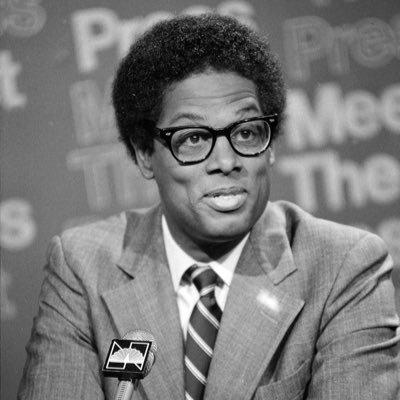
Thomas Sowell – The Man Who Asked for the Evidence 📚
He was born in 1930 in North Carolina, in a house without running water. His father died before he was born. He grew up in Harlem, left school at sixteen, delivered telegrams, worked in a machine shop and served in the Marines. Then he went to Harvard, Columbia and Chicago.
He started as a Marxist. Books did not cure him. A summer job did.
In 1960, at the U.S. Department of Labor, he studied the minimum wage in Puerto Rico's sugar industry. Each time the wage was raised, employment fell. He proposed a simple test to find out why. Nobody in the building wanted it run. The department's budget depended on the law being good; whether the law was good was not its business. That summer, he understood that an institution has interests of its own, and that the truth is rarely among them.
Everything else followed from there. For sixty years, he has asked the three questions that no ideology survives: compared to what, at what cost, and what hard evidence do you have?
He put the whole of economics in one line, observing that there are no solutions, only trade-offs. And he put the whole of politics in another, noting that it is hard to imagine a more dangerous way of making decisions than putting them in the hands of people who pay no price for being wrong.
He gave the planners their true name: the anointed. People who judge themselves by their intentions and everyone else by results, and for whom every failure of their policy is proof that it was not tried hard enough.
He was a black man from Harlem who said that culture matters more than grievance, and that the policies made to help the poor had hurt them most. For that, the people who claim to speak for the poor never forgave him. He kept writing anyway – more than forty books, without a single slogan in them.
He is ninety-six. He has never held power, never led a movement, never raised his voice.
He only asked for the evidence. In the age of the Lie, that turned out to be the most radical thing a man could do.
—
America has one honor that fits: the Presidential Medal of Freedom, its highest civilian award. 🏅🇺🇸
He should receive it now, while he can still walk up and collect it. 🗽

10
Ruby Lougheed Yawney retweeted

It was our most-read story this weekend
You can love public schools and public health care, and still acknowledge something is broken. Sweden may have some answers
theglobeandmail.com/business…

Ruby Lougheed Yawney retweeted
In September, Javier Milei stood at the UN General Assembly and said what nobody in that room wanted to hear: the institution now exists to feed "a caste of fatally arrogant parasites disguised as well-intentioned bureaucrats."
He wasn't only talking about the UN.
That caste is everywhere. Over decades, the left and the corruption that travels with it have infiltrated every institution that matters: ministries, universities, NGOs, international bodies, newsrooms. This isn't a few bad apples. It's systemic.
And we are all paying the bill. Record public debt across the West, collapsing public services, nations that can no longer keep their own streets safe. That's not bad luck. It's the direct consequence of a system that rewards capture instead of results.
Here's the good news: the answers are no longer theoretical. They've been tested in the real world.
On the economy: Milei. He took a country everyone had written off, took a chainsaw to the state, and broke an inflation spiral the experts swore was unbreakable.
On security: Bukele. El Salvador went from murder capital of the world to one of the safest countries in the Americas in a few years. The same experts said that was impossible too.
The playbook exists. It works. And every country on earth can apply it.
I believe the next five years will be historic. A turning point on the scale of the fall of the Berlin Wall.
And when it comes, we will need a Nuremberg 2.0. Not of individuals, but of an entire system of lies. A system that used the media, artists, culture and even the courts to hide its own failures and silence anyone who pointed them out. Every lie exposed, documented, put on the record, so it can never happen again.
Now watch closely what that system is doing right now: everything in its power to ban AI, or capture it.
It's no accident that Milei used the same UN speech to reject pre-emptive AI regulation. AI is the one thing the caste can't control. A tool that lets any individual verify, build, create and speak without asking the gatekeepers for permission.
So they will try to regulate it, license it, and own it. And AI in the hands of that caste is the perfect infrastructure for a totalitarian state.
Europe is already on those rails.
The choice for the next decade is simple: freedom or the caste.
Pick a side.

History will remember two men as the ones who exposed the empire of lies: Javier Milei and Nayib Bukele.
For decades, the same class of experts, NGOs, think tanks and international institutions told us two things were impossible.
That you could kill inflation without destroying a country.
That you could kill violent crime without "addressing root causes" for another 30 years.
Milei took the first one.
Argentina, December 2023: inflation over 200% a year, 25% in a single month. A central bank printing money to fund a state that had become a vote-buying machine. Every economist on TV predicted a social explosion if anyone touched it.
He cut the number of ministries in half. He balanced the budget in his first year. Monthly inflation went from 25% to under 2%. Poverty, which peaked at 52.9% right after the devaluation, fell to 28%, the lowest since 2018. It's not a straight line, poverty ticked back up this year, and he says so himself. But the point is proven: the "impossible" was possible all along.
The lesson is brutal. Endless money printing was never a technocratic necessity. It was a hidden tax on the poor, quietly paying for the people who designed the system and lived off it.
Bukele took the second one.
El Salvador, 2015: 106 homicides per 100,000 people. The most violent country on earth outside a war zone. Gangs ran neighborhoods, taxed every bus driver and every street vendor, and decided who lived and who died.
El Salvador, 2025: 1.3 per 100,000. Lower than the United States.
Every international expert said it couldn't be done. The NGOs called it barbaric. Salvadorans re-elected him with over 80% of the vote, because they're the ones who used to bury their kids.
And now his helicopters are in Haiti, pulling his own soldiers out of gang territory, telling the gangs: we finished with ours, we can finish with you.
So ask yourself the real question. If it was this simple, why didn't anyone do it?
Because an entire ecosystem lived off the problem.
Inflation funded the state that funded the clients that funded the elections. Crime created fear, and fear created demand for programs, consultants, studies, panels, subsidies and "experts" who never had to deliver a result. In Latin America it was the gangs. In the West it's mass immigration with no integration and crime with no consequences. Different symptom, same business model: the problem is never solved because too many people are paid to manage it.
Milei and Bukele didn't just fix two countries. They published the proof. Every politician who still says "it's complicated" now has to explain why a guy with a chainsaw and a guy with a baseball cap did in two years what they couldn't do in forty.
Thank you Javier Milei. Thank you Nayib Bukele.
The world is going to heal with your solutions.
Europe is next. We're waiting.

Ruby Lougheed Yawney retweeted
A few years ago, Peter Thiel wrote to Mark Zuckerberg: 70% of Millennials say they're pro-socialist.
His conclusion: stop calling them stupid, and try to understand why.
His explanation was economic. Too much student debt, unaffordable housing, no capital. When you own nothing, you have no reason to defend the system.
He's right. But that's only half the story.
The other half is school.
School destroys critical thinking. Methodically. For fifteen years.
You learn to recite instead of question. To find the expected answer instead of the true one. To obey authority instead of reasoning for yourself.
When you've spent your youth outsourcing your thinking to an institution, it feels natural to outsource your life to an even bigger one: the State.
That's why so many end up Marxist. Not by conviction. By conditioning.
And that conditioning is about to become a handicap.
We're entering a world where AI does everything conformist, predictable and standardized better than we do. The only value left is thinking differently.
To create value tomorrow, you'll need to be neurodivergent.
And someone who thinks differently and reasons from first principles almost always ends up seeing the same thing: the State, as it works today, destroys more value than it creates.
It's no accident that Alex Karp created a fellowship at Palantir dedicated to neurodivergent talent. To him, in the age of AI, there are only two ways to have a future: master a real trade, or be neurodivergent.
But I'll go further than Karp.
I believe neurodivergence isn't the exception. It's the natural state of the human mind.
Look at a four-year-old. They ask hundreds of questions a day. They take everything apart. They refuse any rule they don't understand. They think from first principles without even knowing it's a thing.
Then they go to school. And we spend fifteen years normalizing them.
School doesn't shape minds. It sands them down.
The future belongs to those who survived the sanding.

Ruby Lougheed Yawney retweeted
History will remember two men as the ones who exposed the empire of lies: Javier Milei and Nayib Bukele.
For decades, the same class of experts, NGOs, think tanks and international institutions told us two things were impossible.
That you could kill inflation without destroying a country.
That you could kill violent crime without "addressing root causes" for another 30 years.
Milei took the first one.
Argentina, December 2023: inflation over 200% a year, 25% in a single month. A central bank printing money to fund a state that had become a vote-buying machine. Every economist on TV predicted a social explosion if anyone touched it.
He cut the number of ministries in half. He balanced the budget in his first year. Monthly inflation went from 25% to under 2%. Poverty, which peaked at 52.9% right after the devaluation, fell to 28%, the lowest since 2018. It's not a straight line, poverty ticked back up this year, and he says so himself. But the point is proven: the "impossible" was possible all along.
The lesson is brutal. Endless money printing was never a technocratic necessity. It was a hidden tax on the poor, quietly paying for the people who designed the system and lived off it.
Bukele took the second one.
El Salvador, 2015: 106 homicides per 100,000 people. The most violent country on earth outside a war zone. Gangs ran neighborhoods, taxed every bus driver and every street vendor, and decided who lived and who died.
El Salvador, 2025: 1.3 per 100,000. Lower than the United States.
Every international expert said it couldn't be done. The NGOs called it barbaric. Salvadorans re-elected him with over 80% of the vote, because they're the ones who used to bury their kids.
And now his helicopters are in Haiti, pulling his own soldiers out of gang territory, telling the gangs: we finished with ours, we can finish with you.
So ask yourself the real question. If it was this simple, why didn't anyone do it?
Because an entire ecosystem lived off the problem.
Inflation funded the state that funded the clients that funded the elections. Crime created fear, and fear created demand for programs, consultants, studies, panels, subsidies and "experts" who never had to deliver a result. In Latin America it was the gangs. In the West it's mass immigration with no integration and crime with no consequences. Different symptom, same business model: the problem is never solved because too many people are paid to manage it.
Milei and Bukele didn't just fix two countries. They published the proof. Every politician who still says "it's complicated" now has to explain why a guy with a chainsaw and a guy with a baseball cap did in two years what they couldn't do in forty.
Thank you Javier Milei. Thank you Nayib Bukele.
The world is going to heal with your solutions.
Europe is next. We're waiting.
Ruby Lougheed Yawney retweeted

Canada added no private sector jobs from 2019 to 2024 — U.S. did the exact opposite nationalpost.com/news/canada…

Ruby Lougheed Yawney retweeted

If you sponsor this podcast, calling for the execution of Elon Musk, I will never use your product… and will buy from both of your top two competitors
This is unacceptable and dangerous.
This a dog whistle to murder someone because you disagree with them — and this is the same guy who joked about the assassination against President Trump.
Fuck this piece of shit.
