
Experienced Senior Bioinformatician primarily working with sequencing data but can solve most tasks if the data is good. Opinions are all my own.
Biggleswade, United Kingdom
Joined May 2012
- Tweets1.3K
- Following192
- Followers112
- Likes855

Robert King retweeted

In the last few months at @nanopore, we've made major strides in improving the accuracy of native DNA sequencing in bacteria, a challenging task due to bacterial DNA modifications. Watch my colleague Katherine Lawrence dive into the details:
youtube.com/watch?v=rRFREd8q…
Robert King retweeted

Today we’re excited to freely share an early-version of, perhaps, the world’s most expansive genetics dataset: Logan.
#bioinformatics #petabase #genetics #genomics #openscience
biorxiv.org/content/10.1101/…

Robert King retweeted

A mind-blowing discovery of a noncoding region in the human genome that might be holding the answer that 1000s of parents around the world with a child with a neurodevelopmental disorder (NDD) have been patiently waiting for years.
A recurrent de novo noncoding single base pair insertion variant sitting within an 18-bp region within a small nuclear RNA (snRNA) gene, RNU4-2, accounts for ~0.5% of all undiagnosed NDDs in the Genomics England cohort. Even among the coding region, such a highly recurrent de novo variant probably doesn't exist. The most recurrent mutation in Deciphering Developmental Disorders cohort (>30k probands) is a missense variant in PACS1 accounting for 0.12% of the all the NDDs, which was discovered more than a decade ago through whole exome sequencing (pubmed.ncbi.nlm.nih.gov/2315…)
Such a commonly genetic cause of NDD has remained buried in the noncoding genome and evaded detection all these years. It really blows my mind.
Studies like this give us a glimpse into what to expect with the ongoing transition from whole exome to whole genome sequencing (WGS), both in the population genetics and in the clinical genetics fields. It's satisfying to see that the recent WGS efforts by Genomics England and UK Biobank are slowly bearing their first fruits.
The UK biobank WGS data of ~half a million healthy volunteers helped the authors to pinpoint this 18b region based on the fact that it is significantly depleted of any variations, therefore developmentally critical (like the unhit regions of the surviving aircraft, commonly shown to explain survivorship bias). It turned out this 18-bp region transcribe to a very critical part of the spliceosome complex that the RNU4-2 snRNA is a part of.
The obvious question here is why that 18-bp region is so prone to mutation, particularly an insertion type mutation. That's not clear yet. The author predicts that it could be either that the region is prone to form secondary structures that might be tricking the DNA polymerase to insert an extra base pair and/or that this variant might confer survival advantage to the sperms, resulting in a positive germline selection.
This is going to be one of my most favorites papers of the year. Congrats @quenchentin, @nickywhiffin and all the authors!


Would you believe me if I told you that a single variant in a non-coding RNA explains ~0.5% of all undiagnosed individuals with neurodevelopmental disorders (NDD) in @GenomicsEngland ???
I didn’t initially either, but here is the story of RNU4-2 🧵1/9
Robert King retweeted

If you are attending #AACR this year come and say hello to the Oxford @nanopore team! We have lots of incredible new things to share with you! #CancerResearch

We've got plenty to look forward to at #AACR24.
Drop by booth 3053 throughout the event to meet our team of experts. Be sure to join our Spotlight Session & live demos hear more about how nanopore sequencing is accelerating oncology research.
Learn more: bit.ly/3TFVvvj

Robert King retweeted

Tomorrow!
ucsc-seqtech-events.online/

ALT A cartoon image of a DNA molecule with the text: Telomere-to-Telomere Consortium presents ONT Ultra-long sequencing and applications: All are invited to join our upcoming online webinar to discuss ultra long ONT data generation and analysis. We have a set of wonderful speakers and panelists to share their insights into advantages, breakthroughs, and obstacles of ultra-long sequencing. Thursday, April 4, 2024, noon-4pm Eastern Time
Robert King retweeted

Friendly reminder: the T2T/UCSC SeqTech ONT Ultra-Long Conference is tomorrow (12-4p ET). Register today! bit.ly/3PFTa2f

Robert King retweeted

Minimap2-2.27 introduces a new lr:hq preset (long read:high quality) for fast accurate mapping of @nanopore data.
The new preset is a huge ~4x reduction in CPU hours vs map-ont 🚀

Minimap2-2.27 released with new presets for accurate Nanopore reads and Illumina Complete Long Reads (both recommended by vendors), along with a few minor features and bug fixes. Output alignment identical to v2.26 except the value at a custom tag. github.com/lh3/minimap2/rele…

Robert King retweeted

We are eager to connect with anyone using @nanopore sequencing for DNA or RNA modifications!
Robert King retweeted

Minimap2-2.27 released with new presets for accurate Nanopore reads and Illumina Complete Long Reads (both recommended by vendors), along with a few minor features and bug fixes. Output alignment identical to v2.26 except the value at a custom tag. github.com/lh3/minimap2/rele…
Robert King retweeted

🔬 Unveiling a milestone in genome reconstruction! 🌟 Our research showcases ONT's remarkable stride in matching PacBio's quality for non-model bacteria with high GC content. 🧬 check future of cost-effective sequencing #ONTwinsPacBio 🧬 @uni_copenhagen
biorxiv.org/content/10.1101/…

Robert King retweeted

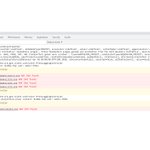
PSA, since I've now seen problems arising from this: As of Sept 2023, GATK no longer makes missing genotypes explicit in VCFs (i.e. "./." as in the VCF spec). Missing genotypes are instead coded as "0/0" with a DP=0 format field. See attached for examples.

Robert King retweeted

Great opportunity to do bleeding edge technology development in my research team at @nanopore . We work on RNA and DNA epigenetics using synthetic biology.
Fixed term position of 1 year as a research scientist.
Apply here : ejnh.fa.em2.oraclecloud.com/…
Robert King retweeted
We've had a busy few months at @nanopore !
* 99% Indel F1 & Q50 Nanopore assemblies
* Hemi-methylation base calling
* T2T simplex-only assembly
* a Q30 1Mb read (!!)
* 20% faster basecalling
* Increasing basecalling accuracy
* Increasing Direct RNA throughput & accuracy
Geat chance to make a difference to kids. Senior bioinf role to develop new diagnosis using sequencing. Check out this job at Great Ormond Street Hospital for Children NHS Foundation Trust: linkedin.com/jobs/view/37754…
27
Robert King retweeted

Thrilled to see Telo-seq out (also in review). Telo-seq has come a long way since our first discussions with the @KarlsederLab and has been released as a workflow community.nanoporetech.com/p…. Count telomere and sub-telomere length at base resolution - methylation profile included!

Our preprint “High resolution long-read telomere sequencing reveals dynamic mechanisms in aging and cancer” is now on bioRxiv. biorxiv.org/content/10.1101/…

Robert King retweeted

mosdepth calculates depth quickly from bam/cram. @LudvigOlsen added the ability to filter on fragment length (e.g. to count only cfDNA reads) for latest release: github.com/brentp/mosdepth/r…

Robert King retweeted

Major Remora Release [3.0.0]
- Datasets re-vamp
- Train from over 1,000,000,000 chunks!
- Improved signal analysis toolkit
- Full direct RNA support
- CheBI code support (ANY modified base!)
- Split read support
community.nanoporetech.com/p…
github.com/nanoporetech/remo…


Robert King retweeted
Big RNA Dorado release [v0.4.3]
- m6A DRACH-context mod model
- poly(A) / poly(T) tail estimation
- RNA read splitting
- RNA adapter trimming
Plus sample sheet support & significant memory reduction for duplex calling.
github.com/nanoporetech/dora…

Robert King retweeted
You can provide known gene annotations to minimap2 with --junc-bed. This improves junction accuracy and the alignment of small exons. More effective for nanopore reads given good annotations. The option was added >4 years ago but might not be used often. github.com/lh3/minimap2/rele…

Robert King retweeted

Don't miss your chance to join us for NCM Houston!
There are still a limited number of in-person tickets so act fast before they are gone!
We can't wait to see you in December.
Learn more: bit.ly/3ZJst0l #nanoporeconf
