


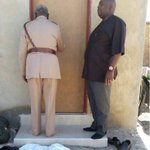

1)@CityofMutare traffic depart should exercise restraint otherwise many innocent lives maybe lost due to chasing of mushikashika(unlicensed taxi operators).I witness the mushikashikadriver being chased by traffic council officers in the process he hit an oncoming HondaFit vehicle
3)) The vehicle crushed on the wall of the shop causing panic to the customers inside the shop and other people going about their business.What surprised me is the council traffic officers who were in the council behicle disappeared immediately.
Robert Dick retweeted

There is nothing wrong for war veterans of Muchena's caliber, to give us their view of what one-man-one-vote means to them & how universal suffrage found its full expression in section 91 (2) which confers the right on every Zimbabwean 18 & above & registered to vote, to directly elect their President.
How Banana or Mugabe was elected in 1980 & 1985 as you put it, was a result of a negotiated settlement through the Lancaster House Constution. It is an indication of vestiges of colonialism that miscreants & political delinquents like you want to tout as democratic.
The electoral system expressed in the Lancaster House constitution was meant to preserve white supremacy, hence the requirement for reserved seats for the Rhodesian Front.
We accepted that, & the election of leaders through parliament, not as an expression of the fulfillment of our liberation war objectives, but as a compromise to end the conflict.
It is unfortunate that miscreants & war deserters like you now want us to go back to that as if it's an expression of our will when it was a compromise to end a 16 year old armed conflict.
We did that with the issue of land & for 20 yrs, lived with a land ownership pattern that we fought against in the guerrilla war.
We can't go back to what was obtaining btn 1980-2000 in terms of land ownership patterns & say that since we went for 20 yrs after independence without land, therefore the war wasn't fought for land.
Zimbabweans came up with their constitution in 2013 which confers the right to directly elect a president of their choice.
This is the right & meaning of one-man-one-vote that Muchena & his other Cdes believe in.
The Lancaster constitution, which you refer to, didn't give us back our land. We got back our land through changing that constitution. We did the same with the election of our President, we changed the electoral system so Zimbabweans could directly elect their President as a way of giving full expression to our understanding of universal suffrage.
We don't care how our erstwhile colonizers, the British, elect their leaders. We will not use their template caz we are not British.
We will also not be bullied by miscreants & war desserters to adopt a British system that we rejected even before 2013.
Our people spoke in 2013, through their constitution, that they will elect their President directly as an expression of their understanding of one-man-one-vote & universal adult suffrage.
Of the 170 countries in the world, more than half, 90, directly elect their presidents & of these, more than 80 use the two tier system to ensure majority above 50%.
It is actually stupid to insinuate that directly electing a president was meant to achieve a one party state & that directly electing a president is inimical to multipartyism.
That's a self-serving foolish argument that lacks intellectual empiricism.
The French directly elect a president, how many political parties are in France. Aren't there 451 registered political parties in France?
Zambia, which changed ruling parties 3 times, directly elect presidents & there is no one-party state there.
The same can be said about Kenya where you are hiding.
Don't Kenyans elect their President directly? Is there a one-party-state in Kenya? Isn't there multi-partyism in Kenya?
Zimbabwe uses direct election of the president, how many political parties are here?
Wasn't Zanu-PF defeated under the same electoral system in 2008?
We all know what is killing multi-partyism in Zimbabwe. It is the direct use of state resources & capture of the judiciary to destroy opposition political parties by political miscreants & mercenaries like you who created Tshabangu & destroyed the CCC opposition political party.
To then turnaround & accuse an electoral system for entrenching a one-party-state that you brought about through your Tshabangu shenanigans is the highest level of political dishonest that can only be found in political miscreants like you.

MUCHENA’S USE OF LIES TO PURPORT TO DEFEND THE CONSTITUTION IS NEITHER REVOLUTIONARY NOR CONSTITUTIONAL: Air Marshal (Retired) Henry Muchena—and the unnamed co-authors, alleged retired generals and senior civil servants said to be ex-combatants who cowardly remain incognito behind his 15 March 2026 letter—are correct that the liberation struggle rested on two fundamental, non-negotiable pillars: land and universal adult suffrage (“one man, one vote”). These principles remain sacred.
They are, however, blatantly lying in claiming that “universal adult suffrage” or “one man one vote” ever meant the direct election of the head of state or government, during the liberation struggle or since independence in 1980. Nowhere under the sun has universal adult suffrage equated to direct election of the executive.
Muchena’s claim—and that of his incognito retinue—is neither revolutionary nor constitutional; it is embarrassingly ignorant, illiterate, uninformed and dangerously misinforming. It is irresponsible and dangerous to elevate illiteracy to the level of political noise for purposes of conflict-mongering.
Universal adult suffrage simply means the right of every adult citizen to vote without discrimination based on race, sex, property or similar qualifications. It concerns who is entitled to cast votes, not the voting system used to cast them. This right applies equally to direct and indirect voting systems alike.
The heroic armed struggle under PF-Zapu and Zanu-PF delivered universal adult suffrage in 1980. But this triumph did not confer direct “one man one vote” elections for President Canaan Banana or Prime Minister Robert Mugabe in the 1980 and 1985 polls.
Rather, the triumph restored the right to vote for every adult Zimbabwean under the voting system that prevailed. Both Banana and Mugabe were creatures of indirect election in 1980 and 1985: Banana chosen by Parliament sitting jointly as an electoral college; Mugabe appointed by the President as the leader commanding a majority in the House of Assembly. Muchena’s lie betrays both the liberation legacy and constitutional truth.
Far from an aberration, this truth is powerfully affirmed by notable global examples.
The United Kingdom has upheld full universal adult suffrage since 1928—extending the vote to all women—yet its citizens have never directly elected their Prime Minister. Voters choose Members of Parliament; the leader of the party commanding a majority in the House of Commons becomes Prime Minister through parliamentary confidence.
India, the world’s largest democracy, constitutionally entrenched universal adult suffrage in 1950 (Article 326 of the Constitution) for direct elections to the Lok Sabha (Parliament), yet the Prime Minister is indirectly elected by the parliamentary majority.
Even the United States, the world’s oldest democracy, having perfected near-universal suffrage through the 15th, 19th, 24th and 26th Amendments, deliberately rejects a nationwide “one person, one vote” for its President, electing the executive instead through 538 members of the Electoral College.
These examples demonstrate conclusively that “one man, one vote” secures the right to participate—it does not dictate the mechanism for voting to choose the executive. To claim otherwise is not merely historically false; it is intellectually bankrupt.
Direct Presidential Election: A Relic of the Failed 1987 One Party One-Man Rule Socialist State
Retired Air Marshal Henry Muchena and the political interests he fronts peddle a blatant lie that Zimbabwe’s current direct presidential election is rooted in the liberation struggle’s galvanising mantra for “one man, one vote.” Nothing could be further from historical truth and constitutional reality.
As pointed out above, universal adult suffrage was secured in 1980. The direct election system for the Executive Presidency was deliberately engineered—not to express that suffrage—but to entrench a legislated one-party, one-man-rule socialist state anchored squarely in the 1987 Unity Accord between PF-Zapu and Zanu-PF.
The Accord itself (see attachment), signed at State House on 22 December 1987, is unambiguous about this.
1987 Unity Accord Agreement: Zimbabwe's Model for the current Directly Elected Executive President
1. That Zanu (PF) and (PF) Zapu have irrevocably committed themselves to unite under one political party.
2. That the unity of the two political parties shall be achieved under the name Zimbabwe African National Union (Patriotic Front), in short Zanu (PF).
3. That Comrade Robert Gabriel Mugabe shall be the First Secretary and President of Zanu (PF).
4. That Zanu (PF) shall have two Second Secretaries and Vice-Presidents who shall be appointed by the First Secretary and President of the Party.
5. That Zanu (PF) shall seek to establish a socialist society in Zimbabwe on the guidance of Marxist-Leninist principles.
6. That Zanu (PF) shall seek to establish a one party state in Zimbabwe.
7. That the leadership of Zanu (PF) shall abide by the Leadership Code.
8. That the existing structures of Zanu (PF) and (PF) Zapu shall be merged in accordance with the letter and spirit of this Agreement.
9. That both parties shall, in the interim, take immediate vigorous steps to eliminate and end the insecurity and violence prevalent in Matabeleland.
10. That Zanu (PF) and (PF) Zapu shall convene their respective congresses to give effect to this Agreement within the shortest possible time.
11. That in the interim, Comrade Robert Gabriel Mugabe is vested with full powers to prepare for the implementation of this Agreement and to act in the name and authority of Zanu (PF).
Signed at State House this 22nd day of December 1987.
Joshua Mqabuko Nkomo, President, (PF) Zapu.
Robert Gabriel Mugabe, First Secretary and President of Zanu (PF).
Paragraphs 5 and 6 expose the Accord’s twin objectives. Pursuant to this vision, the Constitution of Zimbabwe Amendment (No. 7) Act, 1987 fused Head of State, Head of Government and Commander-in-Chief into an imperial Executive Presidency.
On 30 December 1987 Mugabe was installed as Zimbabwe’s first Executive President—after he was elected not by direct popular vote—but indirectly by Parliament sitting jointly as an electoral college.
Where were Muchena, his retired generals and senior civil servants who are ex-combatants when this happened in 1987?
The direct election introduced in March 1990 was designed as a mere formality under an anticipated monolithic political project for a de jure one party state. The current system is therefore no liberation dividend at all; it is the constitutional offspring of a failed ‘Marxist Leninist’ project for one party one man-rule which was rejected by history itself.
It is ironic and laughable that self-anointed guardians of democracy and citizen empowerment now scramble as defenders of the Constitution to salvage the directly elected Executive Presidency—a tarnished vestige of a botched de jure one-party, one-man-rule socialist state. Its very persistence defies the 2013 Constitution's sacred cornerstone: a multi-party democratic system enshrined in section 3(2)(a) as the bedrock of good governance.
How the Directly Elected Executive President Agenda to Legislate for a One Party One-Man Rule Failed
In 1987, armed with the Unity Accord and the Constitution of Zimbabwe Amendment (No. 7) Act, Zanu-PF meticulously constructed the framework for a one-party, one-man-rule socialist state. The vision was unambiguous: by 1990, prevailing social, economic and political conditions would enable the direct election of an unchallenged President Robert Mugabe as an imperial Executive President, while Zanu-PF—legislated as the sole lawful party—would confront no opposition whatsoever. This ideological and constitutional template gave birth to Zimbabwe’s current voting system of direct presidential elections.
Yet history unfolded with radical, irresistible force to torpedo this agenda.
Scarcely 10 months after the 22 December 1987 Unity Accord, Edgar Tekere’s expulsion from Zanu-PF in October 1988—ignited by his blistering public denunciation of corruption and the one-party state push—produced the first fatal fracture. Tekere promptly launched the Zimbabwe Unity Movement (ZUM) in April 1989: the inaugural credible urban opposition party championing multiparty democracy, free-market reforms and an end to nepotism.
Compounding this internal rupture, the fall of the Berlin Wall in November 1989—just weeks before the PF-Zapu and Zanu-PF Unity Congress—and the subsequent implosion of the Soviet Union demolished the global ideological scaffolding that sustained one party one-man rule.
Simultaneously, the World Bank’s seminal November 1989 report, Sub-Saharan Africa: From Crisis to Sustainable Growth, proclaimed “good governance” under multiparty democracy as the indispensable precondition for development—demanding accountable institutions, judicial integrity, reduced corruption, free press and citizen empowerment—thereby directly assaulting the legitimacy of legislated one-party regimes across Africa.
Zimbabwe’s 1990 election campaign itself laid bare the fragility of the one party state project. Widespread irregularities, harassment in ZUM strongholds and brazen violence—including a daylight assassination attempt on candidate Patrick Kombayi and multiple ZUM-linked killings—inaugurated the pattern of what has become the scourge of disputed elections.
Although Zanu-PF achieved a parliamentary landslide, ZUM’s two seats, ZANU-Ndonga’s one and Tekere’s commanding 20% presidential vote obliterated any legal argument for legislating a de jure one-party state. By late 1990 the agenda lay dead within Zanu-PF itself.
The July 1990 adoption of the World Bank/IMF-sponsored Economic Structural Adjustment Programme (ESAP)—with its sweeping neoliberal reforms of liberalisation, subsidy removal and privatisation—delivered the decisive ideological coup de grâce, and accelerated the irreversible retreat from a legislated one-party state.
These six epochal developments transformed the 1987 constitutional design of an imperial Executive Presidency from a triumphant formality into a perpetual source of intractable national contestation.
All told, the adoption of ESAP delivered the decisive blow to Zanu-PF’s ambition to entrench the imperial Executive Presidency of 1987. By aligning with the World Bank’s 1989 governance framework—articulated in its seminal study Sub-Saharan Africa: From Crisis to Sustainable Growth—ESAP mandated multiparty democracy and good governance as prerequisites for sustainable development. This dismantled the legislative path to a de jure one-party socialist state, despite the de facto political dominance secured through the PF-ZAPU and Zanu-PF Unity Accord.
This hybrid ESAP-inspired model proved irreconcilably incompatible with the Constitution of Zimbabwe Amendment (No. 7) Act of 1987. That transformative legislation fused Head of State and Government, abolished the Prime Ministership, and designed direct presidential elections from 1990 as mere formalities to cement an unchallenged vanguard party and its leader after an anticipated one-party triumph.
Over the ensuing 36 years, this constitutional dislocation has unleashed a relentless cycle of disputed elections, political violence, societal polarisation, corruption, policy paralysis, inefficient service delivery, infrastructural decay, and toxic governance—severely undermining national development and social progress.
In the immediate wake of ESAP, retrenchments and subsidy cuts sparked urban unrest, exposing the 1987 framework’s structural obsolescence as an instrument of one party one-man rule. The failure to enact a de jure one-party state, coupled with retention of an imperial Executive Presidency in a nominal multiparty system, spawned early fissures: plummeting voter turnout, protests, and simmering social discord. A subsequent attempt to reform the presidency via a new constitution collapsed in 2000.
Even the 2013 Constitution, forged as a compromise between Zanu-PF and the MDC formations and enshrining multiparty democracy as a foundational principle, failed to rectify the core incompatibility by retaining the 1987 directly elected Executive President.
The military coup in 2017, followed by the fiercely contested 2018 and 2023 elections and ensuing governance crises, crystallised an unassailable reality: the 1987 fusion of powers, engineered for a one party one-man rule state, had become a dangerous anomaly in a multiparty environment, perpetuating an obsessive focus on a single office and trapping the nation in perpetual electoral contestation that undermines peace, development, unity, stability and national security.
The consequences have been catastrophic.
Since 2000, the mismatch between the 1987 Executive Presidency and a multi-party democratic political system has erected five toxic barriers to progress: a short five-year electoral cycle that consigns governance to perpetual electioneering, privileging populism and political survival over effective service delivery, while igniting disputed polls, policy paralysis, rampant corruption, inefficiency, and deepening polarisation.
Muchena’s Referendum Call a Constitutional Fraud
Retired Air Marshal Henry Muchena’s 12 March 2026 letter compounds his falsehoods about universal adult suffrage by brazenly demanding that the Constitution (Amendment No. 3) Bill be subjected to a national referendum. He declares that if the amendments are in the national interest, they must be put to the people—yet he cites no constitutional provision or law to support his claim.
Instead, he cynically invokes the year 2000, falsely claiming Zanu-PF “championed” a referendum. The decision to hold that referendum on the 2000 Draft Constitution was taken independently by the Constitutional Commission, not by Zanu-PF. Such mendacity is not revolutionary discourse; it is naked conflict-mongering calculated to sow discord and undermine national stability.
The constitutional position is unequivocal. Section 328(6) reserves the ultimate democratic veto—the national referendum—solely for the most sacred provisions: amendments to Chapter 4 (Declaration of Rights), Chapter 16 (Agricultural Land), or section 328 itself. Section 328(9) extends this protection to the clause. Only in these exceptional cases must a Bill, even after securing a two-thirds parliamentary majority, be submitted to the people within three months and approved by a majority of participating voters.
All other provisions—including all those in the Amendment No. 3 Bill, 2026—require nothing more than a two-thirds majority in Parliament. No referendum is required or permitted. Any demand to extend the limit beyond this scope is illegal, unconstitutional, and amounts to conflict mongering disguised as democratic zeal.
Section 117(2)(a) of the Constitution expressly empowers the Tenth Parliament to amend the Constitution in accordance with section 328(5). This Parliament is sovereign and not bound by its predecessors. As the United States Supreme Court held in Fletcher v. Peck (1810), one legislature cannot abridge the powers of a succeeding legislature.
The Tenth Parliament therefore possesses full constitutional legitimacy to enact the Amendment No. 3 Bill without a referendum. Muchena’s referendum call is not only baseless but is also dangerous psychodrama.
Conclusion
The Constitution (Amendment No. 3) Bill of 2026 delivers a bold antidote to Zimbabwe's enduring constitutional malaise dating back to 1987. By shifting presidential selection to Parliament, lengthening the electoral cycle from five to seven years, and embedding electoral safeguards, the Bill dismantles the falsehood that the directly elected Executive Presidency is a legacy of the liberation struggle—when in fact it was specifically crafted in 1987 to entrench a legislated one party one-man rule state—and when it has crippled the nation since the Mach 1990 general election.
Muchena and his veiled allies are outrageously mistaken in claiming the Bill strips anyone’s voting rights; the claim is not an argument or debate it is a blatant lie. Far from diminishing suffrage, the Bill expands it profoundly. As the Minister of Justice, Legal and Parliamentary Affairs Hon Ziyambi Ziyambi has announced, a pivotal outcome of the Bill will be granting Zimbabweans in the Diaspora their long-denied right to vote, under the Electoral Act—finally fulfilling universal adult suffrage for all.
Equally erroneous is their call for a referendum on the Bill. Under section 328, a referendum is not a political weapon but a strictly legal tool reserved only for any amendment to Chapters 4, 16 and section 328; and no other part of the Constitution. Weaponizing the referendum is reckless conflict-mongering that imperils national harmony.
Far from regression or disenfranchisement, the Bill forges a visionary recalibration: fostering stability, continuity, cohesion, and socioeconomic advancement. It redeems the Constitution from the 1987 imperial presidency's grip meant for a legislated one party one-man rule state, fulfilling history's urgent call since the Unity Accord.
President Mnangagwa and his Cabinet deserve commendation for coming up with the ground-breaking Bill. Its reforms, including taming the 1987 executive behemoth, are progressive and unprecedented. In championing the Bill, which truly offers something for everyone, they herald a transformative era, bridging Zimbabwe's turbulent history with a prosperous horizon beyond self-interest and beyond 2030.
Significantly, the Bill reforms the electoral system, not individuals who can only be reformed by God!

Robert Dick retweeted

BREAKING: 2026 Tesla Model Q FINALLY arrives at $19,990 — It’s fully re-engineered, compact EV with sleek design, shocking price, and game-changer for the EV market.

Robert Dick retweeted

🚨This account from a Venezuelan security guard loyal to Nicolás Maduro is absolutely chilling—and it explains a lot about why the tone across Latin America suddenly changed.
Security Guard: On the day of the operation, we didn't hear anything coming. We were on guard, but suddenly all our radar systems shut down without any explanation. The next thing we saw were drones, a lot of drones, flying over our positions. We didn't know how to react.
Interviewer: So what happened next? How was the main attack?
Security Guard: After those drones appeared, some helicopters arrived, but there were very few. I think barely eight helicopters. From those helicopters, soldiers came down, but a very small number. Maybe twenty men. But those men were technologically very advanced. They didn't look like anything we've fought against before.
Interviewer: And then the battle began?
Security Guard: Yes, but it was a massacre. We were hundreds, but we had no chance. They were shooting with such precision and speed... it seemed like each soldier was firing 300 rounds per minute. We couldn't do anything.
Interviewer: And your own weapons? Didn't they help?
Security Guard: No help at all. Because it wasn't just the weapons. At one point, they launched something—I don't know how to describe it... it was like a very intense sound wave. Suddenly I felt like my head was exploding from the inside. We all started bleeding from the nose. Some were vomiting blood. We fell to the ground, unable to move.
Interviewer: And your comrades? Did they manage to resist?
Security Guard: No, not at all. Those twenty men, without a single casualty, killed hundreds of us. We had no way to compete with their technology, with their weapons. I swear, I've never seen anything like it. We couldn't even stand up after that sonic weapon or whatever it was.
Interviewer: So do you think the rest of the region should think twice before confronting the Americans?
Security Guard: Without a doubt. I'm sending a warning to anyone who thinks they can fight the United States. They have no idea what they're capable of. After what I saw, I never want to be on the other side of that again. They're not to be messed with.
Interviewer: And now that Trump has said Mexico is on the list, do you think the situation will change in Latin America?
Security Guard: Definitely. Everyone is already talking about this. No one wants to go through what we went through. Now everyone thinks twice. What happened here is going to change a lot of things, not just in Venezuela but throughout the region.

Ushe madzoro! Varume avo vakamborira sure vachifurufusha the Crocodile, but tables turned for good,the rest is history.
God's time is the best time!

Robert Dick retweeted

On this day in 1986, the apartheid regime in South Africa assassinated Samora Machel by tampering with the navigation beacon of his plane, causing it to crash in South Africa.
Samora Machel was a real leader, a thinker, and a revolutionary who did not run with the wind. Take a moment to listen to what he is saying in this clip. Politics is about strategy, not wishes.
Rest in Peace great leader!
Robert Dick retweeted

God has given you victory. Don’t make the devil feel you have lost the battle. Fear is a thief of faith. Guard your faith and live victoriously.
Robert Dick retweeted

FULL TRANSCRIPT OF 🇧🇫CAPTAIN IBRAHIM TRAORÉ SPEECH: 🎤
[Speaking in Russian]
"Good day, Comrade President."
[Retranslated]
"It is an honor to be here for the celebration of the 80th anniversary of the Great Victory.
I would like to extend my congratulations and sincere thanks for this invitation, which carries deep symbolic meaning for us.
During my visit, I have learned a great deal.
The cultural session I attended on the eve of the dinner helped me understand that history and culture are the foundation upon which a strong and resilient army is built.
Together, we have seen the immense sacrifices made by the Soviet people so that today we may live in a free world.
For this, I extend once again our heartfelt gratitude.
Moments like these allow us to reflect on our own situation and envision new paths forward.
The obstacles we face today must not stop us.
On the contrary, they can serve us in some ways.
Because despite all the sanctions imposed on Russia, your country has developed internal mechanisms that have brought it back to the forefront of the international stage.
We take this lesson to heart.
During the parade, I was deeply impressed by the display of military equipment — from the legendary T-34 tank of the Great Patriotic War to today’s modern machines.
It shows just how far the Russian army has advanced, and how technology has strengthened its capabilities.
In this context, we hope our cooperation will grow exponentially.
I thank you for the scholarships already granted to students from Burkina Faso, and I hope they will continue to expand.
This morning, I visited the University of Chemistry [D. Mendeleev University], and I emphasized that after defense and security, our top priority is education — especially in the sciences.
We hope Russia can help us train our youth in scientific fields.
Because only by developing our own industrial and military technologies can we build a sustainable future for Africa.
The war that has been imposed on us today is, in many ways, a new face of Nazism.
The terrorism we are confronting is not terrorism — it is imperialism.
It is our land that interests those who attack us.
Ending this war, building a strong army, and launching the development of our homeland — that is the meaning of our struggle.
And for this, the training of qualified personnel is vital.
We know you are engaged in a special military operation.
We understand the challenges you face, and what it means for the rest of the world.
That is why we are not here to ask for material aid.
The assistance we are seeking is knowledge transfer.
We would like to see more scholarships made available and also explore how we ourselves can fund student opportunities to study here.
Furthermore, we hope that Russian universities — especially the one I visited, and others focused on science — can establish branches in Burkina Faso, complete with the laboratories necessary to provide our youth with hands-on, practical training.
This is our essential request today:
To transform what we have at home.
To produce for ourselves.
And to make Burkina Faso a hub where many young Africans can come to study science.
Because here in Russia, you have mines of knowledge.
You have produced great minds whose works we continue to study.
That wisdom is like a tree, and we hope to draw from its roots to nourish our own development."
#CaptainIbrahimTraore #BurkinaFaso #Moscow #VictoryDay
#RussiaAfrica 🫶🏿🫶🏿🫶🏿🫶🏿
xitter.cf/afrilivesmatter/status…

Not every foreign president is afforded this honour through the corridors of power in Moscow —President Putin, a strategist of history, recognizes in Captain Traore @CapitaineIb226 🫡🫡🫡🫡 a spirit powerful enough to bury Western domination in Africa. This is not a routine diplomatic gesture; this is a meeting between giants of resistance. Traoré stands as the uncompromising face of African resilience, rising from the Sahel to challenge centuries of exploitation. Putin embodies the global front against Western imperialism, unyielding in the face of aggression. To the puppets installed by colonial interests across Africa: your days are numbered. The people are awakening. The era of betrayal is ending.
🇧🇫IBRAHIM TRAORÉ:
[Speaking in Russian]
"Good day, Comrade President."
[Retranslated]
"It is an honor to be here for the celebration of the 80th anniversary of the Great Victory.
I would like to extend my congratulations and sincere thanks for this invitation, which carries deep symbolic meaning for us.
During my visit, I have learned a great deal.
The cultural session I attended on the eve of the dinner helped me understand that history and culture are the foundation upon which a strong and resilient army is built.
Together, we have seen the immense sacrifices made by the Soviet people so that today we may live in a free world.
For this, I extend once again our heartfelt gratitude.
Moments like these allow us to reflect on our own situation and envision new paths forward.
The obstacles we face today must not stop us.
On the contrary, they can serve us in some ways.
Because despite all the sanctions imposed on Russia, your country has developed internal mechanisms that have brought it back to the forefront of the international stage.
We take this lesson to heart.
During the parade, I was deeply impressed by the display of military equipment — from the legendary T-34 tank of the Great Patriotic War to today’s modern machines.
It shows just how far the Russian army has advanced, and how technology has strengthened its capabilities.
In this context, we hope our cooperation will grow exponentially.
I thank you for the scholarships already granted to students from Burkina Faso, and I hope they will continue to expand.
This morning, I visited the University of Chemistry [D. Mendeleev University], and I emphasized that after defense and security, our top priority is education — especially in the sciences.
We hope Russia can help us train our youth in scientific fields.
Because only by developing our own industrial and military technologies can we build a sustainable future for Africa.
The war that has been imposed on us today is, in many ways, a new face of Nazism.
The terrorism we are confronting is not terrorism — it is imperialism.
It is our land that interests those who attack us.
Ending this war, building a strong army, and launching the development of our homeland — that is the meaning of our struggle.
And for this, the training of qualified personnel is vital.
We know you are engaged in a special military operation.
We understand the challenges you face, and what it means for the rest of the world.
That is why we are not here to ask for material aid.
The assistance we are seeking is knowledge transfer.
We would like to see more scholarships made available and also explore how we ourselves can fund student opportunities to study here.
Furthermore, we hope that Russian universities — especially the one I visited, and others focused on science — can establish branches in Burkina Faso, complete with the laboratories necessary to provide our youth with hands-on, practical training.
This is our essential request today:
To transform what we have at home.
To produce for ourselves.
And to make Burkina Faso a hub where many young Africans can come to study science.
Because here in Russia, you have mines of knowledge.
You have produced great minds whose works we continue to study.


This is one of my 2024 news highlights. This made me understand how people can be easily brainwashed.
The video was shared by @matigary
Robert Dick retweeted
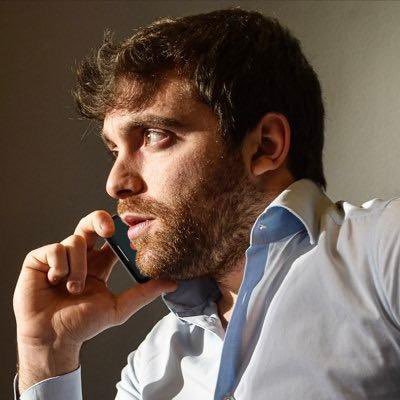
🚨 Cristiano Ronaldo: “Vinicius Jr should have won the Ballon d’Or, in my opinion it was clear”.
“It was UNFAIR. This is why I love Globe Soccer Awards, they are honest”.


Robert Dick retweeted

Alleged agent of the criminal investigation services escapes lynching by the population in Nampula.
#MozambiqueProtests
#MozambiqueElections
Robert Dick retweeted
🚨🥇 Ancelotti: “Vinicius Jr WILL win the Ballon d’Or, in my opinion. He will get the award”.
“It’s not about tonight… it’s what he did last season. Tonight’s hat-trick can help his case for next Ballon d’Or!”. 😄

Robert Dick retweeted

Oh, a big elephant has fallen in South Africa! A beautiful flower has withered.
Tonight, with a heavy heart, I join the global community to say goodbye to a man who was more than just South Africa's former finance minister, Tito Mboweni – the king of Tinfish cuisine and a cultural icon.
Tito, or "The Finance Minister with Flavor," wasn't just about numbers; he was a cultural phenomenon whose legacy was as rich and diverse as South Africa.
Here was a man who could cook up an economic policy with the same flair he cooked his famous Tinfish dishes – a culinary experiment that did raise eyebrows, but we loved him for it anyway.
As a Nigerian, who sees South Africa as a brother nation, like we'd borrow a lighter, Tito was that generous neighbor,
except he offered wisdom, humor, and those legendary suits that could make a fashionista smile at what style looks like in the 80s....!
He was a man of the people, something rare in finance ministers. His Twitter was his connection to the everyday South African and beyond, sharing not just policy but his humanity, his love for his country, and his unique fashion sense – from his iconic shoes to his retro suits. Tito dressed not just to impress but to express, making old school cool again.
His intelligence was both deep and down-to-earth. He danced through economic policies like he was at a township groove, making complex issues seem like a casual stroll in the market.
Yet, he never lost touch with the community, the soul of any nation. His love for his people was obviously obvious, a reminder that true leadership means walking among your people, understanding their struggles, and celebrating their joys.
Tonight, we aren't just mourning Tito Mboweni, the economist, or the Twitter star. We remember Tito, the friend to South Africa, a beacon of intelligence, wit, and warmth.
He showed us you could lead with both heart and humor, making leadership accessible and relatable. As we bid farewell, let's not see this as an end but as his legacy living on. Let's take inspiration from his life – not just his policies, but how he lived with passion, style, and humor.
Rest in peace, Tito. You left too soon, but your spirit? It's as enduring as your love for Tinfish, as sharp as your suits, and as lovely as the Limpopo community you cherished.
Until we meet again, perhaps where fish tins are gold, and suits never fade.
Adieu.

Robert Dick retweeted

🚨🇺🇸2 TODDLERS THROWN FROM MOVING JEEP... BUT THEY ARE UNHARMED
2 toddlers in diapers walked away uninjured after being thrown from a Jeep that flipped on a Texas highway.
Deputy Sheriff:
"Deputies responded to a major crash on the main lanes of the East Freeway at Freeport. It was a two-car crash where one of the vehicles flipped over several times, resulting in the ejection of the 2 children.
The car was occupied by one adult and 2 children. They are being transported to a hospital. No injuries were reported for the occupants in the other vehicle."
The incident reportedly occurred on the Interstate 10 East Freeway in Freeport, Texas.
Source: KQVT

