

Co-Founder and CEO at @hud_hq. Formerly Envara (aq by Intel), AeroScout (aq by Stanley), Soluto (aq by Asurion), Santa & WeWork’s OG CPO. Also 👩🔬👧👧👦🥋🤓⚽️
Tel Aviv
Joined April 2009
- Tweets4.5K
- Following340
- Followers3.5K
- Likes5.3K




Roee Adler retweeted

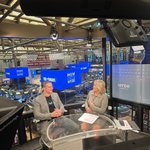
youtu.be/RrPopigmXzk
AI is writing more code. Can reliability keep up?
I spoke with Roee Adler @roee CEO and Co-Founder of Hud @hud_hq) about giving AI coding agents real-world feedback to catch bugs and slowdowns.
#AI #SoftwareDevelopment

Roee Adler retweeted

AI made writing code faster, but the bottleneck is knowing whether it's safe to ship.
clickhouse.com/blog/clicksta…
Which is why we're partnering with @hud_hq: ClickStack shows where an issue is; Hud adds automatic, low-overhead function-level insight into why.
Together, they give coding agents the runtime context to ship with confidence.


Roee Adler retweeted

The hottest company that nobody has ever heard of in the AI coding shift is @hud_hq


Roee Adler retweeted
The AI "Hangover": Why We Need to Stop Debugging Like It’s 2015
I’ve been analyzing the disconnect in modern engineering, and I am genuinely blown away by what is happening with Hud (hud.io).
We have handed the keyboard to AI agents, letting them generate code at warp speed. But when that code breaks, we are stuck debugging with tools from 2015: dashboards, logs, and sampling. We are driving Ferrari-level code generation with horse-and-cart observability.
Here is why Hud’s story shifts the paradigm:
1. The "Investigation Tax" is Killing Velocity
Teams at Drata and monday .com realized they were paying a massive "investigation tax"—burning hours just acting as "human bridges" between disconnected tools to guess why an endpoint was slow. Traditional APMs require you to predict what to monitor, but with AI-generated code, you often don't know what you don't know.
2. The Shift: From Dashboards to "Agentic Investigation"
Hud isn't just another monitor; it’s a runtime sensor. It captures full execution context (variables, DB queries) and—this is the genius part—feeds it directly back to AI agents via MCP.
- Old way: Engineer digs through logs -> guesses the fix.
- New way: Engineer asks Cursor: "Why is this slow?" -> Agent reads Hud’s runtime data -> Agent says: "This function is 30% slower since the last deploy, here is the fix."
3. The Metrics Are Staggering
I am rarely impressed by efficiency claims, but Drata’s numbers are undeniable:
• Manual triage dropped from 3 hours per day to under 10 minutes.
• Mean Time to Resolution (MTTR) improved by 70%.
• Monday .com went from chasing "voodoo incidents" to solving deep root causes in minutes.
My Perspective:
We are entering an era where engineers will not know all the code in their production environment. That is the reality of AI scaling. If you are building with AI agents, you cannot use tools that treat your app like a black box. You need production behavior to be obvious to your AI. If your AI writes the code, it must be able to see how it runs to fix it.
Dashboards are for humans. Runtime intelligence is for the future.

Roee Adler retweeted
We’ve been working with the @awscloud team on integrating @hud_hq into @kirodotdev : install Hud in 1m, and have errors, performance degradations and CPU spikes detected with the root cause needed to fix them quickly. Give it a try!

Roee Adler retweeted

Thanks @elonmusk! This feels like the beginning of a wonderful friendship.

Roee Adler retweeted

How Hud's runtime sensor cut triage time from 3 hours to 10 minutes venturebeat.com/ai/how-huds-… via @VentureBeat
"Every software team building at scale faces the same fundamental challenge: building high-quality products that work well in the real world," @roee Adler, CEO and founder of Hud, told @VentureBeat in an exclusive interview. "In the new era of AI-accelerated development, not knowing how code behaves in production becomes an even bigger part of that challenge."

Roee Adler retweeted

Enterprises finally get a heads-up on what AI-generated code actually does in production
venturebeat.com/ai/how-huds-…
Roee Adler retweeted

With the right tools vibe bug fixing can be less of a nightmare
MCP to bring observability data, instructions to use git to correlate to recent changes and linking it all correctly can make at least RCA a done problem
Look at @hud_hq for example, seems like they nailed it

Roee Adler retweeted

Definitely agree on the runtime context part 👩💻@hud_hq

Roee Adler retweeted

Unpopular Opinion: enterprise is the new disruptor
Why @hud_hq Co-Founder and CTO May Walter says the startup mentality of "move fast and break things" isn't cutting it in AI world - dropping this Wednesday in our newsletter: bit.ly/2WaBoKS

Roee Adler retweeted
Great vibes at EuroPython today! 🔥
It was really exciting to discuss the future of monitoring in the era of #AI and showcase some of what we've built at @hud_hq for self-healing production with coding agents like @github Copilot and @AnthropicAI 's Claude CLI, utilizing @ThePSF 's powerful capabilities (thanks to Brett Cannon who's also giving the keynote tomorrow 🤩).
This talk was directly followed up by Richard Magliocchetti from @elastic with a deep dive into @opentelemetry for Python. It's always great to learn directly from maintainers who know best 🤓

Roee Adler retweeted
🚨 @github just dropped their new AI coding agent for Pro & Enterprise users
Naturally, I threw it straight into production to fix my real bugs. 😈🐞
It worked!! Here’s what happened 👇🧵
Roee Adler retweeted
I swear the best part about Gemini CLI is the texts while we wait. I almost want the agent to take more time.
Nice one @googledevs @GeminiApp! ✨
Roee Adler retweeted

🚨 Most devs ship code without really knowing how it behaves in production.
Meet Hud, the first Runtime Code Sensor built for humans and AI agents.
Here’s how it changes everything 👇 🧵
Roee Adler retweeted

This is huge for production applications!
Literally every developer has to deal with server errors they can't reproduce, and it doesn't matter how many logs they have.
You don't have to be "every developer" anymore.
Look into Hud's Runtime Code Sensor. Hud is one of my collaborators, and their code sensor is a game-changer for production applications.
Watch the video I'm attaching here. For those of you who'd prefer a TL;DR;
Hud captures how code behaves in production and puts those insights in context right in your IDE.
This is really cool!
You can see on top of every function data about how it works in production:
• How long does it take to run?
• How many times has the function failed?
• Are the number of failures going up or down?
All of this information is accessible to Cursor, Copilot, or WindSurf via an MCP server. That means that you can use the IDE to act on these issues!
The way Hud works:
• They provide a lightweight SDK
• It takes one line to configure
• All insights are right in your code
• No dashboard necessary
The best part:
Their free plan includes ALL features they offer, so you can actually try it out properly and see how it fits your workflow. No paywall, no trial.
Here is the link: hud.io
Logging everything is great, but getting production insights right next to the code is definitely next-level!