
Ancient Historian. PhD Student @unifreiburg. DFG @GRK2571 "Empires". Interested in #identities, #memories and #politics of the #ancientworld
Freiburg im Breisgau, Germany
Joined April 2021
- Tweets68
- Following81
- Followers46
- Likes1.9K





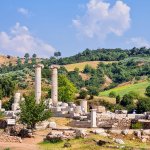

AWOL - The Ancient World Online: Politics of Pasts and Futures in (Post-)Imperial C... ancientworldonline.blogspot.…
22
Rogier vd Heijden retweeted

#NewRelease
#OpenAccess
Politics of Pasts and Futures in (Post-)Imperial Contexts
eds. Sebastian Fahner et al. De Gruyter 2024
degruyter.com/document/doi/1…
doi.org/10.1515/978311122959…

We published a book!
Read and download "Politics of Pasts and Futures in (Post-)Imperial Contexts" at @degruyter_brill degruyter.com/document/doi/1…

Rogier vd Heijden retweeted

Die #DFG verlängert Förderung des GRK „Imperien: Dynamischer Wandel, Temporalität und nachimperiale Ordnungen“ der #UniFreiburg um 4,5 Jahre. 14 Doktorand*innen promovieren in diesem Rahmen in einem strukturierten Forschungs- und Qualifizierungsprogramm. ufr.link/grk-imperien

Rogier vd Heijden retweeted

Well, I drink, so not an issue. But this nonsense made filled me with rage.
It is like Holywood is actively trying to make mistakes, not even pretending to care about history.
Everything wrong with those two images - a rant
A mini thread 🧵
This Post is from an account that no longer exists. Learn more
Rogier vd Heijden retweeted

'I find antiquity a rewarding study, if only because, while I am absorbed in it, I am able to turn my eyes from the troubles which torment the modern world.'
- Livy writing around 27 BC, prelude to the History of Rome

Rogier vd Heijden retweeted

It’s pretty funny how Geert Wilders spent 25 years railing against the Hague elite and the malevolent deep state and then when he finally got the chance to pick a PM he went for… the country’s former spy chief and top security official
Rogier vd Heijden retweeted

Google's new AI search results are having quite the week. Here's a thread with some of my favorite answers:

#Kenya is to be named "Major Non-NATO Ally" by #biden #USA . Reminds me a lot of the #Roman practice of giving allies in the eastern Mediterranean the designation "friend and ally of the Romans" (amicus et socius populi Romani, φίλος καὶ συμμάχος)
bbc.com/news/articles/cv22nd…

1
50
#MNNA mostly entails closer #military cooperation, just like in the Roman republic. Announced by the #commander-in-chief and ratified by the #Senate
1
38
The question is, of course: will this also lead to a rebrand of #WilliamRuto's portrait in "American" fashion or if he will move in the other direction, like Aretas IV of the #Nabataeans? Check out this blog post at the website of @Classical_Assoc: classicalassociation.org/nab…
1
40
Went to @antikenmuseumbs for the exhibition "Iberer" in cooperation with @macarqueologia. Underrepresented in #ancienthistory and #archaeology. Wonderful to see the Lady of Elche and Lady of Baza, and to learn more about these still mysterious peoples of the Iberian peninsula!

ALT Lady of Elche, 4th century BCE, showing the influence of Hellenistic and Punic traditions in Iberian culture

ALT Detail of the Lady of Baza, with still wonderfully visible colours and patterns
1
79
In the BA course on #culturalmemory in the #Roman world that I teach atm, I find that current examples can be very illuminating for students to understand the complexities of the phenomena we're looking at.
1
80
What do societies remember? Is canonical memory formed top-down or bottom-up? What about memories of minorities?
1
49
Yesterday, about #canonisation, the much-criticised Canon of the Netherlands offers a perfect case study to test out the different #theories! @canonvannl
45
Very happy to have been able to present my paper "Imperial past, imperial present?" at the excellent workshop "Experiencing emperors and emperorship" at Nijmegen last week, organised by @anchoring_oikos @RICH_Radboud! academia.edu/109440052/Imper…

101
Rogier vd Heijden retweeted

Even wat anders dan alle ellende hoor. Eenden gaan langs bij de huizen van hun vrienden en vragen of ze buiten komen spelen. 🦢🦢🦢🦢🦢
Rogier vd Heijden retweeted
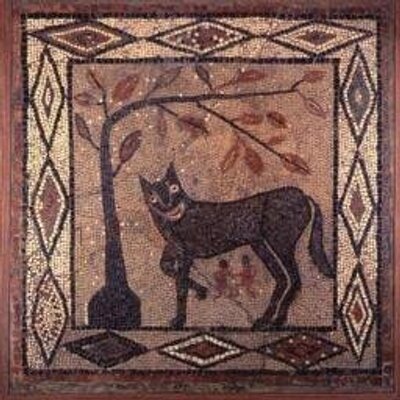
This papyrus signed by Cleopatra grants tax exemption from sales of imported wine to the Roman businessman Publius Canidius, a friend of Mark Antony. At the bottom, in a rare example of her handwriting, Cleopatra herself added the Greek word "ginesthoi," "make it happen."

Rogier vd Heijden retweeted

Hieronder een kritisch artikel van mijn hand in de @volkskrant over de voordracht van @WBHoekstra tot Eurocommissaris.
Opinie: Is Wopke Hoekstra volslagen ongeschikt als Eurocommissaris? Nee, natuurlijk niet. Toch ben ik... volkskrant.nl/ts-be0a1e8f via @volkskrant

Rogier vd Heijden retweeted
12 Reasons Why Cities Need More Trees:
1. Temperature Control
One large tree is equivalent to 10 air conditioning units, and the shade they provide can reduce street temperature by more than 30%.
2. Noise Reduction
Trees can reduce loudness by up to 50%. In urban areas filled with the sound of cars, construction, sirens, aeroplanes, and music, trees are essentially the best way to block noise and keep cities — along with the homes and workplaces in them — quieter.
3. Air Purity
Trees remove an astonishing amount of harmful pollutants and toxins from the air. In urban areas air quality is often disastrously bad — with severe consequences for our health. Trees make the air we breathe much cleaner.
4. Oxygen
And, while absorbing all those pollutants, trees also put more oxygen back into the urban environment. Oxygen levels are significantly lower in cities compared to the countryside; trees help to solve that problem.
5. Water Management
Trees do more than just shelter us and our buildings from rain — which is, in fact, extremely important. They also absorb huge quantities of water, reduce run-off, neutralise the severity of flooding, and make flooding more unlikely altogether. Not to forget that their roots absorb pollutants and prevent them from feeding back into a city's water supply.
6. Psychological Health
Studies have proven what we instinctively know to be true: that human beings are significantly happier when surrounded by nature rather than sterile urban environments. Our emotions, behaviour, and thoughts are shaped by the places we spend time — and trees have a profoundly positive effect on our psychology. The consequential benefits of being happier and more peaceful — as individuals and as a society — are immense.
7. Physical Health
Beyond all the other ways in which trees improve air quality and the urban environment, much to the benefit of our health, they also encourage people to go outside. Cycling, running, and walking are all more common in urban areas with plenty of trees. A knock-on effect of people spending more time outdoors is also social integration and stronger communities.
8. Privacy
A simple point, but not inconsequential, is that trees provide privacy.
9. Economics
The total economic benefit of urban trees is hard to calculate. There are costs, of course, including the repair of infrastructure damaged by roots and maintaining the trees themselves. But the total economic benefit — a consequence of everything else in this list and more — far outweighs the expenditure. Trees make cities wealthier.
10. Wildlife
Trees are miniature cities all of their own, serving as a habitat for hundreds of different species, including birds and mammals and insects.
11. Light Pollution
Trees don't only block the light shining down, therefore keeping us and our cities cooler — they also disrupt light shining up, from street lighting, cars, houses, and billboards. Skies are clearer in cities with more trees.
12. Aesthetics
And, finally, trees are beautiful. They break up the potential monotony of urban environments — the sharp geometry, the greyscale roads and buildings, the endless rows of cars — with their trunks, boughs, canopies, and flowers.
Just think: the gold and red of falling leaves in autumn, the white and pink blossom of spring, the vast green canopies of summer, and the branches lined with hoar-frost in winter. Every single tree is a myriad of intricacy and texture, of colour and scent, of dappled light on the pavement, mottled bark, knotted roots, of clustered leaves and delicate petals and stern boughs.
Few streets would not be improved by the kaleidoscopic aesthetic delights of a tree, not to mention the many different species of tree, all over the world, whether willow, oak, lime, cherry, aspen, maple, birch, horse chestnut, dogwood, hornbeam, ash, sycamore... the list goes on.
There are some drawbacks to urban trees, most of them context-specific, and they are not — of course — universally appropriate. But it seems fair to say that many cities would benefit from at least a few more trees here and there.
