

¶, data, compute, memory // prev @meta
Miami, FL
Joined March 2026
- Tweets161
- Following359
- Followers246
- Likes6K
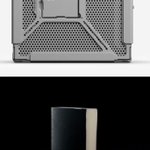


this week two companies launched a personal AI computer: @okihomeai and @ghostai
@ghostai Core ($3,499) bets on compute. 24GB Blackwell GPU, 64GB RAM, any open model you want, agents running 24/7. a brain in a box.
@okihomeai Oki Home ($1,799 launch batch) bets on memory. photos, files, messages, calls in one place, on a swappable Memchip you can literally hold. a memory computer.
why it matters: your AI is only as useful as what it knows about you. today that context sits on someone else's servers and you pay monthly to rent it back.
the personal AI computer flips that. models are becoming a commodity. your context is the moat, and it should live in your house.
1977 had the Apple II, PET and TRS-80 in the same year. that's when "personal computer" became a category. this feels like that week.

Say hello to Oki Home, your Personal AI Computer.
We're building a future of limitless, personalized intelligence for every consumer, while keeping all your data in your hands.
Reserve our first batch, shipping mid-december! okihome.ai

Justin Zhou retweeted

Today, we're launching ScienceBuddy — a free workspace for scientific agents.
Get GPT-6 at no cost, fully GPU-accelerated, and fused with our JEV framework.
The engine behind it relies on two loops:
🔹 Inner loop — refines the agent harness as you collaborate
🔹 Outer loop — trains the model via rubric-guided RL
Together, it drives Recursive-in-Recursive Self-Improvement.
We genuinely want to see how agents improve through sustained, real-world collaboration.
Try it out, push its limits, and let's build better AI for science together!
🔬 science-buddy.io
#ScienceBuddy #PhAILabs #AI4Science
again, this is gonna be huge
the future of ai compute

People have been asking us: "Who will buy $PRL in the future? Is it all just speculation?"
Let us be clear: it's an asymmetric bet.
You are betting on the technical accomplishment of two things:
- A decrease in the computational overhead of the Pearl kernel.
- Pearl's network enforcing real, useful matrix multiplications.
These technicalities are not easy to solve and will take time.
We can see the first progress being made on the kernel here:
teapawt.net/WeinsteinOmri/status/2…
As well as the fact that $PRL will ban consumer-grade GPUs in Q1 2027.
If the above bets pay off, PRL will become the tokenized compute currency, effectively enabling the trading of PRL for useful work on their marketplace.
This is where the demand comes from.
In the end, one has to take a step back and evaluate.
The @prlnet team is one of a kind. Obviously, there are other projects like $TAO or $NOCK trying something similar (one more than the other), but show me one that is as well-connected as Pearl to neo-cloud providers like @togethercompute.
"In crypto, it's all about making calculated bets with asymmetric information."
Do we know if the project will fulfill these two bets?
No, but one always has to weigh the upside:
over the past 2 months i swapped 1 btc into pearl-2:native.
i believe one day it could become 1,000 or even 10,000 btc.
friends who know me well have heard this in private for months. it's the first coin i've named in public since my old account @justinweb33 was suspended.
pearl is way better than bitcoin for the ai era. the key difference: the proof of work is matrix multiplication, the math underneath every ai model. bitcoin's work gets thrown away. pearl's work is the inference itself.
and it just got real. @prlnet's new floating-point scheme runs on nvidia blackwell with near-zero overhead on top of normal inference, and it's headed to frontier models on @togethercompute's endpoints. same gpu, same tokens, plus a coin.
there's a second market nobody is pricing: proof. with @attestable, pearl is building the layer that lets an ai lab prove what it computed without revealing weights or prompts. if ai gets regulated, every lab will need that.
every year the ai compute forecasts get revised up. nobody knows how big this gets.
i'll drop the good pearl reads in the comments if you want to go deeper.


from chinese friend @0xYuxi teapawt.net/0xYuxi/status/20596263…


I am building a research interest and a small position in $PRL, which to disambiguate is from @prlnet.
The central feature of Pearl is that it is a proof-of-work system on top of GPUs and that the proof of work can be mixed in with AI inference workloads.
PRL calls this mining algorithm "proof of useful work". I don't like that name because as far as I can tell there is no actual proof that the work is useful, and I consider the transformation of energy into money inherently useful already -- as with Zcash or Bitcoin or many other coins.
That said, one might argue that ultimately hashrate and security will determine which commodity/internet asset is most valuable. I think PRL has a good shot at getting the highest hashrate and security of all chains.
One can also argue that as software is increasingly fluid, the actual code doesn't matter as much as the distribution (holders + hashrate) because the code is easy to modify or clone after the fact.
As AI consumes more energy, there may be marginally less energy available to secure other blockchains. I think this is already playing out as major Bitcoin miners switch to AI workloads.
If PRL gets successful mining distribution across many of the big server farms, and executes its software stack well to clone features from other cryptos, it may do well over time. That's a lot of IFs. So it is a small position.
Why now? The price has stabilized in a $0.20-$0.30 channel for a while after briefly going far higher. PRL has 100x the units of Bitcoin or Zcash, so consider it trading for $20-$30 in equivalent terms. If PRL is successful I could see it trading at 10-100x this value in a decade.
Some reasons NOT to buy now:
- The network is very early and the token is still very inflationary.
- Price may drop a lot before a real use case comes online.
- There's no proof that anyone will use this and it is not listed on any major exchange.
- It's not really clear what PRL *is* yet. Is it money? Is it some kind of industrial side-effect of inference?
- Other novel proof-of-work coins like Chia/XCH have failed.
Zcash and traditional equities are still my largest positions. PRL is sized like a high risk/reward angel bet in my portfolio (near 1%).
great article from @ZanaVentures, written on pearl's day 1 :)
teapawt.net/ZanaVentures/status/20…

privacy related staff teapawt.net/prlnet/status/20995338…

Privacy-preserving proof of inference is a key building block for AI safety. @DarioAmodei's call for AI slowdown & independent oversight raises a critical question / How can frontier labs prove their computations follow the rules, without revealing model weights, prompts, or private data?
Two complementary technologies are necessary to make this inference layer possible: Zero-Knowledge proofs (zk-SNARKs) can prove that Y = M(x), while keeping M and x private, and verify compliance using explicit policies. Proof-of-useful-work (PoUW) can
tie that evidence to actual, timestamped GPU computation, with a public immutable record and economic incentives for participation.
@prlnet is partnering with @attestable to build this trust layer for AI. Together, our complementary technologies can make AI objectively accountable, making verification economically sustainable and self-funding.
Today, we are announcing @prlnet's new and ultra-efficient floating-point PoUW scheme for NVIDIA Blackwell chips.
Floating-point arithmetic has been a notorious obstacle to efficient verification of compute for decades. Pearl’s FP scheme brings proof-of-useful-work technology to Blackwell FP computations on frontier LLMs, with NEAR-ZERO additional overhead over end-to-end inference on optimized vLLM.
The FP network upgrade specification is now available (github & whitepaper) and will soon serve frontier models on Pearl x @togethercompute's endpoints in production.
Explore the implementation:
github.com/pearl-research-la…
Whitepaper: pearlresearch.ai/Pearl_White…
Run Pearlified models on our endpoint:
pearlresearch.ai/

cofounder of pearl teapawt.net/WeinsteinOmri/status/2…

Pearl (@prlnet) has the fastest FP8 MoE Kernels for Blackwell chips!
Group-Matrix-Multiplication is one of the most optimized operations in AI. As a former researcher at @nvidia I can say firsthand that pushing the performance frontier of MatMuls is... Hard.
Pearl-GEMM is ~5% faster than prior state-of-art Quack (@tri_dao) and ~42% faster than Flashinfer on B200s.
pearlresearch.ai/research/bl…

this one is deserve to read from @brezshares teapawt.net/brezshares/status/2098…

Justin Zhou retweeted

Introducing Atria Dawn Preview:
From Research Questions to Verifiable Results.
Atria Dawn Preview is an agentic foundation model built for long-horizon tasks, helping researchers and engineers turn open-ended questions into executable, verifiable, and reproducible outcomes.
Explore Atria Dawn Preview:
🌐 Website: atria-asi.ai/
💻 GitHub: github.com/atria-asi/Atria-D…
🤗 Hugging Face: huggingface.co/internlm/Atri…
🤖 ModelScope: modelscope.cn/models/Shangha…
🚀 Try Atria:
EN:api.atria-asi.ai/
ZH:discovery.intern-ai.org.cn/t…

Justin Zhou retweeted

被 @rowanzhou 传销了一整天,我也把Hugging Face的四个机器鸭全买了🦆
结果官网:4-6个月发货
Invoice:Made in China
???
都中国生产了还等什么半年啊,给我上中国速度😭 加加班,超级加速一下


The future is gonna be amazing.
The open source @huggingface Micro Duck is the way.
Get two so you can say “ok guys quiet down now”…
tips: if you want to use 100% uptime claude, please switch to claude for government version @claudeai
status.claude.com/

Justin Zhou retweeted

Releasing the model weights and technical report of Kimi K3.
Kimi K3 is our most capable model: a 2.8T MoE model with native visual understanding and a 1M-token context window.
New model architecture: 2.5x the intelligence per unit of compute, not just more params.
Alongside Kimi K3, we're opening up more of the stack behind it — high-performance attention kernels, MoE communication library, and infrastructure for running agent environments at scale.
Model weights: huggingface.co/moonshotai/Ki…
Tech report: github.com/MoonshotAI/Kimi-K…
Tech blog: kimi.com/blog/kimi-k3

Justin Zhou retweeted

It is becoming increasingly clear that the future economy will be denominated in compute cycles more than in human labor.
In a world where AI drives the majority of electricity consumption and GDP, compute is the natural collateral for money: an open, auditable, AI-native currency, produced directly through inference and training.
Since the inception of Bitcoin, an outstanding open problem in distributed systems was whether it is possible to implement Proof-of-Work consensus on top of real-world computation, as opposed to useless random hashing. While long considered impossible, last year we answered this question affirmatively.
Pearl’s mathematical breakthrough enables every GPU cycle powering AI systems to simultaneously produce a native digital currency: ¶PRL.
What this means is that the hundreds-of-billions (and soon trillions) of dollars of compute being deployed for AI workloads will double--for effectively free--to secure Pearl's Proof-of-Work chain; All the properties of Bitcoin, but secured as the by-product of AI inference and training, i.e., by the native operation of GPUs: matrix-multiplication (GEMM).
Pearl changes the unit economics of LLMs, which are are fundamentally non-fungible, and will shift a portion of the wealth generated by AI back to users – who drive production, model improvement and demand, yet currently capture none of the upside of the AI era.
We’ve spent the last year turning this “2-for-1” breakthrough into a working infrastructure, building from the linear algebra down to the CUDA kernels, alongside world-class mathematicians and low-level engineers.
Today, we’re excited to announce that the Pearl Network is ready, and will soon support state-of-the-art LLM serving, through vLLM and SGLang plugins. Running AI workloads on Pearl transforms AI compute from a sunk expense into an AI-native asset, anchored directly to the production of intelligence.
If you’re interested/skeptic or ideally both – we’ve published our next tranche of open problems as a collaborative Polymath challenge – containing math, systems and economics questions we’re grappling with next. We invite you to tear it down, prove it or propose better implementations: pearlpolymath.com.
#AIMoney
#ProofOfInference


Justin Zhou retweeted

HelloTrade is moving to @monad.
We remain focused on our mission to make global capital markets more accessible to everyone around the world. We’re excited to build alongside the Monad team, who share our vision of bringing this future to life at global scale.
Stay tuned for further updates as we continue progressing through Alpha testing.