

Making science faster with algorithms. Assistant prof CU Boulder, Computer Science and BioFrontiers.
Boulder, CO
Joined October 2008
- Tweets1.4K
- Following279
- Followers1.2K
- Likes927





ryanlayer retweeted

How to annotated SV with pop. frequency? Using @PacBio & @nanopore! Gnomad 32% & STIX: 95.9% of SV from @GenomeInABottle annotatable!
Huge implications in SV filtering for eg: @GREGoR_research & #cancer & #disease studies!
Lead by @wtoxzpw & @ryanlayer biorxiv.org/content/10.1101/…

ryanlayer retweeted

STIX: Long-reads based Accurate Structural Variation Annotation at Population Scale biorxiv.org/cgi/content/shor… #biorxiv_bioinfo
ryanlayer retweeted

1/n
🌟🐝🔥 New paper alert 🌟🐝🔥
"Embracing firefly flash pattern variability with data-driven species classification" with @nguyenchantal , @RaphaelSarfati , @DieuMyNguyen , M Iuzzolino, M Chowdhury, @ryanlayer, @oritpeleg
nature.com/articles/s41598-0…


ryanlayer retweeted

🌟 Proud to share a new paper on the flash pattern variability of fireflies! Our work, led by @lepurplemartin & @nguyenchantal in collab with @ryanlayer’s lab, offers new insights into species identification through ML data analysis: nature.com/articles/s41598-0… /1
ryanlayer retweeted

HUGE CONGRATS TO @hdashnow!
news.cuanschutz.edu/dbmi/har…

ryanlayer retweeted

Rare disease research is at the forefront of the DBMI's work. When Harriet Dashnow, PhD, (@hdashnow) joins our team this summer, she will focus on computational research, rare genetic disease, and the discovery of new causal variants. Meet Dr. Dashnow 👇
news.cuanschutz.edu/dbmi/har…
ryanlayer retweeted
Hypothesis Generation For Rare and Undiagnosed Diseases Through Clustering and Classifying Time-Versioned Biological Ontologies biorxiv.org/cgi/content/shor… #biorxiv_bioinfo
ryanlayer retweeted

I'm looking for talented postdocs and staff scientists/software developers to join my lab at @CUBiomedInfo
If you're fascinated by #RareDisease genomics, #STRs and computational methods, please get in touch!
I'm at #ASHG2023 this week, and happy to chat. #hiring
ryanlayer retweeted

The @jxtxFoundation for Open Science will award six scholarships for the CSHL Biology of Genomes meeting covering full conference registration to outstanding graduate students. Application deadline is February 6, 2023. For details: jxtxfoundation.org/news/2022… @cshlmeetings #bog23


ryanlayer retweeted

The toxic culture of rejection in computer science
sigbed.org/2022/08/22/the-to…
ryanlayer retweeted

😅 & that cheatsheet is c/o a @NumFOCUS small development grant & the awe inspiring @NPRougier

This @matplotlib cheatsheet is the best thing on the Internet. Maybe I'll try writing my next plotting script from scratch instead of recopying and butchering that one that I got working 10 years ago that now gives all of those depreciation warnings. matplotlib.org/cheatsheets/c…
ryanlayer retweeted
Cool. You may want to check out/cite Giggle as related work. nature.com/articles/nmeth.45… @ryanlayer
ryanlayer retweeted

Congratulations to our @iscb #ISMB2022 Bio-Ontologies Best Paper winner @fred_bstn from @ISBSIB and Best Poster winner @michael_boulder from @CUBoulder !! 🎉🍾😀
ryanlayer retweeted

“Identifying the genetic changes that cause healthy cells to become malignant can help doctors select therapies that specifically target the tumor,” said CU Cancer Center member @ryanlayer, assistant professor of @CUCompSci at @CUBoulder.
news.cuanschutz.edu/cancer-c…
ryanlayer retweeted

Hope to see you in person or online for Genome Informatics this fall! #GI2022
This Post is from an account that no longer exists. Learn more
ryanlayer retweeted
Tumors contain thousands of genetic changes, but only a few are actually cancer-causing. CU Cancer Center member @ryanlayer and his team are looking into a quicker way to identify these driver mutations that could lead to more targeted cancer treatments. bit.ly/3Q1cgP5
ryanlayer retweeted

Can we utilize big data to learn more about cancerous mutations? 🦠🔬
A recent study by @CUBoulder Assistant Professor @RyanLayer and his team uncovers a new method of finding benign and cancerous cells using thousands of DNA samples.
Read about it ⤵️
theconversation.com/genetic-…
ryanlayer retweeted
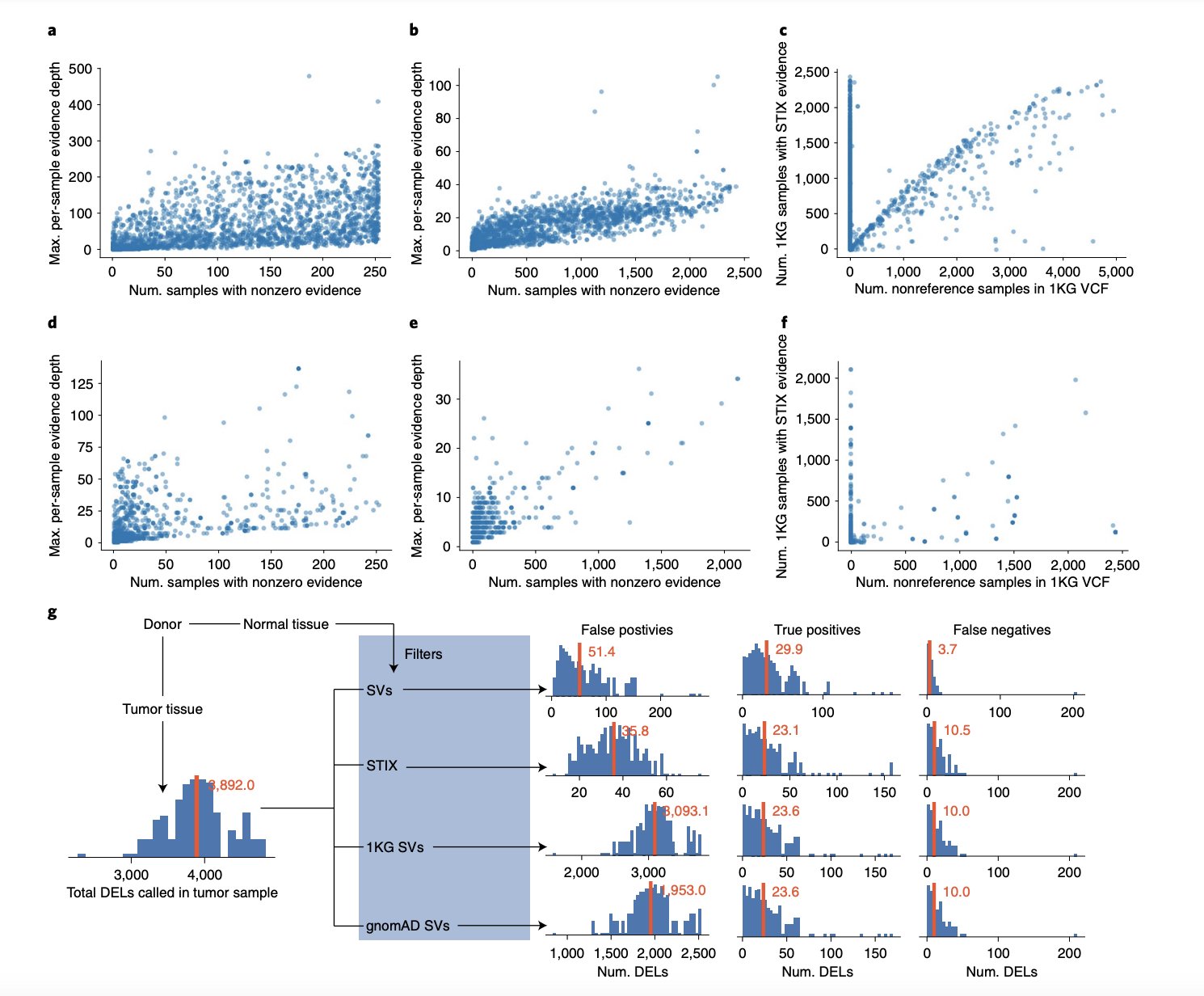
Great work with @ryanlayer @aaronquinlan @brent_p to finally revolutionize SV DB & reliable AF estimation! STIX solves the problem of missing SV & ref bias for SV DB. Showcase in #Cancer filtering somatic calls & prioritization. @naturemethods @BCM_HGSC
nature.com/articles/s41592-0…
ryanlayer retweeted

New work describes a strategy for estimating the population frequency of structural variations by searching the raw alignments of large population sequencing samples using the STIX framework.
@ryanlayer @brent_p @aaronquinlan @sedlazeck
OA paper: nature.com/articles/s41592-0…
