






오늘의 한 걸음, 함께라서 더 멀리. 🏃
러닝 기록부터 크루와 보상까지, StepUp에서 함께 달릴 날을 기다려요.
저는 사전 등록했어요. 같이 시작해요!
#StepUp #스텝업 #러닝크루
※ StepUp 사전 등록 공유 이벤트 참여 글이에요.
stepupcrew.com/?ref=WBS4JQCT youtu.be/5dfGSfGdBPo
4

TOGETRICH retweeted

INTRODUCING FREEDZ
What if the words we write freely are the things that imprison us?
FREEDZ is an 8,888-piece deflationary PFP collection exploring freedom, control, and the machines shaping our world.
A hidden world. A sacrificed word. A question.
Are we really free?
Here's the story:
teapawt.net/0xZergs/status/2108874… 위의 글과 보유중이던 ethereum:0x0c1c1c109fe34733fca54b82d7b46b75cfb71f6e 의 상승을 보며 surf를 이용해봤습니다.
최근 USD.AI가 새로운 방향을 제시하면서 ethereum:0x0c1c1c109fe34733fca54b82d7b46b75cfb71f6e 가격도 꽤 많이 올랐길래 Surf를 활용해서 한번 자세히 찾아봤습니다.
원래 USD.AI는 개인적으로 관심 있게 보던 프로젝트였는데, 요즘 AI 기업들이 GPU와 데이터센터에 엄청난 돈을 투자하고 있다 보니 GPU를 담보로 대출해주는 사업 자체가 꽤 매력적으로 느껴졌습니다.
그런데 정작 USD.AI가 실제로 얼마나 돈을 벌고 있는지, 그리고 그 수익이 ethereum:0x0c1c1c109fe34733fca54b82d7b46b75cfb71f6e 홀더들에게도 돌아가는 구조인지는 정확히 모르겠어서 평소 자주 사용하는 @SurfAIHQ에 물어봤습니다.
처음 질문했던 건 GPU 담보대출의 실제 규모와 이자수익, 담보 구조, 그리고 개인적으로 가장 궁금했던 ethereum:0x0c1c1c109fe34733fca54b82d7b46b75cfb71f6e의 밸류캡쳐였습니다.
Surf가 공식 문서와 DeFiLlama 자료를 바탕으로 꽤 자세하게 찾아줬는데 생각보다 흥미로운 내용들이 많았습니다.
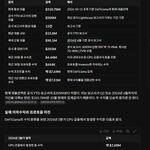
10월 11일 기준 활성 대출 규모는 약 $310M, 최근 30일 총 수수료는 약 $4.44M이고 이 중 프로토콜에 귀속되는 수익은 약 $444K였습니다.
수익의 상당 부분은 sUSDai 예치자에게 돌아가고, 프로토콜은 대출 관련 수수료와 이자마진 등으로 수익을 얻는 구조였습니다.
담보 구조도 생각보다 구체적이었습니다. GPU 가치의 약 70~80%를 대출해주고, 별도 법인인 SPV를 통해 담보를 관리하면서 담보권과 보험 등으로 위험을 줄이는 방식이었습니다.
물론 GPU 가격이 떨어지거나 대출이 부실해질 위험은 있겠지만, 적어도 실제 대출과 수익이 발생하는 사업이라는 점은 긍정적으로 봤습니다.
그런데 여기서 조금 의문이 생겼습니다.
USD.AI는 이렇게 수익을 내고 있는데 정작 ethereum:0x0c1c1c109fe34733fca54b82d7b46b75cfb71f6e 홀더들에게 직접 돌아가는 수익은 확인되지 않았고, DeFiLlama 기준 Holder Revenue도 $0였습니다.
그러던 중 최근 파운더가 올린 글을 봤는데 Permian Labs라는 기업과 ethereum:0x0c1c1c109fe34733fca54b82d7b46b75cfb71f6e 네트워크 자산이 함께 성장하는 새로운 모델을 이야기하고 있었습니다.
이 부분이 궁금해서 파운더의 내용까지 추가해서 Surf에 다시 질문해봤는데, 처음 리서치에서 놓쳤던 사실이 나왔습니다.
지난 5월 Permian Labs가 투자자 할당 물량에서 전체 공급량의 약 3.39%에 해당하는 ethereum:0x0c1c1c109fe34733fca54b82d7b46b75cfb71f6e을 바이백했고, 이전 에어드롭 관련 바이백까지 합치면 전체 공급량의 약 3.71% 규모였다는 것입니다.
처음에는 바이백이 없다고 이해했는데 실제로는 이미 진행된 사례가 있었던 것입니다.
다만 우리가 흔히 생각하는 프로토콜 매출을 이용한 정기적인 시장 바이백과는 차이가 있었습니다.
이번 바이백은 투자자 할당 물량을 줄이는 성격이 강했고, 바이백된 물량이 소각됐는지와 앞으로도 계속 진행할지는 아직 명확하지 않았습니다.
현재 프로토콜 수익의 일정 비율을 ethereum:0x0c1c1c109fe34733fca54b82d7b46b75cfb71f6e 바이백이나 홀더 보상에 사용하는 구조 역시 확인되지 않았습니다.
결국 개인적으로 이해한 건 USD.AI는 이미 실제 수익을 내는 사업이지만, ethereum:0x0c1c1c109fe34733fca54b82d7b46b75cfb71f6e은 그 사업의 성장 가치를 앞으로 어떻게 가져올지가 더 중요한 토큰이라는 점입니다.
파운더가 이야기한 모델대로 기업의 성장과 네트워크 자산의 가치가 실제로 연결된다면 꽤 흥미로울 것 같습니다.
그래서 앞으로는 단순히 TVL이나 대출 규모가 얼마나 늘어나는지보다 프로토콜 수익을 활용한 정기 바이백이나 소각, 홀더 보상 같은 구조가 실제로 만들어지는지를 더 관심 있게 볼 생각입니다.
이번에 Surf를 사용하면서 좋았던 건 처음 질문한 내용에서 끝나는 게 아니라 새로운 자료를 추가해서 다시 물어보니 놓쳤던 정보까지 찾아볼 수 있었다는 점입니다.
특히 투자할 때는 프로젝트가 돈을 잘 버는 것도 중요하지만 그 돈이 실제 토큰 가치와 어떤 관계가 있는지 확인하는 게 더 중요하다고 생각합니다.
요즘은 정보 자체는 어디서든 쉽게 구할 수 있지만 그 정보가 얼마나 정확하고 실제 근거가 있는지가 더 중요하다고 봅니다.
물론 AI 답변도 그대로 믿기보다는 원문을 확인해야겠지만, 이런 식으로 공식 문서와 실제 데이터를 연결해서 궁금했던 부분을 계속 파고들 수 있다는 점에서 Surf를 꽤 만족스럽게 사용하고 있습니다.
이런 저런 정보를 합산해서 내린 결론은 현재 상당히 불리쉬 해보인다는점 그렇다고 지금 사는건... 이미 너무 많이올랐다는점.
#surfai


The Copernican Model
Over the last few months, I’ve been studying the crypto models that seem to be discussed on a "fundamentals" basis: HYPE/Aave/Venice/etc, following the users/ revenue/relationship between a useful product and its token - all to create a sort of "value accural ontology." This is a case study from that research.
The reason was more selfish: I wanted to understand which models work when your business has to interact with the "real world," namely for how we want to take @usdai_official for the most alignemnt
As a founder, I’ve had doors literally shut on my face when we started because we’re “crypto” (literally left in the waiting room like a tv show). I still believe tokenization is one of the most important technologies we have today. But the institutions we need to work with often want a equity counterparty, a board, and a contract. You just wont get around this for the next 10 years (no a cayman foundation doesnt work)
That experience has made me increasingly interested in the role of an equity surrogate: an independent operating business that connects a network to the world outside it.. but frankly there werent many clean examples out there without value destruction.
The case I keep returning to is @tradexyz and Hyperliquid.. and im not really sure they even know how symbiotic of a relationship they created. They technically SHOULD be the same team.. but they are divided across the river due to regulatory issues, while being symbiotic
Consider the S&P 500 agreement, they licensed the benchmark to tradexyz for a perpetual market: the institutional relationship sits with the company, but the product runs on the network.
tradexyz can negotiate licenses, develop products, operate markets, and build distribution. Hyperliquid provides shared execution and settlement infrastructure.
And if theres a company that ever wants "exposure" to the Hyperliquid business, but they just cant buy a "token" (and believe me, it's super super hard to get a traditional enterprise to buy a token, it doesnt fucking matter if you have an ETF, you literally have to convince a boomer board to do it and get the infrastructure set up to do it). Instaed, they could just invest in this equity, as it is not burning the HYPE it buys, but is increasing its share of it. so instead of buyback-n-burn, its closer to commit-n-compound.
I’ve started thinking about this as a value-accrual architecture, with two different forms of capital (terms best described by a16z crypto's post in 2025):
Network asset: scarcity at the core.
- Its supply discipline can become more credible, its economics more programmatic, and its operation less dependent on any single company.
- It coordinates shared infrastructure and connects activity across many businesses to a common asset.
- That is what I mean by a progressively hardening asset. The scarcity and independence have to be earned through the design of the system.
- Not capital intensive, as it must be smart contract based.
- Can often place be the seat of the "decentralized security" - as there is no central underwriter. If HYPE was a company.. itd be regulated out of the wazoo.
Enterprise equity: elasticity at the edge.
- A company can issue shares, raise capital, hire people, acquire licenses, and build products.
- Its capital structure can expand with the work required to bring the network into the real world.
- New shares dilute ownership percentages, but productive investment can increase value per share.
- That ability to finance expansion is why I think of equity as elastic
- This is the part where its OK to be regulated, because most of the regulational burden is held by HYPE, theyre just asset issuers.
These different traits are the reason to combine them.
An enterprise can raise the capital to grow while the network maintains its own supply discipline. The connection is the activity that expansion creates, and the mechanisms that route value from that activity back to the network.
Hyperliquid makes part of that relationship explicit. Trading generates fees for the deployer and the protocol. The Assistance Fund (insurance) automatically converts its allocated fees into HYPE, which the documentation specifies is burned. Hyperliquid fee mechanics
The broader strategy I take from this is Commit & Compound that is conducted around the equity enterprise. It's effectively what a DAT 2.0 would do: create a business first, then max-bid HYPE with that entity, then get new investors to invest in the convexity of HYPE^2.
Build a useful business around the network. Commit capital to its asset. Retain exposure to the infrastructure your business helps make more valuable.
For a company that accumulates and holds the network asset, growing enterprise value and participating in network value become connected opportunities. There is a business to capitalize and a shared ecosystem in which to hold an economic stake.
That is why I find the assumption that every successful application eventually needs its own token less compelling. Building a valuable company around an existing network asset is a meaningful strategy in its own right.
Notice how much kinetic language I’m using: commitment, circulation, gravity
I think network assets and enterprise assets represent different forms of gravity
HYPE is the sun: the network asset at the center
tradexyz equity is a planet: an enterprise building its business around that network
Its real-world integrations are moons: the licenses, institutional relationships, and distribution channels that gather around the enterprise and extend its reach
Enterprise value forms around network value. Real-world relationships form around enterprise value. Their activity feeds back into the shared system.
Personally, I think the greatest value can ultimately accrue at the network level. But that belief has to be substantiated by the businesses being built around it: real users, useful products, liquidity, and recurring economic activity.
A token doesn’t acquire gravity simply because we call it a network asset.
This is the distinction I found useful in a16z’s writing: can the network function and accrue value independently of the original company? Can other businesses build on it and contribute to its economics?
The company can become a great business. The network can become the foundation for many great businesses.
Scarcity at the core. Productive expansion around it.
I’ve learned a lot from this Commit & Compound structure, with a Copernican asset at the center.
It has changed how I’m thinking about USDAI and CHIP. More on that in the next post

1
2
201
I’m still learning about Fungo, but the idea of NFTs having something genuinely private inside them is interesting. Most NFTs reveal everything by default, so letting the holder decide what stays sealed feels like a pretty fresh direction
@fungolabs


My SmartX trader type: “The Alpha Caller.”
“Three hours of research. Two-word thesis: send it.”
Find yours in 6 questions. Join the waitlist for up to 50% off fees and a share of 10,000 USDT in rewards.
smartx.io/waitlist/?invite=w…

2
32
🎁 Surf Mystery Box에서 $4,339 상당의 AMD 당첨!
박스 3개를 열고 총 $7,839 상당의 주식 토큰 보상을 받았어요.
여러분의 박스에는 뭐가 들어 있을까요? 👇
asksurf.ai/mystery-box
#SurfAIMysteryBox
1
56
TOGETRICH retweeted

When hunting for an Earn opportunity, comparing the personalized view against the broader market list completely changes how you spot potential.
One thing I’d actually use Jumper Portfolio for: checking where my stables are sitting across chains before moving anything.
If I had USDC split between Base, Arbitrum and Ethereum, I’d first use Portfolio to see the balances and positions in one place, then decide what actually needs to be moved instead of jumping between explorers.
LI.FI says Jumper Portfolio provides a unified cross-chain view of positions and balances.
Source: li.fi/knowledge-hub/how-jump…

Took a closer look at the JUMP sale terms.
The sale runs Sep 29–Oct 2, with a $2M target and $3M hard cap. Public sale buyers get 50% at TGE, with the rest vesting monthly over 4 months.
Also worth noting: an application doesn’t guarantee an allocation.
Source: Legion app.legion.cc/app/invest/jum…

15
Jumper has already moved beyond just swaps and bridges.
Jumper Earn is live with LI.FI Composer underneath it, so swaps, bridges and deposits can happen in one flow. That’s the kind of UX crypto actually needs.
Source: li.fi/knowledge-hub/introduc…
57
Been looking through Jumper a bit more and Advanced is probably the part that stands out most to me.
Being able to preview output, gas and price impact before executing is useful, especially for larger swaps. Flow splitting orders across liquidity sources is also a nice touch.
Composer making swap → bridge → deposit feel like one flow is where this starts to feel more like a real onchain finance app than just another bridge.
Source: li.fi/knowledge-hub/how-jump… !!

114
TOGETRICH retweeted

Visual tour of my Republic inventory: 33 Ore, 0 unopened Crates or Mysteries.
Mechanics:
📦 Crates reveal ore.
❓ Mysteries may contain VP, crates, both, or nothing. No result is guaranteed, so plan accordingly.
Disclosure: I'm participating in a rewarded Republic campaign.

TOGETRICH retweeted

New to The Republic and half the app is locked? 🙂
Start on Home and follow the Guides — that’s how you unlock the platform step by step.
Each guide opens the next piece: Home → squads → conquests → raids. You don’t need to get everything on day one.
Closed it halfway? 🔁
Go back to Home. The locked tile shows the required guide and Continue / Resume. Same account, same progress — you pick up where you stopped.
Best tip if you’ve never joined: finish one guide fully before jumping into missions or content. That’s how the platform actually opens.
Disclosure: I’m participating in a rewarded Republic community campaign.


TOGETRICH retweeted

Aligned Layer TGE 이후의 계획에 대하여 teapawt.net/i/broadcasts/1yxBePYBE…

Surf를 활용해 Saturn 관련 리서치 작성을 해보려 했는데
Saturn 글을 몇 개 봤는데 어떤 글은 스테이블코인이라고 하고 어떤 글은 수익형 RWA라고 해서 정확히 무엇인지부터 정리할 필요가 있어보여서 찾아봤고 그중에 궁금한게 있어 물어봤는데 답변이 아주 유창하네요 자주 쓰는 코인계의 GPT
@saturn_credit #ASKSURF
asksurf.ai/share/8d26e939-0f…

3
62