
A trader who never said no for a cup of tea or a game of chess
Bengaluru, Karnataka
Joined June 2015
- Tweets6.4K
- Following250
- Followers93K
- Likes6.7K





Pinned Tweet
Grateful to be featured in @moneycontrolcom
moneycontrol.com/news/busine…

One thing I had a very poor understanding of for the longest time was the value of time and the importance of market size.
When we started building FinTarget, it was purely for our own use. Eventually, we realised there was a business opportunity, but we never really understood how big that opportunity could become.
It was only later that we realised the entire addressable market was probably worth just ₹15–20 crore, and even that was growing very slowly, especially with increasing SEBI regulations.
Now, imagine committing 5–10 years of your life to building something in a market that could potentially grow to ₹100–150 crore. Even if you manage to capture 20–30% of that market, you're still looking at a business generating ₹20–45 crore in annual revenue at best.
The problem isn't just the size of the market. It's also how fast the market can grow and whether people are willing to pay.
You could spend the same 10 years, put in the same amount of effort, and build something in a much larger market with significantly greater potential.
That's something I understood very late. Your effort might be the same, but the market you choose can make an enormous difference to the outcome.
Saketh R retweeted

Across Zerodha, here’s roughly the percentage of individual traders who are profitable:
- Futures: ≈50%
- Option sellers: ≈40%
- Option buyers: ≈10%
- MTF: too early to tell, considering it’s a new product
One of the unintended consequences of increasing STT and all the other measures to curb F&O speculation is that they may have pushed traders toward even riskier trading behaviour.
Yes, in theory, losses from buying options are limited to the premium paid. But buying options repeatedly, more often than not, ends with traders losing more money over time than trading futures or selling options. This is not to say that trading futures or selling options is low-risk. It’s a relative comparison.
There are a few reasons why options buying has become so popular.
Most traders don’t realise this, but STT is already one of their largest costs. As STT on futures increased steadily over the years, trading activity migrated from futures to options. Today, options are about 90% of all F&O trading activity.
At the same time, larger contract sizes have made trading futures and selling options more expensive in terms of the margin required. Buying options, on the other hand, is cheaper because it only requires the premium. Hence, more retail traders are buying options.
The other big factor is weekly expiries. Earlier, traders mostly traded monthly expiries. As more contracts started expiring every week, trading effectively became 0-day options. Traders began thinking in days rather than weeks and betting on price moves over increasingly short horizons.
All of these factors have also led to significant growth in MTF, or margin trading facility. With MTF, traders can borrow against eligible stocks and hold positions for extended periods. But MTF is long only.
The intent behind increasing STT, contract sizes, and all the other measures may have been to discourage speculation. The unintended consequence has been traders moving to riskier options trades.
This isn’t just about F&O, by the way. These measures also explain the spectacular increase in crypto F&O volumes. Crypto F&O exists in a grey zone where it’s neither legal nor illegal, and traders can get as much as 100x to 300x leverage on many of these contracts. In the last couple of weeks alone, I’ve come across multiple new platforms advertising crypto F&O contracts, including perpetual futures, none of which are regulated. That’s another unintended consequence of these regulatory measures.
The larger point I’m making is that any regulatory or taxation change has second- and third-order effects. These changes fundamentally alter market structure, and not always for the better, as the recent measures show. The risks always show up in the most unexpected places. And they show up especially in market phases like this one, when markets fall or trade sideways, and liquidity starts to evaporate. That shows up as wider spreads, higher impact costs, and a further drop in trading volumes.
This is perhaps one of the biggest challenges in regulating markets. Indian markets are no longer a backwater, the recent bear phase notwithstanding. We need careful thinking about second- and third-order effects, and thoughtful regulatory design and calibration.

I think one of the most underrated skills in trading is the ability to stick to one thing and keep doing it consistently.
People generally like trying something new. A new job, a new business, a new interest, or in strategy in trading, The moment something stops being exciting or rewarding, the natural tendency is to look for something else.
But trading makes this particularly difficult.
In most professions, doing the same thing repeatedly can become boring. In trading, not only does it become boring, but you can also keep losing money while doing it.
We see this cycle play out repeatedly. When markets are doing well, there is a huge influx of new traders. When markets become difficult and returns don't meet expectations, people slowly start leaving.
Everybody wants to participate when the market is rewarding them. Very few are willing to sit through periods when it isn't.
I've personally made this mistake too. Trying to do too many things at once, constantly exploring something new rather than focusing on getting really good at one thing.
The more I think about it, the more I feel that the ability to focus on one thing, understand it deeply, and have the patience to stick with it through difficult periods is one of the most underrated skills a trader can develop.
It's not just about finding something that works. It's also about being willing to stick with it when it temporarily stops rewarding you.
And I think that's where most people struggle.
It's not necessarily about sticking to one particular strategy, but something much broader. For example, if you take equity and option trading as a whole, rather than spending years and becoming exceptionally good at it, we often tend to jump into other things.
Instead of focusing on one area and striving for excellence, we end up trying to do too many things at the same time, without really developing expertise in any one of them.
Saketh R retweeted

Retail - Please remove long-term capital gain tax.
FM - I will remove the long-term capital gain.

India’s stock market tax stack:
• STT (2004): Payable even on losing trades, with hikes in 2023, 2024 and 2026. Estimated cumulative collection: ~₹3.7 lakh crore up to mid-October 2026.
• LTCG (2018): Reintroduced at 10%, increased to 12.5% in 2024. ₹2.01 lakh crore reported for FY24 and FY25 combined.
• STCG: Increased from 10% → 15% → 20% on eligible short-term equity gains.
• GST (2017): 18% on brokerage and taxable service charges.
• Stamp duty: Charged on purchases, with uniform securities rates introduced in 2020.
• Dividend tax: DDT abolished in 2020; dividends now taxed in investors’ hands.
• Buyback tax: Moved from company-level taxation to shareholder dividend tax, then capital gains in 2026, with additional promoter taxation.
• Trading-profit tax: Intraday and F&O profits attract applicable business-income tax.
• Cess & surcharge: Additional levies on income tax, including 4% cess.
Brokerage, SEBI fees and exchange charges come on top of all this.
Despite this tax burden, our markets continue to attract liquidity. The Finance Minister should welcome that resilience. Unfortunately, liquidity itself now seems to have become a concern.
Saketh R retweeted

This was the post where I had asked traders to send in their comments to @SEBI_Awareness
Today, looking at the final circular, I would call it 7/7 on the core direction of what we had submitted
The biggest one for me
expiry settlement is back to the last 30 minutes of continuous trading, while CAS remains for the cash close.
Indicative values also stay, the timing structure has changed, and iceberg transition now gives participants a choice.
This is why participation matters
A big thank you to @iarjuntandon @vishalmehta29 @PRAFULKULKARN18 @justnottamomma and all the other traders who supported this along with @IRITA_india
Special thanks to @Ashish1Nanda for helping us take this forward 🙏🏻
Thanks to everyone who actually took the time to read, comment and send feedback as well
Link to SEBI order
sebi.gov.in/legal/circulars/…


IRITA response form:
forms.gle/7U4qGVdKQvtWMmkb9
Direct SEBI comments:
sebi.gov.in/sebiweb/publicco…
Read the proposals and submit your own evidence-backed view.


Saketh R retweeted

SEBI has revised the Closing Auction Session (CAS), extended derivatives trading hours and changed expiry-day settlement calculations.
Key changes:
1. Cash market: Regular trading ends at 3:30 PM. Closing Auction Session runs from 3:30 PM to 3:40 PM.
2. Index F&O: Trading continues until 3:45 PM, except expiring contracts, which close at 3:30 PM on expiry day.
3. Stock F&O: Trading continues until 3:45 PM, including expiry days.
4. Expiry settlement: Index and stock derivatives settle using the underlying's last 30-minute VWAP methodology, rather than CAS closing prices.
5. Closing auction: Market and limit orders accepted from 3:31 PM to 3:36 PM. Only limit orders can be entered thereafter, with random closure between 3:38 PM and 3:40 PM.
6. Pending orders: Eligible unexecuted limit and iceberg orders transition into CAS under revised rules.
7. Effective: December 7, 2026, except pending-order transition changes effective February 8, 2027.

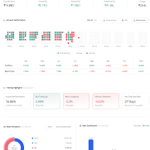
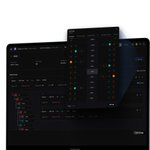
You can simply open Position Analytics from your position book, where all your options positions are grouped symbol-wise.
Select any symbol to view its combined payoff chart and Greeks, add or exit legs, and instantly see how the proposed adjustments would impact your overall position before placing an order.
The idea is simple: everything you need to analyse and manage your options positions, all in one place.
Check out the new Firstock Position Analytics.

One of the biggest challenges in options trading is managing and adjusting existing positions efficiently.
When you're running multiple option strategies across different indices or stocks, you need to understand how your overall position changes before making an adjustment.
With Firstock Position Analytics, we've tried to simplify this entire process.
All your option positions are grouped symbol-wise, so you can view your complete exposure to a particular underlying in one place.
You can switch between different symbols from the left panel and analyse each position independently.
For every group of positions, you can view:
• Payoff Chart: Understand your overall risk-reward structure, breakeven points and how your P&L could change at different underlying prices.
• Option Greeks: Monitor your combined Delta, Gamma, Theta and Vega to understand your directional exposure, time decay and sensitivity to volatility.
• Position Adjustments: Add new option legs or exit existing ones and see how those changes affect your overall payoff before executing anything.
The idea is to make position management more structured.
As an options trader, I believe execution is only one part of trading. Understanding your exposure, evaluating adjustments and managing risk throughout the trade are equally important.
That's what we've tried to bring together with Firstock Position Analytics.
Analyse → Adjust → Review → Execute.
All from your existing position book.


Whenever I see extremist political posts, one thing always surprises me.
Why do these people genuinely believe that the entire West, George Soros, and practically everyone else in the world have only one objective to stop India from progressing?
Think about it logically.
If the West were collectively conspiring to stop a country's rise, wouldn't China be a much bigger priority? China directly competes with them in technology, innovation, manufacturing, and military strength.
India is still nowhere close to China in several of these areas. So why would the entire world spend so much time and energy conspiring against India?
What's even funnier is how practically every protest or criticism in India is somehow linked to George Soros.
I think there's a psychological explanation for this: siege mentality and externalization of blame.
It's much easier to believe that powerful external forces are constantly trying to bring you down than to accept that there could be genuine problems, disagreements, or failures within your own system.
And somewhere along the way, people completely blur the line between a political party and the country itself.
Criticising a government becomes anti-national. Disagreeing with an ideology becomes a foreign conspiracy. Every protest becomes externally funded.
It's almost as though the entire world has nothing better to do than sit around plotting against India.
To me, this is one of the easiest ways to escape accountability. If everything is a conspiracy, nothing ever needs to be questioned.
