
I am Mykyta Creator of @WcashProject. Ex-Architect @okx.
UK
Joined July 2021
- Tweets1.1K
- Following1.9K
- Followers292
- Likes2.9K


The internet changed the world. It still destroyed fortunes.
AI doesn’t have to fail for some of these investments to fail.
Sam Altman is worried about companies promising huge amounts of compute without the revenue or a buyer. He defends OpenAI’s own plans, but questions the wider buildout.
And if compute gets much cheaper, some expensive data centre bets could fail to pay for themselves.
Being right about the technology doesn’t mean you paid the right price.
Someone still has to pay for all this capacity.
Separate interviews: Bezos, July 1999 (published 2019) and October 2025; Pichai, November 2025; Altman, September 2026.
Music: “The Illusionist” by Scott Buckley — CC BY 4.0. Excerpted and mixed for this film.
scottbuckley.com.au/library/…
creativecommons.org/licenses…
13
Claude. ChatGPT. Grok.
@nvidia has delivered Vera CPUs to all three teams.
The next race is getting the work done faster.
17
An AI agent shouldn’t need access to your whole company to do one job.
Jensen’s point here is simple: start with no access. Add the files, tools and network connections the job actually needs.
Then look at the Grok demo. The email is drafted. Sending it is a separate decision. The bot stops for approval.
Anthropic separates the agent’s brain from the sandbox where it runs tools and changes files. NVIDIA’s OpenShell adds file, tool and network restrictions around agents. On 17 November, NVIDIA named Anthropic, OpenAI and SpaceXSI among the companies working with it on OpenShell.
There are different layers here. An AI reviewer checking an action is one. Limits on which files and systems the agent can reach are another.
That’s the direction I’m bullish on. Give an agent useful work, narrow permissions and clear points where a person decides.
More work we can actually delegate with confidence.
@AnthropicAI @OpenAI @SpaceXSI @nvidia
NVIDIA’s current partner update: s201.q4cdn.com/141608511/fil…
Music: 'Catalyst' by Scott Buckley — released under CC-BY4.0. scottbuckley.com.au
scottbuckley.com.au/library/…
creativecommons.org/licenses…
Excerpt edited for this film.
2
1
132
This is why taxing billionaires is so hard.
Archive interviews. The proposed Tesla-backed Twitter loan discussed here was later dropped.
Music: “Ignis” by Scott Buckley. CC BY 4.0. Excerpted and mixed.
scottbuckley.com.au/library/…
creativecommons.org/licenses…
Jensen Huang:
“I’m not afraid of paying taxes. I’m just afraid of being poor.”
1
78
Your coding agent is helping build its replacement.
The same kind of tool we use to fix bugs is helping researchers write training code, run experiments and test ideas for the next AI model.
The loop is simple. A better agent can help the team build the next agent, which can then help with the next round of research.
OpenAI’s researchers describe Codex helping develop ideas for GPT‑6.2. Anthropic also describes Claude taking on more of its development work.
People still choose the research goals and judge the results. The amount of work they can hand over is changing fast.
@OpenAI @AnthropicAI
Research: OpenAI, 18 November 2026; Anthropic Institute, “When AI builds itself.” Interviews published October–November 2026.
Music: 'Discovery' by Scott Buckley — CC BY 4.0. scottbuckley.com.au/library/… creativecommons.org/licenses… Excerpted and mixed for this film.
OpenAI’s models, Claude and Grok are competing for the same work.
GitHub Copilot puts them in the same tool.
That’s a good place to be as a builder.
Pick a model. Give it an issue. Get a change back. Run the checks. Review the code. Decide whether to merge.
This demo keeps the useful part honest: the PR was prepared earlier, the checks pass, and a review still catches something to improve. The person building stays in control.
Then there’s the hardware side. Microsoft’s local coding preview supports selected models on compatible PCs, including NVIDIA RTX Spark, alongside cloud models.
More model choice. More choice over where the work runs.
I’m bullish on what this lets people build.
Let the labs compete. Give builders the tools.
@github @AnthropicAI @OpenAI @SpaceXSI @nvidia
Music: 'Emergent' by Scott Buckley — released under CC-BY4.0. scottbuckley.com.au
scottbuckley.com.au/library/…
creativecommons.org/licenses…
Excerpt edited for this film.
Jensen wanted China buying American.
His case: if Chinese developers build on American chips and software, America keeps the platform. Walk away and you help the competing platform grow.
Dario’s objection is simple too: a chip can be a generation behind and still be extremely powerful.
Jensen’s limit: the US gets the best technology first. He explicitly rejects shipping everything to China.
That’s the fight underneath the chip headlines: how much do you sell while keeping the lead?
These are separate interviews recorded before his departure. @nvidia’s board cited personal conduct for his resignation. The clips do not establish that his China stance caused it.
On 17 November, NVIDIA said it was no longer shipping licensed Hopper data-center products to China.
s201.q4cdn.com/141608511/fil…
Music: ‘Hunted’ by Scott Buckley. CC BY 4.0. Excerpted and mixed.
scottbuckley.com.au/library/…
creativecommons.org/licenses…
Claude competes with Grok.
@AnthropicAI rents compute from Elon Musk’s @SpaceX.
In May 2026, Anthropic announced the Colossus 1 deal. It said this and its other compute agreements let it raise Claude Code usage limits.
Those machines use NVIDIA GPUs. @nvidia has also invested in Anthropic, OpenAI and the business behind Grok.
Sam Altman describes the constraints at OpenAI: memory, rack assembly, data-center capacity.
On November 19, Dario Amodei called the SpaceX compute high-quality, while keeping future choices open. The labs are also adding other hardware suppliers.
Your rival might have the machines you need.
Music: “Machina” by Scott Buckley — CC BY 4.0.
Track: scottbuckley.com.au/library/…
License: creativecommons.org/licenses…
Excerpt edited for this film.
OpenAI has the chip. Elon wants the factory.
And SpaceX is still lining up roughly $40B in financing for @nvidia equipment.
@OpenAI already has working Jalapeño inference silicon. Initial deployment is planned for the end of 2026, alongside continued NVIDIA use.
Terafab is earlier. @elonmusk hopes for a first test chip in June 2027 and phase-one volume production towards late 2028, if all goes well.
@sama explains what he wants from the chip: intelligence per watt. More useful work from the same electricity.
Everyone wants more compute. Everyone wants the bill to come down.
Jensen said it back in April: he has to keep earning the business.
This is the race behind the AI apps: who can deliver more useful work for less money.
Music: ‘Omega’ by Scott Buckley. CC BY 4.0.
scottbuckley.com.au/library/…
creativecommons.org/licenses…

Alexander Embiricos helped build Codex. He called Claude Code’s launch “genius.”
Boris Cherny joked that Codex looked familiar. He also said competition gives people more choice and pushes everyone to do a better job.
Cat Wu describes Claude Code’s early rollout inside Anthropic: engineers were putting up far more code changes, and senior engineers were overwhelmed by the reviews.
Writing more code creates more work unless the tools can check what they built. Boris explains the feedback loop. Cat explains how real incidents became tests for automated review. Tibo talks about designing around human attention.
The people are moving too. On 5 November, Cat announced she was joining OpenAI to lead product management for Core Products.
Anthropic released Fable 5.2 on 9 November. OpenAI released GPT-6.2 Astra and Sol in Codex on 17 November.
I want this competition to give us more useful work and less babysitting.
Interviews from February–October 2026. Cat’s Runtime conversation was recorded on 1 October, before her move; she describes what she wants to make possible for individual engineers.
@OpenAI @AnthropicAI @_catwu
Music: “Goliath” by Scott Buckley, CC BY 4.0. Excerpt edited for this film.
scottbuckley.com.au/library/…
creativecommons.org/licenses…
Before Codex and Claude Code, there was a donated computer.
In 2016, Jensen delivered NVIDIA’s first production DGX-1 to OpenAI. It was a nonprofit. Ilya and Karpathy were explaining what they hoped to build with it.
The SpaceX handoff in this film came later: a different machine, DGX Spark, in October 2025.
Now a Revolut engineer describes using Codex to build an internal code review service. He plans the work, delegates implementation and still reviews every line.
And Anthropic is using NVIDIA GPU capacity from SpaceX as part of its push to meet demand for Claude. On 19 November, Dario called that compute high-quality and said they enjoyed working with SpaceX.
OpenAI and Anthropic compete for our work. NVIDIA supplies hardware across the industry, while SpaceX supplies compute to Anthropic.
A bigger machine helped a small lab try bigger things. Better tools are giving individual engineers more room to build.
The Codex customer video was published on 17 November 2026. The OpenAI research footage is from 2016.
@OpenAI @AnthropicAI @elonmusk @nvidia @SpaceX
Music: “Catalyst” — Scott Buckley, CC BY 4.0. Excerpt edited for this film.
scottbuckley.com.au/library/…
creativecommons.org/licenses…
NVIDIA backs Anthropic. Claude is helping Anthropic use AMD.
Tom Brown, Anthropic’s cofounder and compute chief, told Lisa Su in July that one engineer connected an AMD rack to Claude and left it working over the weekend.
In November’s roadshow, Anthropic reported about three days for a specific task: getting one model’s prompt processing running on AMD MI355X at useful performance. That’s the step where the model reads its input. The comparison with 6–12 months comes from Anthropic’s own engineering history.
Jensen laid out the other side back in April. Getting code to run and pushing hardware to its limit are different jobs. NVIDIA uses AI to write GPU code too.
A rival chip only gives you a real choice when you can run your work on it.
If AI makes that software easier to build, more suppliers get a chance to compete.
More choice for the people building things. I’m all for that.
@AnthropicAI @nvidia @AMD
Music: “Emergent” — Scott Buckley, CC BY 4.0. Excerpt edited for this film.
scottbuckley.com.au/library/…
creativecommons.org/licenses…
NVIDIA backs Anthropic. Its engineers use Claude Code. Dario still disagrees with it on selling advanced chips to China.
@AnthropicAI builds Claude. @nvidia builds the hardware. Their joint engineering work is meant to make Claude faster and cheaper to run.
The deal was announced in November 2025. By June 2026, Claude on NVIDIA GB300 in Azure was generally available.
In this week’s CNBC interview, Dario called the partnership productive. Daniela also named Amazon, Google and Broadcom as compute partners.
So Anthropic is building with NVIDIA while keeping other ways to run its models—and its own position on chip exports.
I like that. You can work together and still say what you think.
The video combines the November 2025 announcement, Dario’s June 2026 Bloomberg interview and CNBC on 19 November 2026.
Music: “Machina” — Scott Buckley, CC BY 4.0. Excerpt edited for this film.
scottbuckley.com.au/library/…
creativecommons.org/licenses…
Too busy to pray. Never too busy to scroll.
A pastor says he asked ChatGPT what it would do as the devil. He reads back an unsettling answer about distraction, broken families and a divided church.
“Put on the whole armour of God, that ye may be able to stand against the wiles of the devil.”
— Ephesians 6:11 (KJV)
Make time for God.
The divide between men and women is being manipulated.
“For where envying and strife is, there is confusion and every evil work.”
— James 3:16 (KJV)
Don’t let an algorithm teach you to hate each other.
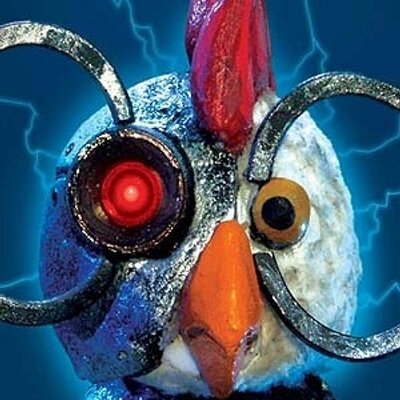

We helped build the knowledge. Now we get a subscription.
Millions of people wrote the code, books, research, tutorials and answers that AI learned from. People spent their lives figuring things out and sharing what they knew.
A handful of companies are turning that knowledge into enormous private value. Most of the people who contributed have no ownership in what comes next.
That’s the argument @CryptoHayes is making when he goes after Elon, Sam and Dario.
And I think he has a point.
Building these models takes serious engineering and capital. Creating the knowledge they learn from took generations of work too.
His proposal with @flop_labs is to give people a way to participate in the economics: supply useful computing power, earn tokens, help run the network.
That doesn’t repay everyone whose work helped train AI. It does put a different ownership model on the table.
Arthur still has to make it work. People need a reason to use it, and the computing power has to be worth paying for.
But this is an idea worth building.
If AI is going to run on what humanity knows, humanity deserves a better deal.
Sam Altman (@sama), looking back on Codex: “We were way behind Claude Code.”
Peter Steinberger (@steipete) was using these tools to build OpenClaw.
Claude Code and Codex help you build software. OpenClaw is a personal agent you can message from your phone and give work to.
You choose the model. You decide which apps, files and tools it can use.
Peter’s February take: Claude’s Opus is the funny coworker. Codex is the weirdo in the corner who gets things done.
Then he joined OpenAI to work on personal agents. His goal was an assistant even his mum could use.
OpenClaw stayed open source and independent, with support for models from different providers.
That’s the part I like. Peter joined a lab. Everyone can still build on his project.
Part 1: the agent race.