

佐藤直生 Principal Software Engineer (FDE), Microsoft 「ベクトルデータベース」 https://teapawt.net/t.co/lxN0DIkn0j 「バイブコーディングを超えて」 https://teapawt.net/t.co/68rsIN5dIJ
Tokyo
Joined May 2007
- Tweets52.1K
- Following5.9K
- Followers6.3K
- Likes6
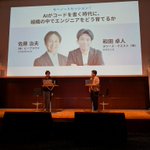


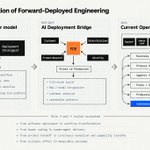
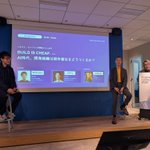


翻訳しました。買ってね。

12/25(金)発売予定の新刊『エフェクティブ・ソフトウェアエンジニア ―個人とチームの成果を上げるAI時代の実践知』の情報をAmazonおよび楽天ブックスで公開開始しました!
AIツールを含む技術の変化に対応しながら、人間ならではの貢献に注力する方法を考える一冊です!
amazon.co.jp/dp/4814401914


“Vector Databases” (ベクトルデータベース ― 実践で学ぶセマンティック検索の基礎) – S/N Ratio
satonaoki.wordpress.com/2026…

SATO Naoki (Neo) retweeted

My newest book 'Fine Tuning AI' just came through the mail from O'Reilly
I think this is perhaps the most important book I've ever written. I strongly believe the best future career for many software developers will be in Fine Tuning AI for domain-specific tasks. With this book, I try to simplify it, primarily using Google's Gemma models.
You can find it on Amazon here: link.amazon/B02x2ZVPD
Or O'Reilly Safari here: oreilly.com/library/view/fin…
Thank you so much for your support!

SATO Naoki (Neo) retweeted

Some things I learned working at Microsoft:
1/ large numbers everywhere. $100M ARR service isn't even a footnote on executive slide decks. Leadership time is too valuable, come back when you're $1B+. Msft ecosystem is so rich that $1B+ sales are common (it's ludicrous how much work goes into closing these). Azure has ~250 services, some are a few mil and stagnant, others in hypergrowth, some are cash cows, you see every quadrant of the growth-share matrix. Imagine the imperial navy with ships of vastly different sizes as far the eye can see
2/ more on immense scale-- the smallest of Azure services run on 10K+ VMs. Large services run on 1M+ (some maybe 10M+ VMs, idk). Msft is stamping one new datacenter into the ground every four days (!!!!), a bewildering rate. Demand is so high, even with all this buildout we're forever capacity constrained. Azure brings in $100B in revenue and is growing 40%+ annually (at this size!!) There are ~225K msft employees. You almost have to think in scientific notation, 10^4 is a tiny number here
3/ msft is totalitarian re serving the customer. It's counterintuitive to outsiders, but the warts in msft products fall out of this culture. For example, it would be easy to improve the Azure Portal. But in all my time working with customers and partners here, I haven't heard even one person complain about the portal UI. Msft invests $0.00 dollars in anything that doesn't serve the customer and is completely unapologetic about downstream implications of this mindset
4/ msft can reshape itself overnight (when it has the will). People argued whether we waited too long to adapt after Storm-0558/Midnight Blizzard hacks (with the benefit of hindsight, we definitely did). But once the leadership team privileged security, everyone's job changed in two weeks. LT tied every engineer's comp to security, centralized reporting of embedded security teams, every org reshuffled its roadmap. Within days everyone was pushing PRs with security fixes. I would have thought it inconceivable to mobilize 200K+ employees this fast
5/ Azure is complicated. Postgres depends on compute, networking, AKS (or EKS for you aws people), secrets, etc. AKS depends on compute, networking, some datastore (probably Cosmos but idk), a dozen other things. Cosmos depends on... you get the idea. When anything breaks, everything above can break too. Some construction crew accidentally cuts a fiber cable in Brazil South, or a dedicated hardware compression chip browns out in storage, or compute failure rate in west eu spikes for some reason, or a million other failure modes. Msft is relentless about improving this, idk exactly but fully loaded probably 50% of engineer time goes into resilience
6/ re lifers who work 20+ years here, SV sneers at this but I now see it differently. I was once on the bridge debugging some IO issue, we call storage, the guy diagnoses it in about a minute, we chitchat, turns out he built NT asyncio support. Or same story but with networking, the guy built NT tcp/ip stack. I used to have a boss here, we were bumping into some problem, she casually goes oh yeah, we hit that when I was working on .NET bytecode. The ex-DEC VAX/VMS database engineers built SQL Server, some are still here. I love bumping into these people
7/ I never *really* understood distribution until I got here. As an example, our team had a customer in Seoul w/ a deep performance problem. We had to fix it to unlock one of these giant contracts. We don't speak Korean, they don't speak English. Of course msft has specialists in Seoul who get to the customer site before you could even get on a plane. There is an office in every major city, a relationship with every major entity, legal experts in every jurisdiction. You can reach these ppl instantly. Claude tells me msft has ~180 offices in ~100 countries (!!) U.S. government has ~270 consulates in ~170 countries. So msft outposts aren't quite as vast as U.S. diplomatic network, but pretty vast
8/ in the 90s everyone was afraid of msft. The lore is that BillG was ruthless. He'd clone you, beat you via ecosystem/distribution strength, and moreover make the ecosystem stronger with the new product. I wasn't there to compare, but msft of today is ruthless about winning, has the will to adapt, and has the wherewithal to undertake colossal projects. Ppl see Teams bugs or whatever and completely misread the signals. Teams is less polished than Slack because msft doesn't care one iota about polish. It cares about winning, and is frighteningly good at it. Underestimate at your own risk
SATO Naoki (Neo) retweeted

「コードを書くだけのエンジニアに未来はない」 SCSK堀井大砂氏が語る「AI駆動開発」が壊す日本の多重下請け構造
※無料で全文お読みいただけます
<JBpress Innovation Reviewは企業変革の専門メディア>
SATO Naoki (Neo) retweeted

ソフトウェアエンジニアリングの基礎は
変わっていないので、生成AIが普及しないが
腐らない知識になる
oreilly.co.jp/books/97848144…
#TechLeadConf

SATO Naoki (Neo) retweeted

How we can secure 50% of the world's software.
Traditionally, formal methods have been mostly used for safety-critical systems like operating systems, hypervisors, and databases. We're extending this to formally and empirically verify code correctness and security for full-stack web apps, one of the most common types of applications*, using the Proof-Driven Development Kit (PDD Kit).
Coding agents now write code faster than anyone can review effectively. PDD Kit turns what the developer meant into a Verus specification. It then proves the AI-generated code meets that spec for every input.
Researchers @alexlavaee, @MatthaiP39719, @Mappletons, and @k_cieslak break down Proof-Driven Development x Chopin in the blog here: githubnext.com/projects/pdd-…
*44.4% of respondents work as full-stack (27.3%), back-end (13.5%), or front-end (3.6%) developers. Stack Overflow Developer Survey 2026, n = 25,767.

SATO Naoki (Neo) retweeted
How do you _guarantee_ your agent's code is correct? You prove it.
Introducing Proof Driven Development Kit (PDD Kit) from @MSFTResearch.
PDD Kit helps turn your plan into a formal spec, then proves the agent's code meets that spec for every input. No vibe verification. PDD Kit is integrated with @GitHubNext's Chopin, so you can plan as a team.
PDD Kit takes an app's login flow from intent to a verified pull request:
It discusses your code, infers your intent as it goes, and proposes a formal spec in Verus, a proof language for Rust.
Once you approve the spec, the Verus verifier automatically proves the code meets it.
Where proof isn't possible, it falls back to empirical verification with tests and computer-use agents (CUAs).
It works on Rust today. No new language, no change in how you produce the underlying code, making formal methods more accessible.
The goal is a verified software factory, where engineers review specifications instead of code.
Come see it in action at GitHub Universe, Oct 28–29. Swing by the Speakeasy and ask for GitHub Next!
ドメイン駆動トランスフォーメーション
―レガシーシステムのモダナイゼーションとリスク低減
oreilly.co.jp/books/97848144…
#TechLeadConf

SATO Naoki (Neo) retweeted

More than 200,000 CPU cores power Uber’s data lake ingestion. At that scale, every efficiency gain counts.
Making better use of that compute means examining how Spark executes queries, moves data, and writes to growing tables. Accelerating one stage can leave other bottlenecks untouched.
Uber engineers are improving production workloads with native vectorized execution and evaluating new ways to accelerate write-heavy pipelines.
Explore the engineering choices behind those efforts, where the benchmarks showed gains, and what remains to be optimized.


SATO Naoki (Neo) retweeted

Thoughtworks Technology Radar Vol. 35 is out now 👉 tinyurl.com/yax6p7d7
#TWTechRadar
SATO Naoki (Neo) retweeted

イベントページが公開されたので告知を。11/19(木) 19時から弊社の六本木オフィスでMicrosoft Ignite 2026の初日ふりかえりをやります。今回はなんコパとのコラボなのでIgniteの初日をふりかえりたい方は参加しような。
avanadejapantech.connpass.co…

SATO Naoki (Neo) retweeted

このシリーズ、立場によって印象は違うと思いますが、企業ITに関わる多くの人の参考になると思います / アーキテクチャの比較表で勝った案を本当に選ぶべきか AIに任せきれない検証と合意のプロセス:ディシジョン・ドリブン・アーキテクチャ AI時代の「決める」技術 itmedia.co.jp/enterprise/art…

SATO Naoki (Neo) retweeted

ほんでほんで、ITエンジニア本大賞2027の投票が始まってます。ありがてえことにコンテキストエンジニアリング弁当本が投票リストにノミネート!2月なので何か久々に名前聞いた感じするかも知れませんが、清くても汚くてもいいので一票をよろしくお願いいたします。
そして、あれだけ大変過ぎてもう二度と書かないと思っていた執筆作業ですが、近いうちにまた書くことになりそうです。Agent界は話題が豊富なもんで…。
shoeisha.co.jp/campaign/awar…

ITシステムを理解するとは、構成要素・データの流れ・依存関係を頭に描き、変更や障害の影響を予測できる状態。メンタルモデルは、その予測を支える脳内の地図。
#TechLeadConf


Thinking—Fast, Slow, and Artificial: How AI is Reshaping Human Reasoning and the Rise of Cognitive Surrender
papers.ssrn.com/sol3/papers.…
#TechLeadConf