

501(c)(3) nonprofit - To recover and restore a variety of threatened marine species, while connecting people to ocean wildlife.
• 🇺🇸 USA • 🇧🇸 Bahamas •
Joined December 2012
- Tweets2.5K
- Following3
- Followers4.1K
- Likes5.1K




👁️ HOW DO SHARKS SEE?
Sharks have surprisingly good eyesight, and their eyes are specially adapted for life underwater.
» Built for low light: A reflective layer behind the retina called the tapetum lucidum reflects light back through the retina, helping sharks see in dark, cloudy, or deep water.
» Sensitive to movement: Their eyes contain lots of rod cells, making them especially good at detecting changes in light, contrast, and movement.
» They can see color — maybe: Some sharks have cone cells, but how much color different species can actually perceive is still an area of research.
» Wide field of view: The position of their eyes gives many shark species a very broad view of their surroundings. Hammerheads take this even further, with their widely spaced eyes increasing their field of vision.
---
Photo by @annieguttridge
#Sharks #SharkFacts #MarineBiology #MarineLife #OceanLife #SharkScience #MarineScience #Wildlife #OceanConservation #SavingTheBlue

BIG SHARK. BIGGER QUESTIONS. 🦈
A great hammerhead gliding through the shallow waters of Andros, and a reminder of why we spend so much time in the field learning where these sharks go and how they use their habitat.
Our hammerhead research looks at movement, habitat use, residency, and the connections between populations across the region. Every sighting helps add another piece to that picture.
There’s still so much we don’t know. That’s why we keep getting in the water. 🌊
----
Photo by @annieguttridge
#GreatHammerhead #HammerheadShark #SharkResearch #Sharks #MarineBiology #MarineScience #OceanLife #SharkConservation #OceanConservation #SavingTheBlue

What looks like a few minutes on the boat is actually a carefully coordinated process.
Once a hammerhead is brought alongside, the research team works quickly and efficiently to collect important data while minimizing the time the shark spends out of the water. Measurements are taken, existing tags are checked, and new tags or samples may be collected depending on the research project.
For hammerheads especially, speed and teamwork matter. A typical work-up can include length measurements, PIT tagging, external tagging, and, when part of the study, a SPOT tag to help us track movements after release.
Every measurement and every tag adds another piece to the puzzle, helping us understand where hammerheads travel, how they use different habitats, and how we can better protect them.
----
Photo by @annieguttridge
#HammerheadShark #GreatHammerhead #SharkResearch #SharkTagging #MarineBiology #MarineScience #SharkConservation #Sharks #OceanConservation #SavingTheBlue


Three very different habitats, all essential to life in the ocean.
MANGROVES
Nursery grounds for young fish, sharks, and rays while helping protect coastlines.
CORAL REEFS
Home to an incredible diversity of marine life and important shelter, feeding, and breeding grounds.
KELP FORESTS
Underwater forests that provide food, shelter, and nursery habitat for countless species.
Different habitats. One connected ocean.
Protect the places that protect marine life.
---
Photos by @annieguttridge
#MarineHabitats #Mangroves #CoralReefs #KelpForest #MarineLife #OceanLife #MarineBiology #OceanConservation #Nature #SavingTheBlue


Quiet moments beneath the surface.
Manta rays are constantly on the move, using their large cephalic fins to help direct plankton-rich water toward their mouths as they feed. Seeing one glide effortlessly over the reef is a pretty incredible reminder of how much life exists just below the surface.
---
Photo by @annieguttridge
#MantaRay #Rays #MarineLife #OceanLife #MarineBiology #UnderwaterPhotography #Nature #Wildlife #OceanConservation #SavingTheBlue

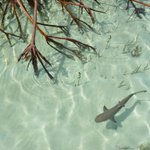
Mangroves aren’t just trees — for young lemon sharks, they can be a nursery. 🌱🦈
Juvenile lemon sharks commonly use shallow mangrove-fringed habitats during their early years. The warm, protected waters provide plenty of food while the shallow depths and complex mangrove roots can reduce exposure to larger sharks.
Young lemon sharks also show strong site fidelity, meaning they may return to and remain within the same nursery areas for extended periods. Protecting mangroves therefore means protecting habitat that can be important during one of the most vulnerable stages of a shark’s life.
Healthy mangroves = healthy beginnings. 💙🌊
---
Photo by @annieguttridge
#LemonShark #Sharks #Mangroves #MarineBiology #MarineLife #OceanLife #Nature #SharkConservation #OceanConservation #SavingTheBlue

For anyone who’s been on a research trip with us… let’s see what you remember.
What is this tag and device, and what does it do?
Think you know the answer? Drop it in the comments before checking the answer below.
----
S P O I L E R S :
Answer: PIT tag + scanner — a tiny ID system that helps us recognize individual sharks over time.
----
Photo by @annieguttridge
#Sharks #SharkResearch #MarineBiology #MarineScience #OceanLife #SharkTagging #Nature #Wildlife #UnderwaterPhotography #SavingTheBlue


just swimming by to say hi ♡
Nurse sharks are often found resting on sandy bottoms and around reefs, using their barbels near the mouth to help locate food along the seafloor. They’re generally slow-moving and spend much of their time close to the bottom, making them one of the more laid-back sharks you might encounter underwater.
A little underwater hello from one of the ocean’s most curious residents.
----
Photo by @annieguttridge

October 17th was International Sawfish Day!
🩵🦈
Sawfish are among the most endangered marine fishes in the world, making conservation efforts more important than ever.
In Andros, Saving the Blue is working with local communities to learn more about these incredible animals through documenting sightings, collecting sawfish rostrums, and conducting DNA sampling. These efforts help us better understand sawfish populations and support research that can guide future conservation efforts.


GUESS THE SHARK 👀
This one might be a little trickier… 👇
🔎 Hint: Look closely at that smooth, slender body and the shape of its fins. This shark has a pretty streamlined look compared to some of the larger species you might be used to seeing.
Think you know it? Drop your guess in the comments! 🦈🌊
---
photo by @annieguttridge
#SavingTheBlue #nature #shark #marinebiology #SharkResearch #SharkScience #MarineLife #OceanLife #Sharks #OceanConservation


There’s a whole world beneath the surface. 🌊🪽
Eagle rays gliding through the blue are a pretty incredible reminder of just how much beauty exists in our oceans. Sometimes, you just have to get in and experience it for yourself. 🤿💙
Go diving. Go snorkeling. Get your feet in the water. Immerse yourself in the ocean and see what you’re protecting.
And if getting in the water isn’t your thing, that’s okay too. Pick up trash on the beach, protect the habitats around you, and leave the coastline a little better than you found it. 🌊
You don’t have to be a diver to make a difference.
The ocean needs all of us. 💙
----
photo by @annieguttridge
#SavingTheBlue #EagleRay #AndrosBahamas #OceanConservation #MarineConservation #Ocean #MarineLife #ProtectOurOceans #Travel #Bahamas #Nature

Tag. Track. Learn. Protect. 🦈🌊
A SPOT tag helps us follow shark movements after release, giving us a glimpse into a world we can’t observe from the boat.
SPOT tags are a powerful tool for tracking shark movements in the wild. 🦈 Attached to the dorsal fin, the tag sends the shark’s location to satellites whenever the fin breaks the surface. This allows us to follow their movements, sometimes receiving updates daily, for up to two years. 🌊💙
savingtheblue.org/sharktags
---

What happens beneath the surface matters! 🌊🦈
Sharks are part of a much bigger ocean ecosystem, and understanding where they go, how they use their environment, and what pressures they face helps us understand how to better protect them.
There’s still so much we don’t know. That’s why we keep looking beneath the surface. 💙
----
photo by @annieguttridge
#SavingTheBlue #SilkyShark #SharkResearch #SharkConservation #MarineBiology #SharkScience #Nature

Why should we care about a sawfish? 🩵🌊
Because losing a species doesn't happen overnight.
Smalltooth sawfish have disappeared from much of their historic range, with fishing bycatch and the destruction of shallow coastal habitats among the major threats. And because they reproduce slowly, rebuilding their populations takes time.
Our work in Andros is helping fill some of the gaps in what we know, looking for important habitats, documenting where sawfish are found, and working with local communities to turn that knowledge into conservation action.
The more we know, the more we can do.
Explore our Sawfish Research
savingtheblue.org/sawfish
----
photo by @annieguttridge
#SavingTheBlue #SmalltoothSawfish #nature #MarineConservation #earth #EndangeredSpecies #AndrosBahamas #life #OceanScience #conservation

There’s a whole world down here worth protecting. 💙🌊
Every reef, every species, every stretch of blue plays a role in the bigger picture of our ocean. The more we explore, the more we understand, and the more there is to protect.
---
photo by @annieguttridge
#SavingTheBlue #OceanConservation #MarineConservation #OceanLife #MarineLife #UnderwaterWorld #BluePlanet #ProtectOurOceans

Great hammerheads can travel across large areas, which means understanding their movements is an important part of conservation. By tracking and studying these sharks, we can start to see the bigger picture of where they go and what habitats matter most.
Dive deeper into our hammerhead research: 👇
savingtheblue.org/hammerhead…
---
photo by @annieguttridge
#SavingTheBlue #GreatHammerhead #HammerheadShark #SharkTracking #SharkResearch #SharkConservation #MarineScience #OceanConservation #SharkScience

A shark that knows how to work the seafloor. 🦈
Great hammerheads are known for hunting along the seafloor, where they feed on fish, squid, crustaceans, and especially stingrays. They can use their wide pectoral fins to make tight turns and even pin rays against the bottom.
Pretty impressive technique 👀🌊
----
photo by @annieguttridge
#SavingTheBlue #GreatHammerhead #HammerheadShark #SharkFacts #SharkBehavior #SharkResearch #SharkScience #SharkConservation #MarineLife #OceanLife

POV: your friends have fins 🦈
These lemon sharks are right at home in the warm, shallow waters of the Bahamas. Their yellow-brown coloring helps them blend in with sandy bottoms while they cruise around looking for their next meal. 🌊💛
Just another day in the field :)
----
photo by @annieguttridge
#SavingTheBlue #LemonShark #SharkResearch #SharkFacts #SharkLife #SharkConservation #Bahamas #OceanLife #MarineBiology #Sharks

Golden hour hits differently in the open ocean. 🌅💙
As the sun goes down, things start to shift beneath the surface. Silky sharks are active hunters, and their movements can change around dusk as they take advantage of changes in prey availability. Many ocean animals change where they’re found throughout the day and night, creating new feeding opportunities for predators. 🦈🌊
----
photo by @annieguttridge
#SavingTheBlue #SilkyShark #SharkResearch #SharkConservation #SharkBehavior #OceanConservation #MarineLife #SharkScience #OceanLife #Sharks

Why silky shark research matters 🦈
Silky sharks are the second most harvested shark species globally, facing significant pressure from both targeted fisheries and bycatch. In some regions, populations have declined dramatically, making understanding their movements and population structure more important than ever. 🌊
Saving the Blue is studying where silky sharks travel, how populations are connected, and whether they return to specific sites to reproduce. Researchers are also working to identify important aggregation and nursery areas that could be critical for the species’ future.
By combining movement and genetic research, we can better understand these highly mobile sharks, and help inform conservation strategies that protect them across the U.S., The Bahamas, and the wider Caribbean. 💙
----
Photo by @annieguttridge
#SavingTheBlue #SilkyShark #SharkResearch #SharkConservation #MarineResearch #SharkScience #OceanConservation #CarcharhinusFalciformis #TheBlue

