Scott Howard retweeted
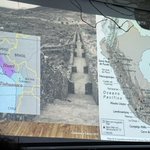
The traditional Inca chronology has collapsed. New radiocarbon dates show the empire lasted longer than was previously thought—and met more resistance.
Learn more: scim.ag/4zDt4le

ALT Map of western South America showing the estimated dates of sites across the Inca empire. The standard Inca chronology held that the empire was founded suddenly in 1438 and spread north between 1463 and 1471. Archaeologists previously thought the Inca empire then conquered the south between 1471 and 1493. However, the median dates obtained from early Inca artifacts across groups of archaeological sites show the empire first went south, and did so nearly a century earlier than the standard chronology dictated.
Scott Howard retweeted
UPDATED VIDEO: Utah County Search and Rescue is sharing new footage from the Oct. 26 rescue of a hiker on Mount Timpanogos.
The hiker slipped off the trail and fell several hundred feet, stopping on a small ledge. A Utah County Sheriff’s Office pilot spotted her from an airplane as search and rescue crews headed to the mountain.
The Utah Department of Public Safety helicopter team then hoisted the hiker from the mountain and took her to a waiting ambulance. The sheriff’s office says she is recovering well and wishes her a full recovery.
Scott Howard retweeted
Analysis of the hair and fingernails of eight mummified Inca children reveals that they were given cocaine and alcohol prior to being sacrificed high on Andean mountain peaks newscientist.com/article/259…
Scott Howard retweeted
📰 Analysis of #Inca mummies identifies the drugs used in sacrificial capacocha rituals
#AntiquityResearch #ArchaeologyNews via @HeritageDaily
heritagedaily.com/2026/11/an…
Scott Howard retweeted
In Tarma, Peru a very interesting dialect of Quechua is spoken.
We analyzed the recordings and show that the dialect features one of the most intriguing phonotactic restrictions. Stops are voiced after a voiceless stop and voiceless after a nasal.
Scott Howard retweeted
Pillar 43 at Gobekli Tepe dates to 14,800 BCE.
Until we grasp this, we will not be able to comprehend the history of mankind and its relationship with the Holocene.
Scott Howard retweeted
On Isla de la Luna in Lake Titicaca stand the ruins of Iñaq Uyu, a major Inca acllahuasi tied to the chosen women and lunar cult. Tradition links the island to Viracocha commanding the moon to rise and to the origin myths of the sun, moon, and first Incas from the sacred lake.
Scott Howard retweeted
The year is 1950. Your doctor lights a cigarette and tells you smoking is fine. He read it in a study. He is telling the truth about having read it. He does not know, or is not saying, that the study was funded by the tobacco industry.
The year is 1958. Your doctor tells you to eat less fat. The evidence is contested. The contestation is not in the public messaging. The food industry has been helpful in clarifying which findings deserve attention. Some researchers who published contradictory data have been quietly defunded. Ancel Keys is on the cover of Time magazine.
The year is 1962. Your doctor prescribes thalidomide to your pregnant wife for morning sickness. It has been approved. The FDA gave it the green light in Europe. Twelve thousand children will be born with severe limb malformations before anyone in an official capacity acknowledges the problem. The families are told the drug was safe. The drug was approved. Both of these things remain true.
The year is 1972. Your doctor prescribes Valium. Britain is in the grip of a benzodiazepine wave that will last two decades. The dependency risk is known internally. It is not shared. Your doctor is not lying to you. He was not told either.
The year is 1999. Your doctor prescribes Vioxx for your arthritis. It is newer than ibuprofen, well-tolerated, and Merck has a study showing it works. Merck also has internal data suggesting it roughly doubles the risk of heart attack. This data will not reach your doctor for four more years. Fifty thousand people are estimated to have died in the interim. Merck eventually settles for 4.85 billion dollars. No criminal charges are brought.
The year is 2002. Your doctor prescribes OxyContin. Purdue Pharma trained its sales representatives to tell doctors the addiction risk was less than one percent. That figure came from a letter, not a study. The letter was about patients with terminal cancer on short-term doses in hospital settings. Your doctor is a GP with a patient who has a bad back. Nobody draws a distinction. Nobody is required to.
The year is 2008. Your doctor checks your cholesterol. Your LDL is elevated. You are prescribed a statin. Nobody mentions that the number needed to treat for primary prevention is approximately 250. Nobody mentions that the muscle deterioration you'll notice over the next two years is listed as a rare side effect rather than a documented pattern affecting a meaningful percentage of patients. The trial that informed the prescription was funded by the manufacturer.
Now it is today.
Your doctor has new guidelines. New studies. New consensus.
He is confident.
He has always been confident.
The confidence has never been the problem.
The confidence is, in fact, precisely the problem.
Scott Howard retweeted
BREAKING: A jury has found Live Nation and Ticketmaster to be an illegal monopoly that overcharges fans, per MorePerfectUnion
Scott Howard retweeted
Anthropologist traces split between Homo sapiens and Neanderthals — Harvard Gazette news.harvard.edu/gazette/sto…
Scott Howard retweeted
Tim Dillon knows what he's talking about.
@TimJDillon: "There's people that go [to Disney World] without children..."
Tucker: "Without children? Why would you go without children?"
Tim: "Because people are sick."
Lindsey Graham lives it up at Disney World during the partial government shutdown!
Take a look: tmz.me/Qr2Dqzn
Scott Howard retweeted
Altar with offerings including skulls and bones discovered in Tula, the ancient capital of the Toltecs labrujulaverde.com/en/2026/0…
Scott Howard retweeted
A pesar de la importancia que se le da actualmente a #Wiracocha como el más destacado entre los dioses #andinos, probablemente esta no corresponda a la visión que se tenía de tal deidad en época prehispánica y más bien haya sido influenciada por los evangelizadores católicos, que buscaban un nombre para explicar a los indígenas el concepto del Dios creador en una religión monoteísta, contraria al panteón con múltiples divinidades y variantes regionales de la religión andina primigenia o #Wakanismo. Además, se le añadieron títulos con el fin de recalcar su calidad de ser supremo, y de este modo se formó el nombre en quechua de: Apu Qun Tiksi Wiraqucha.
Según la tradición, en el #Cusco antiguo, se le dio gran importancia al ser "que envió a Manco Cápac y Mama Ocllo a fundar una ciudad". Con el paso de los años se fue olvidando el culto a este dios, y se le dio más importancia al dios Sol (Inti), hasta el reinado de Yahuar Huaca, que mandó a construir el templo de Wiracocha en la ciudad del Cusco.
Durante el proceso de evangelización la identidad de Wiracocha fue variando a hacia la de un "creador de todas las cosas", significado que atribuyó a su nombre Bartolomé de las Casas. Otros cronistas como Polo de Ondegardo, Sarmiento, Blas Valera, José de Acosta y Guamán Poma también lo vieron como un dios creador. Sin embargo, algunos autores como Garcilaso de la Vega, Juan de Betanzos y Pedro de Quiroga revelan que Wiracocha no fue el nombre original de "dios" y demuestran perplejidad ante tal significado. Según Garcilaso el nombre de Dios en el lenguaje general de Perú fue "Pachacámac" y no Wiracocha.
Es probable que esta denominación de Wiracocha como "dios creador" haya nacido para luchar contra el politeísmo que representaba el culto a las #Huacas, las múltiples divinidades locales a las cuales atacaron los extirpadores de idolatrías. Además la creencia #andina en un dios supremo serviría para demostrar que la revelación de un dios único y universal era "natural" para la condición humana.
Tampoco existen argumentos iconográficos para seguir sosteniendo que la deidad conocida como “Dios de los Báculos” (Staff God) corresponda a Wiracocha, y la única representación específica que nos ha llegado aparece en la descripción que hace el cronista indígena Juan de Santa Cruz Pachacuti Yamqui Salcamayhua de la placa de oro del altar mayor del Qurikancha, el templo principal de Qosqo. En dicha placa, que representaba la cosmovisión andina, Wiracocha aparece como un óvalo por debajo de la constelación del Cinturón de Orión (“Orcorara”), que probablemente hace alusión a la nebulosa de Orión, con la que se habría identificado a esta deidad.
📸 Reconstrucción de la placa de oro donde se representan a las fuerzas que adoraban los incas: sol, luna, estrellas, arco iris, rayo, jaguar y agua. Museo Arqueológico de Coricancha. Convento de Santo Domingo, Cusco / Representación de la cosmovisión incaica por Juan de Santa Cruz Pachacuti Yamqui Salcamayhua en “Relación de las antigüedades del Reino del Perú” (1613), según una imagen en el Templo del Sol (Qurikancha).
LAS CREACIONES DE WIRACOCHA.
A Wiracocha se le atribuye la creación de todas las cosas, entre ellas:
El universo, el sol, la luna, las estrellas, el tiempo (ordenando al sol para que se desplace solo por el cielo) y el hombre en la tierra.
Wiracocha fue descrito como “un hombre de mediana estatura, blanco y vestido con una túnica blanca, con un lazo asegurado a la cintura, llevaba un báculo y un libro en sus manos.”
Las leyendas de wiracocha.
Una de las leyendas de Wiracocha dice que llegó a tener un hijo a quien llamó Inti, y dos hijas, Mama Quilla y Pachamama.
En esta leyenda, destruye a la gente del lago Titicaca con una gran inundación llamada Unu Pachakuti, salvando solo a dos humanos para llevar la civilización al resto del mundo; estos dos seres son Manco Capac, hijo de Inti (a veces se toma como el hijo de Viracocha), cuyo nombre significa “fundación espléndida”, y Mama Ocllo, que significa “madre de la fertilidad”.
Los dos buscaron un lugar apropiado donde se hundiera la vara de oro llamada ‘Tapac-Yauri’ para fundar la civilización Inca.
En otra leyenda, se relata que fue padre de los ocho primeros seres humanos civilizados.
En algunas historias, tiene una esposa llamada Mama Cocha.
Wiracocha en el Perú hoy.
El dios más importante para las culturas andinas sigue siendo representado hoy en día en muchos lugares en el interior del Perú, en donde podemos encontrar monumentos interesantes de Viracocha.
Una de las más importantes e interesantes obras para homenajear la mitología andina de Wiracocha se encuentra en Cusco, en uno de los museos más modernos de todo el Perú: El museo Inkariy.
Es una escultura increíble de 11 metros de altura que nos da la bienvenida a un museo contemporáneo que agrupa a las culturas andinas pre-inca más importantes e influyentes del Perú.
En sus salas conoceremos más sobre la historia del Perú y de Sudamérica, un interesante lugar para visitar si buscamos saber más de Wiracocha y Cusco.
Movimiento de Liberación Indígena
Scott Howard retweeted
Last year, archaeologists discovered a previously unknown Tiwanaku temple in the Bolivian Andes, revealing the complex trade and ritual interaction networks of this powerful pre-Inka state, and it was some of our most-read research of 2025!
Read it 🆓 doi.org/10.15184/aqy.2025.59
Scott Howard retweeted
Colorized early 1900's photo of the "Stronghold House" in Square Tower Canyon, Hovenweep, Utah. This was made around 1200 A.D.
From: Smithsonian BAE Bulletin # 70, 1919.
Scott Howard retweeted
HALLAZGOS EN ESPIRITUPAMPA (Cusco)...
Una de las botellas de origen Wari presenta en el cuello el rostro de un ser humano caracterizado por sus enormes ojos, nariz y boca.
Sin embargo, lo más llamativo, es la corona que está pintada sobre su cabeza, lo cual indica que Espíritupampa durante el apogeo de los Wari estuvo ocupado por personajes de la élite gobernante.
Arqueólogos Trujillo