The app for reviewing and publishing AI edits. Download it today at https://xitter.cf/t.co/56IJVUgWy4
USA
Joined April 2026
- Tweets568
- Following70
- Followers17
- Likes157





Scratch retweeted

Qwen3.8-27B can now be run locally! ✨
Run on 17GB RAM via Unsloth Dynamic GGUFs.
Qwen3.8-27B is by far the strongest model for its size. We also uploaded NVFP4 quants.
GGUF: huggingface.co/unsloth/Qwen3…
Guide: unsloth.ai/docs/models/qwen3…


We promised open weights for Qwen3.8. Now, time to meet them! 🎉
⚡ Qwen3.8-27B:
- A native multimodal dense model. With just 27B parameters, it outperforms Qwen3.7-Plus overall and shines in real-world coding & office workflows.
- 262K native context, easily extendable to 1M tokens via YaRN.
- Built for builders. Highly efficient, high-quality, and licensed under Apache 2.0.
🚀 The open weights for Qwen3.8-2.4T-A95B (Max-level) have also been released recently.
Whether you're shipping lightweight applications with Qwen3.8-27B locally or building agents with Qwen3.8-2.4T-A95B, they're yours now!
Download, deploy, and build something we haven't imagined yet. 👀👇
- Hugging Face:
huggingface.co/collections/Q…
- ModelScope:
modelscope.cn/collections/Qw…

Scratch retweeted

Haters will say it's fake, but here's how we started reporting rising Google traffic with this one simple trick 📈

Scratch retweeted

Good news, everyone! We made it easy and free to convert your entire Airtable workspace to durable Markdown files that you own and can use offline.
Obsidian Bases supports all your views, filters, and formulas. Your data is yours, take ownership of it.


Scratch retweeted

New from Stripe Economics: The Age of the Solopreneur
stripeeconomics.com/p/the-ag…


Scratch retweeted

Hermes Agent now has a production-grade WhatsApp Business Cloud integration: use it as a private WhatsApp bot for yourself or your team, or configure it for customer-facing support.
Connect an existing WhatsApp Business Cloud number or create one through Meta Business Manager, then run 'hermes whatsapp-cloud' to wire it into Hermes with guided setup, secure webhooks, media/voice support, read receipts, typing indicators, and interactive approval buttons.
Scratch retweeted
Whalesync is the best way to sync Airtable with other tools. But we weren't happy with the way editing worked. Claude code spoiled us. So we built a (much) better way to use AI agents like Claude and Codex to (safely!) work with our content in Webflow, HubSpot, Linear, Intercom, Stripe.
The key requirements were:
1. Let the AI agent read and write anything BUT
2. Don't let it publish anything AND
3. Make it as fast and easy as possible for the humans (us) to find and approve/reject EXACTLY what the AI changed
If you like AI agents and work with content, you should definitely try it and let us know what you think. You can download the desktop app and try it free here: scratch.md/start/
Scratch retweeted

There is no way to get the human out of the loop. The Agents simply do not understand obvious user expectations.
Scratch retweeted
Whalesync is still the best way to sync Webflow with Airtable/Notion/Supabase.
But if you want to edit Webflow with AI, you need try @scratchdotmd today. (Hint: we made it too.)
Here's a bit of a preview of what's possible:


Scratch retweeted

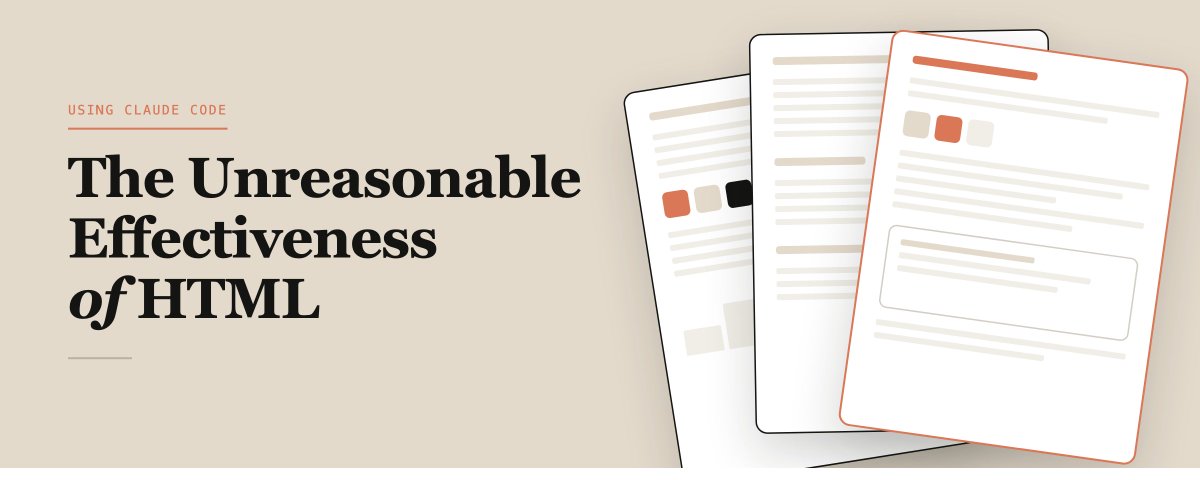
This works really well btw, at the end of your query ask your LLM to "structure your response as HTML", then view the generated file in your browser. I've also had some success asking the LLM to present its output as slideshows, etc.
More generally, imo audio is the human-preferred input to AIs but vision (images/animations/video) is the preferred output from them. Around a ~third of our brains are a massively parallel processor dedicated to vision, it is the 10-lane superhighway of information into brain. As AI improves, I think we'll see a progression that takes advantage:
1) raw text (hard/effortful to read)
2) markdown (bold, italic, headings, tables, a bit easier on the eyes) <-- current default
3) HTML (still procedural with underlying code, but a lot more flexibility on the graphics, layout, even interactivity) <-- early but forming new good default
...4,5,6,...
n) interactive neural videos/simulations
Imo the extrapolation (though the technology doesn't exist just yet) ends in some kind of interactive videos generated directly by a diffusion neural net. Many open questions as to how exact/procedural "Software 1.0" artifacts (e.g. interactive simulations) may be woven together with neural artifacts (diffusion grids), but generally something in the direction of the recently viral xitter.cf/zan2434/status/2046982…
There are also improvements necessary and pending at the input. Audio nor text nor video alone are not enough, e.g. I feel a need to point/gesture to things on the screen, similar to all the things you would do with a person physically next to you and your computer screen.
TLDR The input/output mind meld between humans and AIs is ongoing and there is a lot of work to do and significant progress to be made, way before jumping all the way into neuralink-esque BCIs and all that. For what's worth exploring at the current stage, hot tip try ask for HTML.

Scratch retweeted

How much of SQLite, FFmpeg, PHP compiler can LMs code from scratch? Given just an executable and no starter code or internet access.
Introducing ProgramBench: 200 rigorous, whole-repo generation tasks where models design, build, and ship a working program end to end. 🧵