

My goal is to help Mormons make informed decisions about their level of commitment to the church by sharing credible information that is kept hidden from them.
In a Barn with Fanny Alger.
Joined February 2022
- Tweets1.4K
- Following278
- Followers690
- Likes1.4K




Pinned Tweet
PROOF THAT JOSEPH SMITH WAS A SEXUAL PREDATOR
In this brief essay I will present evidence that the Mormon prophet Joseph Smith married children, sets of sisters, and other men’s wives. I will provide sworn testimony from some of wives that he had sex with them. I will demonstrate that these acts constituted adultery under the laws of the land and of the church. Finally, I will prove that Smith’s version of polygamy was of his own creation and was not a “restoration” of the type of polygamy in the Bible.
I will provide links to screenshots of official Mormon church websites, court testimonies and diary entries. When possible, I will provide direct links for readers to verify the authenticity of the content.
We know that Joseph Smith married a lot of women without Emma’s knowledge or consent. His actions broke her heart. Smith married girls as young as 14 years old and he also married several women who already had husbands (polyandry).
I discuss this in more detail here:
teapawt.net/secrets_mormon/status/…
All of the claims above are confirmed by the Church on its official website here:
churchofjesuschrist.org/stud…
[That same essay also notes that his marriages might have included sexual relations.]
Joseph Smith's youngest wife was Helen Mar Kimball. She was born on August 22, 1828, and was married to Joseph Smith in May 1843 when she was 14-years-old. Smith was 37-years-old, 23 years her senior.
Smith married multiple sets of sisters, including Emily (18 years old) and Eliza (20 years old) Partridge. Emily recorded in her diary that they wed behind Emma’s back but later Smith tricked Emma into allowing him to try polygamy. With Emma not knowing that he was already married to the girls, Smith put on a second ceremony to fool her. For that story and other statements about Emily and Eliza’s sexual relations with Smith, see: teapawt.net/secrets_mormon/status/…
Emily Patridge (later Young) testified to having sex with Smith under oath in the Temple Lot case. She also testified that after spending her first night with Smith, Emma immediately rescinded her consent to plural marriage and became an “enemy” of the girls.
See court transcript/screenshots: teapawt.net/secrets_mormon/status/…
Smith commanded 16-year-old Lucy Walker to marry him behind Emma's back. After months of hesitation, Smith told her that a righteous person would obey. He gave her a 24-hour ultimatum to consent or her rejection would be held against her forever.
See screenshots: teapawt.net/secrets_mormon/status/…
Joseph Smith's plural wife, Lucy Walker, testified in a sworn affidavit that Smith married and cohabited with two sets of sisters: Eliza & Elizabeth Partridge / Sarah & Maria Lawrence. Marrying sisters simultaneously is specifically prohibited by God in the Bible – proving that Smith was not actually “restoring” the kind of polygamy that took place in the Old Testament, but making up his own system in violation of the Biblical commandments related to polygamy.
See screenshots: teapawt.net/secrets_mormon/status/…
Beyond Smith’s practice of marrying sister pairs, he also married two sets of mothers and daughters: Patty Bartlett Sessions and her daughter Sylvia Porter Sessions and Clarissa Reed Hancock and her daughter Nancy Marinda Johnson. This was a violation of God's law. Leviticus 18:17 clearly indicates that marrying mother-daughter pairs was "wickedness".
Joseph Smith's plural wife, Lucy Walker, said that Smith had full-marital relations with these sets of sisters, which is an indication of sexual relations.
See screenshots: teapawt.net/secrets_mormon/status/…
When asked under oath if she lived with Joseph Smith in a marriage relationship, Lucy Walker replied that she WAS Joseph's wife. When asked if she had sex with Joseph, she refused to deny it and replied that she couldn't be forced to answer the question.
See screenshots: teapawt.net/secrets_mormon/status/…
Theodocia Francis Walker Davis (Lucy's niece), Angus Cannon and D.H. Morris all stated that Lucy told them that she and Joseph had full marital relations. Morris said she confided that she worried about not being able to conceive from Joseph because of being under great stress.
When Joseph Smith was 36-years-old, he secretly married a 17-year-old Sarah Whitney. The Joseph Smith Papers (on an official church website) includes a letter from JS to Sarah arranging a liaison behind Emma's back. JS's scribe, William Clayton, wrote entries confirming JS efforts to spend nights with Sarah.
See screenshots: teapawt.net/secrets_mormon/status/…
In 1842, Smith wrote to Sarah and her parents for her to come stay with him, but not to let Emma see her. He told them to hide from Emma and gave them a secret plan on how Sarah could rendezvous with him without Emma finding out. He told the family to burn his letter after reading it. They didn’t burn it. It is now part of the Joseph Smith Papers project.
See screenshots: teapawt.net/secrets_mormon/status/…
In Nauvoo, Joseph Smith had eyes for Henry B. Jacobs' comely 20-year-old wife, Zina. She had repeatedly rejected his proposals and chose to marry Jacobs instead. Even after she was married, Smith continued to pursue her. He told Zina that even though she was married, an angel would kill him with a flaming sword unless she married him too. She grudgingly consented and they wed secretly without Emma knowing.
See screenshots: teapawt.net/secrets_mormon/status/…
Zina’s story is especially heartbreaking. She was trafficked between multiple Mormon men. For her full story, see: teapawt.net/secrets_mormon/status/…
The BH Roberts Foundation created the LDSbot.com as a resource for members to learn about Church history and defend the faith. Though it is not an official source, even it confirms that Joseph Smith engaged in sexual relations.
See screenshots: teapawt.net/secrets_mormon/status/…
Under oath in the 1892-93 Temple Lot court case, Lorenzo Snow was asked to clarify the following statement:
"A man that violated this law (polygamy) in the Doctrine and Covenants, 1835 edition, until the acceptance of that revelation by the church, violated the law of the church if he practiced plural marriage?"
Snow's answer:
"Yes sir, he would have been cut off from the church, I think I should have been if I had. Before the giving of that revelation in 1843 if a man married more wives than one who were living at the same time, he would have been cut off from the church. It would have been adultery under the laws of the church and under the laws of the state, too."
Today, the Mormon church admits that Joseph Smith married between 20-24 plural wives prior to the 1843 revelation. One of those wives was Snow's sister, Eliza Roxcy Snow.
President Snow was asked about plural marriages prior to Joseph Smith's July 1843 revelation. Snow responded that any plural marriages prior to that revelation were acts of adultery that violated the laws of both the church and the state. The lawyer pointed out to Snow that his sister had married Smith 3 months prior to the revelation. Snow could only respond that, from an eternal perspective, the marriage was good.
We now know from Eliza Snow's own testimony that she was married to Joseph Smith on June 29, 1842 - more than a year before the plural marriage revelation was allegedly received. Lorenzo Snow's Temple Lot case testimony confirms that Joseph Smith was guilty of "adultery" and should have been "cut off from the church".
See screenshots/original source links here: teapawt.net/secrets_mormon/status/…
Joseph Smith had a long history of inappropriate relationships outside of his marriage long before there was any revelation on polygamy. Members might have heard the story of how Joseph Smith was dragged out of his house one night in Ohio and tarred and feathered by a mob in 1832. What is less known is that the mob was responding to Joseph's attempt to seduce a 16-year-old girl named Marinda Nancy Johnson.
In addition to tarring and feathering, the mob intended to castrate him and brought a doctor to carry it out. Fortunately for Joseph, the doctor could not go through with it. However, Smith’s seductions continued over the years.
In fact, Smith eventually succeeded in gaining Marinda Nancy Johnson as his wife a decade later in 1842. It took some maneuvering because she was already married to a man named Orson Hyde, an apostle. Smith sent Hyde away on a mission to Jerusalem. In his absence, Smith secretly married Hyde’s wife, Nancy Marinda – using a “revelation from the Lord” ordering her to agree to the marriage without her husband’s knowledge.
See screenshots: teapawt.net/secrets_mormon/status/…
Smith seduced other men’s wives using this same manipulative tactic. It was not the only time Smith married women after sending their husbands away. I’m reminded of the story of King David (2 Samuel 11) who lusted after Bathsheba after seeing her naked. David had her summoned and got her pregnant by rape while her soldier-husband was away fighting for David. When Uriah returned, David tried to get him to sleep with his wife but Uriah refused. So, David got him drunk and ordered him to be sent to the front lines where he was killed during fierce fighting.
What finally got Smith killed was when he tried to seduce Jane Law, the wife of his first counselor William Law. After failing to persuade Smith to abandon polygamy, Law broke away from Smith, started the Nauvoo Expositor and began publishing Smith’s crimes. Smith illegally ordered Law’s office to be destroyed, leading to Smith’s arrest and ultimately his murder.
For more on this: teapawt.net/secrets_mormon/status/…
Joseph Smith lied repeatedly to the Church - denying that he was engaged in polygamy. In the 1835 edition of the D&C he called polygamy a "crime". When rumors swirled of his polygamy in 1842, The Times & Seasons republished the disavowal. JS was married to 20 wives by that time.
See screenshots: teapawt.net/secrets_mormon/status/…
Joseph Smith’s polygamy was illegal in the state of Illinois and throughout the entire country. This is confirmed in the Church’s Nauvoo Polygamy essay.
It was also against the law of God, as confirmed in the 1835 Edition of the Doctrine & Covenants. At that time, Joseph was already married to multiple wives. These marriages took place before the sealing power was given.
See screenshots: teapawt.net/secrets_mormon/status/…
According to the legal code of the state of Illinois, in which Smith lived at the time of his illegal marriages and sexual liaisons, his behaviors constituted “adultery” as defined by the law.
The Book of Mormon calls polygamy a "whoredom" and David/Solomon's polygamy an "abomination". The BOM is consistent with the Bible's prohibition of polygamy by Israelite kings. The original revelation from the Lord in D&C 135 called polygamy a "crime". (B. Young removed it in 1876.)
See screenshots: teapawt.net/secrets_mormon/status/…
As was confirmed in the Gospel Topics Essay, Smith’s polygamy was emotionally destructive to the women compelled to participate in it. I’ve demonstrated that Smith used nefarious tactics to coerce women into marriage and proven through court testimonies that at least some of his relationships included sexual relations. And, I have shown that his marriages were illegal and constituted adultery.
I believe that the Church of Jesus Christ of Latter-day Saints is wrong to hide these facts from its members. I also believe that members deserve to know the true character of the person they consider to be a prophet of God.
The choice is now yours as to how you will respond to the evidence.
-
Please share this post with your Mormon friends and family members.


"The dark side of the priesthood is a pathway to many beliefs some consider to be unnatural."
- Chancellor Nelson
#GeneralConference2024

Congratulations to @NemoTheMormon for making it through today's #Mormon church excommunication "trial" with his integrity intact.
PS - If @OaksDallinH doesn't stop impersonating me, I'm going to have to sue him.

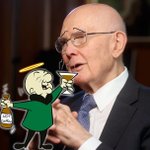
Rusty Nelson just turned 100 years old. 🎉 He has been alive for more than half of the entire lifespan of the Mormon church.
Rusty has 9 children, 57 grandchildren, 160 great-grandchildren and 1 great-great grandson. 👯♂️🧑🤝🧑👭👬👫
In his leisure time, Mr. Nelson enjoys sipping drinks that are not hot, collecting tithes and gazing intensely into top hats.


Looks like the Mormons are finally going to excommunicate @NemoTheMormon. He has been summoned to a "disciplinary council" to hear charges against him over apostasy.
Of course, the #Mormon church sent him a letter advising him that he'll have to sign a non-disclosure agreement to be able to attend his own Salem Witch Trial - and, naturally, he is not allowed to hear the charges against him in advance of the meeting or bring a lawyer.
Just another day for the monolithic Corporation of the President of the Church of Jesus Christ of Latter-day Saints. 🦇💩🤪⛪️

MORMONS AND THE NATIVE AMERICAN SLAVE TRADE
Not long after Mormon settlers arrived in the Salt Lake Valley, they began to expand into Indian territory. This naturally resulted in violence. As settlers moved further into the Utah Valley, Mormon church president Brigham Young issued an extermination order against the Timpanogos natives. This led to the Battle at Fort Utah (present-day Provo) where Young’s forces killed up to 100 natives and took many women and children as slaves. While some of the slaves were able to escape, many of them died in captivity.
In the winter of 1849, after Mormon settlers expanded into Parowan (near modern Cedar City), they attacked and killed a group of 25 natives and took their women and children as slaves. As a result of these ongoing attacks on natives by Mormon settlers, the United States appointed Edward Cooper to serve as Indian Agent to try to quell conflicts between the Mormons and the Native Americans.
Mormon leaders encouraged settlers to participate in the Indian slave trade, with apostles such as George A. Smith encouraging the purchase of Piede children captured by Chief Walkara of the Timpanogos and Sanpete tribes. The going price for a “Lamanite” boy was $100 and girls cost between $150-$200 because they had a reputation for being better house servants.
Matters only worsened for the natives when the Mormons began large-scale purchasing of dark-skinned Native American children in order to help them become white-skinned Mormons. The Book of Mormon teaches that the alleged ancestors of the Native Americans were the Lamanites, “loathsome…an idle people, full of mischief.” But when Lamanites converted to ancient Mormonism, God would change their skins to white so they could intermingle with the righteous white Nephites.
Brigham Young wrote:
“I advised them to buy up the Lamanite children as fast as they could… and teach them the gospel, so that not many generations would pass ere they would become a white and delightsome people.”
Source: American Historical Society (1913), Americana, Volume 8, pg. 83.
Brigham Young sought to control and regulate the Native American slave trade. In 1851, a slave trader from New Mexico named Don Pedro Leon Lujan asked Young for a license to engage in trade, including slaves, with natives in the Utah territory. Young refused to grant him the license. On his way out of the territory, Lujan’s party was attacked by Ute Indians. In retaliation for them stealing his horses, Lujan kidnapped some Ute children to sell on his return to New Mexico.
However, Lujan was stopped in Manti, Utah where he was charged with trading in the territory without a license. The children were seized and distributed as slaves to Mormon families. The natives received no compensation for the stolen slaves.
At that time, some tribes depended on the slave trade for income. In response to the Mormon curtailment of slave trading outside of the Mormon community, the brother of Chief Walkara, Chief Arrapine, the brother of Chief Walkara, protested the disruption to the trade by the Mormons and insisted that since Mexicans were being forbidden from buying the slaves, the Mormons had to take up the slack.
According to Daniel Webster Jones, the colonizer of Mesa, Arizona, when a group of Mormons declined to purchase some children from a Ute slave trader, he “took one of these children by the heels and dashed its brains out on the hard ground, after which he threw the body towards us, telling us we had no hearts, or we would have bought it and saved its life.”
Though Brigham Young and the Utah Mormons supported the enslavement of African Americans (see: threadreaderapp.com/thread/1…), they did not like the stigma which came with it. In the case of Mormon enslavement of Native Americans, they were careful to refer to the practice as either “adoption” or “indentured servitude”.
Semantics aside, the slavery of Native Americans in Utah was formalized in 1852 under the “Act in Relation to Service” and "Act for the Relief of Indian Slaves and Prisoners", passed by the Utah Territorial Legislature. It codified slavery and provided guidelines on how Mormon settlers could indenture children into servitude for up to 20 years.
Rather than acknowledging that the practice was an act of purchasing children into slavery, Brigham Young said it was instead a practice of “purchasing them into freedom”. The slaves were stripped of their Native heritage and raised among Mormons under strict assimilation policies.
Under this Mormon freedom system, the Native American children were treated as domestic servants and forced laborers who often worked under harsh conditions against their will, resulting in a high mortality rate. Half of the slaves died by their early 20s, according to historians Kevin Waite and Sarah Gordon. Those who managed to survive their terms of enslavement found that they had nowhere to go. Their skins had never turned white as promised and therefore assimilation in white society was difficult. And, having been separated for so many years from their original tribes, they found themselves without communities to which they could comfortably return.
Even after the slave traders had left the territory, Mormon settlers perpetuated the slave trade. They not only continued to take children from their families, but they also sought out Paiute tribe parents to try to buy their children away from them. While many of the children were kept by the Mormons for their own purposes, many Mormons simply sold the slave children to other tribes.
Although the adoption rhetoric was used to justify the enslavement of these hundreds of Native American children, the practice is now understood as a form of cultural genocide that contributed to the broader history of the mistreatment and marginalization of Native American peoples.
[Today, the Mormon church maintains the Mount Timpanogos temple. In his 1996 dedicatory prayer, President Gordon Hinckley said: “Renew our appreciation for our faithful forebears, who were driven from their homes and came with trust in Thee to these mountain valleys.” Unfortunately, no remembrance is made for the Timpanogos natives who were slain or enslaved by these “faithful forebears”.]
Further Reading:
"Indian Slavery and Indenture in Utah" by W. Paul Reeve
This article provides an overview of the practice in Utah and discusses the legislative framework that allowed it, including the 1852 Act for the Relief of Indian Slaves and Prisoners. Source: Utah Historical Quarterly
"The Indian Slave Trade in the Utah Territory"by Virginia Kerns
Kerns’ work delves into the history and impact of the Indian slave trade, particularly in the context of Mormon settlers in Utah. Source: Journal of Mormon History
"The Adoption of Native American Children by Mormons: 1850-1887" by Todd M. Compton
Compton explores the practice of adopting Native American children by Mormon families, examining both the motivations and the consequences of these adoptions. Source: Dialogue: A Journal of Mormon Thought
"Forgotten Kingdom: The Mormon Theocracy in the American West, 1847-1896" by David L. Bigler and Will Bagley
This book provides a broader historical context of the LDS Church’s interactions with Native Americans, including the practice of indenturing children. Source: University of Oklahoma Press
"Boundaries of Faith: Geographies of Mormon Settlement and Native American Displacement" by Jared Farmer
Farmer’s book explores the geographical and social impact of Mormon settlement on Native American populations, including the practice of indenturing children. Source: University of Nebraska Press
"Indian Servitude in the West: Utah's Native Americans, Brigham Young, and Slavery" by Lawrence G. Coates
Coates examines the role of Brigham Young in promoting the indenture of Native American children and the broader implications of this practice. Source: BYU Studies Quarterly
Sources for this Essay:
Jeffrey D. Nichols (April 1995). "Slavery in Utah". History Blazer. Retrieved May 24, 2021.
Jones, Daniel Webster (1890), "Chapter VIII", Forty Years Among the Indians, Salt Lake City, Utah: Juvenile Instructor Office, p. 53, OCLC 3427232, retrieved May 24, 2021
Farmer, Jared (2008). On Zion's Mount: Mormons, Indians, and the American Landscape. Harvard University Press. ISBN 9780674027671.
Reséndez, Andrés (April 12, 2016). The Other Slavery: The Uncovered Story of Indian Enslavement in America. Houghton Mifflin Harcourt. ISBN 978-0-544-60267-0. Retrieved May 24, 2021.
Congressional Series of United States Public Documents, Volume 688. 1853. p. 7.
Young, Brigham (1987), Collier, Fred C. (ed.), The Teachings of President Brigham Young: Vol. 3 1852–1854, Salt Lake City, Utah: Colliers Publishing Company, ISBN 0934964017, OCLC 18192348
Young, Brigham (1863). Journal of Discourses/Volume 10/Necessity for Watchfulness, etc. . pp. 248–250 – via Wikisource.
Holt, Ronald L. (July 31, 2006). Beneath These Red Cliffs: An Ethnohistory of the Utah Paiutes. Logan, Utah: Utah State
Gordon, Sarah Barringer; Waite, Kevin (May 30, 2020). "'The other slavery' a part of Utah history". The Salt Lake Tribune. Retrieved May 24, 2021.


STOP DEFENDING POLYGAMY!
To those of you Mormon apologists who keep trying to defend Joseph Smith's adultery by lecturing others about the benefits of polygamy, I recommend that you 1) STFU and 2) read the full stories of the women and children who suffered under this abominable Mormon institution.
No man of integrity today should be defending the mentally, emotionally and sexually abusive practice of polygamy. It is sexual exploitation and has no place in a civilized society.
Here are some books on the subject:
"In Sacred Loneliness: The Plural Wives of Joseph Smith" by Todd Compton
This book provides detailed biographical accounts of the women married to Joseph Smith, illustrating the emotional and psychological toll that polygamy took on them. I like this one the best.
"Nauvoo Polygamy: But We Called It Celestial Marriage" by George D. Smith
This book offers an examination of the origins of polygamy in Nauvoo and its negative impact on the families involved.
"The Ghost of Eternal Polygamy: Haunting the Hearts and Heaven of Mormon Women and Men" by Carol Lynn Pearson
Pearson explores the lingering effects of polygamy on modern-day Mormons, particularly women, and its impact on their spiritual and emotional well-being.
"Polygamy in Primetime: Media, Gender, and Politics in Mormon Fundamentalism" edited by Brenda R. Weber
This book discusses the portrayal of Mormon polygamy in popular media and its broader cultural implications, with a focus on the power dynamics between men and women.
"Sister Saints: Mormon Women Since the End of Polygamy" by Colleen McDannell
While this book covers a broader history of Mormon women, it also addresses the lasting effects of polygamy on the LDS Church and its members.
"Stolen Innocence: My Story of Growing Up in a Polygamous Sect, Becoming a Teenage Bride, and Breaking Free of Warren Jeffs" by Elissa Wall
This memoir offers a personal account of the psychological and emotional damage caused by polygamy within a fundamentalist sect of Mormonism.
"The Polygamous Wives Writing Club: From the Diaries of Mormon Pioneer Women" by Paula Kelly Harline
This book presents diary entries from 19th-century Mormon women, shedding light on the hardships and emotional challenges they faced in polygamous marriages.
"Shattered Dreams: My Life as a Polygamist's Wife" by Irene Spencer
Spencer shares her personal experiences growing up in a polygamous family and the deep emotional pain it caused her and her family.
Bishop Magoo retweeted
As I wrote previously, personal opinions and anecdotes do not have the same value as verifiable statistical evidence.
You cited a Pew Research report to suggest that "in the US no religion is more active" than Mormons. That's not true. According to the report, Jehovah's Witnesses are significantly more active than Mormons. (See screenshot)
Since you brought up Pew Research, you may be interested in their additional findings about Mormons which confirms what I told you previously.
In the 1980s, the overall retention rate of the Church as around 90%. A 2007 Pew Research study put the retention rate at approximately 70%. In a 2014 study, Pew Research indicated that only 64% of members who were raised in the Church continued to identify as Mormon while 36% had left the faith.
The retention rate for millennials was 57%. Based on this ongoing trend and the acceleration of the general decline of religious observance, LDS retention rates have almost certainly declined sharply in subsequent years.
When these retention figures are divided by age groups, an even more sobering picture emerges. As was confirmed in a leaked video recording of a meeting of the Church’s top leaders on November 12, 2008, the Presiding Bishop of the Church presented a statistic that 72% of Latter-day Saint youth cease activity in the Church before they reach 20 years old.
I'll also note three more Pew Research studies. Pew reported in 2017 that their survey on the general public’s “warmth” toward various religions placed Jews at 67%, Catholics at 66%, Protestants at 65%, Evangelical Christians at 61%, Buddhists at 60%, Hindus at 58%, Mormons at 54%, Atheists at 50% and Muslims at 48%.
In 2023, Pew reported the following “Very/Somewhat Favorable” ratings for Jews at 35%, Catholics at 34%, Mainline Protestants at 30%, Evangelical Christians at 28%, Atheists at 20%, Muslims at 17% and Mormons at 15%.
These polls demonstrate that Americans rank Mormons near the bottom of the favorability ratings among religions.
My Sources:
pewresearch.org/religion/201…
web.archive.org/web/20220520…
youtu.be/FBH045ooaY0?si=s_AW…
pewresearch.org/religion/201…
pewresearch.org/religion/201…
pewresearch.org/religion/202…


Utah's teen suicide rate has been notably higher than the national average for several years. According to various studies and reports, the rate of suicide among teens in Utah can be up to 50% higher than the national average, depending on the age group and specific data sets.
Nationally: In 2020, the national suicide rate among teens (ages 15-19) was about 11.2 per 100,000, according to the CDC.
Utah: In 2019, Utah's suicide rate for teens (ages 15-19) was reported to be around 24 per 100,000, more than double the national rate.
While there are numerous factors for this higher rate, the most notable cause is the pressures of Mormon culture, including expectations regarding perfection, conformity, and sexual orientation.
Bishop Magoo retweeted
You Mormon leaders do as much harm as you do good for marriages. In this information age, many adults are having faith crises after finding evidence that you all are lying to the church about the foundational claims of Mormonism.
When these adults talk to their spouses about their concerns, often the spouse will turn to the church for guidance on what to do. President Oaks (and others among you) have specifically advised for the spouse to NOT engage in research on the subject outside of the tightly-controlled, sanitized correlated curriculum.
Instead, you advise spouses to hold fast to their testimonies and "not take counsel from those who do not believe" (Russell Nelson). This creates a terrible dynamic where one spouse is engaging in open, intellectually honest investigation of your claims while the other spouse puts on blinders and refuses to listen to his/her concerned partner out of fear of going against you "Brethren".
In my capacity as both Bishop and lay member, I've seen many marriages fracture and fall apart over this test of loyalty that you impose on marriage partners. Your counsel is cult-like and controlling. You should be encouraging true-believing spouses to give full consideration of all the evidence their partners want to share with them.
If you have the truth, then why are you so afraid?
Stop ruining marriages, David. It would be better for a family to leave the church but remain together as a unit than for one spouse to stay and divorce the other out of loyalty to you third wheels.
"ERM": THE SCARLET LETTERS OF MORMONISM
There has been a notable increase in the number of Mormon missionaries returning home early from their missions. This trend, which has been observed particularly among Millennials, reflects a shift in the experiences and challenges faced by these young people.
As of 2016, the "Next Mormons Survey" indicated that 20% of missionaries were returning home. That figure is believed to have risen over the past 8 years.
One significant factor contributing to early returns is mental and physical health. A study by Utah Valley University found that mental health issues accounted for 36% of early returns, while physical health problems made up 34%.
Other reasons include unresolved transgressions (12%) and disobedience of mission rules (11%). Interestingly, the data suggests that early returns are slightly higher among young women than young men.
A significant cause for missionaries to return early from their missions is the emotional trauma of being cut off from healthy levels of contact with their friends and family members.
The cultural stigma surrounding early return missionaries (ERMs) is also a major concern. Many ERMs report feeling unwelcome or judged by their church communities, which can exacerbate feelings of shame and isolation.
Members of the Mormon church should call on their leaders to eliminate restrictions placed upon parents to see their missionary children. The current policy states that "Generally, family and friends SHOULD NOT visit you during your mission."
By acting as gatekeepers, the Mormon church interferes with a missionary's greatest support: his/her own family. For a struggling missionary, visits with loving family member can provide a sense of comfort and strength unavailable from other sources.
And, parents are better judges of their children's mental and emotional health than mission presidents. A visit from a parent may reveal that the child is suffering beyond any reasonable expectation. The parent can reinforce to the missionary that returning home is not something to be ashamed of and can advocate on behalf of the missionary with his/her mission president.
The Mormon church asks too much of its youth. And that is one reason why, according to a 2008 leaked video of the Presiding Bishop, 72% of Mormon youth abandon activity in the Church before they reach 20 years old.
I believe that those of us who argue in favor of reducing the burden of extreme expectations on the youth of the church are more in line with what is right than those who argue in favor continuing to push children and young adults past their breaking points.


14
932

BOOKS ON CULTS & DECONSTRUCTION
If you are interested in reading about cult mind control or how to deconstruct after spending time in a high-demand religion, here are some suggestions:
1. "Combating Cult Mind Control" by Steven Hassan
Overview: Written by a former member of the Unification Church (the Moonies), this book is a comprehensive guide to understanding how cults operate and how to help individuals leave. It’s often considered a must-read for anyone recovering from a cult experience.
Key Topics: Cult mind control, psychological manipulation, recovery strategies.
2. "Freedom of Mind: Helping Loved Ones Leave Controlling People, Cults, and Beliefs" by Steven Hassan
Overview: Another essential book by Steven Hassan, this work expands on his earlier work and provides practical tools for those helping others (or themselves) exit a cult. It also discusses the broader issue of controlling relationships.
Key Topics: Exit strategies, recognizing manipulation, supporting loved ones.
3. "Cults in Our Midst" by Margaret Thaler Singer and Janja Lalich
Overview: This book offers a detailed analysis of the psychological tactics used by cults and the impact on members. Written by two prominent experts in cultic studies, it provides both theoretical and practical insights.
Key Topics: Cult recruitment tactics, psychological abuse, recovery processes.
4. "Recovery from Cults: Help for Victims of Psychological and Spiritual Abuse" edited by Michael Langone
Overview: This book is a collection of essays by various experts, including therapists and former cult members, discussing the process of recovering from cult involvement. It covers a wide range of experiences and recovery strategies.
Key Topics: Therapy approaches, spiritual abuse, healing processes.
5. "Take Back Your Life: Recovering from Cults and Abusive Relationships" by Janja Lalich and Madeleine Tobias
Overview: Focused on the journey of regaining autonomy and a sense of self after leaving a cult or abusive relationship, this book offers practical advice and exercises for healing.
Key Topics: Regaining control, rebuilding identity, practical recovery steps.
6. "Leaving the Fold: A Guide for Former Fundamentalists and Others Leaving Their Religion" by Marlene Winell
Overview: This book is especially helpful for those deconstructing from fundamentalist or authoritarian religious groups. It offers guidance on dealing with the emotional and psychological fallout of leaving a strict religious environment.
Key Topics: Religious trauma, emotional healing, reclaiming identity.
7. "The Subtle Power of Spiritual Abuse" by David Johnson and Jeff VanVonderen
Overview: This book addresses the more subtle forms of control and abuse that can occur in religious settings. It’s particularly useful for understanding how spiritual beliefs can be manipulated.
Key Topics: Spiritual manipulation, abuse in religious settings, recovery.
8. "Leaving the Cult: A Former Jehovah's Witness's Struggle with Life after the Watchtower" by Mike Farrell
Overview: A memoir that offers a personal account of leaving the Jehovah's Witnesses and the challenges of adjusting to life outside the organization. It provides insights into the emotional and psychological struggles faced by former members.
Key Topics: Personal experience, emotional recovery, identity reconstruction.
Apostle @RonaldARasband apparently does not sustain the teaching of President @NelsonRussellM that we should "never take counsel from those who do not believe".

Mormon apostle Ronnie Rasband (@RonaldARasband) posted photos of him violating mission rules and compromising his granddaughter missionary by 1) visiting her in person and 2) kissing her.
The Mormon church (@Ch_JesusChrist) Missionary Handbook instructions clearly state that personal visits from family members are not generally allowed and that physical embraces of members of the opposite sex are forbidden outside of handshakes.
I'm not saying I agree with any of these ridiculous, cultish rules designed to control young adults. I'm merely pointing out Ronnie's utter hypocrisy. He caused his granddaughter to break multiple mission rules and didn't seem to care because he's an "apostle".
Mormon rules for thee, but not for he.

Bishop Magoo retweeted
Absolutely. No question whatsoever. The main symbols in Freemasonry are the stone mason's square and compass (V L). These symbols are used in their official logo. The level is also used ( - ).
When you go through the masonic initiation as an Entered Apprentice, you spend considerable time in the ceremony blindfolded in a candlelit room. When the blindfold is eventually removed, you are kneeling at an altar. In front of you is an open Bible with a compass and a square laying on top of the book.
This is the script that is spoken when the blindfold is removed:
"My brother, on being brought to light in this degree, you discover both points of the compasses hid by the square, which is to signify that you are yet in darkness as respects Masonry, you having only received the degree of an Entered Apprentice."
"You also discover the three great lights of Masonry, by the help of the three lesser. The three great lights in Masonry are the Holy Bible, square, and compasses, which are thus explained: the Holy Bible is the rule and guide of our faith and practice; the square, to square our actions; the compasses, to circumscribe and keep us within bounds with all mankind, but more especially with a brother Mason."
Joseph Smith stole these symbols directly from Freemasonry. They make less sense in the Mormon Endowment ceremony, but you can still see the vestiges of the Freemasonic script in Joseph's version:
"These four marks are the marks of the Holy Priesthood, and corresponding marks are found in your individual Garment. This one on the right is the mark of the square. It is placed in the Garment over the right breast, suggesting to the mind exactness and honor in keeping the covenants entered into this day."
"This one on the left is the mark of the compass. It is placed in the Garment over the left breast, suggesting to the mind an undeviating course leading to Eternal Life, a constant reminder that the desires, appetites and passions are to be kept within the bounds the Lord has set, and that all truth may be circumscribed into one great whole."
"This is the navel mark. It is placed in the Garment over the navel, suggesting to the mind the need of constant nourishment to the body and spirit. This is the knee mark. It is placed in the right leg of the garment, so as to be over the knee cap, suggesting that every knee shall bow, and every tongue shall confess that Jesus is the Christ."
Smith lifted the masonic symbols and reworked them into his own script. Few Mormons realize that they are wearing underwear covered in common Masonic symbols.
Many of the Mormon temple arm signs are also stolen from Freemasonry. In Mormonism, they seem to have no distinct meaning. But in Freemasonry, some of the signs are simulating masonic squares and levels.


MORMON MISSIONARIES ARE SUBJECTED TO CULT MIND CONTROL TACTICS BY THEIR CHURCH
When I was a #Mormon missionary living on the other side of the world, I was only permitted to talk by phone to my family twice a year - on Mother's Day and Christmas.
Non-members, let that sink in. My church only allowed me to talk to my family 4 times over a two year period - a period in which I was expected to perform a minimum of 78 hours of volunteer service per week to grow the membership base of the Mormon church per week. I received no compensation at any point and I supported myself 100% from money I had saved up before my mission by working multiple jobs simultaneously.
Fortunately, due to increasing rates of missionaries experiencing emotional hardships and abandoning their missions, the Mormon church has loosened the restrictions slightly.
According to the most recent Missionary Handbook, missionaries are now allowed to initiate phone calls to their families once weekly, as long as the calls are sufficiently short and take place within a narrow time frame on a single day of the week.
However, a parent may not initiate contact with his/her child without prior approval of the mission president. And personal visits from family members are not allowed.
Phone calls or video chats with anyone outside of the missionary's immediate family are strictly prohibited.
You may read letters from friends or family received during the week, but you may not write back to them except on approved preparation days.
Cutting off or severely limiting contact with friends and family members is a hallmark of cult mind control.
In 2015, I was traveling to the state where one of my sons was serving a mission and was going to be in his town. I knew he was struggling at the time, so I called his mission president for permission to take him and his companion out for a 1 hour lunch.
The mission president denied my request.
The call ended with me telling the mission president that despite me being a faithful member of the Church, I thought he was acting like a low-level enforcer in a cult... and this was years before I began studying cult mind control tactics. (See attached screenshot).
Today, I know that the Church of Jesus Christ of Latter-day Saints is a cult. It may not be the same kind of cult as Heaven's Gate or Jonestown, but it still employs a vast array of cult mind control and social control techniques to keep members from leaving.
Every day on Twitter, the cultish nature of the Mormon church is on display for all to see by its troll army. It's not easy to tell the difference between Mormon apologists and the extremists in the Jehovah's Witness or Scientology churches.
churchofjesuschrist.org/stud…


And the award for the most culty thing to come out of the mouth of Russell M Nelson in the last year goes to...

There is no end to the adversary’s deceptions. Please be prepared. Never take counsel from those who do not believe. - @NelsonRussellM #GeneralConference
Joseph Smith stole the concept of secret passwords, arm signals and handgrips from Freemasonry.
When I was a true believer, I wanted to better understand the symbolism of the LDS temple rituals so I was inducted into Freemasonry where I learned their secrets.
Joseph Smith directly plagiarized many elements that are used in the temples to this day. Some of the Masonic elements he altered to fit his particular purposes.
Below is a list of some of the key names associated with these tokens and grips:
Grip of an Entered Apprentice (First Degree) Token: The same grip as the LDS First token of the Aaronic Priesthood.
Password: "Boaz"
Grip of a Fellowcraft (Second Degree) Token: The same grip as the LDS second token of the Aaronic Priesthood.
Password: "Shibboleth"
Grip of a Master Mason (Third Degree) Token: Also known as the "Strong Grip of a Master Mason" or the "Lion's Paw."
The LDS version is the second token of the Melchizedek priesthood, the "patriarchal grip" or "sure sign of the nail".
Password: "Tubal-Cain"
Substitute Word: "Mah-Hah-Bone"* (used during certain rituals in place of the "Lost Word" or "Master's Word").
The LDS version of the name of this token is: "Health in the naval, marrow in the bones, strength in the loins and in the sinews, power in the priesthood be upon me and upon my posterity through all generations of time and throughout all eternity."
Joseph Smith used the same name, sign and token pattern to create the additional first token of the Melchizedek Priesthood, not used in masonry.
* Similar to the Masonic "Mah Ha Bone" (a reference to a dead brother named Hiram), Smith taught the phrase "Pay Lay Ale" to be used in the temple prayer circle. Due to its suspicious nature, the phrase was later changed to "Oh God, hear the words of my mouth."
Despite Smith's false claim that masonry was a devolved form of the ancient practices in the Temple of Solomon (957 BCE), Freemasonry evolved in the Middle Ages (2,000 years later) among stonemasons who sought to protect their craft/trade secrets from outsiders in order to guarantee their job security.
Joseph Smith fabricated his teachings about temples and temple work. The Temple of Solomon was never used to perform rituals that remotely resembled the Mormon endowment.
As heartbreaking as it is to true believers, LDS temple rituals are nothing more than fantastical role-playing ceremonies birthed from the gifted imagination of a 19th century religious con artist.
They do not bind families together beyond death, as beautiful as that concept feels. I always enjoyed attending the temple, despite it being mind-numbingly boring after multiple visits, so I do not fault any active Mormons who find personal value in Temple attendance.
My wish is simply that attendees have a fact-based, informed understanding of the man-made origins of these rituals so that their lives are not controlled by fears of losing their salvation or access to their loved ones after death.
The Temple is used by the Mormon church to exert incredible power over its members. Members therefore deserve to know the truth.

I'll never forget my first Masonic ceremony. There I was, standing barefoot and scantily clothed, blindfolded, a noose around my neck (which was used to pull me in circles around the candle lit room), feeling the point of a knife pressed against my chest.
Yes, that is really how the first ceremony goes.
Some of the words from the ceremony are:
"...by your meek and candid behaviour this evening you have symbolically escaped two great dangers, those of stabbing and strangulation..."
It is definitely a unique experience.