Roger Guimerà & Marta Sales-Pardo. Complex systems & networks; Statiscal learning; Comput. social science; Systems biology at @universitatURV @icreacommunity

Tarragona, Catalonia
Joined March 2010
Call for nominations: "Young Scientist Award for Socio- and Econophysics", the prestigious award from the German Physical Society. - deadline 15.10.2026 - below the age of 40 - awarded prize EUR 7,500 dpg-physik.de/vereinigungen/…
1
1
156
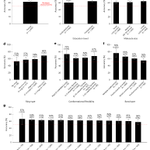
Structure alone supports efficient visual computation in the Drosophila visual system Eudald Correig-Fraga, Roger Guimerà, Marta Sales-Pardo arxiv.org/abs/2610.10023 [𝚚-𝚋𝚒𝚘.𝙽𝙲 𝚌𝚘𝚗𝚍-𝚖𝚊𝚝.𝚍𝚒𝚜-𝚗𝚗 𝚌𝚜.𝙻𝙶]
2
2
210
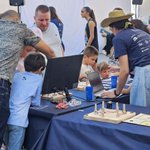
Quina és quina? Troba les neurones equivalents. Descobreix jugant els problemes actuals de la neurociència! #NitRecercaTGN
1
2
3
123
1⃣2⃣ converses a investigadors de referència a la @universitatURV 1⃣2⃣ articles divulgatius en català amb il·lustracions a la revista 'Mirades de Ciència' 📗 Publicació gratuïta en paper o on line per fer arribar la recerca a tota la ciutadania diaridigital.urv.cat/dotze-r…
8
8
348
Els investigadors #URV Roger Guimerà, Clara Granell, Francesc Giralt, Sergio Gómez i Àlex Arenas signen dos articles que han estat seleccionats entre els més influents dels darrers 30 anys en l’àmbit de la física estadística.  Enhorabona! 👏👏 👉 diaridigital.urv.cat/dos-art…
1
5
1
14
793
Yet another fantastic @complexitatcat Day, and it's been 13 already! Great community and great science!
1
82
102 organic chemists shown real vs AI-generated molecules. Couldn't tell them apart — 62% accuracy ≈ random. That's CoCoGraph: graph diffusion with 100% chemical validity, 534K params vs 4.6M for comparable models. Constraints in the math, not the model. nature.com/articles/s42256-0…
1
3
145
Out today in @ScienceMagazine: with the amazing Haochuan Cui, Yiling Lin, & @LingfeiWu, we analyzed 3.6 million scientists publishing 1960–2020. The findings reshape a century-old debate about age and scientific creativity.
7
95
11
280
81,599
💻 Una IA desenvolupada a la #URV genera milions de molècules noves que segueixen les lleis de la química. Es tracta d'un pas important per avançar al desenvolupament de nous fàrmacs i materials.  Descobreix com ho han fet i què representa 👇 diaridigital.urv.cat/desenvo…
6
14
839
🙌La Societat Catalana de Física premia l'estudiant de la #URV Leonel Nabaza pel seu treball de fi de grau sobre expressions matemàtiques tancades. Enhorabona! #comunitatURV 👉diaridigital.urv.cat/un-estu…
5
6
556
2026 edition is on the way!! Opening #CompleNet26
8
1
9
637
Hardwiring chemistry into diffusion to generate realistic molecules The space of drug-like molecules is roughly 10^60 candidates, and most generative models waste capacity learning what every chemistry student knows on day one: atoms have valences, bonds come in fixed multiplicities, not every graph is a molecule. The result is models that produce invalid structures or need millions of parameters to keep validity high. Manuel Ruiz-Botella and coauthors take a different route with CoCoGraph, a discrete graph diffusion model where chemical validity is built into the noising process rather than learned. Each step performs a double edge swap: bonds AB and CD are removed and replaced by AC and BD. This preserves the molecular formula and every atom's valence, so the trajectory never leaves the space of valid graphs. The denoiser only learns structural patterns, not chemistry's rules. A second idea is the collaborative mechanism. Some molecules randomize faster than others, so the nominal time step is a poor proxy for how far you are from a real molecule. A small auxiliary model estimates that distance from the graph and picks the trajectory point with the smallest predicted time. On GuacaMol (a standard benchmark scoring validity, novelty and property-distribution match against real molecules) against PubChem, CoCoGraph hits 100% validity, 95.7% novelty, and the best KL divergence, beating DiGress, GDSS, GruM and DeFoG with an order of magnitude fewer parameters. Across 36 descriptors picked by an external LLM to avoid cherry-picking, it wins on at least two thirds. The team also released 8.2M synthetic molecules and ran a Turing test with 121 chemists: postgraduates only reached 64% accuracy, and for acyclic or aliphatic molecules no better than random. This matters because validity-by-construction removes layers usually sitting downstream in drug and materials pipelines: post-hoc filtering and retraining cycles to push validity up. Combined with inpainting for scaffold preservation, it fits naturally into lead optimization, where teams grow fragments around a fixed core. Paper: Ruiz-Botella et al., Nature Machine Intelligence (2026) — journal license | doi.org/10.1038/s42256-026-0…
12
40
2,337
SEES Lab retweeted
Can we design generative #AI models capable of creating new molecules, much in the same way that other generative models generate text or images? In a new paper in @NatMachIntell, we introduce #CoCoGraph, which does just that dx.doi.org/10.1038/s42256-02… rdcu.be/fgNIA
1
4
6
261
Can we design generative #AI models capable of creating new molecules, much in the same way that other generative models generate text or images? In a new paper in @NatMachIntell, we introduce #CoCoGraph, which does just that dx.doi.org/10.1038/s42256-02… rdcu.be/fgNIA
1
4
6
261
To verify this, we implemented and analyzed the results of a Turing-like test, where experts were asked to distinguish between real and generated molecules
1
43
Great work by @manu_ru_bo. Congratulations!!
42