
Research at @periodiclabs. Prev Ph.D. Student at @Mila_Quebec / @mcgillu • ML, Physics, Math
Montréal, Canada
Joined November 2018
- Tweets237
- Following594
- Followers841
- Likes2.7K






Oumar Kaba retweeted

If you are interested in working on science of scaling RL, please apply!
You'll be closely working with me


I asked people which neolabs under $10B have the highest talent density:
32 votes: Core Automation (@MillionInt, @_arohan_)
26 votes: Periodic Labs (@LiamFedus, @ekindogus)
20 votes: Flapping Airplanes (@spectorb, @amspector100, @aidanmantine)
18 votes: Standard Intelligence (@G413N, @devanshpandey)
8 votes: Ricursive (@annadgoldie, @Azaliamirh)
5 votes each:
- Ineffable (David Silver)
- Mirendil (@bneyshabur, @HarshMeh1a, @shayan_, @tararezaeikh)
- Recursive (@RichardSocher, @_rockt, @timshi_ai, @josh_tobin_, @CaimingXiong, @jeffclune, @tydsh, Alexey Dosovitskiy)
3 votes each:
- Applied Compute (@ypatil125, @rhythmrg, @lindensli)
- Isara (@ezhang7423, @hegasz)
- Prime Intellect (@vincentweisser, @johannes_hage)
2 votes each:
- Elorian (@AndrewDai, @yinfeiy, @SethInternet)
- Goodfire (@eric_ho, @DanJBalsam, @banburismus_)
- Inherent (@tantumscollins, @edwardfhughes, @LouisKirschAI, @kallyaleksiev)
- Trajectory (@rronak_, @QuantumArjun, @MichaelElabd)
- World Labs (@drfeifei, @jcjohnss, @BenMildenhall, @chlassner)
People couldn't pick a company they work at or founded. Disclosure: I'm a small investor in Applied Compute, Factory, Standard Intelligence, Trajectory and Wafer. I didn't vote.
Continued:

Oumar Kaba retweeted

reading feynman lecturess as feynman intended: with accompanying ai-made demo sections for each chapter
rapid acquisition of knowledge is possible thanks to superintelligence
Oumar Kaba retweeted

Periodic is hiring SWE's for physics simulations, scientific data, and lab robotics
These are hard problems that codex/cc can't one-shot, because they require interfacing with the real world and collaborating with scientists
Science experience is a + but not required! Apply ⬇️

Oumar Kaba retweeted

Very happy to see this profile of @hugo_larochelle
Before I join Google Brain, I watched all his lectures from Sheffield. You have to remember at the time, all of the knowledge for deep learning belong to less then 100 people. He made it available to many more.
He became my PhD advisor many years later. Hugo is an exceptional researcher, has shaped so much of our ecosystem.

Excited to share some of what we’ve been building at Periodic!
One thing I’ve come to appreciate is how important it is for AI for science to stay close to the lab: working closely with scientists, learning from real data, and solving the problems that actually slow science down

We built high-throughput materials labs in Menlo Park to create a loop between experiments and models. The labs generate fresh data, the models learn from it, and then help us decide what to try next.
Using only 1,300 H200s, plus months of our experimental data, we mid-trained and RL’d an open-source model to surpass GPT-6 Astra on our analysis benchmark. We call it Neon.
This is real footage from our lab. We’re focusing first on hard problems in materials science, including superconductors, magnets, and semiconductor materials.
Read our blog posts below.
Oumar Kaba retweeted
I gave a talk at ICLR 2026 about how we are scaling RL on frontier LLMs with 1T+ parameters, on experimental data from our physical lab at Periodic!
Here's a rough recording of the talk:
Oumar Kaba retweeted

The Montreal Expos are exiting the baseball space. During Q2 and Q3 2026, we will transition to acquiring high-performance GPU assets. This is all part of our long-term vision to become a fully integrated GPU-as-a-Service (GPUaaS) and AI-native cloud solutions provider.
Oumar Kaba retweeted

- Drafted a blog post
- Used an LLM to meticulously improve the argument over 4 hours.
- Wow, feeling great, it’s so convincing!
- Fun idea let’s ask it to argue the opposite.
- LLM demolishes the entire argument and convinces me that the opposite is in fact true.
- lol
The LLMs may elicit an opinion when asked but are extremely competent in arguing almost any direction. This is actually super useful as a tool for forming your own opinions, just make sure to ask different directions and be careful with the sycophancy.
Oumar Kaba retweeted

One month left 'til @iclr_conf, about time to launch our ✨@GRaM_org_ Competititon✨ The theme is geometry x AI4science with a dataset kindly provided by @BeyondMathLtd .
Deadline: April 22, 2026 (AoE)
🔗 gram-competition.github.io

Oumar Kaba retweeted
this is honestly why the most important measure of progress in building true intelligence is our ability to eliminate prompt engineering.

thanks to @karpathy , now i have cracked the mystery why my agent doesn't follow my instruction closely enough.

Oumar Kaba retweeted

We have updated the submission deadline for GRaM workshop @iclr_conf.
Submit your works on everything geometry + generative modeling to GRaM workshop (@GRaM_org_ ) at #ICLR2026.
🗓️ Rio | April 26-27
⏰Deadline: Feb 5th AOE
Submission site: openreview.net/group?id=ICLR…
gram-workshop.github.io
Excited to announce the second edition of the GRaM Workshop at #ICLR26 🚀
If you work on geometry-grounded representations or generative modeling, we’d love to see your submissions!

📢The second edition of ✨GRaM workshop✨ is here this time at #ICLR26.
🌟Submit your exciting works in Geometry-grounded representations.
We welcome submissions in multiple tracks i.e.
📄 Proceedings
📝extended abstract
👩🏫Tutorial/blogpost
as well as an exciting challenge!

The GRaM workshop is coming back at #ICLR2016!
Very much looking forward to exciting discussions on geometry, representation learning and generative modeling!
📢 GRaM workshop is back!! This time at #ICLR2026
🌟Excited to be in Brazil 🇧🇷!
More information coming soon!
@iclr_conf @GRaM_org_
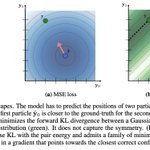
Prediction of physical configurations is almost always trained with proxy losses like MSE and cross-entropy.
But physics already gives us the right objective: (free-)energy minimization.
In our NeurIPS paper, we show that using approximate energies as losses can drastically boost performance at no extra cost 👇🏾
🧵 1/7

We have tested this in practice on training diffusion models to generate molecules.
We find that training models with energy loss leads to faster convergence, better optima. It is also more data efficient and has greater benefits than equivariant models at lower cost.
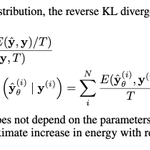
In principle, the resulting score estimator can be biased at high times.
But in practice this yielded significantly higher molecular stabilities at essentially no cost.

This work is a joint effort with my incredible collaborators @KushaSareen @dnllvy and Siamak!
Check out the paper on arxiv: arxiv.org/abs/2511.02087
And come say hello at our poster on Friday afternoon!
