




Pinned Tweet
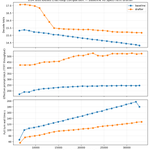
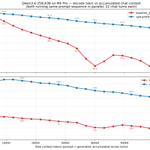
Qwen3.6-35B-A3B-4bit, 64k context, M4 Pro Mac mini using speculative prefill:
Prefill: ~1500 tok/s
Decode: ~65-75 tok/s
Super consistent perf compared to out of box mlx that throttles under sustained load. Built a custom harness to do chat loop testing on extended sessions.

ALT local llm mlx performance comparision with prefill optimization on a mac mini
seslly retweeted

I am talking to an LLM in a datacenter that’s reaching out over a few strands of copper to adjust firmware settings in a laptop here on my desk, firmware designed by an Apple engineer in California, installed on hardware assembled in a factory in China, shipped to my door in Texas so that I can get Linux running on it and unlock its full power for the global open source community.
In this case, the agent is tweaking the brightness of this amazing OLED screen, asking me if it’s getting brighter or dimmer.
I feel sorry for the folks in our industry that have taken an anti-LLM stance. They are missing out on a magical moment in computing history.


If you’re running models off SSD do yourself a favor and buy used enterprise drives like the Samsung PM9A3 with high endurance and don’t wear out your root drive
I got 3x 7.68TB drives last year that I run in RAID0 on my server and it’s like having a massive DDR4 pool to read your models from @ ~21GiB/s
If you can get Intel Optane drives it’s even better

There's been rumours going around that using Strada, Basalt or similar engines degrades your hardware, especially your SSD
I went ahead and created the best estimates I could for the health degradation of your SSD if you run inference with these engines locally.
The reality is running it right alongside normal desktop use barely makes a difference.
The major factor if you use it a lot would be if you actually fit all experts into RAM and VRAM and only read the N-gram off the SSD after that or not.
These are relatively worst case estimates. In reality the degradation will likely be slower.


1
42
Gotta upgrade the local lab with some AI magic
#RTXON

We're giving away a Hogwarts Legacy custom wrapped NVIDIA GeForce RTX 5090 to celebrate its official release with DLSS 5 🪄
To enter:
🟢 Share this post
🟢 Comment #RTXON
Terms and Conditions: nvidia.com/en-us/geforce/con…

20


seslly retweeted

We’re about to learn that most code written over the last 20 years was complete slop and most software developers were never that good

seslly retweeted

If humanity can survive the next 24 months, we're going to have the most secure software ever.

Sorry everyone... We're announcing a 0-Day vuln in QUIC that allows anyone to remotely turn off a server running these libraries. I swear we didn't plan this.
foxio.io/blog/header-accordi…

seslly retweeted

PHP vuln is so bad NSA is out here on twitter shouting at strangers about it

Effective Immediately, all organizations using PHP for their systems are advised to be prepared for an update addressing two critical vulnerabilities. PHP is widely used for web applications. These vulnerabilities often provide a direct path to the server's file system or database. If an immediate update is not feasible, it is recommend that organizations take the system offline until it can be fully mitigated. NSA will follow up shortly with more specific guidance.
seslly retweeted

You've gotta patch your dependencies super fast because they're full of vulns (PHP, Node, eMudhra, etc), but not _too_ fast because they're full of backdoors (LiteLLM). Good luck!


seslly retweeted

every IT worker in north korea has been up all night injecting malware signed by google dot com and microsoft dot com etc into as many embedded microcontroller devices as possible, across millions of devices


lmao this is insane

arstechnica.com/security/202…
The private keys for these certs are literally the numbers 4, 56, 66, 115, 155, 156, 230, and 237 (life imitates XKCD, again).
1
40


Crazy to say but Macs are good values

GPU prices have been climbing for a year, and I wanted to know whether this is a genuine shortage or a Labubu moment.
So I spent sometime mapping what this hardware actually sells for.
It is both, and the split shows up the moment you separate what sellers ask from what buyers pay. Asking prices run 40 to 60% above what transactions actually close at. The transactions themselves are real, and they only go one way.
HOW I CHECKED
489 dated observations across 14 sources and 11 machines. Four price tiers, never mixed. First party list price, retail street price for new stock, second hand asking price, second hand sold price. Sold beats asking, asking beats list, and when a card has both I print both.
Sold prices come from a weekly sold listing series, 101 observations from January 17 to October 6. Asking prices come from daily asking medians, 367 observations from July 28 to October 11. List prices come from the vendors themselves. Street prices come from retail trackers and store pages. Windows differ per card because the archives differ, so I label which window each number sits in instead of averaging them together.
USED PRICES, OCTOBER 2026 (sold listings, what buyers paid)
RTX 3090, 2020, 24GB: $1,206, up 56% since January
RTX 4090, 2022, 24GB: $2,214, down 6% this year, still 38% above its launch price
RTX 5090, 32GB: $4,843, up 70% since January, no down month
RTX A6000, 48GB: $5,108, up 28% since July
RTX 6000 Ada, 48GB: $7,590, up 28% since July
RTX PRO 6000, 96GB: $14,400 new, against roughly $8,565 in launch listings
DGX Spark, 128GB: $6,950 list, launched at $3,999
The premium over launch price tracks memory tier, not compute. The 24GB cards are the only ones trading near their launch prices. 32GB is 2.4x. 96GB is up 1.7x at the cheapest listing I could verify, closer to 2x on the street.
Apple is the cleanest proof, since they raised the M3 Ultra by $1,300 in June and deleted the 512GB option entirely, blaming memory supply. NVIDIA did it to the Spark twice, $3,999 to $4,699 to $6,950. Different silicon, different vendors, same line on the chart.
WHERE THE BARGAINS ARE
Treating each machine as a memory carrier, here is what a gigabyte of fast memory costs and how fast it is.
Mac Studio M5 Ultra, 256GB: $37/GB, 1,200 GB/s
MacBook Pro M5 Max, 128GB: $40/GB, 614 GB/s
used RTX 3090, 24GB: $50/GB, 936 GB/s
DGX Spark, 128GB: $54/GB, 273 GB/s
used RTX 4090, 24GB: $92/GB, 1,008 GB/s
used RTX A6000, 48GB: $106/GB, 768 GB/s
RTX 5090, 32GB: $151/GB, 1,792 GB/s
Two of these stand out and for opposite reasons.
The 3090 is the only used GPU worth buying for capacity. It is the last consumer card NVIDIA shipped with NVLink, 112.5 GB/s between a pair against 31 GB/s per direction over PCIe 4.0. The 4090 and 5090 dropped the connector entirely.
Two 3090s and a bridge give you a 48GB pool for about $2,400. One 48GB pro card costs $5,108. The catch is software. NVLink only pools under a tensor-parallel runtime, so vLLM or a tensor-parallel llama.cpp build. Plain Ollama sees two separate 24GB cards.
The 5090 is the most expensive memory in the table that most people are actually shopping for, at $151/GB. It is the fastest thing here and it still costs four times what an M5 Ultra costs per gigabyte.
MAC IS THE BEST VALUE IF YOU IGNORE CUDA The cheapest fast memory I have found is not a GPU at all. At $37/GB with 1,200 GB/s, a 256GB Mac Studio undercuts every GPU in this table on both axes, and it does that at retail list price, not on the used market.
You ALSO get the whole computer with it, so it's even a better deal than it looks.
DGX SPARK IS A WEIRD OUTLIER
And the Spark, which I want to be fair to, because it is a genuinely good machine with a real problem at the till. $6,950 for 128GB at 273 GB/s. Its actual sweet spot is two of them, connected over ConnectX for 405B models, which is $13,900 before you have bought anything else.
That is a lot to ask for a box thats memory bus will be a achilles heel forever.
Yet the DGX Spark runs on NVIDIA software, it pools 128gb of vram together, with connect7 ports that allows clustering. In current benchmarks, it still stands mostly equal to the M5 Class of Macs, despite the fact that its memory bandwidth, other things about the DGX Spark makes up for the low memory bandwidth, such as it's NVLink C2C (5x the speed of PCI-E Bus).
FINAL SUMMARY - MEMORY SOLD IS NOT ALL EQUAL
Two boxes in this table are both Blackwell, and they have nothing in common. The 5090 and the RTX PRO 6000 run GDDR7 at 1,792 GB/s. The Spark runs LPDDR5X at 273 GB/s, and it asks $54/GB for that against $50/GB for a six year old 3090 that is three times faster per gigabyte.
Cards here punch above their price against newer silicon. Bandwidth is harder to work around. The key here is that cards can go into future-rigs, boxes cannot.
On break-even maths anything thats runs on RTX cards completely obliterates the Macs and Sparks on speed. Money buys capacity. Bandwidth is forever.
The market is asking $6,786 for a 5090 while buyers pay $4,843. That gap is $1,943 and it widened all year. That gap is also the honest answer to my Labubu question.
Memory is the product, but where the memory sits is really important to consider.
Sources in reply 👇

26