

economist. postdoc @stone_lis. interests: household finance/demography/inequality. tweets in eng & deu.
New York City, USA
Joined December 2016
- Tweets452
- Following824
- Followers772
- Likes3.7K
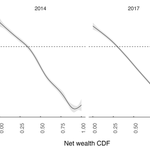




A concise overview of our working paper with P. Fessler (@oenb) on biased perceptions of #inequality and savings behaviour. We find that individuals misperceive how wealthy they are compared to others. Wealthy individuals who underestimate their wealth rank oversave #econTwitter

The subjective wealth distribution: how do individuals misperceive their relative wealth, and how do misperceptions affect savings behavior? Read the spotlight on the new WP by the OeNB's Pirmin Fessler & @GC_CUNY Stone Center postdoc @severin_rapp bit.ly/3YViWTZ
Mit @f_disslbacher ein paar Gedanken zur Besteuerung von Erbschaften hier:
diepresse.com/19002591/wie-v…

1 ausführlicher 🧵zu unserem paper vom @mom_inst

Aktuell werden neue #Steuern als Maßnahme zur Budgetsanierung diskutiert. Die #Erbschaftssteuer geht dabei im Diskurs oft unter. Im #PaperderWoche analysieren @f_disslbacher und @severin_rapp die Vermögensverteilung zum Todeszeitpunkt in Wien. Präsentiert von @sonja_fes. 1/

ALT Leaving legacies and liabilities: The distribution of wealth at death. Issue date: September 30, 2024.
6
400
Join us this week at the @stone_lis seminar series with @ZhexunMO who will present his work on the historical evolution of national wealth in china: bit.ly/SCMDSS-F24
This paper w @f_disslbacher documents substantial inequality in probate wealth and examines potential drivers of wealth at death, including age and bequest motives.

📊1/3 of the population passes away leaving behind debt in Vienna.
In this new working paper, @f_disslbacher & @severin_rapp use a new data source on wealth in 🇦🇹 to study the distribution of wealth at death and its drivers.
Read more▶️ t.ly/x82B4

6
459
Looking back to a brilliant discussion. Why are people pessimistic about the us economy despite good performance on a range of indicators? What changed the relationship between unemployment, wage growth, inflation etc and the economic sentiment?
Excited to see this new wp out with @f_disslbacher use a new data source on wealth in 🇦🇹 to study the distribution of wealth at death and its drivers ⤵️
What is the distribution of wealth at death, and how is it shaped by individual and institutional factors? Read the new paper by GC Wealth Project's @f_disslbacher and GC Stone Center postdoc @severin_rapp, part of the Stone Center Working Paper Series.
bit.ly/3BrdIHs

13
484
@f_disslbacher study wealth inequality at death with a new datasource from 🇦🇹 probate records
This quoted post is unavailable.
On Thursday, 26th Sept I will be presenting my paper "The subjective wealth distribution: How it arises and why it matters to inform policy?" at the @stone_lis Fall 2024 Multidisciplinary Seminar Series. Join us! Registration: gc-cuny-edu.zoom.us/meeting/…
This paper by @matschnetzer and @SixEv4 shows how childhood exposure to cultural activities affects wealth accumulation over the life-cycle 🎭📚 This is very interesting work, and sheds light on some important drivers of equal opportunity.

🥳 I'm very happy that our (w/@SixEv4) paper on childhood cultural capital and wealth has just been accepted in the Review of Economics of the Household.
We find positive links between cultural family background (books, cultural activities, parental education) and adult wealth.

Our work featuring in @DiePressecom!

⚡️New findings on WEALTH TAXATION! ⚡️
@f_disslbacher criticizes the current inheritance tax models in @DiePressecom based on the new WP with
@severin_rapp. Large-scale exemptions + the addition of gifts are necessary to reduce the concentration of wealth.
diepresse.com/18851534/neue-…

Unsere Studie zum Erben in Wien heute im @derStandardat ⬇️ mit @f_disslbacher derstandard.at/story/3000000…

I vouch for this being a fantastic opportunity and the prospect of working in a highly supportive, fun and inspiring environment! feel free to reach out.

Yes! At @stone_lis, we're excited to post the call for our 7th cohort of postdocs working on #inequality. Application deadline is Oct 30; positions start Sept 2025. Two positions; qualified applicants should feel free to apply to both. @GC_CUNY @lisdata @ecineq @WIL_inequality
10
723
Danke an die @wu_vienna, unsere Studierenden und Tutor_innen, die uns die Tutorials ermöglicht haben! Gerade in Wirtschaftspolitik ist kritisches Denken und der Raum für gemeinsames Diskutieren und Reflektieren sehr wichtig.

Kann das Oxford Tutorial System an öffentlichen Universitäten in Europa eingeführt werden?
@severin_rapp und ich haben an der @wu_vienna ein Pilotprojekt durchgeführt und evaluiert, das mit dem Scholarship for Teaching and Learning ausgezeichnet wurde.
wu.ac.at/ineq/outreach/news/…

Today I am starting my postdoc at @stone_lis to work on #wealth #inequality and demographic #econ. This is an incredibly exciting new chapter. Pls do reach out if you are in NYC 🏙️

This sounds like an amazing opportunity for #wealth scholars and a truly fabulous programme.
This post is from an account that no longer exists. Learn more
3
419
🚨WP altert 🚨
Excited to share my new paper with @f_disslbacher on bequests in Vienna/Austria (research.wu.ac.at/ws/portalf…). We use for the first time contemporary probate data to generate a rich dataset on bequests and intergenerational wealth transfers. Here is a short 🧵

Very excited to share that I will be joining the @stone_lis in autumn as a post doc to continue working on wealth distribution and intergenerational transmission in this incredibly vibrant environment!
The Stone Center is happy to announce our two newly selected postdoctoral scholars, @ZhexunMO and @severin_rapp! They will start their two-year appointments at @GC_CUNY in September. Welcome, Zhexun and Severin!
stonecenter.gc.cuny.edu/the-…
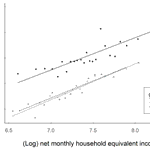
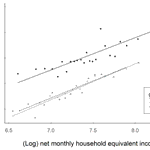
Excited to share the most recent version of my paper on household scale effects and wealth distribution #jmp #EconTwitter The latest version of the draft is available on my website: severin-rapp.github.io/asset…
A short 🧵:

cool research by the fabulous @pslrojo from @LSEInequalities features in the @washingtonpost: "Just one variable — how much you inherit — can account for more than 60 percent of U.S. wealth inequality"

🗞️The III's @pslrojo was interviewed in the @washingtonpost for their article "How likely are you to get an inheritance, really?", in which he discusses inheritances and wealth inequality in the US
Read it here👇
washingtonpost.com/business/…