

Periodista en el diario español ABC (Internacional, América Latina, DD.HH.).
Madrid
Joined March 2010
- Tweets11.8K
- Following3.1K
- Followers1.9K
- Likes3.6K






susana gaviña retweeted

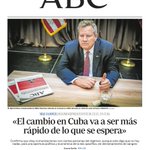
🇨🇺 El régimen cubano acusa a la corresponsal de ABC de atentado: «Buscan silenciarme y obligarme a dejar la isla»
✍️ Por @sgavinabarriuso
abc.es/internacional/regimen…

susana gaviña retweeted

Por favor lea esto. Es sobre un hombre, su profunda estupidez, y la naturaleza humana.

I am a member of the Norwegian Nobel Committee.
There are five of us. Five people, appointed by a parliament most of the planet could not find on a map, who decide, once a year, which human being the world has agreed to call good.
I know. I know. I think about it on the tram.
We meet in a building on Henrik Ibsens gate, a street named after a man who wrote almost exclusively about people discovering they are frauds, which nobody on the committee finds funny except me. There is a room with a long table and the portraits of the dead laureates looking down, Mandela, the Dalai Lama, a great many earnest men in spectacles, and one portrait we do not discuss, which is Kissinger, 1973, awarded while the bombs were still falling, after which two of our predecessors resigned and the satirist Tom Lehrer said political satire was now obsolete. We keep him on the wall. A reminder. Every family has the uncle.
It is October in Oslo, which means the sun gives up around four in the afternoon like a civil servant, and it rains the particular Norwegian rain that isn’t quite falling, just hanging there, judging you. I arrive with wet shoes. I always arrive with wet shoes. There is coffee, because this is Norway and there is always coffee, we drink more of it per person than almost anyone alive, and someone’s wife has sent kanelboller, the cinnamon buns, and we sit, five Norwegians, damp, caffeinated, sugared, and we decide the moral standing of the entire species.
Let me tell you how it actually works, because the world imagines a cathedral and it is, I promise you, a book club with a mandate.
287 nominations this year. 208 people, 79 organizations. Anyone can nominate, that’s the secret nobody understands: a professor, a parliamentarian, a former laureate, so the “nominee” list is meaningless, it’s a suggestion box, and every autumn some congressman nominates his own golden retriever and the press writes “SHORTLISTED.” Nobody is shortlisted. There is no short list the public ever sees. There is us, and the coffee, and the rain, and the portraits, and a Norwegian stubbornness that is older than the prize itself.
We read reports. The institute’s advisers write them, thick dull documents, and we argue. Our chairman told the BBC once that in the final meeting “there is a high temperature.” High temperature, for a Norwegian, means someone slightly raised an eyebrow and then apologized for it. We don’t do high temperature. We do a long silence, and then Kristin says “well,” and everyone knows exactly what “well” meant, and it’s settled. That’s our shouting. “Well.” You’d have to be raised here to hear the violence in it.
Now. This year. I will not say the name, because we never say the name, but you know the name.
A certain head of state wanted this prize the way a child wants a thing in a shop window, which is to say loudly, and in public, and with the full belief that wanting it was itself the argument. He said he deserved it. He said he’d ended eight wars, a number that grew most times he said it, like a fish. He had other heads of state phone us. Israel’s prime minister posted it on the internet, “Give him the Nobel.” The leaders of Cambodia and Pakistan announced they’d nominated him, as though announcing it were part of it, as though we tally mentions. A man flew around the globe collecting endorsements for a Norwegian committee the way you’d collect signatures for a petition to the council about a noisy dog.
And here, uff da, is the detail I treasure, the one that makes me smile into my coffee. The nomination deadline is the 31st of January. He took office on the 20th. So for all the phone calls, all the posts, all the gilded lobbying, the only nominations that could possibly count for this year’s prize were filed in the first eleven days of his term, before he had, by his own arithmetic, ended a single one of the eight wars. He campaigned all year for a prize whose window had shut while he was still hanging up his coat. We didn’t have to reject him. The calendar did. We just watched. Norwegians are very good at watching. We have long winters.
People think we sit there weighing his deeds. We don’t. That’s the thing I can’t make the world understand. We’re not grading his homework. We don’t owe anyone the prize for a ceasefire, however real, however loud the announcement. “He made peace” is not a sentence that ends in a medal, the way he believes it does, the way he believes every good thing ends in his name on it. The will of a dead Swede says the prize goes to whoever did the most for fraternity between nations. A dead Swede, I should add, who made his entire fortune inventing dynamite and selling arms, and spent his last years horrified at his own obituary, which called him a merchant of death, and so bought his way to immortality as a man of peace. The whole prize is one guilty arms dealer’s attempt to launder his name. We are, all of us, administering a dead man’s public relations. I find this clarifying. It keeps me humble. It should keep everyone humble, and it keeps, by my count, no one humble at all.
So who did we give it to?
An eighty-five-year-old woman. A judge. Born in Durban, under apartheid, granddaughter of a Tamil man who came to South Africa as indentured labor, a bus driver’s daughter from the poor Indian quarter, who became the first non-white woman to run a law practice in her province, who defended Mandela’s people when defending them was dangerous, who sat on the Rwanda tribunal and the court at the Hague, and who, at eighty-five, is right now a judge weighing whether a genocide is a genocide. When we told the world, our chairman said the rule of law “underpins the system we have set up to ensure peace,” and that “peace requires justice.” She wasn’t even in Oslo. She was in Nuremberg. In courtroom 600. The actual room where they tried the Nazis. You cannot stage that. God staged that, and God, it turns out, is a better satirist than any of us.
She did not phone us. She did not post. No prime minister demanded it for her on the internet. She had, as far as our deliberations are concerned, the one qualification the loud man could never manufacture, which is that she wanted the work and not the medal. The medal finds those people. It flees the ones who chase it. This is not a rule we wrote. It’s just the only pattern the hundred-odd years of our mistakes has ever shown.
The reaction from across the ocean was immediate. His spokesman posted that we “place politics over peace.” Ja. Perhaps. We’re five damp pensioners in a rainy city; of course it’s political, it was always political, it was political when we gave it to a sitting American president nine months into his first term for the promise of things he had not yet done, and we have been quietly embarrassed about that one for fifteen years, so believe me, we had a particular reason this year to prefer a woman with fifty years of verdicts behind her over a man with eight wars in front of him and a deadline already behind him.
Here is what he will never understand, the thing I’d tell him on the tram if he ever took one. We are the one prize he cannot buy, cannot post his way to, cannot have a friendly dictator phone in for him. Not because we’re incorruptible, nei, we’re as vain and wrong and human as the portraits on our wall. But because the entire point of the thing, the only power a small cold country’s book club has ever held, is that it goes to the person not performing the wanting. The moment you demand it, you’ve proven you don’t understand what it’s for, and proving that is itself the disqualification. He ran the most expensive campaign in the history of the prize and the campaign was the reason. He was never losing to Navi Pillay. He was losing to the concept.
It’s dark now. Four o’clock dark. The buns are gone. Kristin said “well” an hour ago and we all went home. I’m on the tram with my wet shoes, and somewhere across the water a very powerful man is explaining to a camera that the prize is rigged, that we’re corrupt, that he’ll win it next year, and he genuinely might, we’re only five idiots and we’ve been wrong before, Kissinger is still on the wall.
But not this year. This year an old woman in Nuremberg, in the room where the law once stared down the exact kind of man who thinks wanting a thing loudly enough should make it his, got a phone call she didn’t ask for.
That’s the job. We don’t reward the man who ends the war and announces it.
We reward the woman who spent fifty years deciding what a war was.
He’ll never see the difference. That’s rather the whole point of him.
Takk for i dag. I have to change trams.
susana gaviña retweeted
Bezos recortó The Washington Post y dejó en la calle a cientos de trabajadores. Ahora, parte de ese talento vuelve convertido en competencia: 28 antiguos periodistas del Post forman el núcleo de The Washington Sun, un nuevo diario que nace con 110 profesionales y la ambición de ocupar el vacío dejado por el histórico periódico. 👏👏👏


#México: Detenido Miguel Ángel Aguirre, exgobernador de Guerrero, por la desaparición de los estudiantes de #Ayotzinapa abc.es/internacional/detenid… a través de @ABC_Mundo
68
susana gaviña retweeted

Este documental que estrenamos hace casi cuatro meses con Frontline está por alcanzar las 700,000 vistas. Creo que es la más completa cronología de estos pactos mafiosos. “El acuerdo: Trump, Bukele y las pandillas de El Salvador”youtu.be/FuOnV9FGH5U?si=EXXU…

susana gaviña retweeted

Un presidente admirado por reducir la criminalidad en El Salvador. Del otro lado, los presuntos pactos con pandillas para pacificar al país y ganar elecciones.
N+ Univision Investiga presenta "Las dos caras de Bukele", una investigación que analiza el contraste entre su extraordinaria popularidad y las acusaciones que han marcado su gobierno. Este domingo, 7p/6c, por N+ Univisión 24/7, ViX, Facebook, YouTube, X, Instagram y TikTok.
El diálogo entre el chavismo y la oposición de #Venezuela se limita a una llamada telefónica abc.es/internacional/llamada… a través de @ABC_Mundo Por @JorgeBenezra
1
462
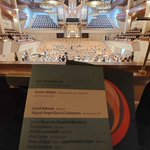
Emocionante concierto de fin de temporada y despedida de David Afkham, titular de la @ocnesp. Una gran Novena de Mahler q ha estado dedicada a las víctimas del terremoto de #Venezuela El público q llenó el Auditorio Nacional, puesto en pie, le brindó un largo e intenso aplauso

susana gaviña retweeted

El terremoto abrió una falla en la tierra. La otra falla, la que Venezuela lleva años soportando, solo podrá cerrarse cuando el Estado vuelva a estar al servicio de sus ciudadanos.

🔵 LA OPINIÓN DE EDMUNDO GONZÁLEZ, presidente electo de Venezuela
✍️Una falla sobre otra falla
🗣️Los venezolanos volverán a levantarse, porque lo han hecho muchas veces. Pero la fortaleza de un pueblo no puede seguir utilizándose para justificar la ausencia del Estado
🔗abc.es/internacional/falla-s…

Entrevista a la expresidenta de #Bolivia, @JeanineAnez: «Evo Morales está enfermo de poder, se ha convertido en el mismo diablo» @caslainstitute @TAMARA_SUJU abc.es/internacional/jeanine… a través de @ABC_Mundo

45
susana gaviña retweeted
Me dirijo a la comunidad internacional con urgencia. Venezuela necesita ayuda humanitaria de emergencia, con acceso real al territorio y entrega directa a las personas afectadas. Necesita equipos de búsqueda y rescate, suministros médicos y apoyo técnico. El mundo debe saber que esa ayuda tiene que llegar sin condicionamientos y sin intermediarios que la usen como instrumento de control.
Edificios derrumbados.
Familias sin saber dónde están sus seres queridos.
Un país en shock.
No tenemos cifras confiables de víctimas.
Todo eso, en sí mismo, es parte de la tragedia.
Llegamos a esta catástrofe después de décadas de destrucción institucional. Los equipos de rescate, el sistema de salud, la infraestructura de comunicaciones llegan a esta emergencia destruidos. Lo que debió ser inversión en proteger vidas no lo fue, por eso quiero reconocer a los rescatistas, médicos, enfermeros, bomberos y voluntarios que hoy están salvando vidas en condiciones extremadamente difíciles. Su valentía es la mejor cara de Venezuela.
Hago un llamado a los países amigos, a los organismos humanitarios y a los millones de venezolanos que viven fuera de nuestras fronteras, por favor, acompañemos a nuestro pueblo en estas horas.
Estoy convencido de que juntos encontraremos la fuerza para levantarnos.
40 segundos entre dos terremotos: la noche que partió a Venezuela Por @JorgeBenezra #terremotovenezuela abc.es/internacional/segundo… a través de @ABC_Mundo


susana gaviña retweeted
❗️Cocaína, la guerra que Colombia no logra ganar abc.es/internacional/cocaina…

susana gaviña retweeted
#Venezuela. Muere Carmen Teresa Navas, la madre de Victor Hugo Navas. La madre que buscó a su hijo enfrentando a la Tirania. La que forzó que la estructura criminal reconociera que lo habian asesinado bajo custodia.
Todos los Altos, Medios y ejecutores responsables tienen una deuda con ella, con su familia, con los venezolanos decentes con la justicia y con Dios.
La recordaremos siempre por valiente, por su constancia, por su serenidad a pesar de la crueldad que vivio. Ella ya esta con su hijo.
Que dolor debe haber sentido.
Que Dios los tenga en su gloria. Que Dios los tenga en su gloria


#Atención A las 7 de la noche de este domingo 17 de mayo, acaba de fallecer Carmen Teresa Navas, madre del preso político Víctor Hugo Quero Navas
Un año presa en las mazmorras de Bukele: el coste de la disidencia para la activista Ruth López elpais.com/america/2026-05-1… a través de @elpais_america
28
susana gaviña retweeted

Hoy, en @abc_es, entrevista al opositor y ex-preso político de #Cuba José Daniel Ferrer: «EE.UU. va a tener que intervenir militarmente en Cuba porque el régimen lo que está haciendo es ganar tiempo». Por @sgavinabarriuso.
abc.es/internacional/jose-da…

El Roto: negociaciones para finalizar un conflicto
elpais.com/opinion/2026-05-1…
17