

Scaling robotic construction like Physical Compute. CEO @ Human Friendly Robotics. Ex-CTO @a16z-backed Betterleap. Founding CTO Trilogy, $750M acq by @edXOnline
New Jersey, USA
Joined February 2009
- Tweets7.3K
- Following1.2K
- Followers2.1K
- Likes3.1K




Pinned Tweet
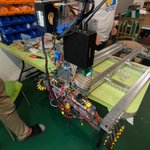
Friends, what do we think about a robot that does tiling? (You know… bathrooms, kitchens, etc)
Everyone building the “physical AI platform” seems to be leapfrogging the whole “we don’t REALLY know what the future will look like.”
Seems like extreme “cart before horse” at venture scale. I know a ton of robotics founders and I can count on two fingers how many of them “struggle” with fleet deployments, telemetry, etc.
Multi million dollar “cloud management” startups made sense AFTER there was billions of dollars of cloud infrastructure.
If I were a betting man, I’d bet on deployments as the first class (and maybe only?) metric. The “but can it do other things” and “but how does it work at scale” WILL be solved by deployments. Those questions are often viewed as barriers, but they’re entirely the wrong question.
Genie 4 is wild, and a world you can poke in real time is a big deal for training robots. But robots don't care how good the rain looks. They care whether the box slips when they grab it.

Shamoon Siddiqui retweeted

Watch the full talk: youtu.be/IwkOnY9T1DE

Shamoon Siddiqui retweeted
A union installer expected "just a little helper carrying a pallet."
Then Tyler started setting tile.
@Shamoons shared the story at @StarnetFlooring 2026, plus how one installer went from 100 to 800 sq ft a day with @HFRobots. Thanks Mark Bischoff for having us.
Full talk below 👇
The list of jobs people swear can't be automated keeps getting shorter. Fun watching another one come off it lol

When we started @SereactAI , people told us returns were impossible to automate.
This is Cortex handling @Zalando
returns at a @cevalogistics fulfillment center. It’s live and in production, every shift.
Proud of the team that made this real.
Glad someone finally wrote this up! The most useful data on a jobsite is every time a person had to step in and fix what the robot did. A demo never shows you that part

Q: How much hook-and-loop/Velcro material is securing cables in the world’s data centers? 🧐
A: Some fuzzy math: 34 million racks × 100 strips per rack × 30 cm per strip = about a million kilometers.
That’s 25 times around the earth’s equator! Or 1.3 trips to the Moon and back! 🌙 TODAY our partners at Velcro Companies visited the Human Friendly Robotics office to oversee development of TREY, our overhead cable tray organizing robot for data centers.
🤖 The need for securing Velcro ties quickly and autonomously, without sending a guy up into the air dozens of times.
Hey Velcro folks! Great having you over. See ya’ll next week to demo at Mortenson!

Totally true for software. The physical world is still missing a few bricks tho. The internet never recorded what it feels like when a bolt starts to cross thread

LLMs are magical alien technologies we’ve managed to conjure up from a distillation of the internet. Even if progress completely stalls, we have years worth of value to harness from what we already have. In other words, these lego bricks still haven’t been put together in the most obvious combinations.
Cheap text is great, but machines never really made it out of the factory. Building a house or pulling wire looks alot like it did 50 years ago, and construction productivity has actually gone down since 1970. Cheap houses and infrastructure is the abundance I'm most excited about!!

1. Humans will not stop creating text, images, and music. We will always do this for joy and self-expression.
2. AI will create most content in the future, and it will displace many humans doing so, just as machines did for physical products. The result will be an abundance of affordable, high-quality text, images, etc. for everyone to use and enjoy.
3. You might be sad about this. I won't tell you that you are wrong, because I don't police people's feelings. Regardless, this transformation will be, on net, a very good thing. I understand if it's emotionally hard to process, though.
The electrician premium is the one I'd bet sticks around even if the boom cools.
Chips and turbines can add capacity. A journeyman electrician takes 4-5 years to train, and a lot of them are retiring.
Labor stays tight, so automating the repetitive parts (pulling wire, terminating, testing) pays off either way.

The AI boom has created insatiable demand for data centers. Nobody knows how long it will last.
Everything that goes into data centers, from cement, to the labor that builds them, to the electricity that runs them, to the chips that provide their intelligence, is overpriced by a large factor.
Gas turbines are on track to triple in price from 2019 levels. An electrician wiring a data center makes about double what electricians make everywhere else. Nvidia sells its chips at a 75% gross margin, as if it were a software company.
Companies making these investments are drawing straight lines into the future.
Big congrats to the Skild team!!
Abhinav's line about revenue over demos and free POCs should be pinned in every robotics startup. A free pilot proves the robot can do the task. A paid one proves the customer thinks its worth doing.
Next number I want to watch: how much human help each robot needs as the fleet grows.

Best line in the Pi API writeup: construction, surgery, warehouse automation 'each requires an entire company.'
Pi makes the model layer shared. The robot company still owns the hardware, the task, the recovery when stuff goes sideways, and the customer paying for it to work every shift.
And the loop they describe is the real unlock for small teams: collect demos, fine-tune, run it, let the failures pick the next data. Almond got a deburring policy in 4 days of iterating.
Also an autonomous wheel loader in commercial use with nobody in the cab. Love seeing construction on the list!!

Fun detail on how Kaiser actually hit that rate. They built deckhouses and hull sections upside down in a separate prefab plant, so most welding was down-hand, the easiest position. Newcomers got placed right away and could make journeyman in a few months. Average Liberty ship went down to 42 days.
Same playbook works for robots in construction and factories imo. Change the job so new hands (or simpler machines) can do it. Nobody went looking for more master welders.

150 GW of new production brought online over 20 years, or 7.5 GW per year. Most of it would be wind power.
Offshore turbines currently generate about 25 MW, so they would have re-industrialized Glasgow's dockyards to produce about one per day.
This is about the same rate that the Kaiser shipyards produced finished liberty ships, which are substantially more complex.
One turbine per day doesn't sound like all that much, but do it for a decade and Britain doubles its power production capacity.
Or stay poor forever.
Wild that the whole room landed on the same thing. If the brain gets cheap, the value moves to everything around it. Does the robot know the job actually got done? Can it back up and retry when it didn't? Who shows up when it gets stuck at 2am?
Demos get to skip all of that. Curious how many times per shift someone has to step in on the real deployments.


Feedback is only useful if you know how old it is. By the time a robot acts on a camera frame the world already moved, and force/torque comes in way faster than vision anyway. Love seeing time treated as a real input!!

Most robot policies treat time implicitly, using sequence position as a proxy for physical time. But real robot systems rarely run on a fixed clock. Sensors run at different rates, observations arrive with delays, and actions take time to compute and execute. Successful control depends not only on what the robot observes but also on the timing of observations and actions.
We introduce 🕒 Chronos Policy, a diffusion policy that explicitly conditions on observation capture times and requested action execution times. We use time-aware positional encodings to make attention depend on elapsed physical time. Because timestamps let the policy interpret each sequence's timing, we can randomize sensing and action timing during training without making those variations ambiguous. This exposes the policy to a wider range of timing conditions, improving robustness to timing changes at deployment.
Really like this framing from @vedantnair__. 5 min of data gets you to ~83% on simple tasks, but customers pay for 100% and someone to call at 2am. Thats the deployment company's whole job.
Big question for me is who keeps the field data. If the failures go back to the lab, the deployco is kinda renting its moat.

A new kind of company is emerging in robotics: the deployment company.
Broadly speaking, a deployment company builds on a frontier model instead of training its own. Instead, it builds/assembles its own hardware, fine-tunes the model on vertical-specific data, and owns all the hard work of deployment: commissioning, ops, support, and workflows.
Until recently, this wasn't an option. If you wanted to deploy a robot that did real manipulation work, you had to build the autonomy yourself. This meant a big robotics team and years of data collection before you could deliver a reliable robot.
Now, labs like @Physical_int and @GeneralistAI are changing this pattern.
So far, Pi has announced three deployment partners publicly:
-> @Weaverobotics builds robots that do laundry and take care of the home
-> Actor Labs brings Physical AI to heavy machinery like excavators and loaders, starting with construction.
-> @Ultraroboticsco robots pack e-commerce orders in warehouses
Notably, each of these companies uses different embodiments in different verticals but can still benefit from the same base model.
Generalist hasn't announced any partnerships publicly, but today has released the waitlist for Gen 1.5 (and I've heard whispers of deployment partnerships there as well).
The economics of the partnerships aren't public yet, but the setup is mutually beneficial. This lets the labs focus 100% of their effort on developing better models and avoid the demanding deployment schlep. On the flip side, this lets startups benefit from the billions of dollars and world-class researchers needed to train these models.
This is incredible for startups. With SOTA models available to build on, teams need less capital to get started, reach their first deployment faster, and spend their time obsessing over customers’ problems, workflows, and the long tail of details that create real value.


Weeks of sim modeling down to hours from a video is the real news here. Cornhole is cute but if that works on boring factory tasks, it's a big deal.

Gemini 4 Argon is a step change and will have massive impact on robotics. We have published a developer blog to show various ways in which Argon accelerates robotics.
developers.googleblog.com/ge…
A token is a token on every GPU. A grasp isn't a grasp on every arm.
Most of a robot skill lives in the cell: gripper, fixturing, calibration. What really needs to transfer is recovery, so if a hub pays per reuse, the failures should pay the most.

Someone is going to be the Hugging Face of robotics. Probably the OpenRouter too. It won’t be a robot company. And almost nobody is building it yet.
Yesterday I stood in a London robot gym. Three arms, three makers: FANUC, ABB, Universal Robots.Three controllers. Three SDKs. Three ways of saying “pick up that gear.” That’s robotics in 2026: brilliant hardware, no shared language.
LLMs got their platform layer in about two years. Open weights on one hub. One API to route across every model. Switch providers in a line of code. Robotics has none of that. Most robot skills are still welded to the arm they were trained on.
Meanwhile, the money is flooding in: nearly $48bn into robotics this year, per PitchBook. Much of it goes to data: gyms, rigs, operators. Billions spent on data that can’t leave the building. That isn’t a market yet it's a stockpile. ft.com/content/e5fd2655-f95f…
The inflection point isn’t a better humanoid. It’s portability. When a skill learned on a FANUC runs on an ABB tomorrow, and on a robot that doesn’t exist yet the day after, the economics of the whole industry flip.
OEMs will read this as a threat. It’s their biggest upside. Today an arm does what it was programmed to do. Tomorrow it runs any skill from anyone. Same steel, 100x the jobs.The OEM that opens up first sells more arms than the rest combined.
What the hub needs:
→ a common format for robot data and skills
→ routing: the right model for this arm, this task, this cost
→ provenance: where every clip came from
→ payment: the person paid 94 cents to record a task gets paid again every time it’s reused
That last one is the edge. Hugging Face never had to pay for weights. A robotics hub will, because the data costs real hours from real people. Whoever solves micropayments for contributors wins the supply side. That’s the machine economy. It is being built right now. Here in Europe. You doing your part? My DMs are open.


Huge congrats to Jason and the ICON team!! $200M to build more Titans, with paid reservations running 10x ahead of forecast. That's what robotic construction looks like when it's selling cycle time and cost to real builders. Robotics capital still loves the humanoid reel, so it's great to see a machine shaped for the job get backed like this.

