

Building Forest City 1. Author of books. Co-Founder of @inter_gen. https://xitter.cf/t.co/WsSzqewlfD
London, England
Joined February 2010
- Tweets49.7K
- Following5.6K
- Followers17.7K
- Likes29.4K




Pinned Tweet
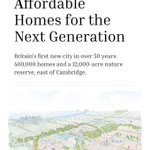
Okay we’ve announced it. We’re building a city. The first major city in the UK for fifty years. And we want the Labour government to back it. We’ve already got amazing prominent supporters. But we need everyone to sign the pledge first to prove real demand. Sign it and read more in the link below!

Shiv Malik retweeted

The ugly truth about France and some of the other European countries currently in turmoil - and which none of the politicians want to admit because it'd be political suicide - is that you can't solve the problem by going after immigrants (as the right asserts) or the rich (as the left asserts), but you could solve it by going after the old.
One extraordinary statistic for you: people over 60 in France, a quarter of the population, own 60% of France's wealth, non-financial and financial (ofce.fr/pdf/revue/2025/3-192…).
And here is another crazy statistic:
that same quarter of the population, those above 60, receive nearly two-thirds of all social spending by the French government (previssima.fr/actualite/prot…) - which is famously among the highest in the world (France's government spending is an insane 57.3% of GDP).
Last statistic: they make up about 40% of voters because they're a third of registered voters (insee.fr/fr/statistiques/266…), and they turn out far more than anyone else (franceinfo.fr/elections/sond…).
Put our 3 statistics together and there's almost a bit of an apartheid situation here: the old own most of the country's wealth, collect most of the social spending and have the political power to keep it that way.
Which makes them a de-facto rentier class, living off assets and transfers paid for by younger generations.
And, of course, at the risk of stating a truism, the future is built by the young. Yet France keeps effectively taking money away from them to give it to those whose working lives are already behind them - and need the money far less since they already own the country's wealth.
What about inheritance, I hear you ask? That's the funniest/saddest aspect: given that life expectancy has kept rising, the French now inherit a home at 54 on average. The most common case is someone in their 80s leaving it to heirs in their 50s, in effect the very old transferring wealth to the about-to-be old (insee.fr/fr/statistiques/fic…).
You can add this to our earlier apartheid statement: on top of all the rest, even when the old finally let go of their wealth, it stays within their own "camp".
That's my personal situation, incidentally: I'm 42, my father is 71 and he is starting to look at ways to pass things on to me and my siblings, when our professional lives are already well settled, so it'll arrive when it changes things the least, which is pretty much the French system in a nutshell.
Now, I get that there'd be some unfairness in going after them: they paid into the system their entire working lives, playing by the rules of a social contract that told them if they paid up they'd collect at the end. Changing the rules now means breaking that promise, which is admittedly unfair.
But there's no magic wealth tree in any society: you can only take it where it is. That's the way most major societal transformations end up happening. They're often triggered by a catastrophic event (the so-called "four horsemen": mass-mobilisation war, revolution, state collapse, plague) BUT what really drives change is a transfer: wealth gets pried from the privileged class who've been sitting on it and handed to those who'll build what comes next.
So, in theory and in an ideal world, you can do without the catastrophic event and directly proceed with the transfer...
The fact that in France, and elsewhere in Europe, it's the youth protesting is probably no coincidence - even though they don't frame it as a generational fight. And even though, cruel irony, the left politicians many of them march behind promise to bring the retirement age back to 60 (lcp.fr/actualites/legislativ…), which would make the situation even worse.
Let's say they understand intuitively that the system is stacked against them, even if they haven't yet figured out how. And politicians are obviously doing what politicians do, meaning pandering to the people who actually vote, while pointing the young towards easier - and politically convenient - scapegoats.
To be clear I'm not saying it's the only problem in France, VERY far from it. I'm also not saying that all old people in France live a lavish lifestyle at the expense of younger generations: there are also plenty of very poor retirees who, if anything, would deserve more.
What I am saying is that it's probably the biggest elephant in the room: everyone can see it, nobody dares mention it - no politician, from any side, wants to run on cutting grandma's pension - and it makes every other problem harder to fix.
Shiv Malik retweeted

One reason young people want socialism so much is that they're jealous that older people have it and they don't.
Shiv Malik retweeted

The fact the Treasury recognises the need to restrain access to Help To Buy subsidies ought to raise alarm bells about the risks of the scheme to begin with.
Just stop subsidising housing demand when house prices are already very high!

Exclusive:
John Healey is poised to make the government’s revived Help to Buy scheme more generous in a boost to middle-earners
The chancellor was set to exclude households earning more than £90,000 outside London and £110,000 in the capital from the “Your First Home” scheme
It offers first time buyers a 20 per cent equity loan to help them buy a new-build home, with an initial interest free payment and a minimum deposit requirement of just 2.5 per cent
However, the initial earnings cap would have meant young couples with relatively modest incomes would have been unable to access the initiative. The median pay for a teacher is £51,048 and for a nurse the figure is £44,053
The Times was told that Healey recognised these concerns and decided to instead set the cap at £110,000 outside London and £140,000 in the capital
thetimes.com/uk/politics/art…

We’re looking forward to these endowment buildings for Forest City

Amazing that Andrew Carnegie, 130 years ago, built 2,500 libraries, Carnegie Hall, and Carnegie Mellon. He invested $50M in today's dollars to build the Peace Palace in The Hague, in a country he was not from and did not live in.
Shouldn't there be a Musk Hall, Bezos Auditorium, or Zuckerberg Cathedral everywhere? What are these boys doing with all that money?


I once spoke to Gro Brundtland at an OECD event (Norway’s PM at the time of the fund’s set up) and she told me that it was incredibly difficult to push through the fund’s rule of not spending the capital - only the interest. Norway was a poor country at the time so it took real strength of will and political bravery. And maybe this solidifies the difference between politicians and statesman: it’s all about time preference. Do you act for your people now. Or can you get them to wait for a greater pay off later.

Shiv Malik retweeted

Norway's fund works because Norwegians can look at $2.4trn of Nvidia and Palantir shares for twenty years and not touch it
the people most upset Britain never built one would have forced it to dump Palantir after the first demo and spent the rest on nurses in the first recession
Shiv Malik retweeted

Fascinating argument - which come just as Andy Burnham seems to be going cold on the idea of greenfield new towns
(Naturally, he wants mayors to decide)
as.ft.com/r/95370b6e-c64a-43…


100 years ago, England embarked on one of the most successful urban expansion projects in history: the creation of Metroland, beautiful suburbs and towns, strung along the railway lines out of London. Today, @SCP_Hughes, @createstreets and I set out how we can do it again. (1/?)

Shiv Malik retweeted

Britain’s nature is in crisis. We are one one of the most nature depleted countries in the world, with more than 200 species at risk of extinction.
If you just followed debates online or in parliament you would assume that the biggest issue for nature is building. Discussion of nature restoration revolves around planning policy for buildings, not payments to farmers to protect and restore nature. Yet just 7% of Britain’s land is built on. 69% is agricultural land.
Nearly a quarter of agricultural land is upland sheep farms. In most recent years the price of wool does not even cover the cost of shearing a sheep. Just 1% of our calories come from lamb. But these farming businesses have been kept on life support by public money: most upland hill farming income now comes from subsidies rather than food production.
Britain’s uplands are stark, open spaces. This is not ‘natural’. Many of these landscapes were once forests. Some were even ‘temperate rainforests’ a landscape once widespread, now almost entirely destroyed. We should restore at least some of these landscapes.
And, as the sheep farmer James Rebanks has put it. “There is a simple mechanism for transitioning farming to create landscapes you want – pay farmers to do it, pay them fairly at an appropriate rate, and ensure that the payments are guaranteed for long enough for them to be viable.”
In Scotland and Wales we still mostly do the opposite. We subsidise farmers to keep grazing the hills. In England, on paper, things have changed. But things are happening far too slowly.
Three years ago 56 ‘Landscape Recovery’ projects were announced. Just 3 have moved from planning to delivery. Every project must be over 500 hectares (the size of a small town) requiring many farmers to work together and the creation of new legal entities.
To convince government that they are ready to begin work, farmers have founded they need to hire project managers, stakeholder consultation specialists, green finance consultants, solicitors, and accountants. So far so projects have spent £37 million of taxpayer money on design work. Government has also inserted a ‘ ‘termination for convenience’ clause which they can exercise at any time . Farmers who have committed to multi decade projects can have the rug pulled from under them.
If we want to restore nature, instead of arguing about building on car parks in big cities we should instead focus on getting the right deal for farmers. Government needs to make an offer to farmers on nature that is credible and does not need an army of consultants to access. Until then, sheep farmers are going to keep trying to make their money from sheep.
Read more here: britishprogress.substack.com…
All credit to @TomGegg and Ted Theisinger (who is too sensible to be on here).
Good advice from two years ago.

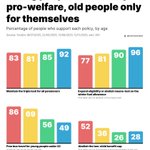
Millennials and Gen Z I’ve been arguing for Intergenerational unfairness for 14 years after co-writing a book abt it called Jilted Generation. I’ve done TV shows, live debates, radio phone-ins and trust me, you may care about boomers but when it comes to money intermediated through the state, they DO NOT care about you. As a group, they will absolutely vote for their direct interests such as higher pensions and freebies, and usually support anti-young policies like NIMBYism, National Service, cuts to youth services, student fees etc.
It works every time, which is why politicians deliver for them. The main problem with this is that pensioners don’t work and therefore an economy run in their interests will always decline and stagnate. Which is why Britain is where it is. In the doldrums. A fight for new towns and cities, better infrastructure, cheaper education, faster trains, fewer starving children etc is a fight for growth and a better future for this country. You are the real patriots.
Very much agree with this. Beauty isn’t an automatic passport to getting things built.

I'm in @WorksInProgMag's letters section this week, arguing that British YIMBYism's preoccupation with beauty is a massive waste of time and resources.
Beauty is marginal. There are bigger problems to solve in British housing—they're just all a bit less sexy.


Shiv Malik retweeted

Oh no, if only we had the stable power needed for projects like this.
I bet he's really annoyed at the minister in this video.

Anyone else really conflicted over this?
We need more data centres to compete at all in the AI arms race, but at the same time a national campaign to ensure Nick Clegg does not receive another £30 million seems like one of the few things that would unify the country.
H/t to @ArianCymreig

Shiv Malik retweeted

Age, not gender, is SPLITTING Texas.
U.S. Senate, Texas likely voters
🔵18-29 - Talarico 74, Paxton 22
🔵30-44 - Talarico 61, Paxton 29
🔴45-64 - Paxton 46, Talarico 41
🔴65+ - Paxton 58, Talarico 38
Excellent video, excellent ambition. However, the one thing Kemi didn’t mention was the huge amount of opposition from her own MPs to building anything in actual places. People reject development and without a return to - it’s my land I can build what I like- what’s her solution to the blockers?

Imagine, just imagine, we had 1 place where all this could be permissioned in months not decades. Somewhere right next to the world’s greatest knowledge centre. No more piecemeal fights for this or that bit of infra or plot for housing. Just one place, moving fast, unlocking growth, jobs, and opportunity. Let’s call it Forest City.


Because of farming … that’s the number one reason.

Speak to any hard-bitten older farmer around me in Somerset, or anywhere in Britain, and they will tell you that they grew up among fields teeming with corncrakes, grass snakes, hares, hedges full of yellowhammers and other songbirds, car windscreens splattered with bugs after the shortest summer drive, nearly all now gone. 98% of wildflowers, gone. Huge shoals of herring, cod, and other fish in the sea, a distant memory. Across almost every indicator, the losses during just one human lifetime have been catastrophic. The data is all there, as are the anecdotes. Britain is among the most nature-depleted countries on earth.
