

Asst. Prof of CBE at Northwestern @nu_chbe Scientist and engineer interested in how living cells work @shrinivaslab.bsky.social in the other place
Evanston, IL
Joined December 2008
- Tweets665
- Following271
- Followers912
- Likes2.6K




Pinned Tweet
This is now published in PNAS! And double-treat, we also made the cover :)
pnas.org/doi/10.1073/pnas.25…


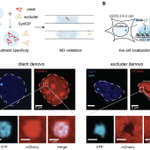
Inspired by condensates that form on specific DNA loci, we ask:
Can we design multicomponent fluids to form distinct condensates on diff. surfaces?
i.e., perform a type of information processing (surface classification) through condensation!
arxiv.org/abs/2509.08100 (1/2)

Krishna Shrinivas retweeted

In new work, we report a surprising finding: prompting Evo 2 with a handful of sequences of shared function can steer the model to generate new sequences with similar function, a form of generative in-context learning (ICL). This is an emergent phenomenon that we did not anticipate during training.
In a first study, led by Alex Hao, we show that ICL enables few-shot design of mammalian regulatory elements, including novel enhancers with cell-type specificity for a neuronal subtype in the mouse brain.
In a second study, led by @garykbrixi and Alex Hao, we extend these results to the computational design of natural proteins, de novo antibodies, protein-RNA systems, and complete bacteriophage genomes.
As part of this work, we also release several useful new artifacts, including a highly efficient new inference stack. 1/n

Krishna Shrinivas retweeted

New (to you?) preprint alert!
Can protein-coding mRNAs "moonlight" as nuclear-architectural RNAs?
Our revised preprint uncovers how nascent TTN RNA organizes a specialized nuclear compartment in cardiac cells—and how its disruption may contribute to heart disease. A thread! 🧵

Krishna Shrinivas retweeted

Public preview of BioEmu2! @MSFTResearch AI for Science’s new foundation model for biomolecular structure, dynamics and function. Open weights, MIT license.
github.com/microsoft/bioemu2
Movie: BioEmu2-simulated binding of intrinsically disordered peptide PUMA to MCL-1 receptor. 🧵⬇️
Krishna Shrinivas retweeted

Thrilled to share that I’ll soon be defending my PhD at @Harvard and starting my own research group as an ELISIR Fellow in the School of Life Sciences at @EPFL_en! My lab will investigate how signal transduction networks evolve and function in time-varying environments to improve cellular growth and survival.
I’m currently recruiting a PhD student through EPFL’s Computational and Quantitative Biology doctoral program (epfl.ch/education/phd/edcb-c…). Please reach out if you’re interested in working with me!
I'm also excited to share that the preprint of my PhD research, "Translational antagonism enables bet-hedging in yeast via mitochondrial bistability": biorxiv.org/content/10.64898…. More below (↓)

Apply and come to Chicago and NITMB where there many fun scientists to talk and brainstorm with at @NorthwesternU and @UChicago !

Are you an early-career researcher looking to develop mathematical, theoretical, and computational approaches to study any area of biology?
We’re looking for researchers to join the NITMB Fellows program!
Apply by November 15, 2026 nitmb.org/nitmb-fellows-prog…

Krishna Shrinivas retweeted

We have found stable singularity on 3D Euler!
anima-ai.org/2026/09/07/stab…
Our starting point is a physics-informed neural network (PINN) to come up with an approximate answer, and then to argue stability around that to complete the proof.
The challenge so far has been that PINNs have not been successful in discovering singularities on the current problem. A common failure mode is PINNs converging to a trivial solution. We take special care to nudge our PINN to interesting regions through a combination of constraints, and we believe this is a novel way of making PINNs work for such hard optimization problems.
We also carry out a detailed study of the transport field of our approximate profile, and show it has promising properties of local outgoing flow, essential for proving linear damping, which is an important ingredient of overall stability.
We believe that such physics-informed and physics-centric AI are critical ingredients across many areas of research involving physical systems, and LLMs lack such physical grounding.
We have been working on this problem for much of this year, and we just saw the announcement by Tristan on Euler with forcing. In contrast, we consider without forcing and use a PINN formulation. @Caltech
Krishna Shrinivas retweeted

Out in @ScienceMagazine: we found a new asymmetry in large-scale chromosome structure: sister chromatids are shifted by hundreds of kb in the 5′→3′ direction of their inherited strands! A close collaboration w/ @Gerlich_Lab, led by @flavia_corsi
science.org/doi/10.1126/scie…

Krishna Shrinivas retweeted

Thrilled to share that I’ll be starting as an Assistant Professor in Mechanical Engineering at UC Berkeley in January 2027!
I’ll be launching the Deep Lab for Microbial Biomechanics. 🧵 1/7
@Cal_Engineer


Krishna Shrinivas retweeted

Research led by Professor Krishna Shrinivas suggests biomolecular condensates may help cells distinguish between chemical cues and generate different responses, offering new insights into biology and synthetic systems.
spr.ly/6012B1BMXa

ALT Research led by Professor Krishna Shrinivas suggests biomolecular condensates may help cells distinguish between chemical cues and generate different responses, offering new insights into biology and synthetic systems.


Krishna Shrinivas retweeted

Excited to share the first pre-print from our lab!!
Check it out here! biorxiv.org/content/10.64898…
We found that many RNA-binding proteins understood to regulate RNA processing can also function like transcription factors and cofactors to directly regulate transcription.

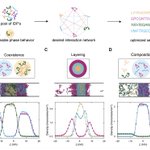
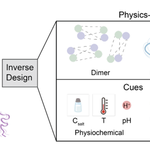
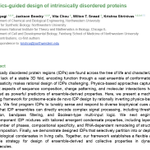
Intrinsically disordered proteins (IDPs) flit between diverse shapes and interact in fuzzy ensembles whose collective properties shape function.
Q: Can we rationally design emergent properties of IDPs?
Our newest preprint takes a stab at this 🧵
biorxiv.org/content/10.64898…

Design 2: emergent condensate properties 🫧
By jointly optimizing IDP networks, we designed multicomponent mixtures that form condensates with: • layered architectures (like the nucleolus)
• compositional specificity (who's in/out)
• RNA-dependent reorganization

Design 3: localization in living cells 🔬
We designed IDPs to selectively enrich (client) or deplete (excluder) from FUS LC condensates & tested in living cells with @wilton_snead .
Great work by co-first authors Neha Tyagi & Jackson Boodry, with Vita Chou & Wilton Snead!

Krishna Shrinivas retweeted
Our work made the cover! (and my very first cover) Congrats to co-authors (@RyanKrue @BrennerGroup1) as well as Ramanna Shrinivas for cover art and @NatComputSci for editing/cover design.

🚨Our May issue is now live, including a method to design dynamic unstructured proteins, a benchmark to evaluate spatial alignment methods for spatial transcriptomics, and much more! nature.com/natcomputsci/volu…
📰Cover: nature.com/articles/s43588-0…

ALT A spiral of protein forms, resembling a tornado.
Our work made the cover! (and my very first cover) Congrats to co-authors (@RyanKrue @BrennerGroup1) as well as Ramanna Shrinivas for cover art and @NatComputSci for editing/cover design.
🚨Our May issue is now live, including a method to design dynamic unstructured proteins, a benchmark to evaluate spatial alignment methods for spatial transcriptomics, and much more! nature.com/natcomputsci/volu…
📰Cover: nature.com/articles/s43588-0…
ALT A spiral of protein forms, resembling a tornado.
Krishna Shrinivas retweeted

Excited to share our new paper “Distinct mechanisms underlying in-context learning in transformers” led by Cole Gibson and @WPCui.
arxiv.org/pdf/2604.12151
See thread below: