Bristol DJ: https://teapawt.net/t.co/4JQZkdYPLI
Joined December 2010
- Tweets2.9K
- Following1.6K
- Followers121
- Likes4.8K










SIMMO1210 retweeted

Farage identified a hotel housing asylum seekers in 2024 - the Hilton Bromsgrove. He made a video of himself there, he made the location public. And far right mobs attacked it. People and their families, location identified by Farage, right wing mob stormed the place....again I say, F ing Hypocrite.

SIMMO1210 retweeted

A 33-year-old woman at MIT wrote the code that ran inside the Apollo 11 lunar lander, and 20 seconds before Neil Armstrong touched the moon, her program made a decision the astronauts didn't know was happening that was the only reason the mission didn't crash.
Her name was Margaret Hamilton.
She led the team writing every line of code that would fly humans to the moon and back. The part almost nobody knows is that she had to fight to be allowed to do the work at all.
Code in 1965 was not treated as real work.
Rockets were serious. Circuits were serious. Writing code was something the men at NASA thought secretaries could do on the side. Hamilton was told this to her face more than once.
So she started calling what her team did "software engineering."
She used the phrase on purpose. In meetings. In memos. To force people to treat it as a discipline instead of a chore. Colleagues laughed at her the first few times she said it out loud.
That phrase is now the name of the biggest engineering profession on earth.
The story of what her code did on July 20, 1969 is the one every kid should be taught.
Neil Armstrong and Buzz Aldrin were 3 minutes from touching down when the computer inside the lunar module started flashing an alarm.
1202.
Then again. Then 1201. Five alarms in four minutes. The computer was telling the astronauts it could not finish everything it had been asked to do.
The computer they were flying with had less memory than a modern microwave.
Someone on the checklist had left a switch in the wrong position, and a radar the astronauts did not even need right then was flooding the computer with data. It was eating around 13% of the machine's brain at the exact moment every second mattered.
In almost any other system, that overload would have frozen the machine.
A frozen machine 30,000 feet above the moon means a crash. It means two dead astronauts and a third one orbiting alone above them, waiting for a signal that would never come.
Hamilton's code did something else.
She had built the software with a rule almost nobody in her field was using at the time. When the machine ran out of room, it would not treat every task as equally important. It would look at the list of jobs it had been asked to do, throw out the ones that could wait, and keep running only the ones keeping the crew alive.
The radar was the low priority job.
The landing was the highest.
So the computer did what she had told it to do. It dumped the radar. It kept flying. The alarm was not a failure. It was the machine reporting that it was handling the overload exactly the way she had designed it to.
Down in Houston, a 24-year-old engineer named Jack Garman recognized the alarm from a test his team had run months earlier. He shouted "Go" to the flight controller. The controller shouted it up to the crew. The landing kept going.
Armstrong touched the surface with 25 seconds of fuel left.
The part that gets lost in every retelling is why Hamilton had built that safety net in the first place.
NASA had not asked for it.
She had added it on her own, years earlier, because her 4-year-old daughter Lauren had once crashed the simulator by pressing a button during a test. The button was one the astronauts had been told they would never press.
Hamilton wanted the code to survive that button press anyway.
Her bosses told her it was a waste of time. Astronauts do not make mistakes.
She insisted. The safety net went in.
Two years later, on the way to the moon, an astronaut left a switch in the wrong position. The exact class of mistake she had been told would never happen.
There is a photograph of her from that period.
She is standing next to a stack of paper as tall as she is. Every page in that stack is the code her team wrote for the mission. She is smiling at the camera like she knows something the rest of the aerospace industry has not figured out yet.
In 2016, Barack Obama put the Presidential Medal of Freedom around her neck and said the astronauts did not have much time, but thankfully, they had Margaret Hamilton.
Every autopilot in every plane you have ever flown on uses a version of what she invented. Every pacemaker. Every self driving car. Every satellite in orbit.
The idea that a machine should know which job matters most and drop the rest when it runs out of room is now the foundation of almost every safety system on the planet.
She wrote it because a 4 year old crashed a simulator and nobody else thought it was worth fixing.
The men in the room laughed at her for calling it engineering.
Then her code was the only thing in the sky that did not fail.

SIMMO1210 retweeted

🍑 En el lado de Nacimiento, a la fachada correspondiente a la nave lateral del templo, se encuentran las cestas de frutas de la primavera y el verano, mirando al este y al inicio del día.
SIMMO1210 retweeted

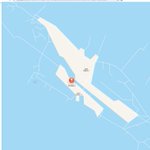
There is a region in southeastern Spain called Almería. If you pull it up on satellite imagery, you will assume the screen has glitched. A vast, blinding white scab where a landscape used to be.
It's not a glitch. It's 64,000 acres of plastic greenhouses. So much plastic sheeting that it is, genuinely, visible from space. The entire region has been wrapped in industrial farming film to grow tomatoes, peppers, cucumbers and lettuce for European supermarkets in January.
The plastic has created its own microclimate. The reflective surface is so vast it has measurably lowered local temperatures by bouncing sunlight back into the atmosphere. Scientists have a name for it. The Albedo effect of Almería. The only place on earth where human activity has cooled the local climate, and they did it by accident, while building the world's largest open-air plastic factory.
The plastic itself is single-use agricultural film. It sits in UV light for three to five years, degrades into microplastics, blows into the Mediterranean, and ends up in the ocean and the soil. Every year, 45,000 tonnes of plastic waste is generated just from replacing degraded greenhouse covering. Every year. Just the covering.
Inside, workers from Morocco and sub-Saharan Africa labour in 45°C heat for €30 a day. No contracts. No rights. Spraying crops with pesticides at concentrations that would be illegal on outdoor fields. Ventilation: minimal. Chemical exposure: constant. The aubergine looks lovely.
The groundwater underneath Almería is so contaminated with agricultural runoff that it has been declared unusable. The region now imports water from elsewhere in Spain while sitting on top of a poisoned aquifer it created. The land that was meant to feed Europe more efficiently has become a place that needs water flown in to keep the show running.
And this is what supplies your fresh vegetables in January. Grown in plastic factories. By exploited workers. Using groundwater they have already destroyed. Wrapped in more plastic. Shipped across Europe. Refrigerated the whole way. So a person in Manchester can have a tomato in February that tastes of nothing.
But sure. Cattle grazing on Scottish hills are the environmental problem.
Pull the satellite up. Have a look. Then tell me which system is the one that needs explaining.

SIMMO1210 retweeted

Your own husband posted this btw


Kimmel’s hateful and violent rhetoric is intended to divide our country. His monologue about my family isn’t comedy- his words are corrosive and deepens the political sickness within America.
People like Kimmel shouldn’t have the opportunity to enter our homes each evening to spread hate.
A coward, Kimmel hides behind ABC because he knows the network will keep running cover to protect him.
Enough is enough. It is time for ABC to take a stand. How many times will ABC’s leadership enable Kimmel’s atrocious behavior at the expense of our community.
SIMMO1210 retweeted

Does this sound like a “Ballroom”? Or a bunker for a guy who never wants to leave?

SIMMO1210 retweeted

The most f*cked up aspect of this is the "DoorDash grandma" t-shirt she's wearing, and the implications of this: I checked and this is a pre-organized PR stunt between DoorDash and the White House (they boast about it on their website: about.doordash.com/en-us/new…).
The lady - Sharon Simmons, "a grandmother of ten" who has "completed more than 14,000 deliveries" - isn't even from DC, they brought her over from Arkansas as a prop for this.
Think about just how uniquely rotten things need to be in order for this to happen.
She is literally a grandmother relying on gig work because she can't afford healthcare for her husband's stage-3 cancer. She doesn't even get paid a living wage and needs to rely on tips. And as an "independent contractor," she gets no benefits, no healthcare, no retirement.
Which means she is an almost perfect illustration of the failure of the American social contract on almost every level: healthcare, labor rights, retirement, wages, etc. Any decent human being looking at her story - let alone policymakers - should feel only one thing: shame.
Yet DoorDash and the White House looked at this woman and saw a photo op. They flew her from Arkansas, branded her "DoorDash grandma" and used her as a mascot for a tax tweak - no tax on tips - that wouldn't even begin to cover her husband's chemo sessions.
Watching the actual video of her "delivery" to Trump (pbs.org/newshour/politics/wa…) is almost unreal. Trump opens up by saying, smiling at the camera, "who says it looks staged? It doesn't." They immediately proceed to do a joint press conference to a bunch of journalists who were conveniently standing right there.
None of the questions that follow during the next 15 minutes are related to Simmons' situation who just stands there. Journalists, the President, and cameras all obsessing over culture wars and the actual war in Iran, while the walking embodiment of the country's deepest structural failures - healthcare, labor, retirement - stands silently in a corporate t-shirt, unmentioned and too uncomfortable to confront.


SIMMO1210 retweeted

If we beat Saints...
A follower who RTs will win a pair of swimshorts from sheworeshop.com

SIMMO1210 retweeted

An Amphibious Landing in Iran and the Battle of Gallipoli
Any war against Iran risks repeating the classic mistake of Gallipoli: a superpower’s underestimation of a determined defense strongly favored by geography.
In 1915, the British Empire believed its superior fleet would be enough to force the Dardanelles and bring down the Ottoman Empire with relative ease.
Generals and politicians, including Winston Churchill, Ian Hamilton, and Lord Kitchener, viewed the Turks as a backward army of “doubtful value” that would flee at the first salvo from British battleships. Reality proved very different.
The geography of Gallipoli turned the attack into a nightmare. The Ottomans controlled the steep heights above the beaches. Once the Allies landed, they became trapped on narrow strips of sand, fully exposed to machine-gun and artillery fire from above.
Advancing or retreating safely was nearly impossible. This is exactly the same natural wall that Iran possesses today in the mountains that surround nearly its entire coast.
Any force attempting a landing in the Persian Gulf would immediately face steep elevations right behind the beaches, giving the defender total visibility and fire superiority.
Beyond geography, Iran possesses something the British also underestimated in the Turks: the ability to conduct a saturation defense.
While offensive and defensive munitions stocks are running low for the attackers, Iran is preparing a war of saturation. Thousands of drones of various types, missiles, and fast attack boats launched in swarms could quickly overwhelm and exhaust the coalition’s ability to provide cover for a landing in Iran.
Logistics represent another fatal bottleneck. In Gallipoli, the Allies could not sustain the flow of supplies under constant fire. In Iran, the challenge would be even greater: supply lines could not rely on American bases in the region, which have already been heavily damaged and under fire for 26 days.
They would instead depend on much more distant logistics, supported by an already weakened American industrial base. Meanwhile, Iran would be fighting at home, with underground factories, short supply lines, and the ability to open multiple fronts through Iraqi militias and the Houthis.
In parallel, the Strait of Hormuz functions as the modern equivalent of the Dardanelles. Iran dominates the area with sophisticated yet relatively cheap naval mines, anti-ship missiles, drones, and its own navy.
The loss of just one or two major ships, or landing vessels, would be enough for the entire operation to collapse, just as happened in 1915 when simple mines sank three British battleships in a single day.
The error of assessment is the same as it was a century ago. Just as the British believed the Turks “had no stomach for modern warfare,” today some assume that an intense technological bombardment would quickly cause the Iranian regime to collapse.
Statements like Netanyahu’s, “Iran is a paper tiger… A strong blow and the regime will fall”, dangerously echo the declarations of Churchill and Hamilton.
Both ignored the fact that a nation of tens of millions of people, fighting on its own territory with strong ideological motivation, does not easily surrender to technological superiority.
Gallipoli cost the Allies around 250,000 casualties, including tens of thousands killed, and ended in a humiliating withdrawal. It was a meat grinder that exposed the arrogance of a superpower when it collided with the reality of the terrain and the defender’s determination.
Any potential amphibious landing in Iran today carries the same risk of becoming a Persian Gallipoli: where excessive faith in technology runs into an insurmountable geography, a mass of missiles and drones, and the overwhelming advantage of those fighting on home soil.
Iran is the opening conflict of a multipolar world, a reality that America, Israel and probably the entire west still fail to recognize.




SIMMO1210 retweeted

BREAKING: Everyone is watching the Strait of Hormuz for oil and fertilizer. Almost nobody has noticed that it is also shutting down MRI machines, semiconductor fabs, and the global aerospace supply chain.
Helium. The second lightest element in the universe. No substitute exists for it. You cannot synthesize it. You cannot replace it. And roughly one-third of the world’s supply just went offline.
Qatar produces 30 to 33 percent of global helium as a byproduct of LNG processing at Ras Laffan, home to the largest helium production facilities on Earth. When the Hormuz blockade triggered LNG force majeure declarations and attacks hit Qatari infrastructure, the helium stopped flowing with it. Prices have doubled in spot markets. And helium has a property that makes this crisis structurally different from oil, fertilizer, or any other commodity caught behind the strait.
It evaporates. Continuously. Even in sealed containers, helium boils off. The global supply chain operates on roughly 45 days of buffer before existing inventory simply ceases to exist. You cannot stockpile helium the way you stockpile crude oil in salt caverns or grain in silos. If the supply stops for six weeks, the buffer is gone. Not depleted. Gone. Returned to the atmosphere where it is too diffuse to economically recapture.
This is why the industries that depend on helium are facing a crisis that no financial instrument can solve.
Semiconductor manufacturing requires ultra-pure helium for wafer cooling in lithography and for leak detection in sub-5-nanometre chip fabrication. TSMC, Samsung, and Intel cannot produce advanced processors without it. Every AI chip, every smartphone processor, every data centre GPU in the current generation traces its manufacturing lineage through a helium-cooled process. If fabs run dry, the production lines stop. Not slow. Stop.
MRI machines require liquid helium to cool superconducting magnets to near absolute zero. Hospitals cannot substitute another gas. When helium supply tightens, MRI availability falls. During previous shortages, hospitals rationed scans. A sustained one-third supply cut puts diagnostic imaging capacity at risk across every healthcare system that depends on magnetic resonance.
Aerospace depends on helium for purging rocket fuel systems, pressurising tanks, and testing for leaks in systems where failure means explosion. NASA, SpaceX, ULA, and every launch provider in the Western world runs on helium. Fibre optic cable manufacturing requires helium atmospheres. Quantum computing research requires helium-3 isotopes for cryogenic cooling.
The US is the world’s largest helium producer and has some buffer capacity. Algeria and Russia produce meaningful volumes. Overland rerouting from Qatar through Oman and Saudi Arabia is theoretically possible but logistically slow and capacity-limited. None of these alternatives can replace one-third of global supply within the 45-day evaporation window that defines the crisis timeline.
The same 21-mile strait that is starving the food system is now threatening the technological infrastructure of modern civilization. The fertilizer trapped behind Hormuz determines whether four billion people eat. The helium trapped behind Hormuz determines whether the chips powering the AI revolution get manufactured, whether cancer patients receive diagnostic scans, and whether rockets carrying communications satellites reach orbit.
One chokepoint. Two invisible supply chains. Both irreplaceable. Both operating on biological or physical deadlines that no ceasefire retroactively extends.
The world built petroleum reserves. It never built fertilizer reserves. It never built helium reserves either.
The pattern keeps repeating. The lesson keeps being ignored.
Full analysis:
open.substack.com/pub/shanak…

SIMMO1210 retweeted

Unless it’s racist. Then suddenly a staffer grabbed his phone.


SIMMO1210 retweeted

Well 1,061 certainly didn’t stay ‘a little back’. That’s the number of non-American NATO troops who were killed in support of US actions in Afghanistan.
He really is ungracious, ignorant and uncaring on such matters. Especially unbecoming from someone who managed to avoid military service himself.

Trump on NATO: "I've always said, will they be there if we ever needed them? That's really the ultimate test. I'm not sure of that. We've never needed them. They'll say they sent some troops to Afghanistan and this or that. And they did. They stayed a little back, off the front lines."
Readers added context they thought people might want to know
Other NATO members sent troops to Iraq and Afghanistan. For example the UK armed forces lost many hundreds of lives in these wars
en.wikipedia.org/wiki/Casualtie…
en.wikipedia.org/wiki/British_F…
SIMMO1210 retweeted

It wasn’t the racism.
It wasn’t the rule breaking.
It wasn’t the corruption.
No Jenrick gets removed for plotting.
Politics for too many leaders is just a game, and not a moral one.
It’s why people are crying out for hope.

I have sacked Robert Jenrick from the Shadow Cabinet, removed the whip and suspended his party membership with immediate effect.
I was presented with clear, irrefutable evidence that he was plotting in secret to defect in a way designed to be as damaging as possible to his Shadow Cabinet colleagues and the wider Conservative Party.
The British public are tired of political psychodrama and so am I. They saw too much of it in the last government, they’re seeing too much of it in THIS government.
I will not repeat those mistakes.