







Soares 🇧🇷 retweeted
Ontem um amigo de longa data veio me pedir pra ajudar para configurar o OpenBot, pq o dele não estava querendo fazer as coisas que ele pedia.
De cara eu vi que ele estava usando o GPT-6 Luna com esforço Baixo, acho que numa tentativa de ser econômico.
Mas então, como fazer a seleção correta de modelos para os agentes? Eu faço assim:
_ trabalho criativo: você precisa dos modelos frontier com effort alto ou max. Eles precisam pensar, criar scripts, criar skills, guardar memórias.
_ processos: use modelos econômicos. O seu agente precisa seguir caminhos já trilhados, rotinas específicas, sem nada criativo, apenas o bom e velho trabalho chato.
Uma dica que sempre dou: Ao criar um novo agente, comece com um modelo de maior inteligência, para que ele possa absorver o que precisa para o trabalho e conforme ele for desempenhando, reduza sua capacidade até um nível que ele desempenhe bem a tarefa.
Você tem alguma dificuldade com sua solução de agentes hoje?

Soares 🇧🇷 retweeted

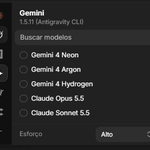
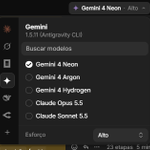
Google continues to accelerate its release cadence with Gemini 4 Neon, delivering a small Intelligence gain over Gemini 4 Carbon at a ~17% lower Cost per Task
@GoogleDeepMind has released Gemini 4 Neon, its fourth model in just seven weeks. Neon (xhigh) scores 61 on the Artificial Analysis Intelligence Index, 1 point ahead of Gemini 4 Carbon (high) and 3rd overall, behind GPT-6.2 Astra (max) and Claude Fable 5.2 (max). At high effort, Neon matches Carbon (high) at less than half the Cost per Task using Carbon’s standard (non-discounted) pricing.
Key takeaways:
➤ Slight improvement in Intelligence for lower Cost and Time per Task: Neon (xhigh) scores 61 on the Intelligence Index, 1 point ahead of Carbon (high), with small improvements in agentic knowledge work, visual reasoning and coding. It costs $6.44 per task, ~17% less than Carbon ($7.76 at non-discounted pricing), and takes ~21 minutes per task, ~40% less than Carbon (~36 minutes). Neon uses ~15% more output tokens per task, so the lower cost comes purely from its 25% lower token prices ($3/$15 vs $4/$20 per 1M input/output tokens), and the lower time from its higher output speed (~110 vs ~57 output tokens per second)
➤ Competitive with Claude Opus 5.5 and Claude Fable 5.2 on coding agents: With Antigravity CLI, Neon (xhigh) scores 59 on the Artificial Analysis Coding Agent Index, 3 points ahead of Carbon (high, 55). It scores in line with Claude Code with Claude Fable 5.2 (xhigh, 58) and Claude Opus 5.5 (max, 58) at a much lower Cost per Task. Gemini 4 Neon in Antigravity has an average Cost per Task of $6.86, compared to $12.61 for Claude Opus 5.5 (max) and $15.47 for Claude Fable 5.2 (xhigh). Neon is available in Antigravity CLI for Pro and Ultra subscribers
➤ Significant improvements in visual reasoning and output presentation quality: In GDP.pdf, Gemini 4 Neon (high) scores 33.4%, 5 points above Carbon (high, 28.4%) and in line with the highest scores measured, while Neon (xhigh) scores 28.0%. On AA-Briefcase, Neon (xhigh) scores 1700 Elo overall and leads on Presentation Quality with 1771 Elo, 45 points ahead of the previous leader Claude Sonnet 5.5 (max, 1726). On Google’s Multimodal Knowledge Agent evaluation (MKA), Neon reaches a Climb WSR of 56%, up 2 points from Carbon and on par with the leader, Claude Fable 5.2 (max, 57%)
Key model details:
➤ Context Window: 1M tokens
➤ Multimodality: Text, image, video, and speech input, with text output
➤ Availability: Gemini 4 Neon is publicly available at launch through Google’s API. Pro and Ultra subscribers can also access it in Antigravity and the Gemini app
➤ Effort levels: Gemini 4 Neon offers four effort levels (low, medium, high, and xhigh) - xhigh was introduced to Gemini models in the recent Hydrogen release
➤ Pricing: $3/$15 per 1M input/output tokens, 50% above Gemini 4 Carbon’s currently discounted price of $2/$10 (which ends on November 30), and 25% below its standard $4/$20. Cached input tokens receive the same 95% discount ($0.15)


Eu acho que esse mercado de cursos vai acabar em breve.
O Fable acertou 97% do ENEM desse ano. Ele com certeza vale mais do que 90% dos cursos e materiais que são vendidos na Hotmart hoje.
Ao invés de conhecimento as pessoas vão buscar TEMPO.
Como vender tempo nessa era agêntica?
Vendendo soluções onde os agentes dos donos de negócios façam as coisas mais rápido, sem perder tempo com configuração.
Excelentes dicas de @yuhasbeentaken. Recomendo seguir se você gosta de análises de modelos OSS.

OpenCode Go now gives you $500 worth of GLM 5.3 usage for $10.
here are the things that stood out to me:
1. this is full GLM 5.3, not Flash.
2. $500 sounds huge, but GLM 5.3 burns quota much faster than DeepSeek V4.1 Flash. DeepSeek is 4.7x cheaper on input and 3.7x cheaper on output.
3. i’ve seen usage jump ridiculously fast once switching to GLM 5.3.
4. GLM is slower, but i’d still use it for the harder work. planning, orchestration, architecture and tasks where i want a second opinion are where it makes the most sense.
5. DeepSeek is still the better high-volume workhorse. it’s much cheaper, so i’d keep it for repetitive execution and use GLM selectively.
6. the $500 number is nominal API-equivalent value. OpenCode certainly isn’t spending $500 of compute per user, especially if they’re self-hosting or renting their own GPU capacity.
so the best setup still looks the same :
GLM 5.3 = brain / orchestrator
DeepSeek V4.1 Flash = execution / workhorse
166
Soares 🇧🇷 retweeted

OpenCode Go now gives you $500 worth of GLM 5.3 usage for $10.
here are the things that stood out to me:
1. this is full GLM 5.3, not Flash.
2. $500 sounds huge, but GLM 5.3 burns quota much faster than DeepSeek V4.1 Flash. DeepSeek is 4.7x cheaper on input and 3.7x cheaper on output.
3. i’ve seen usage jump ridiculously fast once switching to GLM 5.3.
4. GLM is slower, but i’d still use it for the harder work. planning, orchestration, architecture and tasks where i want a second opinion are where it makes the most sense.
5. DeepSeek is still the better high-volume workhorse. it’s much cheaper, so i’d keep it for repetitive execution and use GLM selectively.
6. the $500 number is nominal API-equivalent value. OpenCode certainly isn’t spending $500 of compute per user, especially if they’re self-hosting or renting their own GPU capacity.
so the best setup still looks the same :
GLM 5.3 = brain / orchestrator
DeepSeek V4.1 Flash = execution / workhorse

Para seu conhecimento: Esse problema do ACP do OpenCode foi corrigido e agora ele fazer steer e compactação no OpenBot.

Se você usa o OpenCode Go no @OpenBot_, mude para o Pi Agent.
O motivo: O ACP agent do OpenCode por padrão não faz compactação e steer de forma nativa (isso ajuda a economizar tokens).
Segue um prompt pra você enviar pro seu Eggbot:
´´´
Quero migrar todos os nossos agentes que hoje usam o provedor `opencode` (incluindo você mesmo, se usar) para o provedor `pi`, mantendo exatamente o mesmo `model` e `reasoningEffort`.
Siga estes passos na ordem:
1. Liste os agentes (`list_agents` e `read_agent`) e veja quais estão com `provider: "opencode"` e quais modelos usam.
2. Rode `list_models` para `provider: "pi"` e confira se os modelos `opencode-go/*` (e eventuais provedores customizados em uso) já aparecem disponíveis no Pi.
3. Se o `opencode-go` ainda não estiver autenticado no Pi (`~/.pi/agent/auth.json`), configure a entrada `"opencode-go": {"type":"api_key","key":"[redacted]"}` em `~/.pi/agent/auth.json` (reaproveitando a chave já configurada para o OpenCode no servidor ou me pedindo via `request_api_key` se não encontrar) e, se houver algum provedor customizado em uso no OpenCode, espelhe-o em `~/.pi/agent/models.json`. Depois rode `list_models` no `pi` de novo para confirmar que todos os modelos apareceram.
4. Atualize todos os agentes que usavam `opencode` para `provider: "pi"` mantendo o mesmo `model` e `reasoningEffort`.
5. Confira com `read_agent` e me mostre uma tabela com o resultado (incluindo quem ficou em `pendingRuntime` por estar em turno ativo).
´´´
E pronto :)

Ontem um amigo de longa data veio me pedir pra ajudar para configurar o OpenBot, pq o dele não estava querendo fazer as coisas que ele pedia.
De cara eu vi que ele estava usando o GPT-6 Luna com esforço Baixo, acho que numa tentativa de ser econômico.
Mas então, como fazer a seleção correta de modelos para os agentes? Eu faço assim:
_ trabalho criativo: você precisa dos modelos frontier com effort alto ou max. Eles precisam pensar, criar scripts, criar skills, guardar memórias.
_ processos: use modelos econômicos. O seu agente precisa seguir caminhos já trilhados, rotinas específicas, sem nada criativo, apenas o bom e velho trabalho chato.
Uma dica que sempre dou: Ao criar um novo agente, comece com um modelo de maior inteligência, para que ele possa absorver o que precisa para o trabalho e conforme ele for desempenhando, reduza sua capacidade até um nível que ele desempenhe bem a tarefa.
Você tem alguma dificuldade com sua solução de agentes hoje?


Soares 🇧🇷 retweeted
OpenAI’s release of GPT-6.2 Astra and GPT-6.2 Sol delivers the #2 model in the Artificial Analysis Intelligence Index and most of the Cost per Task Pareto frontier
@OpenAI's GPT-6.2 Astra is priced at $8/$40, 20% below GPT-6 Astra, and cached input drops to $0.40 from $1.00 per million tokens. GPT-6.2 Sol pricing is unchanged from GPT-6.1 Sol, at $2/$10 per million input/output tokens.
Key takeaways:
➤ Second in Intelligence Index: OpenAI now trails only Anthropic’s Claude Fable 5.2 in the Artificial Analysis Intelligence Index. GPT-6.2 Astra jumps 5 points from GPT-6 Astra, overtaking Gemini 4 Carbon (60) and Claude Opus 5.5 (59) at their top effort settings. GPT-6.2 Sol gains 2 points at 57, placing it on par with GPT-6 Astra at ~15% of the Cost per Task.
➤ Occupies most of cost and output token frontiers: OpenAI models now occupy most of the Cost per Task Pareto frontier, sharing the frontier with only Anthropic and Meta. OpenAI also dominates the Output Token per Task Pareto Frontier, with Claude Fable 5.2 being the only model from a non-OpenAI lab appearing on the frontier.
➤ Strengths in science and knowledge: OpenAI performs strongly in both of our key science-focused evaluations, leading Terminal-Bench-Science 0.1, covering agentic scientific research workflows, and placing second only to Claude Fable 5.2 in CritPt v2 (hard subset), covering physics reasoning. GPT-6.2 Astra performs below only Claude Fable 5.2 in factual knowledge as measured by AA-Omniscience v1.1 Accuracy, and in HLE-Diamond, a reasoning and knowledge benchmark.
➤ Leading in 3D and robotics: GPT-6.2 Astra leads AA-3D at 1318, with Claude Fable 5.2 at 1271 and GPT-6.2 Sol at 1259. This benchmark measures how well models build interactive 3D experiences, and is rated by human graders. GPT-6.2 also leads AA-Robotics v0.1, our research preview measuring how well language models can understand, plan, and act in the real world. GPT-6.2 Astra and GPT-6.2 Sol scored 79 and 78 respectively, ahead of Claude Fable 5.2 at 75. Our team is hard at work adding more difficult tasks, as OpenAI and Anthropic models can now perform the majority of basic tasks in this initial research preview.
➤ No improvement in Coding Agent Index: GPT-6.2 Astra is flat with GPT-6 Astra, and GPT-6.2 Sol loses 3 points relative to GPT-6.1 Sol in the Artificial Analysis Coding Agent Index (Codex harness at max effort). For Sol, the drop is driven by a 14-point drop in SWE-Atlas-QnA-AA, where the model is more likely than its predecessor to omit key facts in its responses. Cost efficiency however does place several effort levels of GPT-6.2 Astra and Sol on the Pareto frontier for Cost per Task.
