
MSc candidate in Medicinal Chemistry @ University of Copenhagen | Jesper L. Kristensen lab | @softnucleophile@mas.to
- Tweets154
- Following238
- Followers43
- Likes2.7K

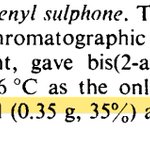


ALT Screenshot from a paper, with the last 15-ish words highlighted in yellow. Full text says: "(h) 2-Azidophenyl phenyl sulphone. The aryl azide (1 g) was photolyzed for 24 h. Chromatographic separation on alumina, diethyl ether as eluant, gave bis(2-aminophenyl) sulphone (0.05 g, 6%), m.p. 116 °C as the only identifiable product, along with a brown oil (0.35 g, 35%) and a brown polymeric solid (0.15 g, 15%)."


ALT The image is divided horizontally by an undulating line between a cloudscape forming a nebula along the bottom portion and a comparatively clear upper portion. Speckled across both portions is a starfield, showing innumerable stars of many sizes. The smallest of these are small, distant, and faint points of light. The largest of these appear larger, closer, brighter, and more fully resolved with 8-point diffraction spikes. The upper portion of the image is blueish, and has wispy translucent cloud-like streaks rising from the nebula below. The orangish cloudy formation in the bottom half varies in density and ranges from translucent to opaque. The stars vary in color, the majority of which, have a blue or orange hue. The cloud-like structure of the nebula contains ridges, peaks, and valleys – an appearance very similar to a mountain range. Three long diffraction spikes from the top right edge of the image suggest the presence of a large star just out of view.


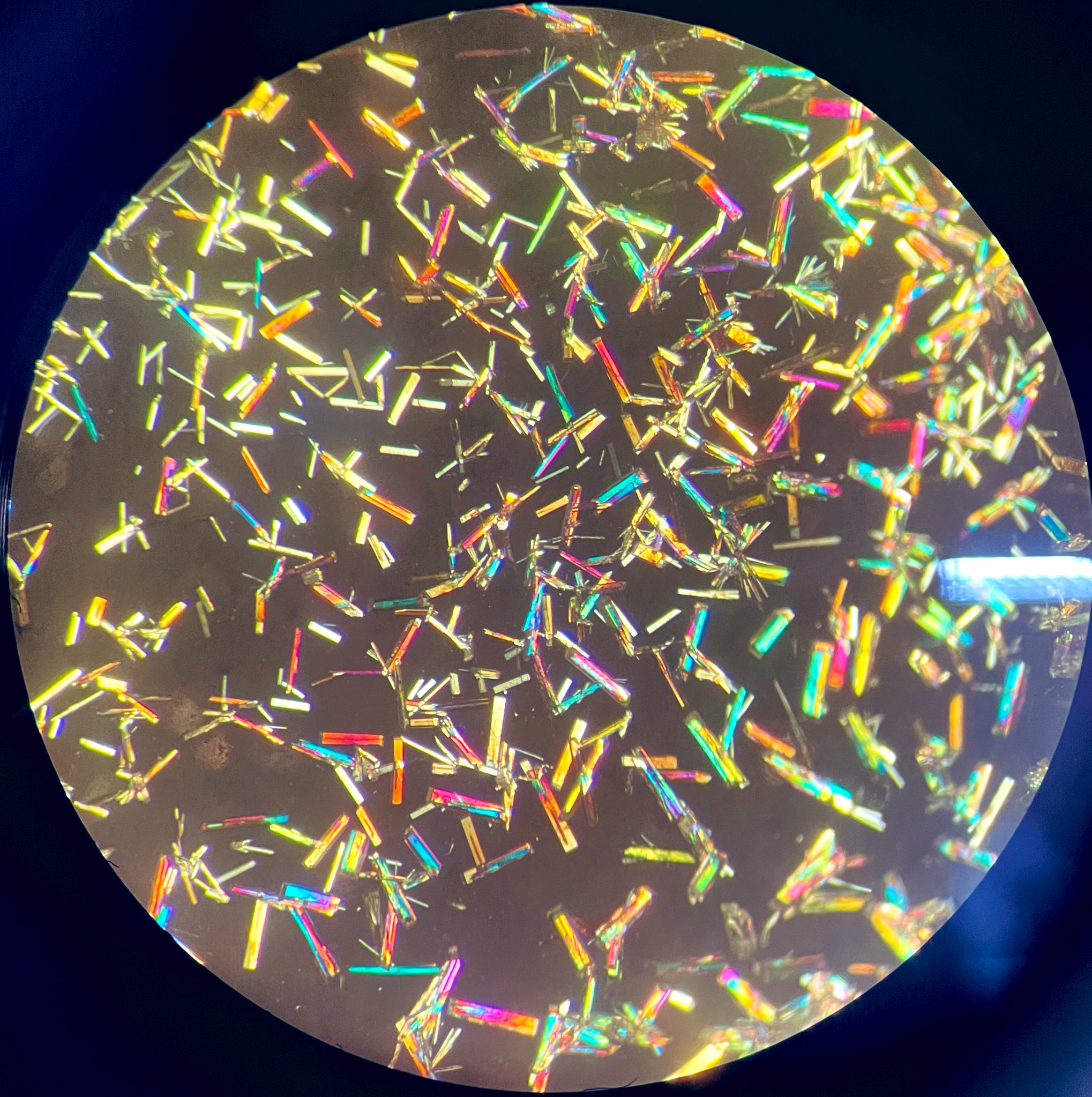


ALT Temminck's ground pangolin


