
SOF, military training, veteran stories, and security careers. Built for operators and those who want to become one.
United States
Joined September 2012
- Tweets9.5K
- Following478
- Followers4.7K
- Likes9
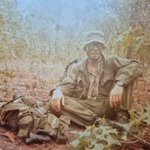




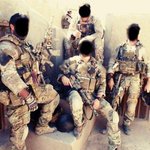
This is Mike Vining, an operator with the Army's SMU, at a Ranger camp in 1985. If the photo looks familiar, that's because it has been shared countless times online. And no, he wasn't a Ranger before he went through selection. The SMU did sometimes train alongside the Rangers, and that's how he ended up in this shot.
His actual background was explosive ordnance disposal. After a combat tour in Vietnam, where his EOD team destroyed the largest enemy ammunition cache found in the war, he joined the newly formed SMU in 1978. He went through the unit's selection course and graduated from its very first Operator Training Course, becoming one of its founding members and its first EOD specialist.
Over the years that followed, Vining took part in Operation Eagle Claw, the assault on Richmond Hill Prison during Urgent Fury, Desert Storm, and Uphold Democracy in Haiti. He served as Chief EOD Technician and Breaching Sergeant Major within the Unit, and later investigated the 1996 Khobar Towers bombing. He retired as a Sergeant Major in 1999.
More than just a meme, he's one of the original operators.

A heavily armed U.S. Navy SEAL poses with a modified M60 machine gun and belts of ammunition during the Vietnam War. In the rivers, canals, and mangrove swamps of the Mekong Delta, SEAL platoons operated in small teams deep in enemy territory, often at night and far from help. When contact came, it was usually close, sudden, and violent.
To give a handful of men the firepower of a much larger unit, SEALs modified their M60s for the fight they were in. Shortened barrels, removed bipods, and other changes made the gun lighter and handier in thick vegetation, and the men carrying them packed in as much ammunition as they could manage. Those M60s were built to break contact and win the first few seconds of a firefight.
Photos like this capture a defining era for the Teams, when the SEALs earned their reputation one patrol at a time.
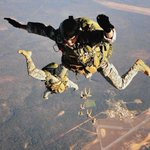
Polish prosecutors have released their findings on the deaths of two GROM operators, Sgt. Karol Rubin and Senior Pvt. Rafał Kotnarowski, who were killed during a nighttime parachute training jump near Eloy, Arizona, on September 19, 2025. The two were taking part in a group night free fall jump from around 3,000 meters when the accident happened at about 2:50 a.m. local time.
According to investigators, an unplanned change of positions in the formation caused the two jumpers' flight paths to cross. They collided and became entangled in the air. One of them did not cut away his main canopy and was unable to deploy his reserve. The other cut away, but by then he was already too close to the ground. After a year long investigation, prosecutors found no involvement by any third party, and the case has been formally closed.
Rubin came from Orzysz and Kotnarowski from Suwałki. Both were experienced jumpers who served with Poland's Special Mission Unit, and both were lost doing the kind of demanding training that keeps GROM ready for whatever comes next. Former GROM commander Gen. Roman Polko summed it up simply: they ran out of a soldier's luck.

Did this Chadian sniper really take the scope off his anti-materiel rifle to use as a spotting scope? You know you're in a well trained and well resourced army when the optic comes off the big gun, zero and all, just to stand in for a piece of gear that costs a fraction of the price.
And before anyone says a good spotting scope is expensive, take a look at what he's peering through right now. A $200 Bushnell spotter would have him in business. It's not top tier glass, but it would be a massive upgrade over his current method, and his rifle would still be ready to shoot when he needs it.
Improvise, adapt, overcome. Just maybe not like this. 😅


It's often said that one of the last times Marines were ordered to fix bayonets in combat came in Fallujah, Iraq, in 2004. During the house to house fighting of the Second Battle of Fallujah in November and December of that year, Marines did fix bayonets as they cleared the city room by room.
Fallujah was some of the most intense urban combat Americans had seen since Hue City in 1968. Insurgents fought from fortified houses, rooftops, and tunnels, and the fighting often came down to a doorway or a stairwell. In that environment, the bayonet stopped being a relic of past wars and became a last line of defense when rounds ran low or a weapon jammed at the worst possible moment.
The Marine Corps still teaches the bayonet at boot camp, not because it expects frequent charges, but because of what it represents: the willingness to close with and destroy the enemy, no matter how close the fight gets.


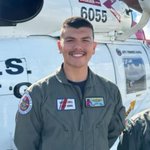
In the predawn darkness of October 16, Coast Guard rescue swimmer Josh Law was lowered from a helicopter into the Pacific about 140 miles west of Ensenada, off Mexico's Baja California peninsula. A boat had capsized, and more than two dozen people were scattered across the water. He couldn't see them, and over the noise of the helicopter he couldn't hear them. All he had to guide him was the searchlight from above.
Law was 24 years old and the only rescuer in the water. Fighting 8 foot waves for well over an hour, he swam from one survivor to the next, flipping each onto their back, towing them through the swells, and getting them into the rescue basket. As his dry suit slowly filled with water and exhaustion set in, he kept going. By the end, he had personally pulled 16 people out of the ocean.
Even on the flight to San Diego, his work wasn't done. He treated three survivors for serious wounds, including injuries the Coast Guard said were consistent with shark bites. Not everyone on board was found, and the Coast Guard has since ended its search.

Skill or too close?
A Croatian Air Force UH-60M Black Hawk works low over Jarun Lake in Zagreb during the 2025 Statehood Day program. Seconds before the helocast, the main rotor tips clip the edge of a tree crown and send leaves into the air. The crew holds it together, settles into a hover over the water, and the operators drop from the cabin into the lake.
Watch the freeze frames and decide for yourself: was this impressive control at the edge of the envelope, or a margin that got too thin?
👇 Skilled flying or a close call? Tell us in the comments.
#UH60M #BlackHawk
Fourteen years ago today, on October 23, 2012, Chief Warrant Officer 2 Michael S. Duskin was killed by enemy small arms fire while on a dismounted patrol in Chak District, Wardak Province, Afghanistan. He was 42 years old and served with Company A, 1st Battalion, 3rd Special Forces Group (Airborne).
Known to his teammates as "Big Mike," Duskin enlisted in 1993 and began his career as a forward observer with the 3rd Battalion, 75th Ranger Regiment. He later earned his Green Beret through the Florida National Guard's 20th Special Forces Group, served as an Engineer Sergeant, and deployed to both Afghanistan and Iraq before becoming a Special Forces Warrant Officer in 2010. When his patrol came under attack that day, he moved forward to help the American and Afghan soldiers alongside him.
He left behind his wife, Maggie, and their three children. When his teammates came home, they chose to honor him and Staff Sgt. Ryan Stephens, also lost from the battalion that year, by starting a fundraiser instead of holding another somber memorial. Today, the Duskin & Stephens Foundation has raised hundreds of thousands of dollars to support the families of Special Forces soldiers.


A U.S. Marine Scout Sniper in Afghanistan, working his rifle from a stretcher. It's not a position you'll find in any manual, but in combat, snipers learn to make use of whatever the ground and the moment give them.
Scout Snipers spent much of the war in Afghanistan watching over patrols, observing enemy movement, and taking precise shots at long range in some of the most unforgiving terrain in the world. The job demanded patience, discipline, and the ability to adapt when conditions were anything but ideal.
The setup may be unconventional, but the fundamentals stay the same: a stable position, steady breathing, and a clean trigger press.

Soldiers from 10th Special Forces Group's Commander's In-extremis Force training in trenches. Each Special Forces Group maintains a CIF, a dedicated company trained and kept ready for crisis response and direct action missions within its region. For 10th Group, that region is Europe.
Trench work is unforgiving. Tight spaces, limited visibility, and close quarters mean every corner can hide a threat, and clearing them demands precise movement, communication, and teamwork under pressure. As the fighting in Ukraine has shown, trenches are far from a relic of past wars.
Training like this keeps the force ready for whatever the next fight looks like.


Over three years after an SAS operation in eastern Syria, the way the soldiers involved were investigated is now facing scrutiny of its own. On the night of July 3, 2022, during Operation Shader, an SAS team was sent to capture a suspected ISIS cell leader near Deir ez-Zor. As the team closed in on the target, they heard gunfire and saw two men in a field whom they believed were about to open fire. Both men were shot dead.
What followed was Operation Tanglement, a Royal Military Police investigation into the team leader who authorized the pursuit and the four soldiers who fired. All five were investigated on two counts of murder, and according to reporting, some were sent back to Syria while the probe was still hanging over them. They maintained throughout that they had acted in self-defense. In May 2025, military prosecutors decided not to bring charges.
Now the Defence Secretary has asked the Defence Serious Crime Unit to examine concerns about how the original investigation was handled. Accountability matters, and so does the reality these men operate in. For the soldiers who spent years under suspicion, that review comes long after the cost was paid.

Long before Shawn Ryan became one of the most popular podcasters in the country, he was a Navy SEAL. He enlisted in the Navy at 18 with one goal, and after making it through BUD/S, he served with SEAL Team 2 and SEAL Team 8, deploying to multiple conflict zones around the world.
After leaving Naval Special Warfare, he kept going as a contractor with the CIA's Global Response Staff. Across 14 years as a SEAL and Agency contractor, he completed more than 20 deployments to combat zones in 14 different areas of operation. In December 2015, he founded Vigilance Elite to bring those skills and that mindset to civilians and law enforcement.
Today millions know him from the other side of the microphone, where he has brought on many of the people he once worked alongside. But the credibility behind the show was earned long before the cameras started rolling.


Salvatore Giunta was a 22 year old Specialist with the 173rd Airborne Brigade when his squad walked into a close range ambush in Afghanistan's Korengal Valley on the night of October 25, 2007. Heavy fire hit the patrol from multiple directions, and within moments several of his teammates were down.
Giunta moved forward through the gunfire to pull a wounded soldier to cover, then pushed on to help others. When he reached the front of the line, he saw two insurgents dragging his friend, Sgt. Joshua Brennan, away. Giunta ran after them, killed one, wounded the other, and brought Brennan back to cover, staying with him and treating his wounds until help arrived. Brennan died of his injuries the next day. Spc. Hugo Mendoza was also killed in the ambush.
In 2010, Giunta became the first living service member since the Vietnam War to receive the Medal of Honor. He has always made it clear that he never sees himself as a hero, and that the award belongs to every man who was with him that night.
Remembering Sgt. Joshua Brennan and Spc. Hugo Mendoza. 🇺🇸


Operators from Särskilda operationsgruppen (SOG), Sweden's Special Mission Unit, at Kabul's Hamid Karzai International Airport in August 2021. After the Taliban took Kabul on August 15, the airport became the only way out, and nations around the world rushed to evacuate their citizens and the Afghans who had worked alongside them.

Forty-three years ago today, on October 23, 1983, a truck packed with explosives drove into the Marine barracks at Beirut International Airport just after 6:20 in the morning. The blast brought down the four story building where the men of 1st Battalion, 8th Marines, part of the 24th Marine Amphibious Unit, were sleeping.
241 American service members were killed: 220 Marines, 18 sailors, and 3 soldiers. It was the deadliest single day for the Marine Corps since Iwo Jima. Minutes later, a second bomb struck the French paratroopers' building a few miles away, killing 58 French soldiers.
They had been sent to Lebanon as peacekeepers. Survivors and rescuers spent days digging through the rubble by hand, pulling out the wounded and the dead while still under threat of sniper fire.
Their motto became "They Came in Peace." Four decades on, the families, survivors, and Marines who carry their memory haven't forgotten, and neither will we.
Semper Fi. 🇺🇸

Singapore Police Force tactical officers armed with FN SCAR rifles in the late 2010s. In a city that rarely sees violent crime, the force's Special Operations Command keeps its tactical teams ready for the incidents that regular officers simply aren't equipped to handle.
The Special Tactics and Rescue Unit, better known as STAR, sits at the top of that structure. Formed in 1993, it provides the Singapore Police Force with its highest level of tactical armed response, handling counterterrorism, hostage rescue, high-risk arrests, and the most dangerous criminals the country faces.
In those years, the SCAR became one of the defining weapons of Singapore's police tactical units, giving officers rifle capability for threats beyond the reach of pistols and submachine guns. In one of the safest cities in the world, staying that way takes constant preparation.

Former DEVGRU Red Squadron operator Rob O'Neill sticks Rangers with IVs during the recovery effort that followed Operation Red Wings in the summer of 2005. After the ambush on Lt. Michael Murphy's four man team and the loss of the MH-47 carrying the quick reaction force, a massive effort began in the mountains of Kunar Province to find Marcus Luttrell and bring the fallen home.
The terrain was brutal, the work was relentless, and men from across the special operations community pushed themselves to the limit to get it done. Moments like this rarely make it into the history books, but they're part of the story. Even in the middle of a recovery mission, keeping each other in the fight was part of the job.
Twenty years later, the bond between those who searched those mountains and those who never came home still runs deep.

A Swedish soldier training in full chemical protection. We'll be honest, we much prefer looking at pictures of people in MOPP 4 than actually being in MOPP 4.
Mask on, suit sealed, gloves and boots on, and every task suddenly gets harder. Breathing takes effort, communication gets muffled, your vision narrows, and the heat builds fast. Shooting, moving, and working as a team all have to keep happening anyway.
It's miserable, and that's exactly the point. When it counts, the soldiers who've already put in the hours suited up are the ones who can still function.
Go hard or go home.

Eleven years ago today, on October 22, 2015, Master Sergeant Joshua Wheeler of Delta Force, the Army's Special Mission Unit, was killed during a hostage rescue raid on an ISIS prison near Hawija, Iraq. He was 39 years old and the first American to die in combat against ISIS in Iraq.
Wheeler and his teammates were there to advise and assist the Kurdish forces leading the assault. When those forces came under heavy fire, he moved toward the fight without hesitation. Defense Secretary Ash Carter later said his actions weren't part of the original plan, and that he played a pivotal role in the mission's success. About 70 hostages who were facing execution were freed that night.
Born in Roland, Oklahoma, Wheeler enlisted after high school and built a career that spanned two decades. He served with the 2nd Battalion, 75th Ranger Regiment before joining the Unit, and he deployed more than a dozen times to Iraq and Afghanistan. He earned 11 Bronze Stars, four of them with Valor, and was posthumously awarded the Purple Heart.
He left behind his wife, Ashley, and four sons, the youngest born just two months before he was killed.


Eleven years ago today, on October 22, 2015, then Sergeant First Class Thomas Payne of Delta Force, the Army's Special Mission Unit, took part in a hostage rescue raid alongside Kurdish partner forces at an ISIS prison compound near Hawija in northern Iraq. Intelligence indicated that the hostages held there were facing imminent mass execution.
When the assault force came under heavy fire, Payne and his teammates cleared their building and freed the hostages inside. He then moved to a second building that was already burning and partially collapsing while the enemy kept up the fight, including fire from fighters wearing suicide vests. Working through smoke and gunfire, he cut the locks on the cell doors with bolt cutters, went back into the building again when more remained trapped, and helped bring out dozens of men who had been marked for death. About 75 hostages were rescued that night.
The raid also cost the Unit one of its own. Master Sergeant Joshua Wheeler was killed in the fight, becoming the first American to die in combat against ISIS in Iraq.
In 2020, Payne received the Medal of Honor for his actions. He has said repeatedly that the award belongs to the entire team, and to Josh most of all.
Rest easy, Josh. 🇺🇸


