

Agrifood Data & BI Analyst | Spreadsheets, SQL, Power BI, N8N for automations, and Lovable for real-time operational dashboards!
Kenya
Joined September 2025
- Tweets1.5K
- Following107
- Followers98
- Likes21




Pinned Tweet
Kicking off the ultimate James Spader masterclass!
Following his journey from Alan Shore in Boston Legal to Robert California in seasons 8 and 9 of The Office, then Raymond Reddington in The Blacklist.
I heard a theory that Robert California was actually Raymond Reddington, lying low in Scranton under an alias while expanding his international criminal empire.
368 episodes in 100 days—roughly 3.7 a day. Pray for my sanity.


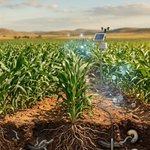
What’s happening above the soil is only half the sweet potato story. 🍠
Above ground, the vines spread, shade the soil and help keep weeds down. Below ground, the roots swell into the tubers that feed families and supply markets.
Healthy yields depend on both. Loose soil, steady moisture and good vine management give tubers room and energy to grow. When vines become overgrown or soil is compacted, farmers may end up with smaller, stringy tubers.
Tracking what happens across each plot can reveal which conditions deliver the best results—the kind of insight I turn into practical dashboards at spirdlytics.online
As you plan your next planting season, which gets more of your attention: the vines or the tubers? Share your experience in the comments.
#SweetPotato #SmartFarming #KenyaAgriculture #DataInAgriculture #Spirdlytics
🤖 Made with AI
LICHENOMPHALIA: THE UMBRELLA MUSHROOM THAT IS ALSO A LICHEN
Most umbrella-shaped mushrooms are simply fungi. Lichenomphalia breaks that rule. It looks like a tiny mushroom, but it lives as a lichen.
A lichen is a partnership. A fungus provides shelter and moisture, and a tiny alga living with it makes food from sunlight. Most lichens look like crusts, leaves or little shrubs on rocks and trees.
Lichenomphalia is different because its fungus partner grows a real mushroom. The cap is small, often yellow to orange and shaped like a funnel or umbrella, standing just a few centimetres tall.
Below it, the green algae live in tiny granules on the soil or moss.
Scientists call these “basidiolichens”. They are rare, because the large majority of lichens use a different group of fungi that never produce mushrooms. You are most likely to find Lichenomphalia in cool, damp places such as mountains, peat bogs and bare, mossy soil.
So the next time you see a tiny mushroom on damp ground, look closely at the soil around it. It may not be one living thing, but two living together.
🤖 Made with AI


IPOMOEA BATATAS: ORIGIN, FLOWERS, PESTS AND KENYA’S PLACE IN AFRICA
Sweet potato began in Central and South America, where people were farming it thousands of years ago. Portuguese traders carried it to the African coast in the 1500s, and it slowly spread inland into Kenya, especially around Lake Victoria and western Kenya. Today it is a quiet hero on Kenyan farms.
Its family tree reads like this: Kingdom Plantae, Division Magnoliophyta, Class Magnoliopsida, Order Solanales, Family Convolvulaceae, Genus Ipomoea, Species batatas. Despite the name, it is no relative of the Irish potato, Solanum tuberosum. They only share the same order.
Farmers do not sow seed. They plant vine cuttings, and the roots swell underground into the tubers we eat. The plant does flower, with pretty pink to purple funnel blooms like its morning glory cousins. Seeds can form, but only breeders use them to create new varieties.
Kenya produced about 863,000 tonnes in 2024, which places it 17th in the world with 0.6% of global output. In Africa, Malawi leads with over 5 million tonnes, followed by Nigeria, Tanzania and Uganda. Kenya sits around ninth on the continent, with plenty of room to grow.
The sweet potato weevil is the biggest enemy, tunnelling through the roots and spoiling them with a bitter taste. Root-knot nematodes damage the roots from below and leave them cracked and deformed. Whiteflies and aphids spread viruses that stunt the vines. Clean planting vines, crop rotation and resistant varieties are the best defence.
🤖 Made with AI


WHY WHALES DON’T EAT HUMANS
Whales are the biggest animals on Earth, so it’s easy to imagine they could swallow us whole. The truth is much calmer. Humans simply aren’t on their menu.
Blue whales, humpbacks and other baleen whales feed on tiny fish and krill. Their throats are surprisingly narrow, about the size of a grapefruit. A human would never fit down.
Orcas and sperm whales have teeth and hunt fish, squid and seals. But they know what food looks like, and we don’t look like it. In the wild, they almost always leave people alone.
A whale needs fatty, rich food to power its huge body. We are mostly bone and lean muscle, with very little fat. We give far less energy than a seal or a school of fish.
Our bones are tough and could even hurt a whale on the way down. For an animal that hunts to save energy, we are simply a bad deal.
📷 Generated by Gemini 3.1 Pro.
🤖 Made with AI


Sponges, primitive, but highly adaptive organisms. These are not plants but real, living animals! The belong to Phylum Porifera, meaning pore-bearing animals.
🤖 Made with AI

A missing feature for a while.
Airtel Apps has always good UI tbh!


Let me guess,
After changing their SMARTA Bundles plan, they lost paying customers like me to safaricom.
Where KES 1500 gets me 25 GB, 400 minutes, and 100sms with no network freeze-ups, etc!!
Against 90GB, and minutes/sms I used to get in previous plans!
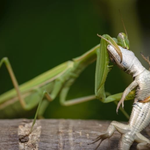
Praying mantises are among the most stealthy, highly adapted, and bizarrely capable predators in the insect world.
From their unique anatomical design to their jaw-dropping hunting methods, these masters of camouflage never cease to amaze scientists.


9. They are masters of deceptive movement
To get close to prey or avoid being eaten by birds, mantises are known to gently sway side-to-side as they walk. This rhythmic movement isn’t random—scientists believe it perfectly mimics the shifting of leaves and twigs blowing in a gentle breeze, keeping their movement completely unnoticed.
10. They aren’t always a “good bug” for gardens
Gardeners often buy mantis egg cases (oothecae) thinking they serve as perfect biological pest control. However, mantises are indiscriminate apex predators.
They will just as quickly devour a beneficial native bee or a beautiful butterfly pollinating a plant as they will a harmful caterpillar or aphid pest.