





spotheplanet retweeted

The root cause of the war in Ukraine is Russian imperialism. A majority of Russians truly believe they have a God-given right to expand their empire and rule over others


spotheplanet retweeted

Kherson. Ceasefire.
A rare walk through just one part of the city.
The scale of destruction must be seen and known.
Usually, we cannot walk here because of the drones infesting the skies—so this is hidden.
This is a European city. 2026.
spotheplanet retweeted
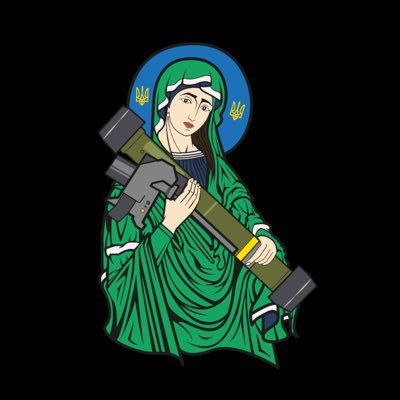
For centuries, russia has invaded, conquered, and colonized other nations. And it’s still doing it today.
Yet somehow, you can open pretty much any social media platform and find people insisting that russia is not a threat.
It’s absolutely diabolical.


spotheplanet retweeted

Repeat after me: Russia has no legitimate security concerns; only its neighbours do. Russia has been the only one invading others.
spotheplanet retweeted

Ad agosto sono stato in Lituania. Abbiamo noleggiato una macchina e girato il Paese. È stato bellissimo, ma non è questo che voglio raccontare.
Una sera, a Vilnius, una persona che era con me mi ha detto una frase: «In Italia non ci abbiamo capito niente».
Quel giorno avevamo visitato l’ex sede del KGB. Celle grandi quanto un armadio, stanze di tortura, prigioni per dissidenti e religiosi. Una stanza dove i prigionieri politici venivano giustiziati, uno dopo l’altro, e i corpi fatti sparire. Ci sono ancora i buchi dei proiettili nel muro. Nel museo, oltre ai crimini commessi dall’URSS (milioni di persone deportate, intere famiglie distrutte, oppositori perseguitati…), viene raccontata anche la storia dei partigiani lituani. Uomini e donne che combattevano e morivano per liberare il proprio Paese dall’occupazione sovietica.
E quella voglia di non finire mai più sotto il dominio russo la senti ovunque. Nei musei, nelle testimonianze delle persone, nelle condanne ai crimini che la Russia commette ancora oggi. Senti una continuità storica fortissima, come se quello che succede oggi in Ucraina fosse anche parte della loro storia.
Quella persona era rimasta in silenzio per un po’ prima di dirmi quella frase. Aveva votato comunista per gran parte della sua giovinezza. Come tanti italiani, era cresciuta pensando che il comunismo fosse l’opposto del fascismo e quindi il massimo della libertà e della giustizia. Per lei la bandiera dell’URSS rappresentava la liberazione, la resistenza, la difesa degli oppressi. E invece: «Mentre in Italia votavo comunista, qui c’erano persone che venivano imprigionate, torturate e uccise proprio da chi finanziava il partito che votavo».
Non erano cose che non si potevano sapere. Le repressioni sovietiche erano denunciate già allora. Ma l’URSS finanziava il più grande partito comunista dell’Occidente, quello italiano, ed esercitava un’enorme influenza sulla nostra vita politica e culturale. La propaganda sovietica ha lasciato un’impronta profondissima in Italia. Quella di Putin ha saputo sfruttare anche quell’eredità.
Siamo cresciuti in un Paese dove gli stessi simboli che per milioni di europei rappresentavano occupazione, deportazioni e repressione venivano esibiti come simboli di libertà. E con questa storia non abbiamo mai fatto davvero i conti.
Ancora oggi c’è chi scende in piazza con bandiere sovietiche, convinto di stare dalla parte degli oppressi. E penso a quei ragazzi e a quelle ragazze lituane, e non solo, che mentre noi celebravamo l’URSS morivano per liberarsi proprio dall’URSS. Per essere liberi.
«In Italia non ci abbiamo capito niente». E purtroppo continuiamo a non capire.


“Dear Italian students, who today take to the streets carrying flags with the hammer and sickle and wearing T-shirts emblazoned with ‘CCCP’,” began an open letter in Italian by Lithuanian expat Neringa Budryt.
“I would like to ask you a question: do you truly know what the symbols you carry represent? And do you know what would have happened to many of you had you openly demonstrated in countries living under the oppression of communist regimes?
Let me tell you something. It is easy to display a red flag when, for you, communism is merely an abstract idea of equality, social justice, and rebellion against the system. It is easy to wear a T-shirt with "CCCP" on it when you have never experienced the reality of a communist regime.
We come from that part of Europe where communism was not a T-shirt, a symbol of rebellion, or a romanticized notion of equality. It was the system in which we lived—a system we never chose.
We know the history of Soviet repression, Stalinist purges, the Gulags, and mass deportations. Above all, we know the word "Siberia"—a place to which thousands of innocent people were forcibly deported, simply for thinking differently.
In Siberia—amidst freezing cold, starvation, and forced labor—many lost their lives; those who survived carried the scars of that experience forever. Entire families were torn apart, and generations were denied the chance to live freely in their own homeland.
In the countries of the Soviet bloc, censorship, political police, surveillance, and the suppression of dissent drastically curtailed individual freedoms.
We grew up in a system where state control permeated even our daily lives. At school, we were required to wear the red necktie of the "Pioneers." We were monitored; they tracked where we went and even whether we attended church. Even faith—a choice that should belong to an individual’s own conscience—could become a cause for suspicion.
We used to celebrate Christmas with our windows blacked out, to ensure no one would see us and report us. Because it was forbidden—just like so many other things: jeans, rock music, and all the symbols of a Western lifestyle. My mother returned from a Soviet labor camp. And do you know what happened to her? She was barred from continuing her education because she had been labeled an enemy of communism.
Under a communist regime, you could not protest. You risked arrest, imprisonment, interrogation, persecution—and, in certain historical contexts, even death. In the Soviet Union and other communist regimes, political dissent could cost you your freedom and your life.
Demonstrations independent of the authorities were not a guaranteed right; they were often suppressed by force.
That is why it strikes me to see young Italians proudly displaying the hammer and sickle—symbols associated with regimes that persecuted and imprisoned millions of people.
Today, you are free to take to the streets, shout against the government, criticize institutions, and wave your flags precisely because you live in a democracy that grants you these freedoms. Under an authoritarian regime of that kind, protesting against those in power could have landed you in prison.
This is not about denying the existence of social injustices, inequalities, or the right to fight for a better world. You are free to take to the streets to demand a more just society—but you should not idealize a system that denied so many people the very things you are free to exercise today: the right to choose, to believe, to speak, and to dissent. Before wearing a T-shirt with "CCCP" on it, listen to those who experienced that world. Talk to the deportees and their descendants; read the accounts of those who endured the gulags and forced exile to Siberia. Learn what it meant to be stripped of your freedom, your home, your loved ones—and even any prospect of a normal life—simply because of your background or your beliefs.
Before waving the hammer and sickle, please, study history thoroughly.”


spotheplanet retweeted

What “poor Russian conscripts” is he talking about? The Russian soldiers fighting against Ukraine serve under official contracts and are paid for it. Their salaries are funded in part by the extra money Putin is receiving as a result of Trump’s recent decisions to waive some of the sanctions on Russia.
And now, something very important.
Russia pretends to be “great,” yet it is a very poor country. Its entire economy is comparable in size to that of the U.S. state of Texas. Millions of Russians live in economically depressed regions. For them, signing a contract with the Russian army is often the only realistic path to social advancement, because it lets them earn the kind of money they could only have dreamed of in their impoverished home regions.
The families of Russian soldiers killed in Ukraine are perfectly satisfied. They receive sums of money that their husbands or sons could never have earned, even if they had worked for the rest of their lives.
That’s why our Russian human rights colleagues call this kind of economy a “necronomy,” meaning a “death economy.” Russia sells death. Literally.
Yes, this bloody war must be stopped. And to stop it, we must make the cost of war for Putin higher than the cost of peace.
So if Musk truly cares about the lives of Russian soldiers, America must break the Russian necronomy’s ability to fuel this bloody war. But the Trump administration has done exactly the opposite. America has begun to finance it.
I am attaching to this post just a few examples of Russian state advertising, showing the amounts in rubles for which “Russian kids” go to kill Ukrainians.


spotheplanet retweeted

Eine Litauische Frau erklärt den linksextremistischen Studenten in Italien, was der Kommunismus bedeutet, für den sie protestieren: Deportationen, Raub, Unterdrückung und Gulags.
“Dear Italian students, who today take to the streets carrying flags with the hammer and sickle and wearing T-shirts emblazoned with ‘CCCP’,” began an open letter in Italian by Lithuanian expat Neringa Budryt.
“I would like to ask you a question: do you truly know what the symbols you carry represent? And do you know what would have happened to many of you had you openly demonstrated in countries living under the oppression of communist regimes?
Let me tell you something. It is easy to display a red flag when, for you, communism is merely an abstract idea of equality, social justice, and rebellion against the system. It is easy to wear a T-shirt with "CCCP" on it when you have never experienced the reality of a communist regime.
We come from that part of Europe where communism was not a T-shirt, a symbol of rebellion, or a romanticized notion of equality. It was the system in which we lived—a system we never chose.
We know the history of Soviet repression, Stalinist purges, the Gulags, and mass deportations. Above all, we know the word "Siberia"—a place to which thousands of innocent people were forcibly deported, simply for thinking differently.
In Siberia—amidst freezing cold, starvation, and forced labor—many lost their lives; those who survived carried the scars of that experience forever. Entire families were torn apart, and generations were denied the chance to live freely in their own homeland.
In the countries of the Soviet bloc, censorship, political police, surveillance, and the suppression of dissent drastically curtailed individual freedoms.
We grew up in a system where state control permeated even our daily lives. At school, we were required to wear the red necktie of the "Pioneers." We were monitored; they tracked where we went and even whether we attended church. Even faith—a choice that should belong to an individual’s own conscience—could become a cause for suspicion.
We used to celebrate Christmas with our windows blacked out, to ensure no one would see us and report us. Because it was forbidden—just like so many other things: jeans, rock music, and all the symbols of a Western lifestyle. My mother returned from a Soviet labor camp. And do you know what happened to her? She was barred from continuing her education because she had been labeled an enemy of communism.
Under a communist regime, you could not protest. You risked arrest, imprisonment, interrogation, persecution—and, in certain historical contexts, even death. In the Soviet Union and other communist regimes, political dissent could cost you your freedom and your life.
Demonstrations independent of the authorities were not a guaranteed right; they were often suppressed by force.
That is why it strikes me to see young Italians proudly displaying the hammer and sickle—symbols associated with regimes that persecuted and imprisoned millions of people.
Today, you are free to take to the streets, shout against the government, criticize institutions, and wave your flags precisely because you live in a democracy that grants you these freedoms. Under an authoritarian regime of that kind, protesting against those in power could have landed you in prison.
This is not about denying the existence of social injustices, inequalities, or the right to fight for a better world. You are free to take to the streets to demand a more just society—but you should not idealize a system that denied so many people the very things you are free to exercise today: the right to choose, to believe, to speak, and to dissent. Before wearing a T-shirt with "CCCP" on it, listen to those who experienced that world. Talk to the deportees and their descendants; read the accounts of those who endured the gulags and forced exile to Siberia. Learn what it meant to be stripped of your freedom, your home, your loved ones—and even any prospect of a normal life—simply because of your background or your beliefs.
Before waving the hammer and sickle, please, study history thoroughly.”
spotheplanet retweeted

For those who push ridiculous soviet nostalgia and russian imperialism: all 3 Baltics 🇱🇹🇱🇻🇪🇪 are in top 30 and rising.
russia is #103 and falling.
Lol!

Prosperity Index 2026
1. Switzerland🇨🇭
2. Norway🇳🇴
3. Ireland🇮🇪
4. Denmark🇩🇰
5. Finland🇫🇮
6. Iceland🇮🇸
7. Sweden🇸🇪
8. Germany🇩🇪
9. Australia🇦🇺
10. Netherlands🇳🇱
14. Japan🇯🇵
16. Canada🇨🇦
17. USA🇺🇸
18. UK🇬🇧
21. France🇫🇷
24. Israel🇮🇱
26. Spain🇪🇸
28. Italy🇮🇹
31. Korea🇰🇷
36. Poland🇵🇱
46. Malaysia🇲🇾
53. Argentina🇦🇷
59. Brazil🇧🇷
64. Indonesia🇮🇩
74. Colombia🇨🇴
85. Mexico🇲🇽
86. South Africa🇿🇦
91. India🇮🇳
97. Saudi Arabia🇸🇦
102. Türkiye🇹🇷
103. Russia🇷🇺
110. China🇨🇳
116. Iran🇮🇷
120. Egypt🇪🇬
125. Pakistan🇵🇰
138. Nigeria🇳🇬
148. Venezuela 🇻🇪
@ProsperityIndex


spotheplanet retweeted

Almost 6 million people have watched the interview with @ZelenskyyUa in just 3 days!
A conversation I will never forget.
He spoke in Ukrainian, we both had ear pieces in with human translators in a room next door, and we translated what he said into English afterwards.

What do you say to your family when you don’t know if you’ll ever see them again?
In February 2022, he told his wife and children the war had begun. Then he left as Russian forces advanced towards Kyiv, unsure what the coming hours would bring.
This is President Volodymyr Zelenskyy.
Before politics, he built a successful career in Ukrainian television as a writer, producer and performer, even portraying a president on screen. In 2019, he was elected President of Ukraine. Three years later, Russia launched its full-scale invasion.
Sitting down with him was surreal and an enormous responsibility. It was a rare chance to hear his account of the first hours of the war and the decisions that followed.
We discussed things like:
How he found out Russia had invaded.
Why he refused an offer to evacuate Kyiv.
The 64km Russian military convoy advancing towards the capital.
How Russian forces tried to capture a key airport.
His account of discovering hundreds of bodies after Russian occupation.
What he believes it will take to end the war.
But I also wanted to understand how he’d been coping.
One of my first questions was simply, “How are you doing?” His answer was: “It’s hard.”
He spoke about meeting parents whose children had been killed. Some, he explained, simply ask him for a hug.
And as he spoke, there were tears in his eyes.
Whatever your views on the war or the decisions made by those involved, this is a rare opportunity to hear his account of events that have changed millions of lives.
Because behind every map, every headline and every political decision, there are real people.
Out now on all platforms ❤️👊🏾
(President Zelenskyy was recorded in Ukrainian and dubbed in English.)
spotheplanet retweeted

The world must stop pretending russia is anything but a terrorist state.
1,600 guided aerial bombs dropped on Ukraine in a single week. Around 230 a day.
Why is russia allowed to get away with this? When did this become normal in the so-called civilized world?
spotheplanet retweeted

The lengths some politicians go to explain why Russia bombs Ukrainian cities. Putin repeatedly denies Ukrainian statehood and calls Russians and Ukrainians “one people – a single whole”, but apparently his own words are too obvious a clue.
Russia attacked Ukraine in 2014, when its non-bloc status was still enshrined in law. NATO’s European members and Canada were spending roughly 1.4% of their combined GDP on defence, with spending still falling in real terms. Quite the threatening military build-up.
Even these rather inconvenient details fail to interrupt the elaborate explanations.
Occam’s razor might help here. Perhaps a ruler who denies a nation’s identity and invades its territory actually means what he says.

spotheplanet retweeted

Nope. Putin is anti-West. He would destroy Europe, as his communist predecessors did last century. Putin is the one orchestrating migrant crisis into Eastern Europe via Belarus.
Ask Poland or any other country occupied/influenced by Russia their thoughts about Putin. They despise him (rightfully so).

ruzzia was and is a fascist state

Exactly this. Whenever Moscow conquers a country, it is impoverished, polluted and destroyed. This is what happened to Estonia's economy (compared to Finland) during the Soviet Occupation. Estonia was wealthier than Finland in 1938, the Soviet occupation (1944-1991) turned it 10 times poorer. Since freedom from the Russians was achieved, it's back on track.

spotheplanet retweeted

Kremlin apologists: Russia was forced by NATO to invade Ukraine
Putin: Ukrainians are genetically Russian and Ukraine is historically Russian land
spotheplanet retweeted

Putin doesn’t think Ukraine deserves their own country. But I know Ukraine wants their independence, freedoms and human rights. Russia wants to take that all away. Russia has killed millions of Ukrainians when they controlled Ukraine in centuries past.

Russian President Vladimir Putin cited genetics to declare that Russians and Ukrainians are “one people” and reiterated his claim to Ukrainian territory, saying: “I think that it is not their territory but the historical territory of Russia.” wapo.st/48aZaZF
