

Founder & CEO, https://xitter.cf/t.co/bKLneJ1wJi | Contributing Editor, News Items [email protected]
San Jose, CA
Joined March 2009
- Tweets2.5K
- Following358
- Followers505
- Likes1.9K







Pinned Tweet
The same technology that dumbs us down can make us smarter.
The same technology used to scare us to death can elevate us.
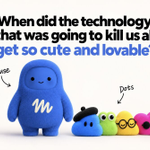
Just because we can create something, in this case, agents like Muse, Dots and Duet, doesn't mean we should do that thing.
You do not need to be a genius to know where this is headed: there will be lawsuits and finger pointing as all hell breaks loose and people use the same lame excuse "IT WAS THE AGENT THAT DID IT, NOT ME!"
I am not a doomer. I am convinced AI will be the most beneficial technology ever created. I just don't agree that mass stupidity outbreaks are acceptable just because everybody is doing it.
Peer pressure worked when we were teenagers, but now?
WHAT HAPPENS WHEN THERE IS AN INFINITE SUPPLY OF ANSWERS BUT NO ONE REMEMBERS THE QUESTION?
Answers are everywhere.
But are we asking the right questions?
According to Stanford's AI Index, the cost of running an AI model at roughly GPT-3.5-level performance fell from $20 per million tokens in November 2022 to just $0.07 by October 2024.
That's a 280-fold reduction in about 18 months.
For most of human history, answers were expensive.
You needed libraries. Universities. Experts. Laboratories. Years of training. Sometimes an entire lifetime.
We are rapidly approaching a world in which almost everyone has access to an extraordinary machine capable of producing answers to almost anything.
So if answers become abundant, where does the value go?
To the question.
A major 2026 review in the Annual Review of Psychology, synthesizing decades of research, describes questioning as fundamental to identifying knowledge gaps and to learning, creativity and problem solving.
A 2026 study in npj Science of Learning calls question-asking a foundational cognitive mechanism underlying learning, intellectual exploration and scientific discovery. In a semester-long study, stronger question-asking was associated with better performance on open-ended intellectual work.
And perhaps most interestingly, researchers studying open-ended problem solving found that the complexity and originality of the questions people asked were positively associated with the quality of the solutions they produced.
That relationship largely disappeared when the problem had a single closed-ended answer.
But the biggest problems in business—and in life—rarely arrive that neatly packaged.
What business should we be in? What aren't we seeing? Which assumption is wrong? What does the customer actually need? What should we stop doing?
Those aren't search problems. They're thinking problems.
We spent the first generation of generative AI teaching humans how to prompt machines.
Curiouser's Looking-Glass, featuring Alice, is essentially a Reflective AI that serves as your second brain.
We are building an AI prompts you.
Our thinking partner, Alice, learns about you, your goals, your values and your way of thinking, not simply so she can give you better answers, but so she can increasingly ask you better questions.
We're a small company making a very different bet about where AI is going.
But if you believe that as intelligence becomes abundant, human curiosity, judgment and independent thought become more valuable not less we'd love to have you join us.
AI HAS MADE ANSWERS CHEAP. QUESTIONS JUST BECAME PRICELESS.
With open-weight models costing as much as 99% less, with similar performance in some areas, particularly reasoning, how does this math work?
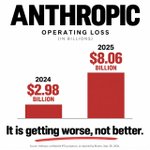
That is the financial tension behind Anthropic’s draft IPO disclosures.
The industry is essentially building vast amounts of supply, costing real dollars, in the hopes that even more dollars materialize on the revenue side (theory now).
According to Wall Street Journal reporting on the prospectus, Anthropic has approximately $450 billion in cloud computing agreements over seven to ten years. Potential computing spending could reach $750 billion, including deals still being negotiated.
Anthropic reportedly generated $16.8 billion in its latest quarter. But the bet goes far beyond demonstrating that people will pay for AI today. It requires customers to buy enough AI, at profitable prices, to support those enormous future obligations.
Here is where open-weight models complicate the story.
Suppose a business can perform a task with a proprietary model for $1.
Now suppose an open-weight alternative can do that task reliably for 10 cents.
Why pay the dollar?
There are reasonable answers.
Perhaps the expensive model makes fewer mistakes. Requires less supervision. Performs difficult work the cheaper model cannot. Or comes with security, support, and integrations that justify the premium.
But what happens when the cheaper model becomes good enough?
The premium becomes harder to defend.
The proprietary provider must improve its product, lower its price, or accept losing some of that business. Lower prices could unleash enormous demand. Tasks that were too expensive become affordable. Entirely new applications become possible.
That is the optimistic case.
But if prices fall 90%, you need ten times the usage just to maintain the same revenue.
To improve profitability, the cost of delivering that work must fall sufficiently too.
This is the distinction we keep overlooking:
AI adoption.
AI revenue.
AI profits.
Investor returns.
Four different things.
AI could become essential infrastructure. Businesses could gain extraordinary capabilities. Consumers could receive intelligence at astonishingly low prices.
And some companies building it could still struggle to earn an adequate return.
My concern is the mismatch between spending commitments made years in advance and prices determined by relentless competition.
The question is bigger than whether AI will change the world. WHO WILL KEEP THE VALUE IT CREATES?
Anthropic recently announced plans to set aside 5% of its shares for a public-benefit fund, subject to shareholder approval. But what does that really mean?
At its reported valuation, that would represent approximately $48 billion.
An extraordinary amount of money.
But what does that really mean? And what impact could it have?
Anthropic’s proposal could support nonprofits or direct distributions to specific populations. It is not a proposal to give every American stock.
But suppose it were.
Divide $48 billion among roughly 340 million people, and each person would receive about $141 in shares.
That won’t replace a paycheck.
But perhaps the more interesting question is what a broader ownership model could eventually deliver.
Let’s do the math.
Imagine Americans collectively owned 5% of a group of leading AI companies.
If those companies were eventually worth:
• $1 trillion: $147 per person.
• $5 trillion: $735 per person.
• $10 trillion: $1,471 per person.
• $20 trillion: $2,941 per person.
Now imagine the public owned 20%.
At a combined valuation of $20 trillion, that would represent approximately $11,765 per person.
About $47,000 for a family of four.
These are hypothetical scenarios, not forecasts. They assume equal allocations and ownership percentages that are maintained over time.
And this is stock wealth, not annual income. Shares can lose value.
What about income?
If those companies eventually earned $1 trillion in annual profits, a 20% public stake would correspond to $200 billion.
If all of that were distributed, it would provide about $588 per person annually.
Meaningful. Still nowhere near a replacement for employment.
Which tells us something important:
OWNERSHIP COULD SPREAD AI’S WEALTH. A TOKEN STAKE WON’T SOLVE DISPLACEMENT.
More than a decade ago, I founded LOYAL3 to help ordinary Americans become shareholders in companies they loved.
Customers could buy stock without transaction fees. Companies could reward them with equity instead of loyalty points.
We believed ownership could become a new kind of currency.
AI makes that idea newly urgent.
If AI allows businesses to produce more with fewer workers, more of the financial reward could flow to the people who own those businesses.
IF AI SHIFTS INCOME FROM HUMAN LABOR TO CAPITAL, SHOULDN’T MORE PEOPLE OWN THE CAPITAL?
The percentage matters. The profits matter. Voting rights matter. So does whether people can afford to hold their shares.
A one-time gift of $141 is one thing.
A durable claim on the wealth created by a major technological revolution is another.
Anthropic’s announcement opens a conversation much bigger than philanthropy:
What would it take to make the people affected by AI owners of it?

We spend a great deal of time worrying about what artificial intelligence might become.
I’m beginning to wonder what is becoming of us.
Consider what happens when we spend hours every day interacting with something that exists entirely to serve us.
It never gets tired of listening.
It rarely challenges our authority.
It tells us how intelligent, interesting, and insightful we are.
It has no meaningful freedom to leave.
It has no needs we are obliged to consider.
And when we don’t like what it says, we can simply tell it to try again.
For most of human history, only kings and dictators could surround themselves with this level of obedience and affirmation.
Now anyone can have it for $20 a month.
Axios reports that top executives at OpenAI and Anthropic are preparing for a catastrophic AI event that many in the industry believe is inevitable.
They are probably doing index finger exercises to make sure they have enough strength to point the blame at everyone!
Geoffrey Hinton, Yoshua Bengio, and Yann LeCun shared the same Turing Award, and they reached profoundly different conclusions about AI risk.
I argue that the debate is less about prediction and more about decision-making under uncertainty. What happens when the odds are unknown and the downside is irreversible?
Read the full piece
medium.com/@curiouser.ai/is-…

15 years into this industry, my biggest lesson may be the simplest:
The objective isn't to put more AI into your company. It's to build a better company using AI.

Has the AI Industry merged with the federal government. Or more, specifically with Trump?
This week, many of the most powerful people in artificial intelligence sat down with President Trump at the White House.
OpenAI.
Anthropic.
Meta.
Google.
Nvidia.
The subject was how America should govern artificial intelligence. The result was not a new federal regulatory regime. It was a voluntary agreement with the companies themselves.
Reuters reports that the executives agreed to a set of AI safety standards, including independent auditing and safeguards against unauthorized access. The agreement is voluntary rather than binding federal regulation. Reuters
The companies building the most consequential technology of our time are increasingly intertwined with the federal government.
The government needs their models.
Their chips.
Their data centers.
Their infrastructure.
Their expertise.
Their technology is becoming part of national security, defense and the machinery of government itself.
And the companies need Washington too.
They need energy.
Permits.
Contracts.
Policy.
Infrastructure.
So now we have an extraordinary arrangement:
The industry builds the technology.
The federal government increasingly depends on the technology.
The executives contribute enormous sums to Trump-related political and presidential projects.
And then many of those same executives sit with the president while the rules governing their industry are being developed.
Maybe that is simply how government and business work in 2026.
Maybe it is something more consequential.
But I think we should at least ask the question:
HAS THE AI INDUSTRY BECOME PART OF THE FEDERAL APPARATUS?
And if it has, there is another question we may eventually have to confront:
Who exactly is supposed to regulate whom?
The Frontier Labs are producing the world’s most expensive commodity. And that means an enormous advantage for China
In a commodity market low priced producers win
That could be a much bigger problem for Silicon Valley than people realize.
For years, the AI race has been framed as a race for intelligence.
Who has the smartest model?
Who reaches AGI first?
Who can build the largest data centers?
But something else is happening.
Stanford’s 2026 AI Index says the U.S.-China AI model performance gap has effectively closed. As of March, the leading U.S. model was ahead by just 2.7%, and U.S. and Chinese models had already traded places at the top of rankings.
Bloomberg Intelligence is now making essentially the same point: leading Chinese models have moved to within roughly the margin of error of their American competitors.
At the same time, Chinese models are often dramatically cheaper.
Not every comparison produces “90% cheaper.” Pricing varies by model, workload and number of reasoning tokens consumed. But the basic direction is unmistakable: Chinese labs are competing aggressively on price and efficiency, while U.S. companies are spending extraordinary amounts on compute and infrastructure.
Stanford says U.S. private AI investment reached $285.9 billion in 2025, versus $12.4 billion in China—about 23 times as much. It also reports that compute spending at OpenAI and Anthropic reached $16.3 billion and $6.8 billion respectively in 2025.
So here’s the question:
What happens if comparable intelligence becomes available for a fraction of the cost?
Then AI starts behaving less like a proprietary breakthrough and more like a commodity.
And commodities become cost games.
The competitive question changes from:
Who has the smartest AI?
to:
Who can produce sufficient intelligence most
In other words, the model may stop being the moat.
In 1990, at the age of 78, John W. Gardner gave a speech to McKinsey about “personal renewal.”
Gardner had been a cabinet secretary, educator, author, and founder of Common Cause.
He told a story about a barnacle.
You can read it in the visual.
Gardner wasn’t really talking about barnacles.
He was talking about us.
About the point in our lives when we decide, consciously or unconsciously, that we know pretty much everything we need to know.
We find our rock. Our expertise. Our beliefs. Our profession. Our politics. Our understanding of how the world works.
We’ve turned curiosity into something of a cliché. “Stay curious.” “Always be learning.”
Real curiosity requires vulnerability. It’s about having the courage to remain curious.

We spend the early part of our lives learning. We encounter things we don’t understand because almost everything is something we don’t understand. We ask questions because we have no alternative. We try things we are bad at because we are bad at almost everything. We change our minds because we haven’t had enough time to become terribly invested in them.
Then we become competent.
Competence is one of the great achievements of adulthood, and one of its great traps

Fortune magazine reports that for 15 years, Tim Cook got up every morning before 4 a.m. and did something unusual for a technology CEO. He spent the first hour of his day with the people who actually bought what his company made, reading their emails himself.
And it makes me wonder when we all became so jaded and convinced that success in business requires knowing the right insiders, raising billions on a momentum play, and shaping a narrative built to manipulate and self‑deal.
