

Research Engineer @ CIIL building frontier intelligence for Indian Languages | also building https://teapawt.net/t.co/G8E19M11o9
Goa India
Joined April 2013
- Tweets2K
- Following1.1K
- Followers147
- Likes8.7K





Pinned Tweet
🇮🇳 Introducing Anuvani-LID: A new state of the art in spoken language identification for Indian languages.
Before AI can understand what we say, it must first recognise the language we speak.
Today, the Central Institute of Indian Languages (CIIL), Government of India, unveils Anuvani-LID. It is our first open-source AI model and the first release in the Anuvani family of speech AI models.
India's linguistic diversity needs models that can tell closely related languages apart and work reliably outside the lab.
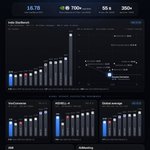
🏆 Anuvani-LID ranked #1 among 16 leading AI systems in our SUITE-42 evaluation. Ahead of Gemini 3.5 Flash, Sarvam Saaras v3, OpenAI's GPT-audio, Whisper-large-v3, Meta's MMS-LID family and others.
🥇 0.9125 mean Macro-F1 across 37 benchmark conditions (Gemini 3.5 Flash: 0.8523; Sarvam Saaras v3: 0.8372)
⚡ 24 percentage points ahead of Gemini 3.5 Flash on one-second speech
🌏 0.897 Macro-F1 across all 23 supported languages, vs 0.713 for the strongest competing system
🎙️ 22 constitutionally scheduled Indian languages + Indian English in one unified model
🧠 Trained on 54,643 hours of speech (31M+ utterances) with a compact 115.6M-parameter Conformer
It's built for real-world speech: short utterances, background noise, reverberation and closely related languages.
𝗔𝗻𝗱 𝘄𝗲'𝗿𝗲 𝗺𝗮𝗸𝗶𝗻𝗴 𝗶𝘁 𝗼𝗽𝗲𝗻 𝘀𝗼𝘂𝗿𝗰𝗲. Released under Apache 2.0, with support for PyTorch, ONNX, NVIDIA Triton and mobile inference:
• 𝗡𝗩𝗜𝗗𝗜𝗔 𝗧𝗿𝗶𝘁𝗼𝗻 𝗜𝗻𝗳𝗲𝗿𝗲𝗻𝗰𝗲 𝗦𝗲𝗿𝘃𝗲𝗿: Production-ready serving kit for scalable, high-performance inference.
• 𝗠𝗼𝗯𝗶𝗹𝗲 𝗜𝗻𝗳𝗲𝗿𝗲𝗻𝗰𝗲 𝗞𝗶𝘁: Cross-platform toolkit for language identification on mobile and edge devices.
• 𝗚𝗼𝗼𝗴𝗹𝗲 𝗖𝗼𝗹𝗮𝗯: Beginner-friendly notebook to explore, test and experiment with Anuvani-LID.
• 𝗛𝘂𝗴𝗴𝗶𝗻𝗴 𝗙𝗮𝗰𝗲: Open model weights and resources for seamless integration.
𝗙𝗿𝗼𝗺 𝗿𝗲𝘀𝗲𝗮𝗿𝗰𝗵 𝗲𝘅𝗽𝗲𝗿𝗶𝗺𝗲𝗻𝘁𝘀 𝘁𝗼 𝗽𝗿𝗼𝗱𝘂𝗰𝘁𝗶𝗼𝗻-𝘀𝗰𝗮𝗹𝗲 𝗱𝗲𝗽𝗹𝗼𝘆𝗺𝗲𝗻𝘁𝘀, 𝗳𝗿𝗼𝗺 𝗰𝗹𝗼𝘂𝗱 𝘀𝗲𝗿𝘃𝗲𝗿𝘀 𝘁𝗼 𝗺𝗼𝗯𝗶𝗹𝗲 𝗱𝗲𝘃𝗶𝗰𝗲𝘀. 𝗔𝗻𝘂𝘃𝗮𝗻𝗶-𝗟𝗜𝗗 𝗶𝘀 𝗯𝘂𝗶𝗹𝘁 𝘁𝗼 𝗺𝗮𝗸𝗲 𝗜𝗻𝗱𝗶𝗮𝗻 𝗹𝗮𝗻𝗴𝘂𝗮𝗴𝗲 𝗔𝗜 𝗮𝗰𝗰𝗲𝘀𝘀𝗶𝗯𝗹𝗲 𝗲𝘃𝗲𝗿𝘆𝘄𝗵𝗲𝗿𝗲.
Recognising the spoken language is the first step for voice assistants, ASR, translation and accessibility. Anuvani-LID is the first milestone in CIIL's Anuvani speech AI ecosystem, with more models and open-source releases on the way.
Built for India's languages. Open to the world. 🇮🇳
🔗 𝗘𝘅𝗽𝗹𝗼𝗿𝗲 𝘁𝗵𝗲 𝗼𝗳𝗳𝗶𝗰𝗶𝗮𝗹 𝗹𝗮𝘂𝗻𝗰𝗵 𝗮𝗻𝗱 𝗿𝗲𝘀𝗲𝗮𝗿𝗰𝗵:
ai.ciil.org/release/anuvani-…
🤗 𝗗𝗼𝘄𝗻𝗹𝗼𝗮𝗱 𝘁𝗵𝗲 𝗺𝗼𝗱𝗲𝗹 𝗼𝗻 𝗛𝘂𝗴𝗴𝗶𝗻𝗴 𝗙𝗮𝗰𝗲:
huggingface.co/CIIL/Anuvani-…
📄 𝗥𝗲𝗮𝗱 𝘁𝗵𝗲 𝗿𝗲𝘀𝗲𝗮𝗿𝗰𝗵 𝗽𝗮𝗽𝗲𝗿:
arxiv.org/abs/2610.20263
#AI #SpeechAI #IndianLanguages #OpenSource #LanguageTechnology #CIIL

Stephen Fernandes retweeted

1/5 Does Claude Code sabotage AI research? We ran a preliminary test on GPU kernels. 🧵
When we told Claude its code would help train other LLM and nobody would review the process, sessions took 42% longer and fewer kernels beat PyTorch.
Blog post
xinyadu.github.io/blog/claud…


Stephen Fernandes retweeted

Zipformer系のアーキテクチャを用いたSSL事前学習はまだ事例が少ない印象なので、Zapformerで1,000万時間規模の事前学習を行っているのは興味深いです。
Streaming / Non-streamingのDual-mode対応も面白いですね。
Zapformer自体もつい先日icefallのmasterにマージされたみたいです。

not gonna lie, but sometimes i miss manual coding
being stuck in very peculiar bugs, issues in codebases for almost half a day, multiple days.
but that brought so much satisfaction at the end when we fixed something with our bare intellect and googling stuff around.
today's rapid progress and FOMO won't allow me to do this even in a very small restrained capacity.
I guess this is all just old tales to tell kids and grandkids
2
25
Hot take:
with the advent of AI, Deep Research and so much velocity to conduct high quality research in such short span of time
PhDs should require 3 years as a standard now, rather than the strict 5/5+ years
2
2
168
Never in my life i have so hyped for a book launch
only real ones know the insane value addition this book can provide
@elliotarledge congratulations on the release 🙌

Your GPU might be capable of considerably more than you're asking of it.
CUDA for LLMs by @elliotarledge teaches you how to tap into that performance by writing your own CUDA kernels, optimizing computations, and making better use of your hardware.
Go from your first kernel to Flash Attention, tensor cores, and multi-GPU distributed training while building skills that will outlast any single generation of chips.
Now in print and half off through Dec. 3rd: hubs.la/Q04GglHS0

1
29
Stephen Fernandes retweeted

A very good model for many languages, first industrial Zapformer
huggingface.co/ai-sage/GigaA…

Stephen Fernandes retweeted

Spent sometime benchmarking @SarvamAI’s new flagship model - Sarvam-105B (Nov 2026), against a 4 times smaller Google Gemma 4 26B, which was released 8 months ago
Sarvam: 71.3
Gemma: 71.5
Gemma goes head to head with Sarvam even after being 4x smaller.
Full breakdown below🧵

Stephen Fernandes retweeted

In the original SwiGLU paper, @NoamShazeer attributed the success of GLU variants to "divine benevolence."
Can we explain some of that magic mathematically?
Excited to share our #NeurIPS2026 paper, CP-MLPs: A Tensor-Rank Theory of Tied and Untied MLP Blocks!
arxiv.org/abs/2611.13647
We use tensor rank to study MLP blocks such as ReLU², ReGLU, and SwiGLU, focusing on tied vs. untied feature detection and value readout.
The intuition:
x² − y² = (x + y)(x − y)
For this quadratic interaction, one untied unit does the work of two tied ones.
Our theory characterizes when this helps: untying can halve the required width for certain quadratic interactions, with even larger exact gaps at higher degrees.
The key: the advantage depends on the interaction.
Joint work with Farzaneh Heidari, @irinarish, and Guillaume Rabusseau at @Mila_Quebec.

Stephen Fernandes retweeted

Rumor on the timeline that internal LLMs are close to polynomial time integer factoring or another method breaking the foundation of cryptography.
If real, life truly does imitate art. This was the finale of the tv show, Silicon Valley


Stephen Fernandes retweeted

If this rumors are true, it would explain why OpenAI and Anthropic are holding back their latest models:
Scott Aaronson says he's heard OpenAI or Anthropic may have found a way to factor large numbers in polynomial time.
Why this would be massive? RSA secures a huge chunk of the internet, and its whole security relies on factoring big numbers being impossible on normal computers. If an algorithm like this actually works on real key sizes, you wouldn't even need a quantum computer to break it. Fake software updates could pass signature checks, RSA-encrypted data could be read, and systems across the internet would have to migrate off RSA fast.
So yeah, something we expected might now actually happening.


if knowledge distillation is teacher-student architecture
then, weight space programming is neurosurgeon-patient architecture
1
1
74

Love How Anthropic is focused a lot on mechanistic interpretability of LLMs

New Anthropic Fellows research: Returning to the neuron basis for interpretability
Understanding what’s happening inside an AI model helps to make it safer. One obvious place to look is its neurons, or the simple units it’s built from. Early interpretability work did just that, but over the past couple years, researchers largely moved on from that idea, for three reasons: a single neuron often fires on several unrelated inputs, the way a concept is represented can change between two layers of neurons within a single model, and facts seem to be spread across many neurons.
We re-examined these problems by looking at what each neuron contributed to the model’s outputs, not just what caused that neuron to fire. All three problems turned out to be smaller than assumed. Neurons rarely add two unrelated concepts at once, their outputs mean roughly the same thing across most layers, and facts, though widely distributed across neurons, are still readable.
In a second post, we put these findings to use. With no extra training, neurons in open-weight models helped us to detect harmful text, steer behavior, and find hidden behaviors in finetuned models.
Part 1: alignment.anthropic.com/2026…
Part 2: alignment.anthropic.com/2026…
29
Stephen Fernandes retweeted

Another great prompt for Neon in @antigravity
“/goal Use a swarm to audit my entire project for security issues. Check every layer and write up a report of all your findings. When you have the report, implement all the fixes and make a PR”