

The creative workspace that turns studios into AI-native organizations. Win more pitches. Ship more projects. Remember everything you make.
Seattle, WA
Joined February 2026
- Tweets45
- Following47
- Followers12
- Likes20






We're inviting creative teams in early. The private alpha is free while we shape the product. It fits teams that want Meeting Capture and a connection to Claude, ChatGPT, Claude Code, Codex and Cursor over MCP. Request alpha access at studiograph.com
16
A client invite arrives while you are mid-project.
Alpha users are testing Inbox. It syncs your incoming email and calendar invites and creates tasks and records tied to projects, people, organizations, and deals.
2
A question comes up halfway through a call. With Meeting Capture, you can ask it in the meeting chat while the call is still going. It captures the call into the workspace, filed on the project it is about, with the people, organizations and tasks it mentions.
3
An agent in Studiograph works with your permissions. Each change it makes is a git commit under its own account, so your team can read what happened. By default, a write to an entry it did not author waits for a person's approval. Agents are on for alpha users.
1
You can open your team's decisions in any editor you like.
They're markdown files with their fields at the top, kept in git on a managed server that is your team's own. The whole workspace exports.
3
Agents in Studiograph can change one passage of an entry.
Each edit is a git commit under the agent's own account.
By default, changes to entries it did not write, or a person edited since, wait for a person's approval.
Any entry can be restored from an earlier version.
2
In Studiograph you can build decks, documents, interactive prototypes, boards, and whiteboards from what your workspace already holds, then present or publish them.
3
Someone on your team is in Cursor, Claude or ChatGPT and needs to look something up in the workspace. Those tools, plus Claude Code and Codex, can read and write a Studiograph workspace over MCP. The workspace itself is plain markdown in git.
12
Schema has spent the last few months building agents that carry out ongoing workflows for our team, and we are releasing them to other Studiograph users. They are on for alpha users, and the private alpha is still open at studiograph.com
18
Meeting Capture files a call on the project it is about, with the people, organizations, and tasks it mentions linked. Ask questions in the meeting chat while the call is still going. macOS only.
6
Work arrives by email and calendar invite. Inbox, in Studiograph, turns it into tasks and records on the right project, person, and organization, and suggests deals. Nobody needs to copy and paste. Request alpha access: studiograph.com
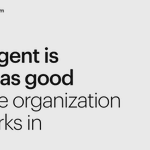
An agent is a model running in a loop with tools. It plans, acts, and checks its own output until the task is done. It is only as good as the organization it works in.


1
12
Meeting Capture, a new feature in Studiograph, writes what happens in a call straight into your workspace, turning it into the people, organizations, and tasks it's about. You can also ask it questions live from the meeting chat.


How we moved from single-player AI loops to an operating system for creative teams.
A look at the architecture behind Studiograph:

I often describe Studiograph as Obsidian plus Claude Code, for teams.
For years my Obsidian vault held everything about my business in one place. When Claude Code came along, that vault became the agent's memory. It read all of it, wrote back into it, and started producing proposals, designs, and prototypes that got better as the vault grew.
Then I tried to give the same setup to my team, and it fell apart. Multiple vaults mean multiple truths. Whose notes are these? Where does output go? Who is allowed to change what?
Studiograph is what we built to answer those questions. One source of truth, in plain files, portable to any model. Plus permissions, a stable schema, and real-time collaboration.
Decks, mockups, prototypes, meetings, and tasks stay in the graph instead of scattering across tools, with a fleet of agents working inside the same boundaries as people.
Multiplayer AI is the conversation right now. We got there by needing it, and it feels like the start of how creative teams will work.
Alpha access is open: studiograph.com

ALT Single-player to multiplayer AI
1
1
45
Studiograph retweeted

I often describe Studiograph as Obsidian plus Claude Code, for teams.
For years my Obsidian vault held everything about my business in one place. When Claude Code came along, that vault became the agent's memory. It read all of it, wrote back into it, and started producing proposals, designs, and prototypes that got better as the vault grew.
Then I tried to give the same setup to my team, and it fell apart. Multiple vaults mean multiple truths. Whose notes are these? Where does output go? Who is allowed to change what?
Studiograph is what we built to answer those questions. One source of truth, in plain files, portable to any model. Plus permissions, a stable schema, and real-time collaboration.
Decks, mockups, prototypes, meetings, and tasks stay in the graph instead of scattering across tools, with a fleet of agents working inside the same boundaries as people.
Multiplayer AI is the conversation right now. We got there by needing it, and it feels like the start of how creative teams will work.
Alpha access is open: studiograph.com
ALT Single-player to multiplayer AI
Most creative tools are built for one kind of object: a canvas, a document, a table.
Projects don’t stay in one shape. They move from conversation to brief to data to deck.
Studiograph keeps those pieces connected in one workspace your team owns.
