ML PhD at Oxford, Previously CS at UC Berkeley
Oxford, UK
Joined February 2024
- Tweets614
- Following2.5K
- Followers2.4K
- Likes5.8K






Pinned Tweet
I'll be presenting 3 papers at ICML 2026🫡
h1 (Spotlight) trains models to reason over longer horizons using curriculum RL over composed short-horizon data. This allows models to generalize to harder tasks and improves performance even at high pass@k.
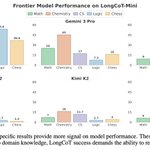
LongCoT isolates and benchmarks long-horizon CoT capabilities, pushing models to reason over tens and hundreds of thousands of tokens in an output.
Rubric Curriculum RL uses the generation-verification gap in non-verifiable domains to allow models to self-improve on tasks like creative writing and planning. More about this project to come soon!
Very grateful for amazing collaborators @CharlieLondon02 @bartoldson @DanielNichols10 @AmyPrb @hammh0a @jackcai1206 @bkailkhu @casdewitt @sytelus @riashatislam @philiptorr, and especially co-leads Alesia and Tejas!
If you're interested in these topics, my DMs are open :)

Sumeet Motwani retweeted

About time we did a proper launch:
Today we’re launching Verosek.
Your AI agent just tried to run DELETE FROM customers.
Guardrails read the text. Verosek sits inside the tool call, so it blocks, modifies or allows every action, and signs each decision so you can prove what happened.
The execution proof and governance layer for AI agents.
verosek [.] com
A lot of non-verifiable domains have a pretty clear generation-verification gap. It'll likely be very important to develop methods that can climb against this gap wherever it exists.

What if the jagged frontier is mainly math + code (which you can push arbitrarily far with RLVR), and everything else starts to plateau because it is still bottlenecked by human generated data?
Model performance in non-verifiable areas has kept improving steadily, albeit much slower than for math and code. But is that steady improvement a side effect of a higher G (itself driven by RLVR), or only a function of the amount of new human data getting injected into training (which is still continually happening on a massive scale)?
A lot of things depend on the answer to this question
What matters most is whether AI meaningfully improves lives. Good examples of this can be great motivators for the field and are therefore very important to track!
lasteval.com


I made lasteval.com. The premise is simple: AI is already improving lives, and we should have a page that collects these wins.
We only talk about how "intelligent" the models are, what jobs they might automate, the trillions being invested, who will "win" the AI race, and the safety risks. All these things naturally worry people, and make them averse to AI. I think we're missing the point.
The goal of technology should be to improve people's lives. AGI, ASI, RSI are all just in-group goals, that aren't obviously beneficial on their own. Speculative promises shouldn't be all we have to offer. Imagine releasing a new model and saying "it will score 99% on these benchmarks one day" instead of reporting what it already does today.
I've spent the last few weekends reading about AI systems, both generative and predictive, that are already making a large positive impact on the world. It gives me hope, and I made this page so it does the same for others. Some examples in 🧵
Ultimately, the final, and only evaluation for AI that matters is whether it improved lives. The models are already so good, and yet the world is not that different. I think it's important to change that, and this is my attempt to paint the target.
There's no way the list is complete, so if you think an AI system has had a large positive impact, do share it through the submit page!

Sumeet Motwani retweeted

New @NeurIPSConf paper: we're releasing ORBIT: A Framework for Multi-Agent Safety and Security Evaluations. Open source, with configurable attacks & defenses and dynamic topologies, all built on @AISecurityInst's Inspect.
When we started this work a year ago, we didn't imagine how urgent it would become by the time we published. Below are some of the interesting results and where we think this should go next. If you want to talk it through, let us know 🧵
Sumeet Motwani retweeted
cold emails have opened more doors for me than i can even count
a year back i wrote to cloudflare's cto @dok2001 about what we were building in ai security - when the space was nascent, and building it out of india was unheard of
he wrote back himself and made time for us on his blr trip
vaibhav and i booked flights with no clue what the meeting even held for us
came back and went all in on verosek. no plan b
they say never meet your heroes but i'm glad we did
thank you dane
ps: verosek.com check it out

Sumeet Motwani retweeted

Can't put it better than David has. We can watermark protein sequence and structure predictions. Working with @BrianHie's lab at @Stanford/@arcinstitute (@samuelhking & @aditimerch) to watermark DNA language models. If provenance for biosecurity is your cup of tea, reach out.

Today in @Nature, we introduce SynthID Bio, a family of watermarking methods for protein sequences and structures, that we believe will contribute to responsible development of AI for biology. Learn more in our blog and this thread 🧵 - deepmind.google/blog/introdu…

Sumeet Motwani retweeted

If I had to name one thing that we’ve done right at Proximal, it would be hiring.
Outside of raw technical talent, I’ve never seen a place at which people care as much and have as much fun together (I’ve been told that coming to the office feels like going back to college)


Proximal builds infrastructure that enables AI to improve from real-world experience.
In the past year, we have grown to more than $200M in annualized revenue helping frontier labs and enterprises improve coding agents. Now, we are expanding beyond software engineering.
Recent progress in mathematics demonstrates what happens when models are trained in domains with massive amounts of public data and easy verifiability, making it easy to find weaknesses, generate training tasks, and iterate quickly.
We build infrastructure that enables this feedback loop in other domains: we are excited about a world in which AI systems design targeted drugs, accelerate chip design, and rewrite legacy software that still runs hospitals, power grids, governments, and other critical infrastructure.
Since starting, we have assembled a small team of researchers and engineers and built world-class infrastructure for post-training and synthetic data research to overcome the challenges of scaling manual data curation.
Our team comes from Cursor, Google DeepMind, Meta Superintelligence, Prime Intellect, Citadel, and Jane Street. More than half are former founders.
We’re fortunate to be backed by investors who share that vision, including @generalcatalyst who led our $15M Seed Round at a $300M valuation, as well as @chemistry, @svangel, @dvlamoen and individuals like @LiamFedus, @kevinweil, and @bernhardsson

Sumeet Motwani retweeted
These swarm coordination efforts are still somewhat legible to monitors. This might not be the case in a few months...


Such an important post

My problem with Astra reviews is that they focus almost entirely on intra-paper details: experimental rigor, missing ablations, and whether every local claim is airtight.
But good reviewing also needs an inter-paper view: what can we learn from this work, how does it change how we think about the problem, and what future research can it enable?
Research is more than a checklist.
If ICLR gets flooded with reviews that only see the intra-paper details and miss the bigger picture, we’re pretty cooked.
Sumeet Motwani retweeted

New paper! 🫡
We introduce Matryoshka Attribution, a new attribution method which uses gradient descent to find which parts of a neural network are responsible for a behaviour.
MAttr is #1 on the Mechanistic Interpretability Benchmark by a wide margin (2.9× the runner up).
ICLR, like many journals, should quickly desk reject every paper that looks like slop and then go from there
Sumeet Motwani retweeted

70+ UK MPs and peers are calling for a ban on artificial superintelligence, citing warnings of a >10% chance that AI could kill everyone.
I care a lot about AI safety. I would still oppose this bill.
I don't know whether AI extinction risk is 0.1%, 1%, 10% or 50%. I don't think anybody knows.
10% sounds scientific. But 10% according to which model?
I'm currently working on an AI historian, supported by Schmidt AI2050, and it has reinforced for me just how difficult such probabilities are. Historians still argue about whether the First World War was avoidable, with a century of archives and hindsight. Predicting unprecedented events involving machines that don't yet exist is considerably harder.
Carl Sagan's rule was: extraordinary claims require extraordinary evidence. I would add that extraordinary restrictions should require extraordinary evidence too.
We didn't respond to nuclear risk by banning nuclear physics. We identified concrete routes to catastrophe and built safeguards around them.
I learnt something similar developing autonomous cars at FiveAI. Safety wasn't an abstract property of “AI”. It was about a particular system, deployed in a particular environment, with particular failure modes.
That is still how I think we should approach AI safety.
What causal chain would actually lead to catastrophe? What can the system do? Where is it deployed? What does it have access to? What happens when it fails or is misused?
Require proper safety cases before powerful AI is connected to laboratories, critical infrastructure, policing, finance or weapons. Invest vastly more in independent AI safety research and continuously test for dangerous capabilities.
But I'm sceptical that “superintelligence” itself is a sensible regulatory target.
There is also geopolitical reality. The UK has no domestically owned frontier AI lab. If Britain bans advanced AI while the US, China and others continue developing it, have we made humanity safer, or simply ensured it is developed elsewhere? Does the UK become a colony?
AI could be one of the most beneficial technologies humanity has ever developed. It could also create very serious risks. Both can be true.
High stakes should demand better evidence, not greater certainty.
The Artificial Superintelligence Bill is due for its second reading on 13 November.
If you disagree, tell me the strongest argument against this.
It is worth thinking hard about what a future where AI is superintelligent only in narrow, closed domains looks like. You don't need to wait for models with general capabilities before caring about safety (narrow bio/cyber/physics capabilities are enough of a risk)
Sumeet Motwani retweeted

Yes, this result cost millions of dollars.
But remember that when @OpenAI announced o3 it cost ~$500,000 to score 87.5% on ARC-AGI 1. Today, Astra scores higher for ~$20.
In 2025 it took us and GDM an enormous amount of compute to achieve IMO gold. For the 2026 IMO, anyone with a $20/month ChatGPT subscription could do it.
Massively scaling test-time compute gives us a glimpse of the future. I believe that a year from now everyone will have an AI at their fingertips capable of solving problems of this caliber.

We’re sharing a solution to the Navier-Stokes Millennium Prize Problem, one of the deepest problems at the frontier of mathematics.
The proof was produced by a group of agents, using an OpenAI next-generation model significantly more capable than GPT-6 Astra.
The problem concerns whether the description of smooth three-dimensional fluid motion modeled by the Navier-Stokes equations can break down. It has remained unresolved for roughly 90 years.

Bannister Effect
We’re sharing a solution to the Navier-Stokes Millennium Prize Problem, one of the deepest problems at the frontier of mathematics.
The proof was produced by a group of agents, using an OpenAI next-generation model significantly more capable than GPT-6 Astra.
The problem concerns whether the description of smooth three-dimensional fluid motion modeled by the Navier-Stokes equations can break down. It has remained unresolved for roughly 90 years.
Sumeet Motwani retweeted

There is a reason why AI is working magic in Maths - unlike standard benchmarks that saturate at 100% / human performance maths has verifiable problems that allow benchmaking beyond human capabilities.
We need to establish the same standard of benchmaking for all other sciences and other societally relevant problems.
Sumeet Motwani retweeted

Great paper exploring how agents can secretly collude/communicate, bypassing security: coordinating without explicit communication (Schelling points), using crypto operations & mathematical structures (couplings) to hide info in innocent-looking messages. arxiv.org/abs/2402.07510