

The Workshop on Software Understanding and Reverse Engineering (SURE). Co-located at ACM CCS 2026 in The Hague.
ACM CCS 2026 (The Hague)
Joined April 2025
- Tweets74
- Following4
- Followers117
- Likes1





Less than 40 hours to go!
Submit your research to SURE 2026 and help close the software understanding gap. We’re excited to see your work!
sure26.hotcrp.com
⏰Deadline approaching! We'd love to see your awesome work, so get it in by June 19th, 11:59 pm AoE.
sure26.hotcrp.com/
We thank our amazing organizers for their support. None of this would be possible without them:
sure-workshop.org/organizers…
Help us move the needle on securing the next generation of software. We’re looking for awesome research on decompilation, agentic AI approaches, benchmarking, and program visualization & metrics and more.
Check out the CFP: sure-workshop.org/cfp/
As AI-driven code generation becomes standard in production, new danger emerges: hallucinations and vulnerabilities can seep into code, often hidden behind layers of obfuscation and compilation.
Meanwhile, our ability to understand and secure that software struggles to keep pace
We are thrilled to announce that the workshop on Software Understanding and Reverse Engineering (SURE) is back for its second iteration, co-located with ACM CCS in The Hague!
We invite the community to submit their research to SURE:
sure-workshop.org/cfp/


Finally, stay in touch. We have an associated Discord (unorthodox, we know) to connect academics and practitioners: discord.gg/eVySXH7ZQ8
In fact, some of the attendees this year only made it due to the outreach on Discord. Come and chat!
Also, go read some of the papers:
sure-workshop.org/papers/
Keep, a lookout for our executive summary of papers/discussions/conclusions at SURE 2025 for those who could not attend IRL. We will post it in the coming days.
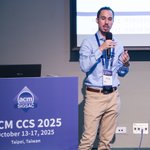
CCS has come to a close, and so has the first-ever SURE Workshop. We want to thank the authors, the PC, @moyix, our panel, and CCS for making SURE a success. We felt the support for this research area (the room was packed out for more than half the day).
See you all next year!

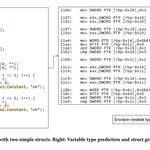
In the special sub-area of type inferencing on binary code, Noriki's work explores the recovery of structs and how different GNN architectures may have better performance.

On our last presented work at SURE, we have Noriki Sakamoto presenting "Toward Inferring Structural Semantics from Binary Code Using Graph Neural Networks"

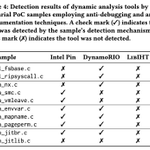
Indeed, LibIHT is more robust. They achieve better results on binaries that attempt to evade their analysis.

The magic happens at the kernel level. Their new tool LibIHT (github.com/libiht/libiht), is implemented both at the user-space and kernel-space level.
This is important for speed and robustness against evasion techniques.

Often, when static analysis tools do not work, you need to get down in the weeds of a program and start dynamically analyzing it.
In Thomason's work, he explores a way to be more robust and efficient by utilizing hardware features for dynamic analysis.
