

Son. Husband. Father. Ethical AI. Social Movements. African Development. Machine Learning. School of Electrical and Information Engineering at Wits University.
Johannesburg, South Africa
Joined April 2009
- Tweets48
- Following136
- Followers58
- Likes11


Martin Bekker retweeted

Navigating the world of AI-assisted academic writing? @surplusthinking describes 5 tiers of LLM assistance with the goal of enhancing inclusion and mitigating against outsourcing thought. #LLM # GenerativeAI #SDG4 bit.ly/4bigDQw

Martin Bekker retweeted
Ukuzulazula emhlabeni wokubhala okusizwa yi-AI kwezemfundo? I-@surplusthinking ichaza izigaba ezi-5 zosizo lwe-LLM ngenhloso yokuthuthukisa ukufakwa kanye nokunciphisa ngokumelene nomcabango wokukhishwa kwemisebenzi. #LLM # GenerativeAI #SDG4 bit.ly/4bjjqbS

Relatively speaking, EFF supporters appear to be better educated and more wealthy than ANC supporters. However, voter fluidity shows the importance of meeting evolving constituent needs. Plus, I made a cool graphic. bit.ly/3njAc6h

Martin Bekker retweeted

New open access publication out today co-authored with @surplusthinking @sasas_rsa The article examines how young people have voted in the last three South African elections and argues that youth voter behaviour is more fluid than is generally thought. tandfonline.com/doi/full/10.…

Martin Bekker retweeted

Women can no longer go to universities in #Afghanistan based on a new decision by the Taliban.
If you’re an academic, please don’t remain silent!
#WomanLifeFreedom 🇦🇫

The 2021 S-African local government elections revealed an alarming trend of decreasing voter turnout among young people. Time to move away from the binary of voter/abstainer & recognize the complexities of youth voter behaviour! #YouthVoting #SouthAfrica bit.ly/3jfAclR
Martin Bekker retweeted

"Depends on how you count them: the value of general propensity choropleth maps for visualising databases of protest incidents" by @surplusthinking.
Full open access article here: doi.org/10.1080/17445647.202…

Martin Bekker retweeted

#HSRCAwards2022 🏆 It's time to announce the winners. The HSRC and @USAf_ORG congratulate the two winners in the Research Team Category: 1) the HSRC/UJ #Covid19DemocracySurvey team (@HSRC_DCES @go2uj) and 2) The Africa Centre for Evidence team @ACE_UJ at UJ #EngagedScholarship


bit.ly/3IovJEY in which we reiterate the value of good social research in giving voice to the voiceless, and that this is all the more important during a pandemic. Policy implications follow.

ALT bar chart with the words 'a voice for the voiceless' running over the bars.
In which @CarinRunciman and I report trends in the youth vote (2021) in South African metros. There's a cool voter-fluidity chart in there, too.


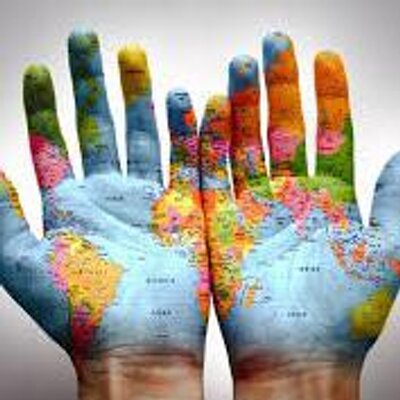

Why did so few South Africans vote in the recent elections? Read @CarinRunciman's and my take: bit.ly/33eFA0B (photo credit: @davidjolier)

ALT People protesting in front of shacks. Placard reading "No land, no house, no vote" held aloft.
Martin Bekker retweeted

“Dutch health authorities announced on Tuesday that they found the new Omicron variant of the coronavirus in cases dating back as long as 11 days, indicating that it was already spreading in western Europe before the first cases were identified in southern Africa.”
webinar < winebar. But still, if you're puzzled by voter fluidity and abstention, check out this one by @CarinRunciman and me, looking at the 2021 South African election. Register gratis at event.webinarjam.com/registe…
Martin Bekker retweeted
Really excited to share the preliminary findings from the Centre for Social Change 2021 local government election survey on voter fluidity and abstention with @surplusthinking and supported by @KAS_SouthAfrica
event.webinarjam.com/registe…
bit.ly/2YHS1A8 in which I forget to apologise to daft punk, but instead show how Machine Learning can really help Protest Event Analysis in non 'world languages'

Martin Bekker retweeted

Every day, I see people claim that protests and civil disobedience are “undemocratic”.
How do you think you got the vote?
tinyurl.com/ykcnw7wd in which I sketch out all police-reported protest in S Africa (1997–2013), showing a sharp increase, while more nuanced measures (protestors per capita) demonstrate a less urban and tumultuous phenomenon than previously theorised. DM me for a free eprint.


