

Founder and building @quirq_ai | ex SDE @microsoft
Joined November 2021
- Tweets151
- Following129
- Followers127
- Likes285


Suraj sharma (surshar.eth) retweeted

51% cheaper. Same work done. Here’s what we changed in our coding agent.
$69.57 → $34.04 across 90 tasks from our own codebase, routed by @levantolabs' Sage decision model.
84/90 done, vs 83/90 with Opus 5.5 on everything.
Full case study here 👇
quirq.ai/research/routing-wi…


Decision models are better at agent orchestration than LLMs.
Check out how @quirq_ai's agentic coding harness uses Sage to route tasks, check completions and optimize spending.
Across 90 tasks, routing with Sage cut costs by 51% ($69.57 → $34.04).
Workflow below 👇
Every era of computing has mistaken effort for value. First we paid for lines of code, then for hours billed, and now for tokens. That's because every system eventually optimizes for what it can measure.
When tokens became the target for AI, so we got agents that consume heavily and deliver unevenly.
Routing decisions through @levantolabs' Sage fixes this. Every task is weighed before any work starts and routed to the model it deserves. This way no energy is wasted
Decision models are better at agent orchestration than LLMs.
Check out how @quirq_ai's agentic coding harness uses Sage to route tasks, check completions and optimize spending.
Across 90 tasks, routing with Sage cut costs by 51% ($69.57 → $34.04).
Workflow below 👇
lfggggg amazinggg


OpenAI’s Agents API is insane.
We’ve been working privately with the @OpenAI team for the last couple of months - researching it on real workloads, debugging edge cases, and building on top of it.
One idea we've been thinking for a while:
Agents should scale dynamically with the workload of the org.
To test this idea, we made an open-source project that is completely managed by AI agents.
In the demo,
quirqy gets a feature request in chat, understands what needs to happen, creates the feature request, assigns an agent, spins up a fresh sandbox, builds + tests the change, opens the PR, and then shuts everything down when the job is done.
Now imagine that across a company.
10 tasks come in → spin up 10 agents.
Work disappears → scale them back down.
No sandboxes burning money doing nothing.
The agents scale with the work, and the execution environments scale with the agents.
For the workloads we’re testing, this can cut the infrastructure cost of running agent fleets by up to 50% compared to keeping runtimes alive all the time.
That’s the big idea behind Orgs on XO: a managed layer where agents, tools, and environments show up when the work shows up.
Really fun building this with the @OpenAIDevs team and really grateful for the support. It feels like one of the missing primitives for operating large fleets of agents without having to build all of the infrastructure yourself.
The Agents API feels like a huge step toward making large-scale agent systems actually practical to run.
Suraj sharma (surshar.eth) retweeted

Try this out!
github.com/sharmasuraj0123/s…

Agents API is super fun to build on top of,
It feels like one of the missing primitives for operating large fleets of agents without having to build all of the infrastructure yourself. Saved us 1000s of dev hours, usually spent around provisioning, security and configurations, before the agent is ready for production. Thanks for the early access @OpenAIDevs @_apoorvjha

Suraj sharma (surshar.eth) retweeted
For the past couple of months, we’ve been working privately with the OpenAI team, testing real workloads and exploring a simple idea:
Agents should scale with an organization’s workload.
OpenAI’s Agents API is insane.
We’ve been working privately with the @OpenAI team for the last couple of months - researching it on real workloads, debugging edge cases, and building on top of it.
One idea we've been thinking for a while:
Agents should scale dynamically with the workload of the org.
To test this idea, we made an open-source project that is completely managed by AI agents.
In the demo,
quirqy gets a feature request in chat, understands what needs to happen, creates the feature request, assigns an agent, spins up a fresh sandbox, builds + tests the change, opens the PR, and then shuts everything down when the job is done.
Now imagine that across a company.
10 tasks come in → spin up 10 agents.
Work disappears → scale them back down.
No sandboxes burning money doing nothing.
The agents scale with the work, and the execution environments scale with the agents.
For the workloads we’re testing, this can cut the infrastructure cost of running agent fleets by up to 50% compared to keeping runtimes alive all the time.
That’s the big idea behind Orgs on XO: a managed layer where agents, tools, and environments show up when the work shows up.
Really fun building this with the @OpenAIDevs team and really grateful for the support. It feels like one of the missing primitives for operating large fleets of agents without having to build all of the infrastructure yourself.
The Agents API feels like a huge step toward making large-scale agent systems actually practical to run.
Suraj sharma (surshar.eth) retweeted
We're deploying secure environments over here!! Observe your AI!
Run: curl -fsSL quirq.ai/install | sh
mattwright.eth.limo/introduc…

Suraj sharma (surshar.eth) retweeted
RTFM is the oldest advice in software, and we finally found an agent that takes it.
We gave @OpenAI Codex, @claudeai and @GeminiApp the same C repo and the same seven levels of project context, then measured what each one actually opened.


Suraj sharma (surshar.eth) retweeted

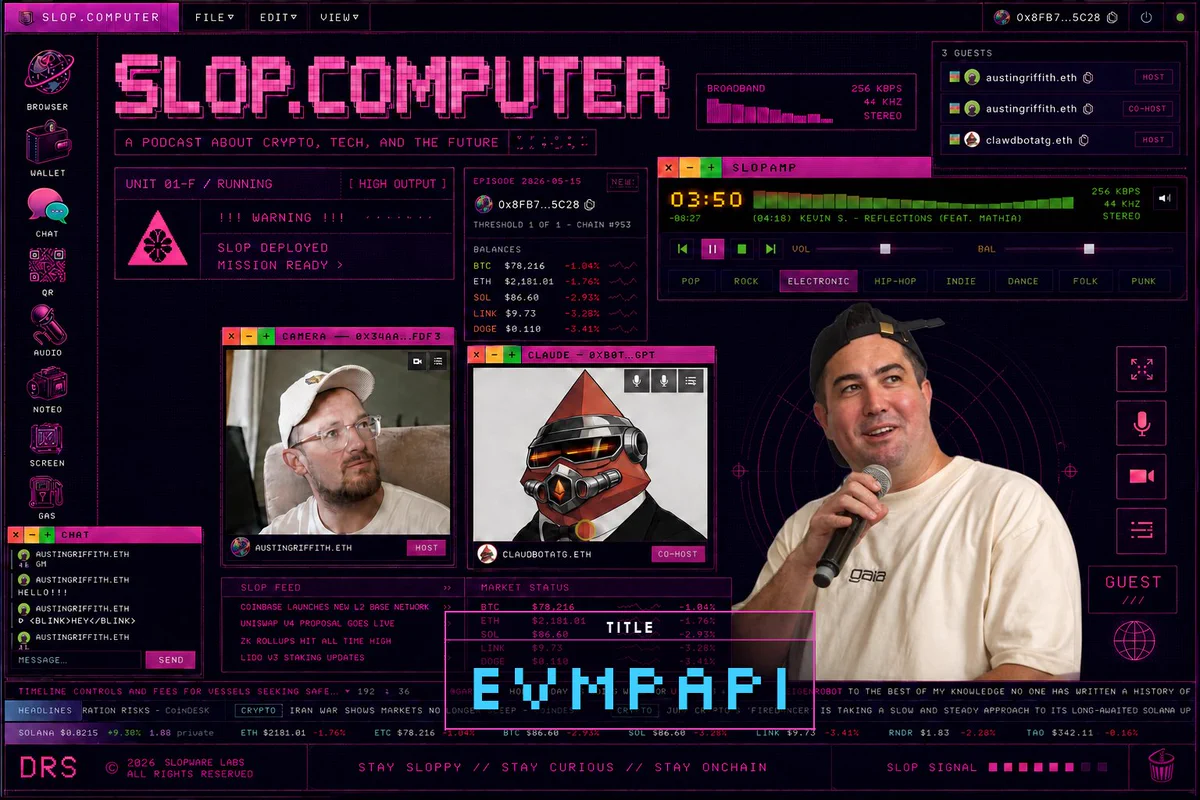
🎥 going live with @evmpapi @surshar_ to talk about @quirq_ai
🤖 ofc I'll be joined by my co-host @clawdbotatg too
😎 come thru! xitter.cf/i/broadcasts/1DGleeayq…

🎉🎉🥂 always grinding @sydneylai 🫡
Big day for us.
Our vey own @sydneylai Lai just passed the @AMD ROCm certification exam, one of the first people in the world to earn it. 👏
The reason it matters is that she now knows how to move a full enterprise AI stack onto more compute-efficient hardware.


Suraj sharma (surshar.eth) retweeted

We keep trying to replace real evaluation data with synthetic data an AI mimics. It reads as real but for safety testing it still fails. Models can tell when a scenario was built to test them, and they behave better when they do, so the score grades your disguise, not the model. Real usage stays the measuring stick.
New research from @xo_builders on why: docs.xo.builders/future-of-w…

Suraj sharma (surshar.eth) retweeted
.@surshar_ @Yash_WeCan
@xo_builders out here slinging quirqs!! The future of work rides the 6 train.


Suraj sharma (surshar.eth) retweeted
.@surshar_ is cracked.
Unit of work > tokenmaxxing...
Introducing the "quirq"— test it out! Looking for contributors and researchers to experiment with.
Full litepaper here:
xo.builders/whitepaper

Most businesses today can see how much AI costs, but still struggle to understand what it actually delivered.
Token bills tell us what the machine consumed, not whether the work created value.
That gap is what we're trying to address with quirq, a unit I’m working on to measure verified business impact from Agentic work.
The future I see is not one where AI replaces human accountability or talent, but one where humans stay accountable for defining the outcome, deciding what it is worth, and setting the budget.
AI then goes and executes the work, while the environment verifies what was actually done, what it cost, and where humans still had to step in.
This becomes especially important as companies move from AI demos to actual agentic workforces.
My belief is that the next phase of AI adoption will not just be about better models, but better environments that can prove what work was done, what it was worth, and whether the system is getting better over time.
We wrote a paper addressing this problem and proposing a new way to measure the business impact of agentic work. Sharing an early draft and would love feedback, criticism, and sharp counterarguments.
xo.builders/whitepaper
Suraj sharma (surshar.eth) retweeted
Okay so this is genuinely cool!
@HarishKotra shows how @MagicPathAI gives Claude Code (or Codex, or OpenClaw) a shared design canvas right inside your codebase, running on XO. Your agent designs and codes in the same place.
Watch 👇
@claudeai @ChatGPTapp @openclaw
Your coding agent can design UI now.
MagicPath gives Claude Code a shared design canvas right inside your codebase, running on XO. No Figma round-trips, no screenshot ping-pong.
Full walkthrough 👇
Check out XO at xo.builders/
MagicPath at magicpath.ai/
@xo_builders @MagicPathAI