
Geek, computer programmer, @Neovim founder. https://teapawt.net/t.co/AbrmxxCTqR
Joined May 2010
- Tweets358
- Following205
- Followers907
- Likes631



Thiago Padilha retweeted
One of the cool things about building a platform is that the meta-applications our customers build to map and fit their terrain are as cool or cooler than the agentic applications executing their processes
To wit: this document extraction agent optimizer coplane.com/perspectives/pro…

Thiago Padilha retweeted

“The cost of ditching a library or framework and using a bespoke solution has gone down, but not disappeared entirely. They will continue to play a substantial, but slightly different role. Well-defined conventions and abstractions will help the LLM work faster, with fewer tokens and fewer errors.”
And reduce the decision burden on humans guiding the agents. Abstractions are valuable because they hide decisions from you, leaving only the ones you actually want to make.

Topcoat is pushing the boundary of server applications with Rust. Given the discussion falling out from @dhh's keynote, I thought I would write a bit about why I'm working on Topcoat and the cool features that were recently shipped: tokio.rs/blog/2026-09-24-top…
Thiago Padilha retweeted

idk man 😂. some people still "prefer" screen vs tmux, wget vs curl, ...
and some would say the same about nvim vs zed ...
everyone is stuck in their current local optimum, trying to figure out if there's gems in the hole they dug.
however, the way Vim rediscovers choices Nvim made 10 years ago, without any apparent self-reflection, is just ... kino.
Thiago Padilha retweeted
this is the future.
planar agents can do this (albeit python - but the agents' code can suspend and resume arbitrarily just like the host program). holler if keen to check it out


Thiago Padilha retweeted

We benchmarked DeepSeek V4.1 Flash by @deepseek_ai .
It reached 98% of GPT-6 Astra’s score at 1.4% of the cost on everyday design tasks based on user requests.
Every model except Astra scored lower AND cost more.
Are open models overtaking closed ones?
Full results below ↘️

Thiago Padilha retweeted

Hugging Face has been acquired by NVIDIA
It is quite exciting to be a part of this journey! NVIDIA has been an active supporter of the llama.cpp project. For more than a year now, their engineers have actively contributed to the codebase, collaborated with the community and provisioned hardware for development and testing purposes. The local AI ecosystem has largely benefited from our joint efforts.
Going forward, llama.cpp/ggml will stick to its founding principles. One of the most important qualities of the project is to be hardware-agnostic. Therefore the development and support of all backends will continue to be done as usual - driven and shaped by the community. Open to everyone who is willing to participate. The existence of such an independent software platform is crucial for the rapid adoption of AI locally and for bringing it closer to the user.
Now, with such a significant partner as NVIDIA supporting us, in addition to the wider Hugging Face team, I believe that our long-term goals will be easier to achieve. We will remain focused on building one of the most exciting projects based on the most exciting technology of our lifetime and making it truly available to everyone in the most accessible and efficient way possible.



RT @vimota: Three weeks ago, we shared the CoPlane AI Operating Principles with the team.
So much of AI usage is context dependent, and wi…
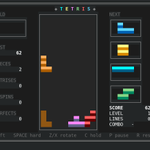
Best terminal tetris I've had an LLM create. This was built by llama.cpp + DeepSeek V4 Flash 0731 IQ3_XXS (huggingface.co/tarruda/DeepS…)

1
3
804

Thiago Padilha retweeted

also to support this point: back in 2024, 90% of my prompts were begging the AI to "think hard", "work step by step", etc.
then, the reasoning paradigm happened, I don't do that anymore
now, 90% of my prompts are begging for erasure: "simplify", "remove junk", "find ROOT causes", "STOP duct-taping", "STOP patching"
literally that's where 90% of my effort with Fable goes. I barely spend time teaching it the domain anymore. it is competent, it writes great code. but then it accumulates junk and fails. not for lacking intelligence, but for lacking a clean context. and then I need to intervene and manually trim the code myself. and then the AI works again!
that's all we're missing. I concede: deep learning works, transformers are god's chosen architecture, and they are one fix away from autonomous bots working for infinite periods of time. so if you do train models for big labs I hope you take this seriously

(sorry for the silly post just some thoughts)
so after working with Fable 24/7 for several weeks now, I now genuinely believe that, indeed, the only and one last thing between us and AGI is erasure. I can't put in words how strong this belief is forming in me. I really believe so. not architecture, not compute, not datasets. every capability that the AI currently lacks (continual learning, infinite context, long term work, etc.) is root-caused by its inability to erase, and they will all emerge naturally from a well designed erasure centric train, just like so many capabilities emerged from the reasoning paradigm
I really wish I could do something about this but I'm not in a big lab so, meanwhile, I've been thinking in ways to patch that externally. clearly begging the AI to "remove, re-derive" does NOT work, because it has a massive bias to keeping what is there. an example from today: I spent an hour *begging* Fable to simplify Bend2's parser as much as it could, and I was paying attention to one specific function, a completely moronic backtracker that should NEVER be in a well written parser. yet, it was never removed. it was untouched, survived several cleanup turns, no matter how I prompted Fable, how much I asked it to aggressively prune the code. it is simply incapable of refactoring competently because Fable just... adds, patches, and keeps
but then, I realized: it cannot keep something it doesn't see!
so, what if I do this instead?
1. ask Fable to select some code and describe what it is *for*
2. then, a script mechanically removes that code
3. the script asks Fable to fill it again, without seeing the original
4. ...?
5. AI capable of improving long term code quality
basically I think I could perhaps compensate Fable's utter inability to erase stuff by just... deleting that stuff myself. and I then ask it to re-fill. I don't need to beg, I don't need to explain how to redesign from first principles, or meaning of erasure. I can just... literally, programmatically erase it myself. it cannot preserve stupid shit it can't see
sorry this post is as dumb as it seems, but it's not stupid if it works, right? I'm exited to try it, at least.
Thiago Padilha retweeted
Co-signed.

A post of ours on vendor lock in and LLMs. We don't like the growing trend of AI companies quietly hiding your data while stripping away your control. We think that's bad for users and bad for the ecosystem. Here's are our thoughts: earendil.com/posts/session-p…

Thiago Padilha retweeted
my contribution to the discourse -
Including some ideas I think are missing from the software factory debate, with a real world example


