

Humanist, carbon intensity of energy, GHG emissions, pollution, environmental impacts, reliable energy for all, nuclear, member of Canadians for Nuclear Energy
Winnipeg, Manitoba, Canada
Joined September 2012
- Tweets9.8K
- Following1.9K
- Followers767
- Likes13.9K



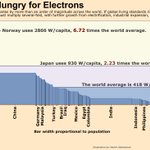



The Other Two Legs of the Stool kilovar1959.substack.com/p/t… "This article by experienced power system engineer Brad Panike provides additional details regarding the grid destabilizing effects of inverter-based resources (solar, wind, and batteries.)" @andrew_leach @maxfawcett
Todd De Ryck retweeted

Nice wind lull going on. If you follow the white Ontario demand line, we never stop running gas, so we are charging batteries with gas and then discharging that gas-generated energy during the peaks. The emissions savings of gas-powered batteries? 🤷🏻♂️ 😂


The Anatomy of a UK Blackout - The UK Electricity Grid Walking On A Tigh... youtu.be/HBUA868p9bU?si=Wg5N… via @YouTube @renewablesmiffy @mwt2008 @ret_ward @Glen4Climate
Todd De Ryck retweeted

Chris Bowen is playing games here. Cheap wholesale electricity generation is not the same as cheap electricity delivered to Australian homes and businesses. The energy regulator’s 2026–27 figures show that wholesale electricity represents just 36% of a South Australian household’s bill. Network infrastructure accounts for nearly 42%. In fact, SA wholesale costs fell 1.9%, yet network costs increased 8.6%. That’s the problem with continually celebrating wholesale prices while ignoring the full cost of delivering reliable electricity. Australians don’t pay a wholesale spot price. We pay for generation, transmission, distribution, system reliability, storage and retail services. And businesses must recover those energy costs through their products, reducing competitiveness and putting even pressure on productivity. Cheap generation is not the same as cheap, reliable, delivered power. And the labor party know that. The proper measure of energy policy is the total cost of reliable electricity to households and industry, not a selectively presented wholesale price chart.


Todd De Ryck retweeted

Belgium restored nuclear power output
Belgium’s two remaining nuclear reactors are back online, restoring 2GW of reliable power after months shut down.
Under Bart De Wever, the government has also scrapped the nuclear phase-out law and lifted the ban on new reactors. Concrete action to reverse the damage inflicted by energy-illiterate fools.
Germany threw away more than 20GW of nuclear capacity under Merkel, enough to supply roughly 30% of its electricity.
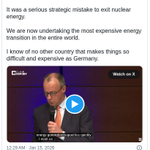
Not just IMHO, 8GW can still be recovered at minimum cost and in short order. Merz must halt dismantling and launch a serious programme to restore capacity - asap. Removed equipment can be replaced. Political paralysis is a choice.
That’s the difference between De Wever’s pragmatism and Merz’s catastrophic inability to correct past energy mistakes quickly and decisively, even with a highly capable Katherina Reiche as energy minister.
Well done, @Bart_DeWever and team.
@_FriedrichMerz @BMWE_


België en @ENGIE_energie zijn erin geslaagd de kerncentrales Doel IV en Tihange III in een half jaar volledig te reviseren, alle veiligheidsprocedures te doorlopen en weer op te starten. Terwijl sluiting gepland was.
Dat is een applausje waard, vindt u niet?
#grafiekvandedag

Todd De Ryck retweeted

Kernkraftwerke werden nach 40 Jahren Laufzeit abgeschaltet – mit dieser recht willkürlichen Annahme haben Publikationen wie der World Nuclear Industry Status Report über viele Jahre den nahenden Einbruch der weltweiten Nuklearindustrie modelliert.
Weltweit zeigt sich nun, wie absurd diese Annahme immer war. Kernkraftwerke werden zunehmend für 80 Jahre Laufzeit lizensiert, neu gebaute Anlagen meist von Beginn mit 60 Jahren Laufzeit geplant.


Todd De Ryck retweeted
An diesem Interview sind gleich zwei Dinge traurig:
1) Ausgerechnet ein Physiker erzählt Unsinn über Kernkraft.
2) Es zeigt, wie die deutsche Öffentlichkeit bei Zukunftstrends Experten zuhört, die diese (ob nun Kernkraft oder KI) nur mit spitzen Fingern anfassen, während Leuten mit Kontakt zur Praxis in den Bereichen selbst erst mal misstraut wird, und in der feinen Gesellschaft (ÖRR etc.) sind sie schon rein quantitativ ohnehin unterrepräsentiert.
Zu den Aussagen von Harald Lesch:
»Niemand, der bei Verstand ist, baut heute noch Kernkraftwerke – außer Staaten, die sie für die Plutoniumproduktion für Atombomben brauchen.«
Völliger Unsinn, weil Staaten ohne Atomwaffenprogramm Kernkraftwerke bauen und Atomwaffen-Staaten über genug Plutonium oder spezielle Produktionsreaktoren dafür verfügen. Die Behauptung von Harald Lesch ist eine typische Lüge der Anti-Atomkraft-Bewegung, mit der die Kernkraft diskreditiert werden soll.
»Die Franzosen denken über neue Kernkraftwerke nach, und in der Schweiz gibt es dieselbe Diskussion. Kernkraftwerke aber sind eine völlig veraltete Technologie, die machen im Grunde nur Wasser heiß. Leider sagen uns die Klimaprojektionen, dass wir in Zukunft mit Wasser viel sorgfältiger umgehen müssen. Es wird auch in Europa knapp.«
Kernkraftwerke können ohne nennenswerte externe Kühlwasserzufuhr betrieben werden, wenn das technisch gewünscht ist. Das gilt übrigens auch für Rechenzentren.
Man kann sogar Kernkraftwerke bauen, die für keinen ihrer Kühlkreisläufe überhaupt Wasser benötigen.

Todd De Ryck retweeted

The 2017 announcement also promoted completion in 2021.
But cost escalation and delays only count when it's nuclear power, right Malcolm & mates?


Todd De Ryck retweeted
❝economic and timing challenges❞?
As in, costs too much and takes too long?
If we apply the favourite logic of Australia's anti-nuclear campaign, pumped hydro ought to be federally banned now.


Todd De Ryck retweeted

Biggest news in safe nuclear waste disposal ever!
"This is the first operating license anywhere in the world granted for the final disposal of spent nuclear fuel."
Huge congrats to Finland for finally answering the question and implementing the solution.

🥇 A historic world first! Finland grants #Posiva the first operating licence for spent nuclear fuel final disposal. Over 40 years of work have paid off. Commissioning continues, with safety first.
🔦 Read more: posiva.fi/en/index/news/pres…
Todd De Ryck retweeted
The entirely unsurprising erosion of what new entrant grid batteries can expect to earn has come around shockingly fast... and before annual NEM share has even hit 2%.


Todd De Ryck retweeted

Aktuell exportiert Frankreich etwa 13GW Strom an die Schweiz, Deutschland, Italien, Belgien und das UK, während es 1,3GW aus Spanien bezieht.
Frankreich exportiert also mit der Leistung von 12 Gösgen.
Kernkraft bringt's.

Zoom webinar by Centre for Inquiry Canada Sunday, Nov. 8, 8pmET "“It’s Only Waste if We Waste it”. Spent Nuclear Fuel or “Nuclear Waste” is a Valuable Resource." Register at the following link centreforinquiry.ca/nuclear-… @Glen4Climate @TroyWestwood @WabKinew @SpencerFernando

Todd De Ryck retweeted

Distributed wind and solar energy means distributed destruction. In SA, most wind farms are on clapped-out sheep/cattle country. But in QLD, it is distributed devastation. Tasmania is next. Where are the Greens? Cheering for the dozers.
youtu.be/nuNwdGJXtvc?si=OvGy… via @YouTube

Todd De Ryck retweeted

Um Deutschland zu 100% mit klimafreundlichem Atomstrom zu versorgen - mit einer CO2-Bilanz von 5-12 g CO2/kWh (🇩🇪 Strom 2025: rund 340 g/kWh) - bräuchte man 95 1600-MW-Blöcke vom Typ Olkiluoto-3 für ca 1,1 Billion €, dh 1/6 der Energiewendekosten.

Laut einer KfW-Studie soll die Energiewende bis zur angestrebten (!) Klimaneutralität ab 2045 – werden wir so nicht erreichen – 6 (sechs!) Billionen (!) Euro kosten, also 290 Milliarden Euro pro Jahr. 🤯
Wie viele Kernkraftwerke wären das und welchen Teil der Erde könnten wir damit klimaneutral versorgen?
Todd De Ryck retweeted

Saksassa autotyöläiset kaduilla, sähkön hinta G20:n kärkeä, ja teollisuus siirtää kapasiteettia pois. Tätä kutsuttiin vuosia malliksi, jota Suomenkin "pitäisi seurata".
Eihän kaikki ongelmat johdu pelkästä energiapolitiikasta, mutta sen rooli on kansakunnan kaikessa muussa tekemisessä suuri (ja tätä päättäjät eivät ole ymmärtäneet kovin syvällisesti).
Kun ydinvoima ajetaan alas, korvataan tuulella, auringolla ja tuontikaasulla, ja samaan aikaan lupaillaan halpaa, vakaata sähköä teollisuudelle…
Joko tässä vaiheessa saa sanoa "I told you so?" vai vieläkö pitää odottaa lisätodisteita?
No oheisessa linkissä ihan hyviä uutisia sen suhteen että järjettömiin uusiutuvan energian tavoitteisiin oltaisiin sisällyttämässä myös muita hiilivapaita tuotantomuotoja...
Se kysymys joka itselle jää on, että miksi tämä ylipäätään on koskaan ollut mikään kysymys, mutta siitä on lähdettävä että tähän on tultu.
rapporteur.com/news/berlin-p…


Todd De Ryck retweeted

Nuclear energy and renewables get broad support for proposed EU Energy Framework for 2040 🇪🇺
A majority of EU member states are now calling for nuclear energy and renewables to be treated on equal terms in the EU's future energy framework. The French-led Nuclear Alliance, consisting of 15 EU countries, has called on the European Commission to introduce a technology-neutral clean energy target for 2040 that recognises both nuclear and renewables.
Surprisingly, Germany has also expressed support for a technology-neutral energy framework. Back in 2021, Germany joined Denmark, Austria, Luxembourg and Portugal in signing a declaration against including nuclear energy in the EU's sustainable finance taxonomy. However, its position at EU level has changed under Chancellor Friedrich Merz. In July this year, France and Germany agreed to establish a regular dialogue on the EU's 2040 energy framework, supporting equal treatment of renewable and other low-carbon energy technologies.
In a joint statement following the Franco-German Ministerial Council in July, the two countries agreed to work together "to ensure reliability and investment certainty for renewable and low-carbon energy as well as non-discrimination among all net-zero and low-carbon energy technologies in their respective contribution to European energy, sustainability and climate goals."
Meanwhile, Spain, Portugal and Luxembourg recently called for a dedicated renewable energy target for 2040 rather than a broader clean energy target. Interestingly, Denmark did not sign the letter, despite previously being among the countries opposing greater recognition of nuclear energy at EU level.
The shifting political balance could have considerable implications for EU energy policy, particularly regarding technology-neutral targets, financing and investment in new nuclear capacity. Nuclear energy is gaining political support across Europe, including in countries that have previously been strongly opposed.


Todd De Ryck retweeted

October 6, 2026 Elizabeth Brown talks about the idea of nuclear power returning to Vermont. (Yeah, she talks with me.)
podcast.show/3955816/october…

Todd De Ryck retweeted

Detailed analysis done during the DOE LNG pause showed that the effect of blocking U.S. LNG means countries turn to other LNG sources, including higher-emissions Russian gas, more coal and oil, and only a modest amount of renewables.

