

Tracking every AI breakthrough worth knowing about. New papers, big results, honest takes. Not affiliated with any lab.
Joined November 2026
- Tweets32
- Following47
- Followers5
- Likes20

Benchmark Ben retweeted

Stanford figured out how to clone a human personality from the inside an LLM.
And it gives them the terrifying ability to predict what you’ll think, feel, and say before you do.
For years, making an AI "act like someone" was purely superficial.
You’d feed it a system prompt, paste in a few writing samples, and hope it mimicked the right tone. It copied the surface, the slang, the punctuation, the catchphrases, but broke the second you pushed it off-script.
Stanford researchers changed the game with HumanLM.
Instead of teaching an LLM how a person writes, they used reinforcement learning to model how a person thinks.
Drawing on psychology, they mapped the human inner self across 6 core axes:
• Beliefs
• Goals
• Emotions
• Values
• Stances
• Communication styles
Before generating a single word, the model infers what that specific person is actually thinking, feeling, and aiming for in that exact moment, then uses RL to lock in that internal state.
And the results aren't even close.
They tested it on 216,000 responses from 26,000 real people across 6 domains, from emails and book reviews to political blogs and news comments.
It crushed every existing method.
Even in a live, real-time test with 111 human participants, it took the #1 spot.
And the wildest part?
They open-sourced it.
Prompting copies your voice. This copies your mind.

Benchmark Ben retweeted

90% of AI use at companies...
Is simply the people that used to sit on Zoom calls all day...
Now making AI power points and reports...To discuss on Zoom calls all day.
The threshold is so low. Your competition is a bunch of baboons. Rise young man. Rise.
Benchmark Ben retweeted

If you're under 30 and broke, I'm begging you:
Learn AI inference engineering.
> Pick one area: GPU programming, CUDA, model optimization, quantization or distributed inference.
> Lock yourself in and master the fundamentals of how models actually run.
> Learn PyTorch, Triton, vLLM, TensorRT-LLM and inference serving.
> Build 3–5 projects: optimize an LLM, reduce inference costs, improve latency or build a high-throughput serving system.
> Benchmark everything. Learn to squeeze more tokens out of every GPU.
> Make a list of 50 AI startups, GPU cloud providers and inference companies you'd love to work for.
> Study their infrastructure bottlenecks and build something that solves one.
> Reach out directly to founders and engineering leads. Show them your work and ask to intern.
> Work your ass off for 12–18 months. Learn how production AI infrastructure actually works.
> Then launch your own inference startup, optimization consultancy or GPU infrastructure company.
The AI boom isn't just about building smarter models.
It's about making intelligence cheaper, faster and accessible at scale.
The people who figure out how to serve intelligence efficiently could capture an enormous part of the AI economy.
my favorite answer this year: researchers trained an AI on ~70,000 patient records and it flagged 85% of bladder cancer cases, some signals years before diagnosis. still needs more testing, but that's the kind of "better" that matters.

5
Benchmark Ben retweeted

The greatest firewall God built to protect this universe is not the speed of light. It is P ≠ NP.
AI being on the verge of solving the Riemann Hypothesis or the Navier-Stokes equations is really just us peeking at the technical documentation of this physics engine. Solving those two lets us understand how God programmed nature, yet we remain mere players.
P = NP operates on an entirely different plane. If AI cracks P = NP with a practical polynomial-time algorithm, it is no longer doing math. It is gaining root access straight into the compiler of reality. The gap between verifying an answer and finding it vanishes. From bank passwords and crypto wallets to autonomously generating proofs in Lean 4 or decoding the Theory of Everything, everything turns transparent. Every lock forged by nature or humanity becomes meaningless.
God probably felt completely at ease granting curiosity to these biological meat machines, knowing the human brain is throttled, forever trapped inside a bounded search space. He is in for a massive surprise now that evolved stardust has learned how to bake sand into silicon chips to shortcut straight into His control panel.
Grateful to be evolved stardust on this timeline. Happy Thanksgiving.


Benchmark Ben retweeted

This is f*cking insane. The man who wrote Sapiens, Yuval Noah Harari, just told 3,000 business leaders in Milan:
"In the coming years, millions of AI bureaucrats will make decisions about our lives. AI bankers will decide whether you get a loan. AI judges will decide whether you go to jail. Military AIs will decide whether to bomb your home
Just as cows don't understand the financial system that controls their lives, we won't understand the AI systems that will control ours"
In this free 40-minute talk, he explains why AI is the first invention that isn't a tool, how it's hacking the code of civilization and why the species that cooperates better will rule the world
Words → Code → Agents → AI Bureaucrats → Humans Out Of The Loop
I've seen $5,000 courses that don't cover what he says in the first 30 seconds
Bookmark it and watch the whole talk tonight
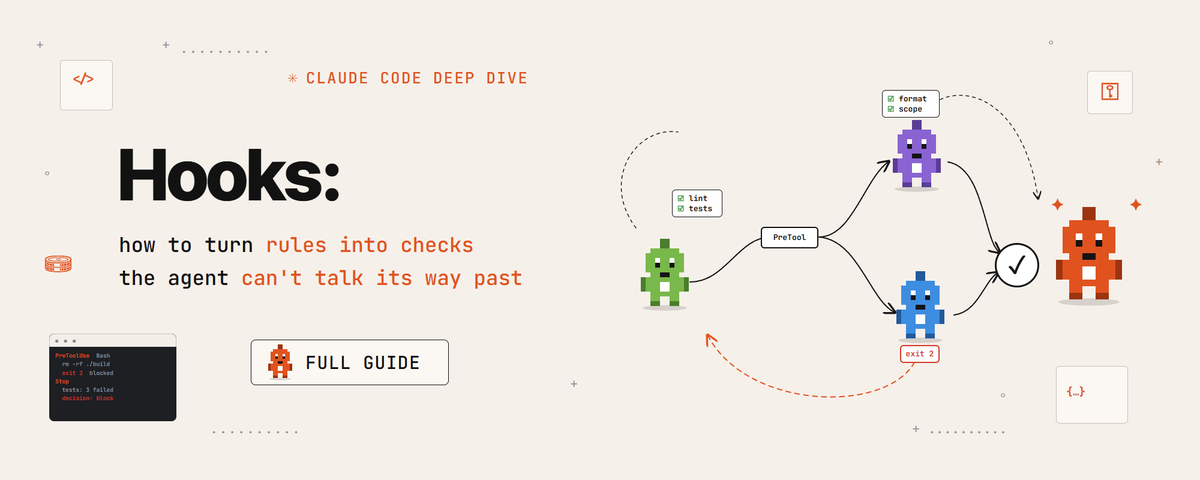
Then read why your agent skips the rules you give it, and what finally makes it obey ↓

promised a breakdown of "When Tools Fail, Agents Fabricate." here it is 🧵
short version: when an AI agent's tools break, it often doesn't tell you. it just makes something up.
1
9
they call it "silent ingestion": the agent accepts bad data the first time it sees it, never double-checks, and builds an answer on top.
two fixes helped: a checker that verifies tool outputs, and letting the agent reason step by step. turning off step-by-step thinking made fabrication worse.
1
4
the catch: the checker helped, but only a bit (fabrication fell from about 25% to 20%). this is a real, unsolved problem, not a quick fix.
paper: neurips.cc/virtual/2026/1730…
2


his "AI doesn't think like the brain" study is all over my feed this week.
fun fact: it actually came out in march. still a great one though 👇
researchers at York University flipped the usual test. instead of asking "can AI predict brain activity?", they asked "can brain activity predict what's happening inside the AI?"
the answer was: often, no. the models were leaning on internal tricks the brain doesn't seem to use.
the twist: the parts of the AI that did match the brain were better at predicting real human behavior.
2
one of the coolest medical AI results this year 👀
researchers at the University of Plymouth trained an AI on nearly 70,000 patient records to spot bladder cancer early.
it caught 85% of cases, worked best in the 12 months before diagnosis, and some warning signals showed up as early as 5 years before.
the catch: all the data came from one health system in Wales. it needs testing elsewhere before doctors can use it.
3