

Senior Solutions Engineer @hops_ai & @zencoderai | AI Agents
- Tweets2.6K
- Following1.3K
- Followers1.5K
- Likes13.6K







ALT Closed ticket cards pass through a weekly job into a shared table with columns for request, linked tickets and number of asks, with duplicates grouped.

ALT Helpdesk, CRM, Slack and Docs boxes feed one ticket view where each fact carries a colored tag showing its source.

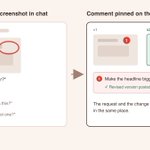
ALT Left: a chat screenshot with a red circle and scattered questions. Right: a comment pinned on the image with version 1 and version 2 side by side.

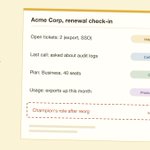
ALT A 'Call brief' card for a placeholder company, 'Acme Corp, renewal check-in'. Rows for open tickets, last call notes, plan and recent usage each carry a source and date chip. A dashed red row reads 'Champion's role after reorg: not found, ask on call'.

ALT Two panels. Left, 'Seats for three': an AI tool connects to three people, who pass pasted summaries down to five grey teammates who get it secondhand. Right, 'One agent in the doc': eight people around a shared doc with an @agent line, captioned 'Everyone works with the same agent'.

ALT A #release-planning Slack thread with a highlighted Decision message: ship v2 export behind a flag on the 28th, old export stays a month. A dotted arrow labelled 'agent writes it down' leads to a Tracker row with the same decision and a 'link to thread'.

ALT Diagram of one round trip: text is copied from a tool into an AI chat and the answer is pasted into another tool, while the sources and the question are left behind. A tally counter in the corner reads today's count.

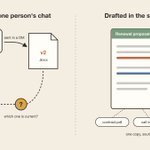
ALT Two-panel illustration. Left: a draft from a private AI chat is sent as v2.docx in a DM while a colleague holds an edited v1, leading to confusion. Right: a shared document with several cursors and linked source files.

ALT Left: the usual flow from last merge to notes written to customers asking to support reading, labeled 'support finds out last'. Center: a release notes doc with sections for what changed, how to use it, and what customers will ask, edited by engineering, docs and support at the same time.

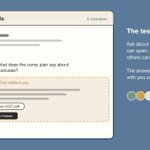
ALT Mock of a team channel. You ask the AI about a comp plan file in a shared thread; its answer is marked with a lock and 'Only visible to you' and has a Share to thread button. Side text: other members see your question, not the answer.

ALT Left: two spreadsheet exports showing 1,240 and 1,312 for the same metric, labeled 'whose sheet is newer?'. Right: a source database feeding one shared dashboard read by three people, labeled 'everyone reads the same number'.

ALT A handoff note passed from a sales figure to a support figure. Its lines, what they bought, what was promised and open issues, are tagged CRM, call notes and tickets.

ALT An escalation checklist moves from one person's head into a written skill, and from there every escalation arrives with repro steps, environment and what was tried.

ALT A chain of tools, ticket, Slack, Jira, Sentry and doc, with people at each step repeating 'So the customer...', followed by a single shared place where the handoff continues.

ALT A handwritten index card titled CALL-PREP team instructions: read CRM notes, last 3 tickets and the contract; cite the date of each fact; if two sources disagree, flag it; one page with open questions last. Three people beside it, captioned: anyone can run it, and reviewers know what to check.


ALT This week's GitHub issues and forum and Discord threads funnel through AI into a list titled Questions the docs don't answer, each item linked to its issue or thread, with docs and devrel cursors editing it.