

Associate Professor of Computer Science @KhouryCollege @Northeastern. Probably an imposter.
Newton, Massachusetts
Joined July 2020
- Tweets1K
- Following278
- Followers3K
- Likes2.5K






Huge congratulations to my student Konstantina Bairaktari for defending her thesis on Monday!🍾🥳🎊
I'm kinda jealous that Konstantina is headed to Aarhus to do a postdoc with the amazing @kasperglarsen. I can't wait to see what she does next!

Jonathan Ullman retweeted
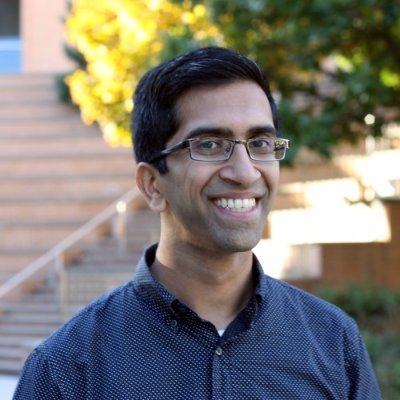
Announcing (w Adam Smith and @thejonullman) the 2025 edition of the Foundations of Responsible Computing Job Market Profiles!
Check out 40 job market candidates (for postdoc, industry, and faculty positions) in mathematical research in computation and society writ large! 1/3

📢Adam Smith, @thegautamkamath, and I are putting together a list of job market candidates in Foundations of Responsible Computing! Last year's list was a great success so we're keeping it going!
If you want to be included, or nominate someone, see link in the replies!
Link to be included: docs.google.com/forms/d/e/1F…
Last year's list if you're curious: drive.google.com/file/d/1Hyv…

🚨 Submissions for ALT2026 are now open! Submit your best work and join us in Toronto!🚨
Deadline: October 2 AoE
Conference: Feb 23-26, 2026
algorithmiclearningtheory.or…
Jonathan Ullman retweeted

Very happy to share our paper with Adam Smith and Jon Ullman (@thejonullman) on the “sample complexity” of membership inference (MIA).
We ask: Is the number of data typically used in practice enough to build strongest possible MIAs? 🧵
link: arxiv.org/abs/2508.19458

Jonathan Ullman retweeted

At least as a PhD student, working 80 or even 100 hour weeks is more about just being anxious all the time and not really about actually working.

I really relate to the part about thinking your results were barely worthy of an email to the authors. I have a two papers from my PhD days where I told my advisor "I have a small observation but I'm not sure what to do with it" and he informed me that it was already a paper.

How did I end up a Mathematician?
(long story)
As a child, my dad said to me "our family isn't good in math" and I, preferring soccer and dating to anything involving brain work, accepted this as truth.
As an undergrad I studied Biology and CS, to go into Neuroscience (I ended up marrying the daughter of one of my esteemed professors. But that's a different story).
I realized I really liked the math courses, and hated anything applied - be it programming or biology labs. In fact, every semester opening I went to the Dean of undergrad at the time (Prof. @noamnisan, now an advisor to StarkWare) to negotiate replacing programming courses with more math (which is why I don't know programming till this day; even though Intro to C++ was the first course I taught as an Assistant Professor. But that, too, is a different story.)
Then, as a graduate student, I wanted to go into Machine Learning, but the coveted Professor (Tali Tishby, RIP), had already a gazzilion students.
I was sitting in a course on Computational Complexity taught by a Postdoc, when he was replaced for one lecture by one Avi Wigderson. I knew nothing about him at the time (his picture did appear on posters, as he just received the Nevanlinna Prize, but as a dumb young graduate student I didn't know what that means).
Avi spoke about how some folks are now trying to formally prove that it's impossible to settle the P vs. NP conjecture. And I was mesmerized by this. So I told him: I want to study this as my MSc. project.
A period of courting started. Avi wasn't sure I'm a good fit for him (my math grades were ok, but I never was the straight-A student type). So, he dropped a book about Proof Complexity on me, saying: Read and summarize it to me.
I read that book like 3 times cover to cover and didn't understand a word beyond the intro chapter (today I know that's more likely the fault of the author, not my own stupidity. But that's another story).
A few weeks later, still not understanding a word on the subject matter, Avi asked to explain a recent paper on "degree and size of Polynomial Calculus proofs". We sat in his home, I explained.
At some point he asked: "Why can't this be applied to the Resolution proof system?" (Resolution is The most important and basic propositional calculus proof system). I squinted, thought a bit, and said "Oh, but it can, here's how", and applied the same proof method to Resolution.
Avi got very excited.
I said "let's send an email to the authors of the previous paper", thinking that if I understand this stuff, it can't really be more than email-worthy.
Avi insisted we write it up as a paper. Every few days I tried to convince him to drop it and just send an email, but he was adamant, and I listened.
Good thing I did. It ended up as my most cited and impotant paper prior to the STARK/SNARK ones.
After that paper, a few others came along. With each one, I was sure it's only an email-worthy observation, not Deep Math. I saw all these other papers, that were so hard to understand, and by comparison my own stuff was so clear and simple.
It took me many years to realize that this is how math progresses. You spend a lot of time internalizing some theoretical concepts, and then one day you "see it". And then it seems to you all clear and simple. But its clear and simple only to you. To others, its complicated.
Today, when I have to go and look back at some of my earlier papers, I find myself squinting, scratching my head, and saying "damn, that's some serious stuff, how did they come up with this?" :-)
After those initial math breakthroughs, Avi offered I do not do just an MSc but actually a PhD, which is how I ended up a theoretical computer scientist (which is a kind of mathematician).
THE END.
Jonathan Ullman retweeted

How did I end up a Mathematician?
(long story)
As a child, my dad said to me "our family isn't good in math" and I, preferring soccer and dating to anything involving brain work, accepted this as truth.
As an undergrad I studied Biology and CS, to go into Neuroscience (I ended up marrying the daughter of one of my esteemed professors. But that's a different story).
I realized I really liked the math courses, and hated anything applied - be it programming or biology labs. In fact, every semester opening I went to the Dean of undergrad at the time (Prof. @noamnisan, now an advisor to StarkWare) to negotiate replacing programming courses with more math (which is why I don't know programming till this day; even though Intro to C++ was the first course I taught as an Assistant Professor. But that, too, is a different story.)
Then, as a graduate student, I wanted to go into Machine Learning, but the coveted Professor (Tali Tishby, RIP), had already a gazzilion students.
I was sitting in a course on Computational Complexity taught by a Postdoc, when he was replaced for one lecture by one Avi Wigderson. I knew nothing about him at the time (his picture did appear on posters, as he just received the Nevanlinna Prize, but as a dumb young graduate student I didn't know what that means).
Avi spoke about how some folks are now trying to formally prove that it's impossible to settle the P vs. NP conjecture. And I was mesmerized by this. So I told him: I want to study this as my MSc. project.
A period of courting started. Avi wasn't sure I'm a good fit for him (my math grades were ok, but I never was the straight-A student type). So, he dropped a book about Proof Complexity on me, saying: Read and summarize it to me.
I read that book like 3 times cover to cover and didn't understand a word beyond the intro chapter (today I know that's more likely the fault of the author, not my own stupidity. But that's another story).
A few weeks later, still not understanding a word on the subject matter, Avi asked to explain a recent paper on "degree and size of Polynomial Calculus proofs". We sat in his home, I explained.
At some point he asked: "Why can't this be applied to the Resolution proof system?" (Resolution is The most important and basic propositional calculus proof system). I squinted, thought a bit, and said "Oh, but it can, here's how", and applied the same proof method to Resolution.
Avi got very excited.
I said "let's send an email to the authors of the previous paper", thinking that if I understand this stuff, it can't really be more than email-worthy.
Avi insisted we write it up as a paper. Every few days I tried to convince him to drop it and just send an email, but he was adamant, and I listened.
Good thing I did. It ended up as my most cited and impotant paper prior to the STARK/SNARK ones.
After that paper, a few others came along. With each one, I was sure it's only an email-worthy observation, not Deep Math. I saw all these other papers, that were so hard to understand, and by comparison my own stuff was so clear and simple.
It took me many years to realize that this is how math progresses. You spend a lot of time internalizing some theoretical concepts, and then one day you "see it". And then it seems to you all clear and simple. But its clear and simple only to you. To others, its complicated.
Today, when I have to go and look back at some of my earlier papers, I find myself squinting, scratching my head, and saying "damn, that's some serious stuff, how did they come up with this?" :-)
After those initial math breakthroughs, Avi offered I do not do just an MSc but actually a PhD, which is how I ended up a theoretical computer scientist (which is a kind of mathematician).
THE END.
I think this goes the other way too. Part of the social contract R1 universities have is that the majority of our world-class teachers should do research and do research well.
My own university/department @KhouryCollege has really badly let down the side in this regard.

Jonathan Ullman retweeted

A reminder that part of the social contract R1 universities have with the public is that not only should we produce fantastic research output, but our world-class faculty should teach and teach well.


On July 3rd, 2015, I left NYC for the last time, vowing to never to go back for any reason. I meant to mark the 10yr anniversary on here but couldn't bring myself to until now. Every minute I spent in that city was a living hell and I still have PTSD from it even now.
This kind of advice is a huge pet peeve of mine. People succeed in all different ways. Phrases that I've found help me give better advice:
-"Doing ... did/didn't work for me"
-"I've seen people have success doing ..."
-"If your goal is ... then you might want to ..."

Super proud of our students @KhouryCollege!
Special shoutout for my former student Lydia @zakynthinou and my postdoc Mahdi @HaghifamMahdi!
Only problem is that I'm going to need some new students/postdocs to work with😉

After building and burnishing their research chops at Khoury College, nine PhD graduates and former postdoctoral fellows are beginning their careers as professors this year.
To hear more about their stories: bit.ly/4eBLedy

ALT Graphic to promote a Khoury News Article with the heading, "Khoury PhD students, postdocs make the jump to professor in 2025" as well as subheading that reads "By Milton Posner". Above the heading is an image of all of the PhD students highlighted within the article.
Jonathan Ullman retweeted
It's time for the Theory Jobs spreadsheet for 2025! The theory CS community crowdsources who accepted which jobs every year.
Link in next post 1/2

Jonathan Ullman retweeted
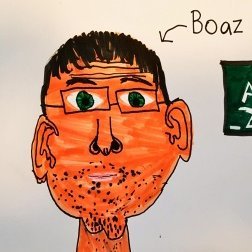
Wrote today in the @nytimes about the dangers of blurring scholarship and activism.


Jonathan Ullman retweeted
No university I am aware of is devoted to partisan activism. But it’s time that university leaders stop letting “the tail wag the dog” and allow a minority of faculty that put activism ahead of scholarship to taint the whole institution.
This minority is even tinier if you measure by the amount of students they teach or research they do.
