

Medical Scientist | DOHaD | Sophrologist How health today shapes future generations Preconception • Pregnancy • Birth • Early Life Founder, The Womb Effect®
Joined November 2013
- Tweets6.2K
- Following548
- Followers624
- Likes21.2K






Pinned Tweet
What if the foundations of lifelong health begin long before birth?
Yet most conversations about health begin decades too late.
The science tells a different story.
🧵👇
1
3
417
A peanut allergy diagnosed in infancy isn’t always permanent.
New research suggests that some babies believed to have a peanut allergy may be able to tolerate peanuts by their first birthday.
But it’s important to distinguish between outgrowing an allergy and never having had a confirmed allergy in the first place.
Here’s what parents should know:
1. A positive allergy test doesn’t always mean a child has an allergy.
Skin-prick tests and peanut-specific IgE blood tests measure sensitisation. On their own, they don’t confirm a clinical allergy.
2. A reaction to food isn’t automatically an allergy.
Symptoms, timing, medical history and appropriate testing all matter.
3. Allergies can change during childhood.
Some children develop tolerance over time, while others remain allergic. The likelihood of an allergy resolving varies between foods.
4. An oral food challenge can help clarify the diagnosis.
When appropriate, a medical professional-supervised oral food challenge can help determine whether a child can tolerate a suspected allergen.
5. Early introduction and allergy treatment are different things.
Introducing peanut-containing foods during infancy, when a child is developmentally ready, can reduce the risk of developing a peanut allergy.
But introducing peanuts to a child with a suspected or confirmed allergy calls for an individual medical assessment.
6. No single test can predict the future.
Allergy test results, clinical history, and changes over time must be considered together.
The important lesson?
An allergy label should be accurate and revisited when appropriate.
A diagnosis made in infancy can affect a child’s diet, family life and relationship with food for years.
Early development is dynamic, and our approach to childhood allergy should reflect that.
The Journal of Allergy and Clinical Immunology: In Practice (2026).
10
Being born at term doesn’t necessarily mean development is complete.
A new population-based study in AJOG examines whether the exact week of delivery, even within the full-term period, is associated with children’s long-term health.
We often think of birth as the end of pregnancy, but biological maturation doesn’t follow a simple calendar.
Perhaps birth timing matters not only for survival, but also for health trajectories long after delivery.

Gestational age at full-term delivery and long-term offspring morbidity in low-risk pregnancies: a population-based cohort study ow.ly/Wvpy5105IgV
4
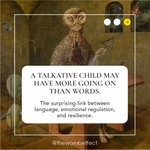
A talkative child may have more going on than just words.
Language development isn’t simply about communication. It may also help children understand their emotions, manage frustration, and seek support.
Research offers an interesting clue as to why. 🧵

1
8
Why can words matter?
A child who can say “I’m frightened”, “I’m angry” or “I need help” has more ways to express distress.
Language may help children shift their attention, seek comfort and make sense of their experiences.
But the relationship is complex: stronger language skills don’t guarantee better emotional regulation.
1
1
And this is where the environment makes a difference.
A baby babbles, and someone responds.
A toddler points, and someone names what they see.
A child asks a question, and someone listens.
These everyday exchanges help support language development.
The goal isn’t to raise the most talkative child. It’s to create an environment where every child’s voice matters.

1
One nap schedule doesn’t suit every child, and science shows why.
A new study that followed 188 children from 12 months to 4.5 years found a surprising pattern: children under two napped less often on childcare days, while children over four napped more.
In other words, the link between childcare and napping reversed as children got older.
Why does this matter?
Children’s sleep needs change as their brains develop, but childcare schedules often stick to standardised routines.
Perhaps sleep schedules should adapt to children’s development, rather than expecting every child to follow the same routine.
doi.org/10.1016/j.sleep.2026…
45
The placenta is more than a barrier between mother and baby.
New research shows that immune cells from both can contribute to the severe placental inflammation linked to some preterm births.
Pregnancy is more than two biological systems coexisting. It is two systems communicating.

Immune cells from both mother and baby drove aggressive placental inflammation in preterm cases, while full-term cases had more cells that support healing and control inflammation. @wustl @sciencetm medicalxpress.com/news/2026-…

12
Semen has its own microbiome.
Emerging research suggests its microbial composition may be linked to sperm quality, inflammation, and reproductive health.
We talk extensively about the vaginal microbiome.
Perhaps it’s time to pay more attention to the male reproductive microbiome, too.
#MaleFertility #Microbiome #TheWombEffect
15
What if pregnancy leaves some of another person’s cells in your brain?
During pregnancy, cells pass between mother and baby. Some may persist for decades, even in the brain.
Scientists are still investigating what these microchimeric cells do.
The biological connection between mother and child doesn’t end at birth.
🤖 Made with AI

14
We measure ageing in years.
But might ageing begin before birth?
A study of nearly 2,500 Norwegian women found that those born small for gestational age had greater epigenetic age acceleration in adulthood, according to one molecular measure.
Perhaps the science of ageing needs to start with the science of development.

12
Two babies can both be six months old, but are their organs the same biological age?
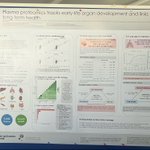
At the European DOHaD conference, I came across fascinating research on how different organs develop during infancy.
Using blood samples from 613 children, researchers analysed 5,416 proteins to estimate the developmental maturity of organs such as the brain, lungs, liver and heart.
They found that organs do not necessarily develop at the same biological pace, and differences in estimated developmental age were associated with health outcomes years later.
🧠 A more advanced brain proteomic age at six months was associated with increased neurodevelopmental risk at age 10.
🫁 A more advanced lung proteomic age was associated with an earlier onset of asthma and a greater risk of developing it.
The researchers also identified distinct metabolic signatures associated with these developmental patterns.
But there is an important distinction.
Being biologically older does not necessarily mean being developmentally better.
During infancy, organ maturation follows complex, carefully timed processes.
A faster molecular trajectory may not always be beneficial.
Could understanding the biological pace of organ development help us identify vulnerability earlier, rather than waiting for disease to appear?
Perhaps biological development can tell us how our health trajectories are unfolding.

23
What if one of the most powerful ways to improve newborn survival isn’t medicine, but financial security?
In Flint, Michigan, a programme called Rx Kids gives families $1,500 during pregnancy and $500 each month throughout infancy.
A new study reports striking changes after the programme was introduced.
Neonatal mortality fell by 50%.
Deaths during the first seven days of life fell by 74%.
Earlier research also found reductions in preterm births, low birth weight and neonatal intensive care admissions.
The programme addresses something medicine often overlooks: the economic conditions surrounding pregnancy.
Financial insecurity can affect nutrition, housing, stress, access to healthcare and families’ ability to provide a safe environment for a newborn.
Sometimes the best opportunities to improve health early in life lie outside the hospital.
The environment in which a pregnancy unfolds matters.
And sometimes improving that environment means giving families the resources they need.
jamanetwork.com/journals/jam…

21
Dr. Nauf AlBendar retweeted

Major chemical companies knew plastic particles could infiltrate human tissue and remained silent for decades as they accumulated in our bodies, according to a Stanford epidemiologist who reviewed internal industry memos obtained by The Times. Read the full story
latimes.com/environment/stor…

Dr. Nauf AlBendar retweeted

Something strange is happening to students who use AI over long stretches of time. Their assigned work gets better, and their thinking gets worse. psychologytoday.com/us/blog/…

Dr. Nauf AlBendar retweeted

Parts of plants that are usually wasted, from kiwi skin to squash seeds, contain more fibre than the parts of the plant we do eat newscientist.com/article/259…

A premature baby’s brain isn’t simply developing more slowly; it may be following a different developmental trajectory.
A new study in Science found that premature birth altered cell maturation in the cerebellum, a brain region involved in movement, language and cognition.
Remarkably, babies of the same postmenstrual age could be at different stages of cellular development.
This suggests that reaching the expected due date does not necessarily mean the brain has reached the same biological state as the brain of a baby born at term.
The findings could help researchers develop more individualised neonatal care, guided by biological maturity rather than age alone.

Premature birth may do more than interrupt brain development—it may fundamentally alter how the cerebellum matures into early childhood, according to a new study in Science.
The findings reveal how the timing of birth shapes brain cell development and neural connections, offering new insight into the lasting neurodevelopmental effects of prematurity.
📄: scim.ag/47OzVMI
#SciencePerspective: scim.ag/4yLJRkY

23
Does your ethnicity influence what happens during pregnancy and birth outcomes?
Yes, but probably not for the reason you think.
Pregnancy outcomes vary across populations worldwide.
The question is why.
🧵
1
1
24
The healthcare system itself can reduce or increase risk.
Research has documented inequalities in communication, discrimination, symptom recognition, and access to appropriate care.
Pregnancy outcomes aren't determined solely by the woman carrying the baby; they also depend on the systems surrounding her.
1
5
Perhaps the more useful question isn’t:
“Which ethnicity has the healthiest pregnancy?”
It’s:
“Which factors behind these differences can we change?”
Genes interact with their environments.
Social experiences can shape biology.
Healthcare can influence outcomes.
Population statistics describe risk, not destiny.
5