

#zentensivist, EMCrit Teammate, Proud daddy and husband. BJJ🟪. ICU Santa Cabrini Hospital.
Montreal, Canada
Joined August 2013
- Tweets24.6K
- Following1.1K
- Followers11.8K
- Likes24.1K




Philippe Rola retweeted

Over Shabbat dinner last Friday in Las Vegas, a sweet lady turned to me and said: "So Rawan, your mother tongue is Farsi, right?"
I looked at her, speechless. Finally I said, "Why would it be? I'm half Syrian, half Lebanese. Arabic is my mother tongue."
"Okay, so these are two different languages," she said.
I would have thought that since 9/11, Americans knew Arabic is a language: the language of the Quran and of the Arab world.
I didn't like my reaction. Jet-lagged or not, I told myself, I should find the patience to respond gracefully. Then another American Jew asked me to explain the difference between Sunni and Shia Muslims. I told him to ask the internet.
I could be nicer, but I don't want to be. I am running low on patience.
Political Islam destroyed the Middle East we escaped, and it intends to take over the West where we settled. Every once in a while, a horrific attack makes the news. We watch the culture transform. We watch our backs, and we watch what our children are taught.
October 7 was a declaration of war on Western civilization. Yet most people still struggle to understand why the US attacked Iran. They can't connect the dots, not even between Hamas and the IRGC, or between Qatar and progressive students' support for the Palestinian cause. The masses are enchanted, and they are opening the doors to the enemy voluntarily. Across from the Bundestag, a German throws his flag on the ground and raises the Palestinian flag in its place. Across Europe, feminists side with the misogynistic regime in Iran.
And in our bastion of freedom, the United States, Mamdani is mayor of New York and El-Sayed has just been elected the first Muslim senator in American history. Many Michigan Jews refused to vote for him. But nearly six in ten of those who voted early still did. Atheists are siding with jihadists.
Since October 7, I have spent endless nights in dusty hotels around the world instead of in my comfortable home with my child. We are at war, and I owe him a fight for his future, and for the future of his children and their children. I am doing all I can to share my insights, raise awareness and say out loud what many won't. Including hundreds of hours on planes, in trains, on hair and make up. Trivialities, logistics, emails and comments.
So help me, will you? Since we are at war, at least take the time to learn the basics, so you can understand what is happening around us, to us, and ultimately to future generations.
Learn about political Islam and its history. Learn about the feud between Sunnis and Shia. Learn what happened in Iran in 1979. Learn about the Jews: their relationship with the Prophet Muhammad, their Temple, their Jerusalem. Learn about Al-Aqsa and why Islamists are obsessed with that mosque.
If I couldn't be bothered to learn, I would have supported the Palestinian cause. It's simple, easy, convenient and popular. It's also dangerous, because in the name of the Palestinian cause we will be stripped of basic freedoms you take for granted. Sooner or later, you too will lose the luxury of ignorance. By then, lamenting won't help us much.

Newsflash: the problem with Quebec’s healthcare system is political and administrative, it’s got nothing to do with doctors. Just pull up a chart of the massive growth in healthcare administration over the past 20 years.

Opinion: My son is studying medicine. It’s opened my eyes to Quebec’s doctor problem montrealgazette.com/opinion/…

1
3
652
Philippe Rola retweeted

Full breakdown on Roon: roon.com/doctors/posts/W4wpH…

Philippe Rola retweeted

All meat found at @costcocanada ,
in Ottawa (Gloucester),
is now Halal.
No longer buying any meat products at @Costco
Who is pushing this on western nations!
The Praxis Founding Member window is closing soon.
We’re building something different.
Not just lectures and courses, but an international community where clinicians exchange ideas, challenge dogma, discuss cases, and collaborate to advance bedside medicine.
Founders get our highest level of access, including the full VExUS course, AI coaches, conference archives, live discussions, and direct faculty interaction.
🔒 Your Founding Member rate stays locked in as long as you remain a member.
We’re keeping this group small because meaningful interaction matters. Less than a handful of spots left.
**Last chance to be part of the founding chapter. But no worries the Collaborative level is awesome too. **
praxis-project.com

Philippe Rola retweeted

#ICU / #ED Evidence #007: What if we bring ECMO to the patient instead of bringing the patient to ECMO?
We know ECPR is a race against time, but in most systems we still transport a patient receiving CPR to the hospital before ECMO can even start. The OnScene study, published today in NEJM, asked whether bringing the ECMO team to the patient could change that.
The investigators studied 231 patients ≤ 50 years old with refractory out-of-hospital cardiac arrest in a nationwide Dutch helicopter EMS system. Patients attended by HEMS with prehospital ECPR capability were compared with those receiving conventional care.
The results are hard to ignore:
Survival to hospital discharge: 40% vs 20%
Favorable neurologic outcome at 6 months: 36% vs 13%
And here is probably the number that matters most: median time to ECMO blood flow was 45 minutes with prehospital ECPR (83 patients) vs 77 minutes among the 19 patients who eventually received in-hospital ECPR in the conventional-care group.
That is 32 minutes. In refractory cardiac arrest, 32 minutes is a very long time. The comparator group is tiny and the comparison is nonrandomized, so I would read this as a very interesting signal, not proof that the location of cannulation made the difference.
Before we start putting ECMO machines in every helicopter, though, this was not a randomized trial. The patients were highly selected: only 231 ultimately entered the analysis from 3,362 study-related HEMS dispatches for suspected cardiac arrest. Shockable rhythms were more common in the intervention group (89% vs 75%), neurologic outcome was assessed unblinded, residual confounding is very possible, and cannulation failed in 15% of prehospital attempts (vs 17% of hospital attempts).
So I don’t think OnScene proves that prehospital ECPR is superior to in-hospital ECPR. I think it raises a more interesting question: are we focusing too much on where ECPR happens and not enough on how quickly we establish effective extracorporeal blood flow?
The accompanying editorial by Dr. Demetris Yannopoulos (@DYannopoulos), one of the pioneers in the field, makes another important point. Instead of sequential care (EMS resuscitates, transports, then the hospital prepares for ECPR), perhaps we should think in parallel: identify potential candidates early, mobilize the ECPR team while conventional resuscitation continues, and have the receiving hospital preparing at the same time.
Sometimes the fastest route to ECMO will be bringing the patient to the team. Sometimes it may be bringing the team to the patient. Geography, resources and expertise will matter.
The goal isn’t earlier cannulation. It’s earlier successful reperfusion. That, to me, is the real message of OnScene.
If your system could get ECMO flowing within 45 minutes, would you build it? And who would you pick?
And one last thought: if AI is the hottest thing in tech and finance these days, ECMO is surely the hottest thing in Critical Care.
#ECPR #ECMO #CardiacArrest #FOAMcc #Foamed


Philippe Rola retweeted

The American College of Pediatricians just put out a 🔥🔥🔥 statement calling out all the major medical associations by name for pushing the gender transition craze on kids.
They ask for these groups to "IMMEDIATELY stop the promotion of social affirmation, puberty blockers, cross-sex hormones and surgeries for children and adolescents who experience distress over their biological sex."
The full @ACPeds statement ⬇️
"Therefore, given the recent research and the revelations of the harmful approach advocated by WPATH and its followers in the United States, we, the undersigned, call upon the medical professional organizations of the United States, including the American Academy of Pediatrics, the Endocrine Society, the Pediatric Endocrine Society, American Medical Association, the American Psychological Association, and the American Academy of Child and Adolescent Psychiatry to follow the science and their European professional colleagues and immediately stop the promotion of social affirmation, puberty blockers, cross-sex hormones and surgeries for children and adolescents who experience distress over their biological sex. Instead, these organizations should recommend comprehensive evaluations and therapies aimed at identifying and addressing underlying psychological co-morbidities and neurodiversity that often predispose to and accompany gender dysphoria. We also encourage the physicians who are members of these professional organizations to contact their leadership and urge them to adhere to the evidence-based research now available.”
Next level pearls here!!!

I just updated the IBCC chapter on pulmonary vasodilators, here are new pearls I learned 🤯
🫁 The dosing of inhaled pulmonary vasodilators is a little different for ARDS versus for treatment of RV failure. In ARDS, you're shooting for selective vasodilation of the best-ventilated alveoli to maximize V-Q matching, so you want a mid-range dose (too high and you start vasodilating the worse-ventilated alveoli). In RV failure you're trying to vasodilate every alveoli as much as possible to bring down the pulmonary vascular resistance, so go high.
🫁 Nebulized milrinone causes selective pulmonary vasodilation for ~20-30 minutes, then gets systemically absorbed. One dose of nebulized milrinone in the OR is great, but scheduling milrinone nebs q4hr doesn't make pharmacological sense (it doesn't achieve consistent pulmonary vasodilation and there are risks of systemic accumulation in renal failure). IMHO milrinone nebs don't have much role in ICU. If you want to give milrinone just give it IV.
🫁 There's a gradually escalating amount of evidence supporting combined simultaneous use of inhaled epoprostenol and inhaled NO to treat RV failure. See the article by Andre Denault below. This may be a good option for RV failure before escalating to an Impella RP Flex. It's pretty easy to trial a patient on inhaled pulmonary vasodilators - if they work great, if they don't work you haven't lost much.
#1/2, link in next post.


Philippe Rola retweeted
Addressing the efficacy or lack thereof of vasopressin in septic shock in "The Case of the Vanishing Premise". new blog post. emcrit.org/emnerd/the-case-o…
🤖 Made with AI

Oh yeah!
Fresh IBCC chapter: APRV guide 😁
My first APRV guide came out in 2017. I updated it during COVID in 2020. I just completely overhauled it again.
Two APRV guides were published recently (one by @TheEMNerd in 2022 and one by Nieman et al. 2026). Both guides focus on how to get patients initiated on APRV. My APRV guide is consistent with them. There is a general consensus about how to get APRV started.
Currently, the most challenging & controversial aspect is how to wean *off* APRV. Much less is written about this. I've described two possible approaches based on the best data that we have (Zhou et al. RCT) and basic vent weaning principles. But this remains murky.
Some approaches to weaning off APRV involve a gradual removal of ventilator support, without spontaneous breathing trials. This strategy isn't consistent with modern techniques of ventilator liberation (i.e., providing comfortable non-fatiguing support with intermittent spontaneous breathing trials).
APRV is a great rescue modality currently. However, for APRV to demonstrate benefit in clinical trials, proper attention is needed to rapid APRV weaning. Inadequately aggressive weaning strategies will destroy the ability of APRV to improve ventilator-free days & ICU length-of-stay.
I'd love to hear about folks' experience in terms of APRV weaning.
The role of APRV in ARDS remains controversial. It was hotly debated during COVID in a partisan fashion without any real conclusion. Hopefully further RCTs will clarify its precise use. This is tough because outcomes depend on how APRV is set (not simply the binary presence/absence of APRV).
Aside from ARDS, APRV is pretty fabulous for mucus plugging and atelectasis. Physiologically, its ability to produce biased airflow that promotes secretion clearance is simply unparalleled (slow inspiration & fast expiration clears secretions out of the airway).
So regardless of where we land with APRV for ARDS, I do think that there will always be some use for APRV in critically ill patients. So this guide will hopefully be evergreen.
(#1/2, link next)

1
6
1,289
Oh yeah!
Fresh IBCC chapter: APRV guide 😁
My first APRV guide came out in 2017. I updated it during COVID in 2020. I just completely overhauled it again.
Two APRV guides were published recently (one by @TheEMNerd in 2022 and one by Nieman et al. 2026). Both guides focus on how to get patients initiated on APRV. My APRV guide is consistent with them. There is a general consensus about how to get APRV started.
Currently, the most challenging & controversial aspect is how to wean *off* APRV. Much less is written about this. I've described two possible approaches based on the best data that we have (Zhou et al. RCT) and basic vent weaning principles. But this remains murky.
Some approaches to weaning off APRV involve a gradual removal of ventilator support, without spontaneous breathing trials. This strategy isn't consistent with modern techniques of ventilator liberation (i.e., providing comfortable non-fatiguing support with intermittent spontaneous breathing trials).
APRV is a great rescue modality currently. However, for APRV to demonstrate benefit in clinical trials, proper attention is needed to rapid APRV weaning. Inadequately aggressive weaning strategies will destroy the ability of APRV to improve ventilator-free days & ICU length-of-stay.
I'd love to hear about folks' experience in terms of APRV weaning.
The role of APRV in ARDS remains controversial. It was hotly debated during COVID in a partisan fashion without any real conclusion. Hopefully further RCTs will clarify its precise use. This is tough because outcomes depend on how APRV is set (not simply the binary presence/absence of APRV).
Aside from ARDS, APRV is pretty fabulous for mucus plugging and atelectasis. Physiologically, its ability to produce biased airflow that promotes secretion clearance is simply unparalleled (slow inspiration & fast expiration clears secretions out of the airway).
So regardless of where we land with APRV for ARDS, I do think that there will always be some use for APRV in critically ill patients. So this guide will hopefully be evergreen.
(#1/2, link next)
2
418
Philippe Rola retweeted
Fresh IBCC chapter: APRV guide 😁
My first APRV guide came out in 2017. I updated it during COVID in 2020. I just completely overhauled it again.
Two APRV guides were published recently (one by @TheEMNerd in 2022 and one by Nieman et al. 2026). Both guides focus on how to get patients initiated on APRV. My APRV guide is consistent with them. There is a general consensus about how to get APRV started.
Currently, the most challenging & controversial aspect is how to wean *off* APRV. Much less is written about this. I've described two possible approaches based on the best data that we have (Zhou et al. RCT) and basic vent weaning principles. But this remains murky.
Some approaches to weaning off APRV involve a gradual removal of ventilator support, without spontaneous breathing trials. This strategy isn't consistent with modern techniques of ventilator liberation (i.e., providing comfortable non-fatiguing support with intermittent spontaneous breathing trials).
APRV is a great rescue modality currently. However, for APRV to demonstrate benefit in clinical trials, proper attention is needed to rapid APRV weaning. Inadequately aggressive weaning strategies will destroy the ability of APRV to improve ventilator-free days & ICU length-of-stay.
I'd love to hear about folks' experience in terms of APRV weaning.
The role of APRV in ARDS remains controversial. It was hotly debated during COVID in a partisan fashion without any real conclusion. Hopefully further RCTs will clarify its precise use. This is tough because outcomes depend on how APRV is set (not simply the binary presence/absence of APRV).
Aside from ARDS, APRV is pretty fabulous for mucus plugging and atelectasis. Physiologically, its ability to produce biased airflow that promotes secretion clearance is simply unparalleled (slow inspiration & fast expiration clears secretions out of the airway).
So regardless of where we land with APRV for ARDS, I do think that there will always be some use for APRV in critically ill patients. So this guide will hopefully be evergreen.
(#1/2, link next)
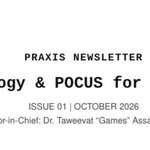
praxis-project.com/newslette… for anyone who hasn’t seen it yet, a one minute read of this is a lot better than scrolling on social media ;-)

I literally cannot believe the first sentence that says that it was thought to be harmful. Medical school physiology explains that lactate is a cellular fuel. Favored by brain and heart tissue. Great when we are anaerobic escaping predators.


Philippe Rola retweeted
When should you use a meta-analysis? FGEBM Ep. 4 out now. Listen at podcasts.apple.com/us/podcas…
Philippe Rola retweeted

What a great honor to be part of this!
So excited for Friday’s issue and the chance to help bring bedside physiology + POCUS deeper into the IM community.
This kind of practical, physiology-first content is exactly what we need at the bedside.
Everyone should sign up! 🚀 🙏
Thanks to @TaweevatA our EIC, 2nd issue this friday! Really happy to collab with @G2Disrupt and @katiewiskar to get the IM community into bedside physiology and pocus! Sign up at praxis-project.com for the newsletter! Pls share w IM colleagues!

Philippe Rola retweeted

"A pregnant person is a person who is pregnant."
That's the answer the Liberal-appointed head of the PUBLIC HEALTH AGENCY OF CANADA gave when asked to define a term used in her own agency's taxpayer-funded guidance on pregnancy.
When pressed to explain how that differs medically from a pregnant woman, she couldn't give a clear answer.
Our own Public Health Agency can't even clearly define the language it publishes in its public health guidance...or tell Canadians whether a man can get pregnant.
This is what happens when Liberal identity politics take priority over clear communication about biological reality.
Nice!

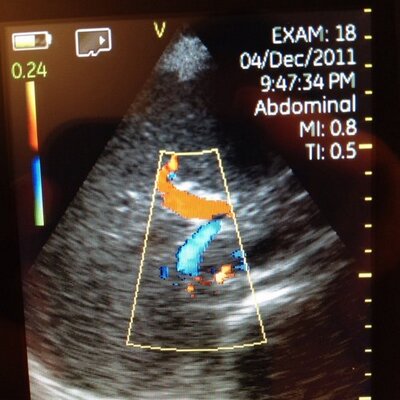
New free sim: VExUS Color & Spectral Lab 🩺
Find the hepatic, portal and intrarenal veins with color, drop the PW gate, read A/S/V/D against a live ECG, measure PVPF, grade the patient.
No login. Works on your phone.
pulmonarypocus.com/vexus-col…
#POCUS #VExUS #MedEd
Philippe Rola retweeted

ScvO₂’s attraction was that it integrated a great deal of physiology into one number. Cardiac output, oxygen content, metabolic demand and extraction all influence the result.
That integration is also its limitation.
ScvO₂ can tell us that the oxygen balance has changed. It cannot uniquely tell us why. It cannot choose the treatment. It cannot guarantee adequate regional perfusion. And making it rise does not establish that the patient has benefited.
Once the actual clinical question is measured directly, ScvO₂ has very little left to add.
Anyone find it useful?
